
In the bag…
Singapore 20th September 2011
Let me get a cat out of the bag….you never have a project in your “bag” until it is signed, sealed and delivered…It has happened to me many times over the years that I have very positive talking potential clients, developers, project managers, architects and so on telling you the project is “in the bag” leaving an impression they are in control and everything is hunky dory, not to worry, you are the man. Then the communication gets gradually less and whilst at first they were the ones talking to you, going after you, you notice it gradually changes to you chasing them for news, to the extend that suddenly there is no news, no communication anymore, they don’t respond to your calls and when you finally get to them the project is gone…
Sounds familiar? We lost another project more or less this way today, though there was no obvious mal intent form the client…but you could just feel it coming. From the initial hyped up discussions telling us we were “in”, it had slowly gone quiet over the last few weeks and when I eventually got to talk to the PM to be, he confirmed that the client had changed his mind and the project team (of which we were part) was no longer the prefered choice…
But even when you have signed a contract, it is not a guaranty you are on the job. A few years ago we had successfully negotiated a new project all the way to receiving the signed contract and all. But as we were pushing for our appointment fees, things got delayed and that’s when we started to get worried…It’s a long story (which can be told over a glass of beer…) but in the end let’s say the client had a change of heart and decided to remove us from the project. They felt bad however and offered us a replacement project, but it was not of the same caliber as the original one. We could have fought it legally but did not really see the point as there was nothing to win other then maybe some financial compensation.
So there again until you have money in the bank the project is still not secure in the bag….!
In Light Watch today a recently completed project in Australia, the redevelopment of the Adelaide Entertainment Centre. I could not find who the lighting designer is but I must say that contrary to many LED projects this one looks to have purpose and thought. It does not fee like an add on design rather a well harmonised addition to give this centre a new modern look. Well done!
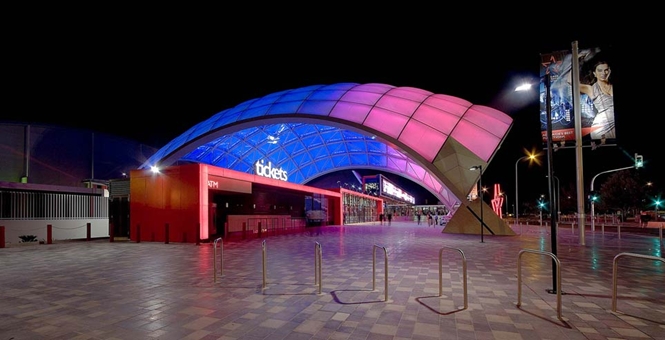
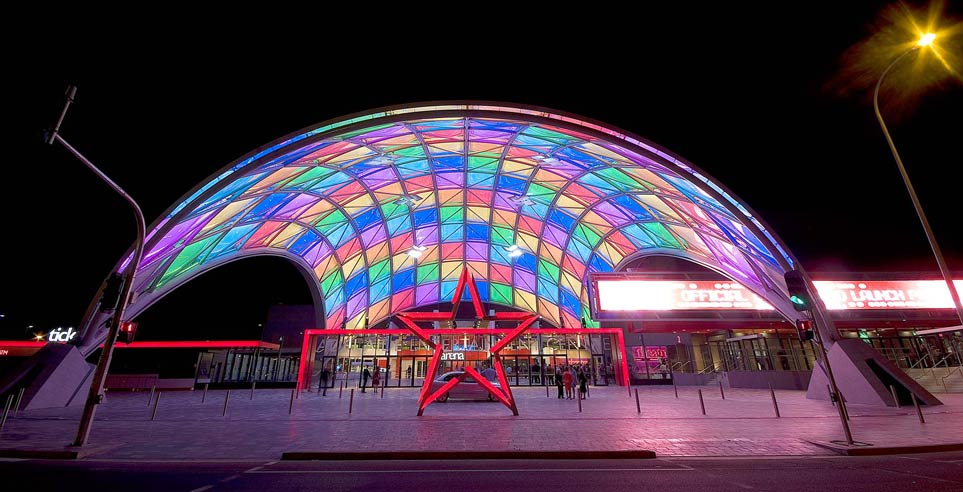
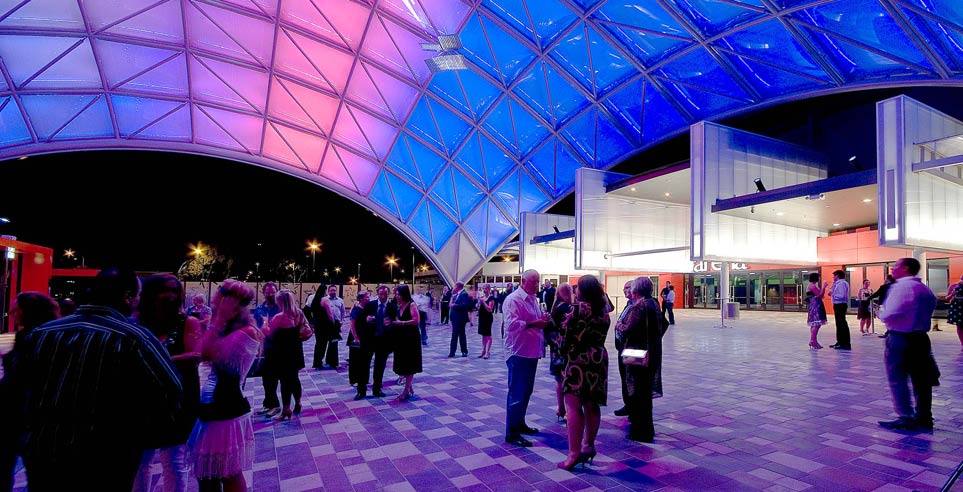
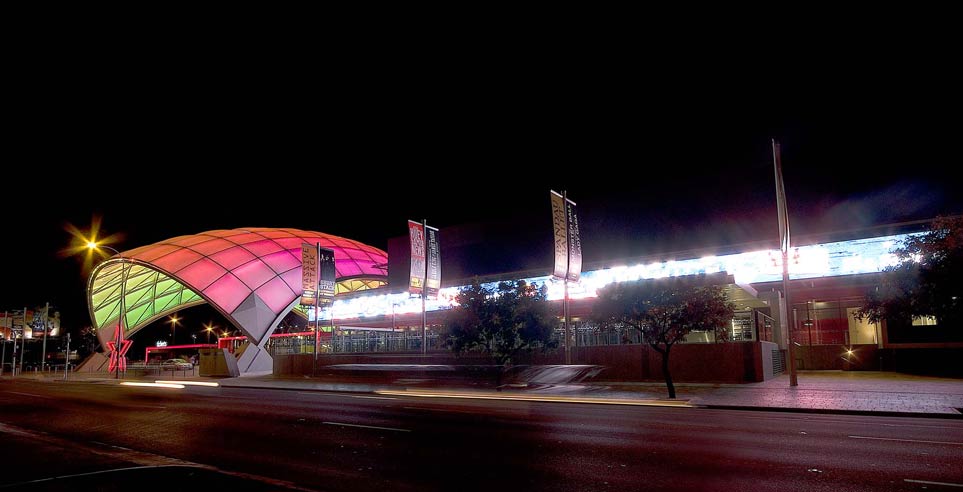
Light Watch 166: The entrance to the Adelaide Entertainment Centre redevelopment
guaranty and warranty in lighting
Singapore 19th September 2011
Does any one know the real difference between guaranty and warranty? In my early days it was always guaranty, then someone started the concept of warranty and now I hear both floating around when it comes to commitments from the manufacturer towards life expactancy of products. Even checking online dictionaries is not really helpful. The subject is triggered by discussions we had today and last week with visiting suppliers in regards to the warranty/guaranty they provide specifically for LED products.
With the main sales credo being energy saving and long life, clients obviously want this to be translated in something more tangible. If a one or two years’ warranty was the norm for conventional lighting systems, with manufacturers claiming 50,000 or more hours for their LED product, a longer guaranty/ warranty is expected. We have (LED) suppliers offering 5 years as a standard norm now, but there are several who up the ante to 7 and even 10 years! While this is obviously an attractive proposition to a client, it should be clear what exactly this guaranty or warranty means.
Todays supplier clarified that to him guaranty was a complete replacement including labour costs of un-installing, replacing the failing product (with new) and re-installing the lighting system. The warranty was only replacing the failing product without the labour cost. He was offering 3 years guaranty and up to 5 years warranty. I did not ask but surely as with all “insurances” it comes with the smal little letters, called terms and conditions.
But one of the interesting questions is of a totally different nature. Considering the speed of progress in LED technology, will they still have the parts and components 5 years down the road? As I see that many of the leading LED manufacturers are already phasing out older LED technology it is unlikely that they will retain the current ones for 5 years, let alone 10 years! In other words should a claim have to be honoured in 5 years time we may end up version 5.2, which has improved so much compared with version 1.0 that it will be an obvious visible change affecting the overall lighting effects. Having to change one may mean having to change all to maintain the integrity of the original design! I am not sure if the guaranty-warranty issuers have thought that far ahead!
In Light Watch today some more futuristic thoughts about solar power in our urban life and lighting….
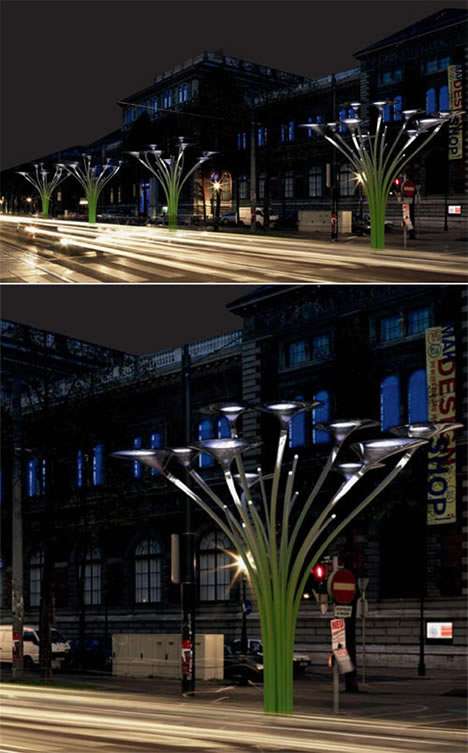
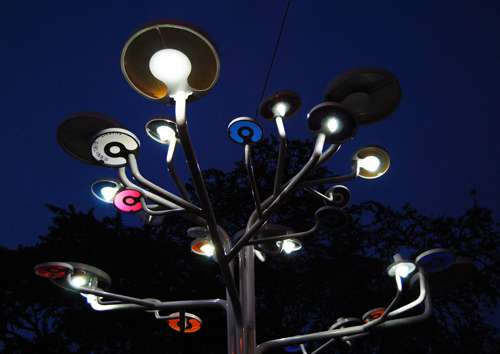
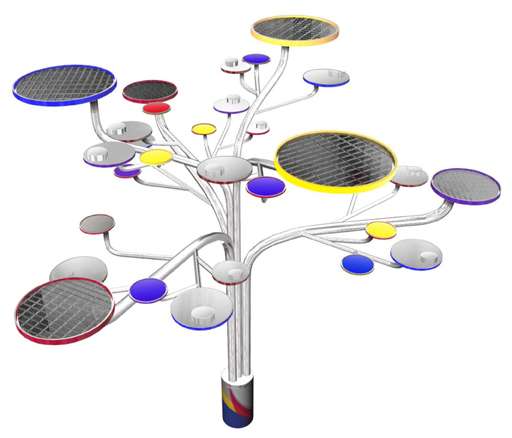

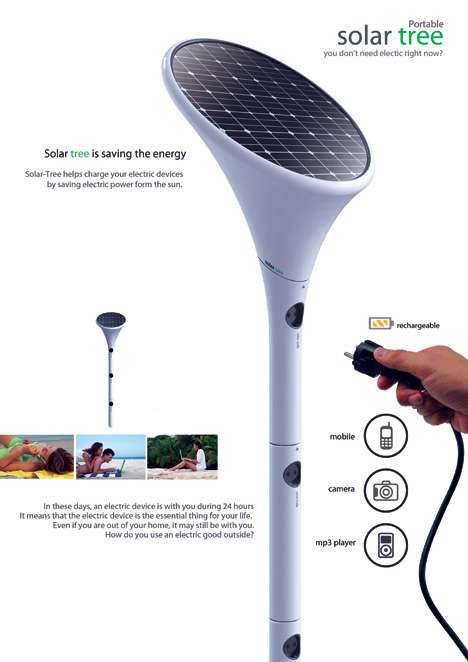
Light Watch 165: Some more trends from the trendhunter.com website
Solar leasing
Singapore 16th September 2011
While we are working out loading and budget estimates for one of our project clients today, I am reading an article on the subject of “solar leasing”. It is sort of links in, as more and more our lighting designs are tied in with how much energy the lighting consumes (or saves depending on how you look at it) set out against the cost of the installation. It is without doubt that lighting systems that are more efficient, sustainable and save more are generally more expensive. So woking out the loading estimates and budget costs are fast becoming a major key element in the design of our lighting concepts. Add to that the opportunities that low energy systems like LED now offer with the prospect of using renewable energy, the matter becomes a calculation exercise in terms of value for money and return on investment.
The article refers to a new innovative approach to solar energy where the town council will “lease” the solar panels (rather then
buying) from a commercial solar company at a predetermined rate over the next 20 years. The panels will be installed on housing development board’s government funded housing estates. The solar company will install and maintain the panels and the housing board will buy the electricity from the solar company rather then from the grid. The solar energy will be used to power common area facilities such as stairway, corridors and lifts.
The leasing principle is applied in many applications (cars!), but a new concept for solar energy. The way it works is that the housing board will pay an agreed tarif for the solar electricity (according to the article at the current rate for grid electricty tarrifs) to the the solar company. Over the years this will then pay off the cost of the installation which the solar company finances first. I am sure they have done the maths of electricity usage against the return on investment. The question that remains is whether the life time will last the lease time (20 years?) and whether the investment can be recouped before the end of life!
In Light Watch today some interesting and trendy suggestion when it comes to using renewable energy. Stylish electricity poles, funky wind turbines and street poles…have agreat weekend!
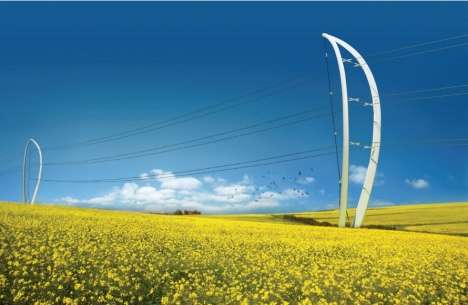
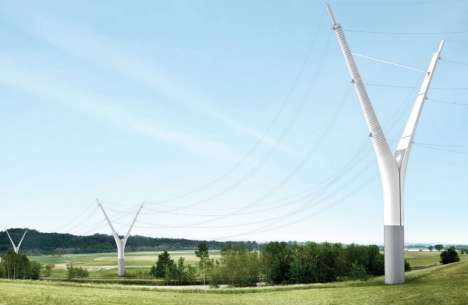
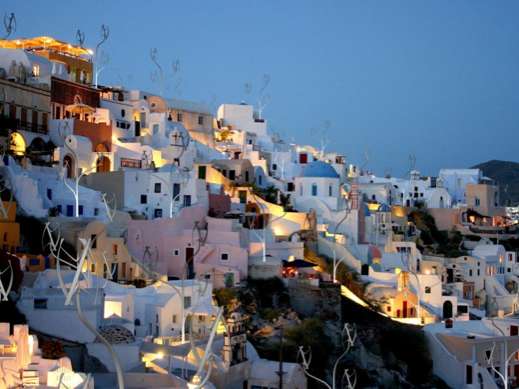
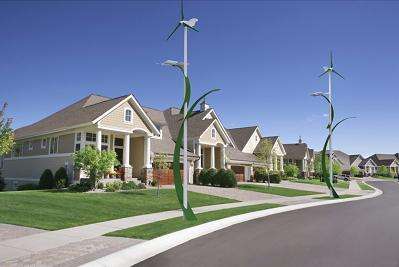
Light Watch 164: Trends as captured from the trendhunter.com website
Twisting the truth for the unknown
Singapore 15th September 2011
Twisting the truth a bit, a few white lies, aren’t we all guilty of it sometimes? We do it to make us look better, feel better, enthuse our potential clients, get a little edge, many reasons. Specifically when we want to reach into an area we do not really have experience or exposure in, yet we know that we can handle it. New start up companies always have this issue that they have no past track record to boast of, so what to do? Saying you have no experience, no track record and that you have no idea whether you could handle a project does not really sound like a great offering to a client certainly if you ask to be paid for it as well.
So we craft our stories carefully to create that little attraction that may pull the potential client over the edge in selecting you for a project. This is unrelated to the fees itself which obviously have to be attractive as well and within the clients budget provisions. Sometimes requests for fee proposals are actually split into a qualitative part and a commercial part. The first lays out your capabilities and ability to perform the job to the requested levels of implementation and deliveries based on merits and track
records, the second part is a simple commercial proposal of the cost of your services and deliveries. By seperating the two and assessing them seperately the two are not influencing each other. We have submitted proposals in the past this way where our commercial bid (fees) may have been ranked the lowest, but our technical merits was ranked, say third. The ultimate award of the project then based on a combined weighted adjudication. This not necessarily awards the project to the lowest or most technically/ creatively competent bidder.
So while the commercial bid is a straight forward arithmic proposition, the technical bid leaves room for some creative interpretation. Of course everything has to be veryviable but then not all references are checked. People read and make their own assumptions. Only when they dig deeper they may find out to what extend you were really involved. I have found suppliers claiming to have been involved in a mega project (like every Tom Dick and Harry in Singapore seem to have been involved in the integrated casino resorts here) only to find out they only suplied some downlights in one of the corridors so to speak. They did not lie…
In Light Watch today something completely different…I mentioned the LED integrated glasses some blogs ago, now there are LED eye contact lenses! The University of Washington figured out a way to implant LED lights in contact lenses would you believe. The purpose being to allow the display of data in sharp images and video directly on your eyeballs! True or false?…
Info courtesy of Elemental-led.com and Trendhunter.com
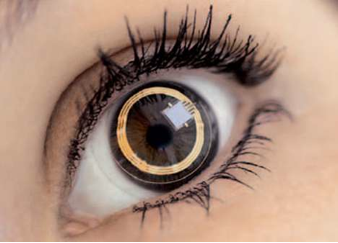
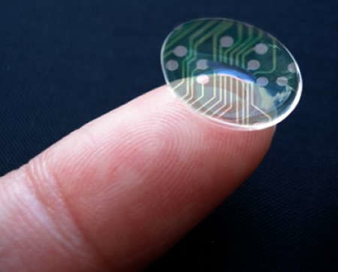
Light Watch 163: LED contacts
Due diligence
Singapore 14th September 2011
Preparing fee proposals for “unkown” clients can always be a bit tricky. I mean real unknown clients. I am not talking about the well established companies that you may not have worked with in the past but are well known in the public domain. No I am talking about people that don’t have a big public profile in the construcion or development business and on which little info can be found when searching for the person’s or company’s track record.
We have been approached today for a big project in the Middle East of which the owner/developper seems to be the son of one of the countries rich and main founders, a sheikh of some sorts. Further internet searches brings up shady stories about his past. While the funding does not seem to be an issue (the proposed budgets seem comfortable to work with) I always have my doubts when it comes to mega rich clients as they seem to think that because of their buying power they can buy anyone, which they probably can. My point is that I need to feel some trust and respect from a client and not be just a number he can dispose of anytime (of course they can, but you know what I mean).
So I find that the only way is to create very demanding terms and conditions, make yourself a difficult catch. I will not refuse to do a proposal, but will be setting up initially steep fees with tough terms and conditions (are they really serious?) in regards to the payment schedule. For instance no work will be started without a signed contract and the appointment fees received in the bank. That shows serious commitment and is for us a sign that the client wishes to pursue the works with us. Trying to find out wh the rest of the team is (architects, M&E, contractors) sometimes help to have a better feel, but so far all the project team members seem to be local companies we have never heard of…as a small lighting design practice we have to do our due diligence for every project before we commit but it is not always that easy…
In Light Watch today just a a look at some of the major developments happening in Dubai. I am not sure if these projects are a big air bubble and sustainable in the long run, a lot of dreams pushed through with multi-billion dollars that some of the rulers
can throw in, but they have been realisedwhether they make sense or not. Burj Al Arab and Burj Khalifa, Dubai Mall, Atlantis Hotel, Palm Resort and World Island are just some of them with still many more on the drawing board.
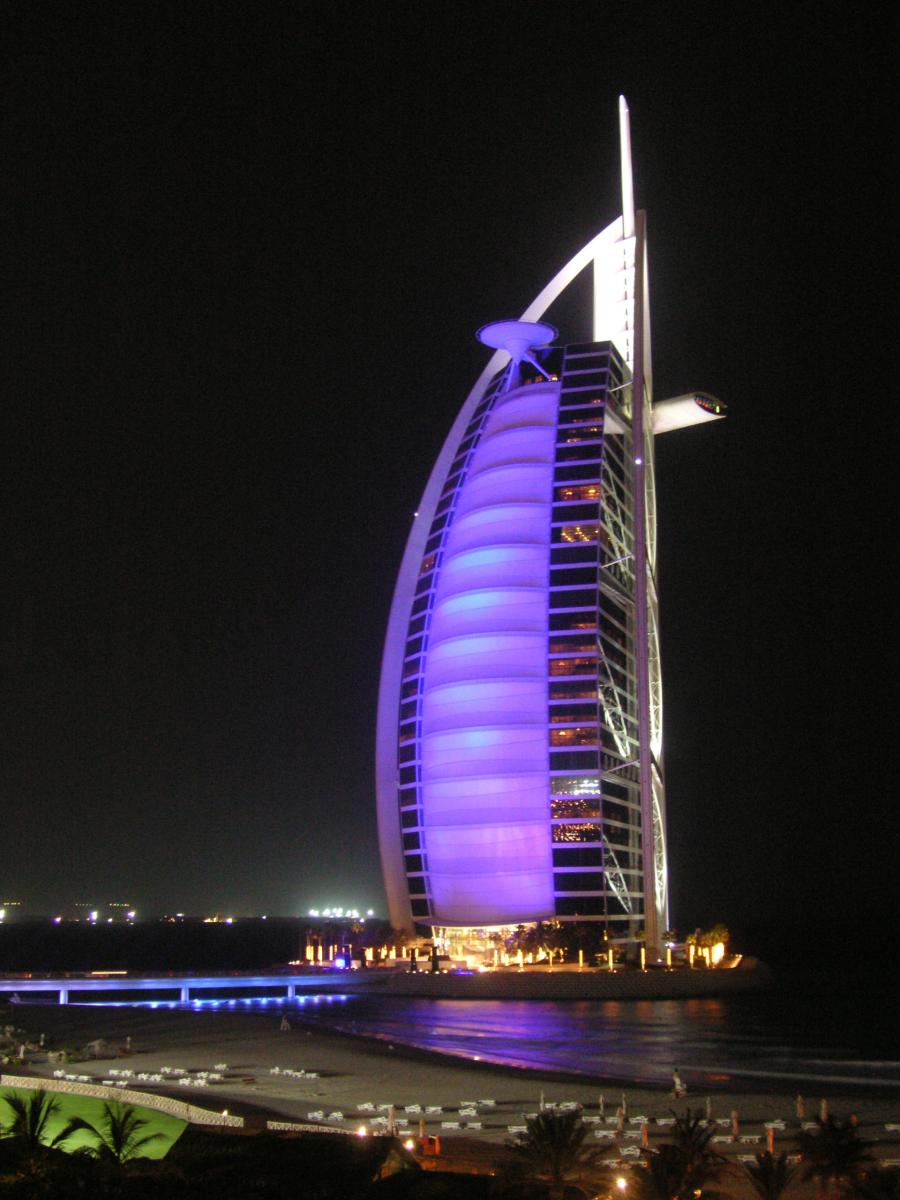
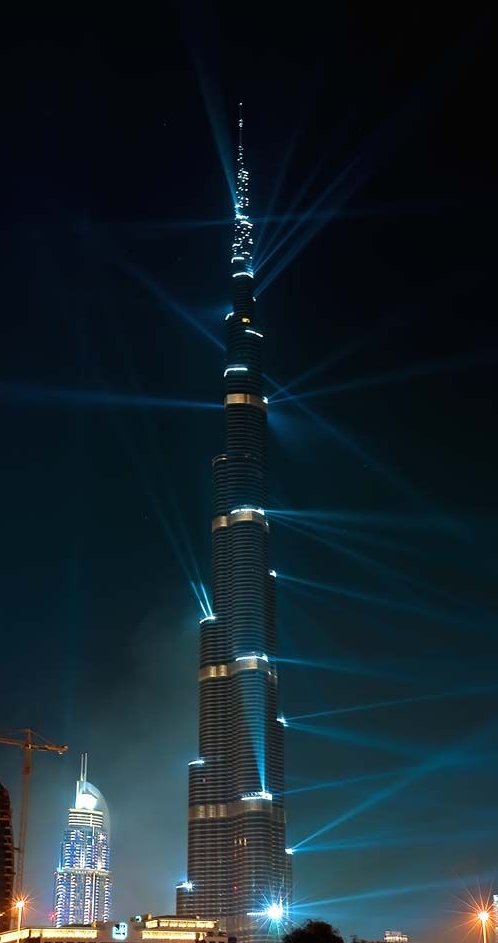
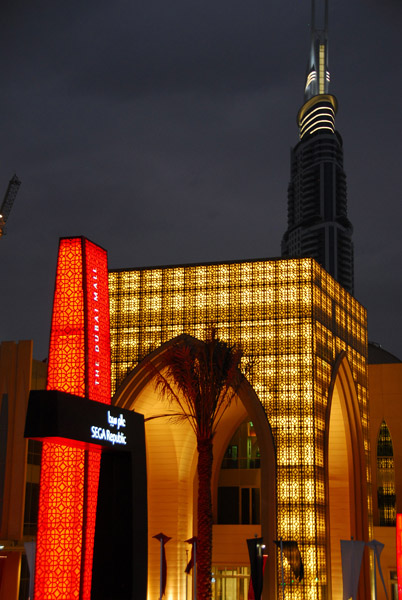
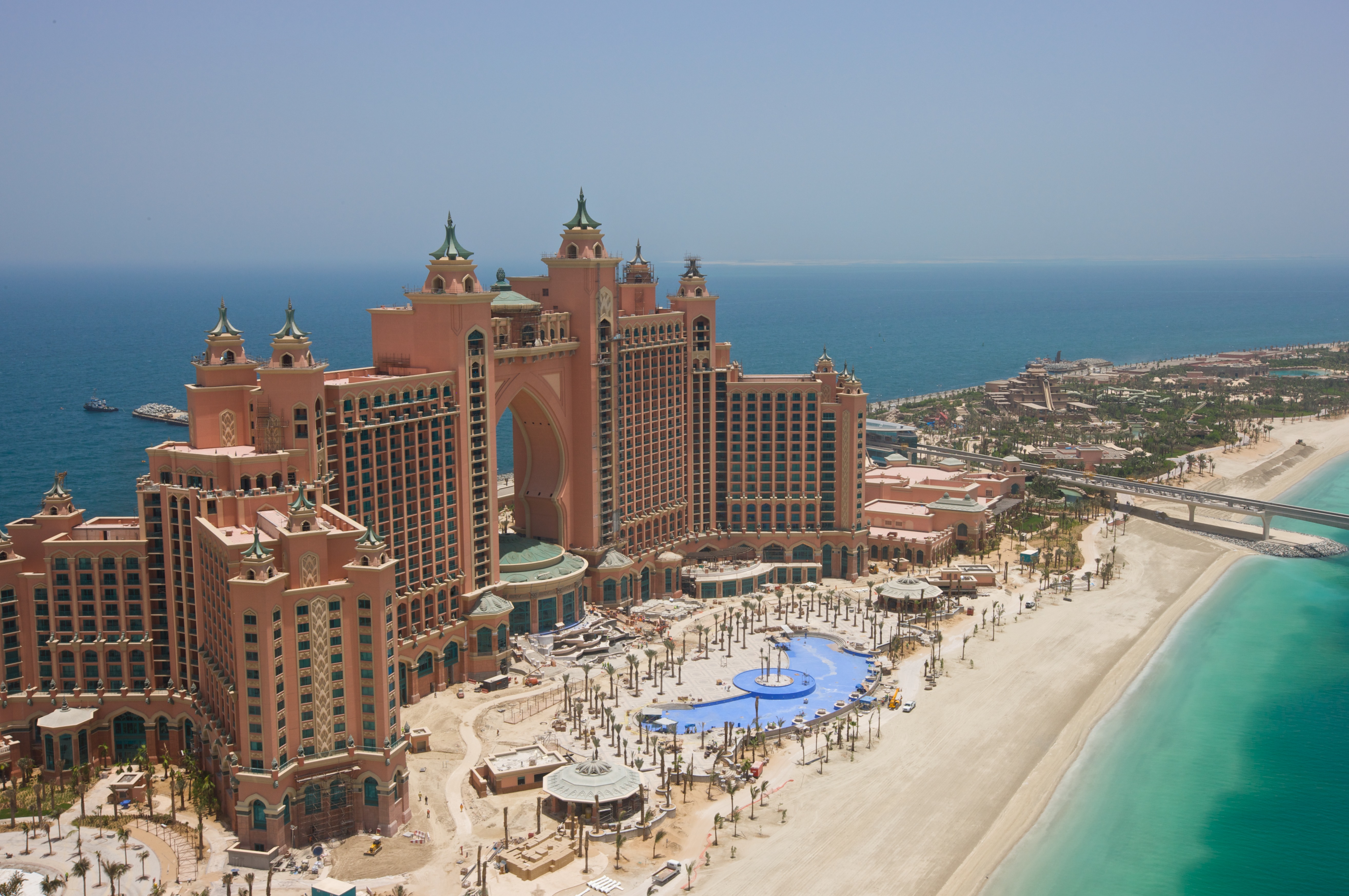


Light Watch 162: Dubai mega projects
The green advantage
Singapore 13th September 2011
These last few days I am full on putting the finishing touch on my book and I must say neglecting my office a little bit in the process. Luckily staff knocks on my door when anyone wants attention J It’s all in the details and it is amazing how many small details need to be resolved before we really can go to print! Today I officially got my ISBN number so the book is now internationally registered in the system!
What caught my attention today (I like reading my newspaper over a cup of coffee at my local Kopitiam in the morning…) was an article about a research done by an Australian real estate organisation in regards to green buildings in Australia and how they found that green buildings on average sold for about 10% more than conventional buildings. Now assuming this is a credible research with verifiable facts (this I don’t know) it would indicate an interesting developing trend in the building industry. Namely that investing in green technologies pays of in the longer run. The article did not specify whether lighting was part of the “green” technologies but assume that the buildings researched had some form of green mark that certified the implementation of these green technologies. I think we can safely take it that regardless of the report, this is a trend that is bound to develop stronger and stronger, it only makes sense, right?
If we add to that the energy saving (or reduction in electricity bill) that is created and in case of lighting also the ease of maintenance and operation, it starts to become an interesting picture. Green lighting design (every good lighting installation green or not starts with good design principles!) comes with a premium when it comes to pricing but with this developing trend we have
a new benefit to present to or client, an investment that eventually will pay off. The value increase maybe 10%, but the savings in operational cost may well add up to another 10-20% benefit. With green lighting technology already implementable with a premium of about 30-50% it starts to become a much more interesting proposition commercially as well!
In Light Watch today some “green buildings in and around Singapore that have been completed in recent times. The Nanyang Technological University, The Singapore Management University, The Marina Barrage and one of the first restaurants with a Green Mark, Mc Donalds Restaurant in Jurong Central Park.
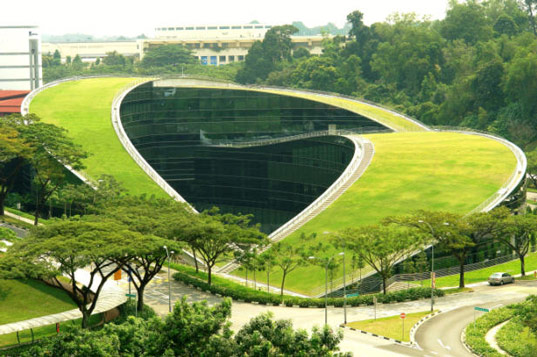
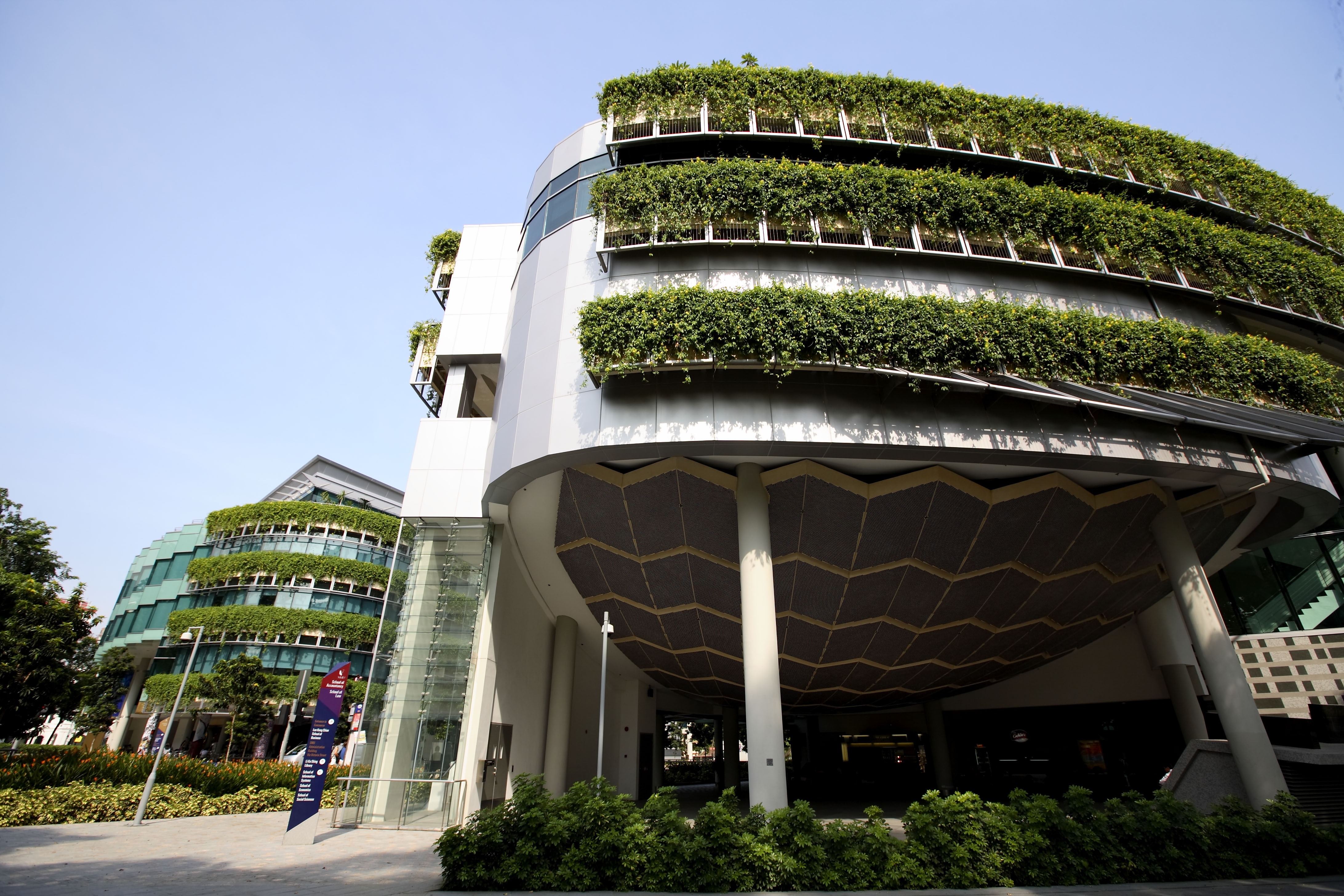
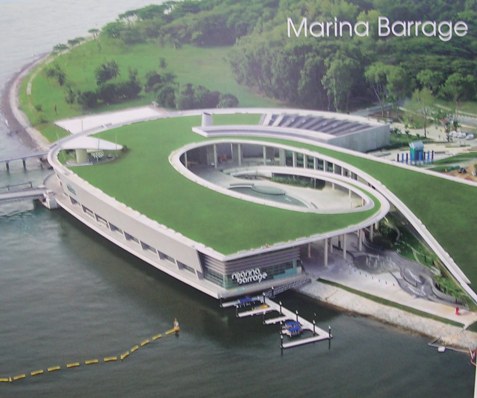
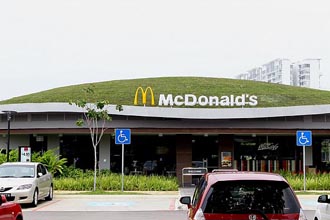
Light Watch 161: Green buildings (literally) in Singapore
Tribute of Light
Singapore 12th September 2011
Nine-Eleven came and went with many memorials held all over the world. Ten years later it still leaves an incredible mark on our lives, for those who lost loved ones in the attack it will be forever. For me as a lighting designer the tribute of light to mark the location where the Towers once stood is the memorial mark and quite an event by all standards. It just shows how powerful light is and how much we all identify with light as a medium of expression. The installation is so powerful that it can be seen from miles away and reaches into the sky as far as you can see.
One of the great points of this lighting expression is the message it “radiates”, courtesy of a well thought concept. Yes the concept is simple, but the message very strong. Beauty generally can be found in simplicity and this is true for most of the really good lighting designs. Once lighting tells a story like it does here, everyone can identify with it, happy or sad. Most of all with a good concept, lighting is not explicit, it leaves room for your imagination, it gives you the basic components of a message and you fill in the dots according to how and what you see with it! Everyone has different life experiences and hence leaving room for personal interpretation allows people to personalise what they see with a greater satisfaction.
Finding the “story” that epitomises your lighting concept is often also the base for a successful design…many designs I see around me have no story and hence they pollute the skies with meaningless expressions of light. Some of my own designs, I admit, also lack the power of a good story and as a result they are just run of the mill. This can be due (often) to stringent budget restrictions not leaving you much room for creative interpretations, sometimes the building is just not inspiring, that happens too! Tribute of Light is a simple but extremely powerful concept that stands totally on its own and leaves everyone to reflect on what once was…
In Light Watch some pictures that I got from the Daily Mail online. The pictures mostly courtesy of Getty Images are quite impressive and show how it all is done. The installation uses 88 floodlights of 7 KW precisely aligned in two squares that recreate the footprints of the original buildings. You can see more of them including video’s at http://www.dailymail.co.uk/news/article-2035010/9-11-anniversary-Tribute-Light-rises-New-York.html
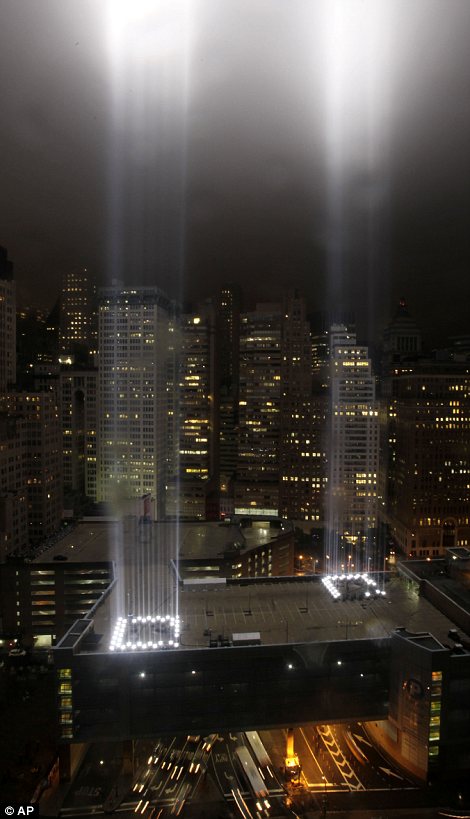
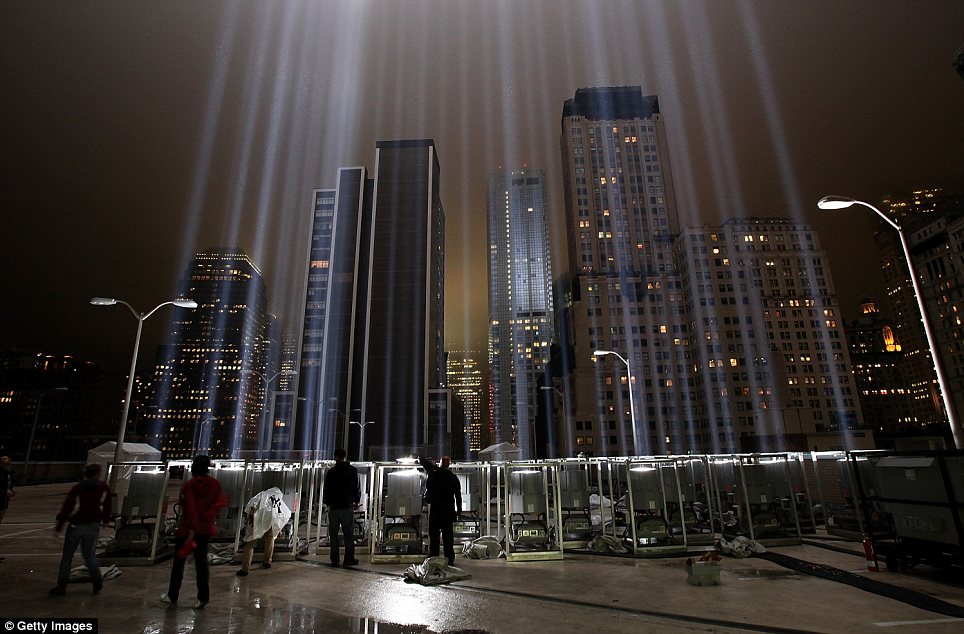
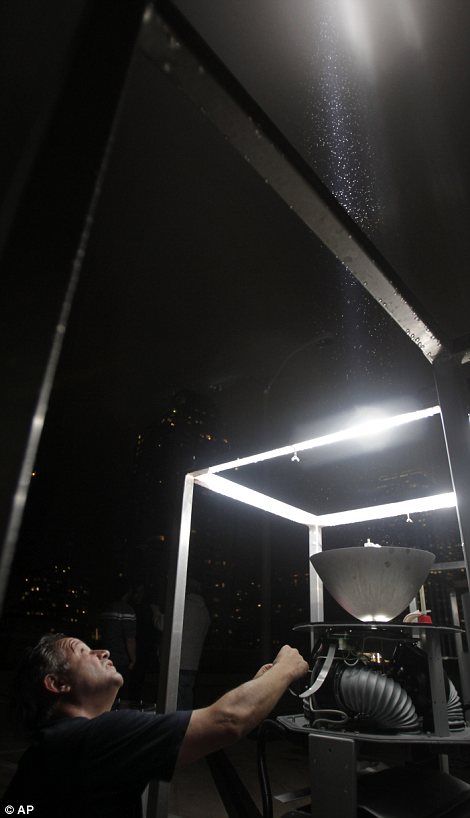
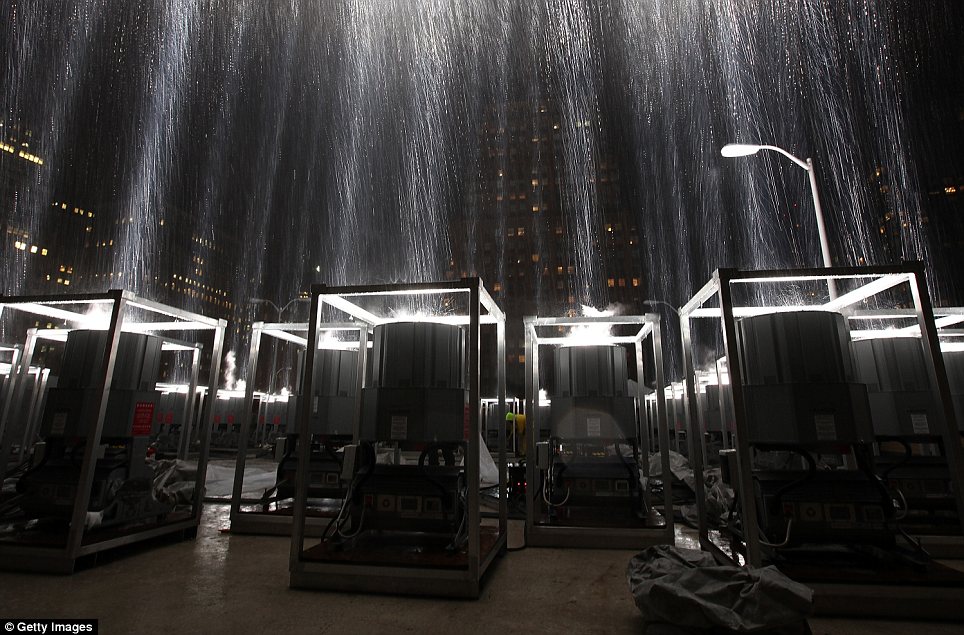
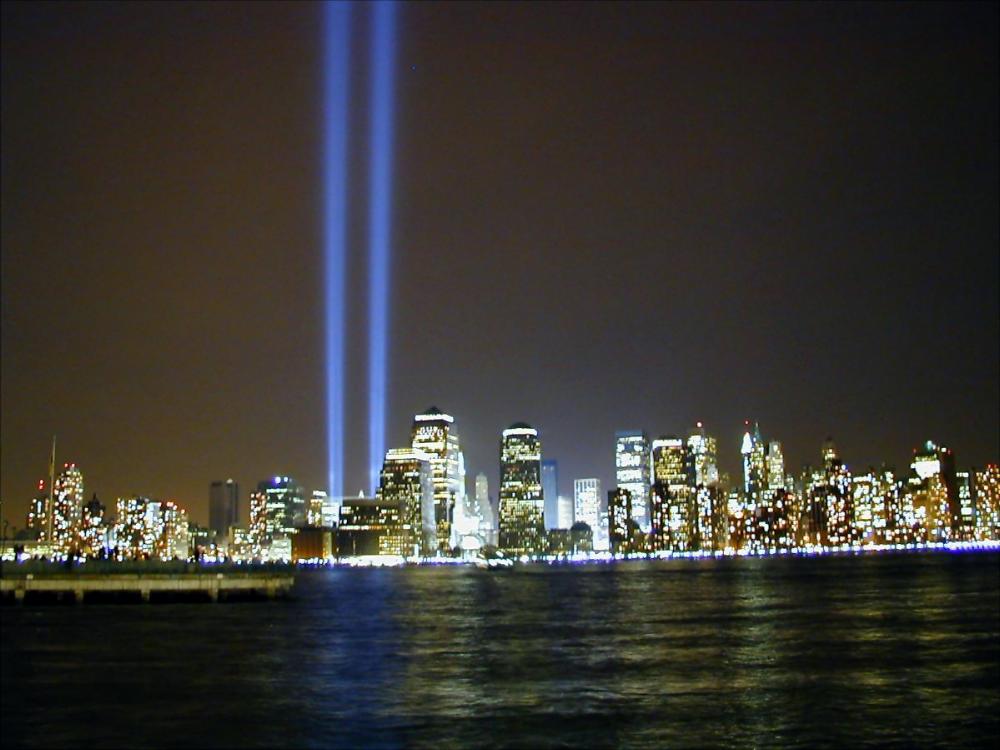
Light Watch 160: Tribute to light, testing the installation before the big day
The (lighting) world today
Singapore 9th September 2011
This Sunday it will be 10 years since the terrible 9-11 attacks in New York and you can’t really open any newspaper or tune into any news program without the subject being broached these days. Many of us remember the day as yesterday, watching speechless how the second plane plunged into the WTC. Where is the world today, how has it affected our lives and has it in any way affected our lives as lighting designers?
We can definitely say that (air) travel has never been the same. The amount of security we need to go through to go from A to B is scary. It does not stop at the airport, hotels, shopping malls, office towers, and residences, everywhere you have security checks and as lighting designers, designing those security stations, whether it is a bomb check for cars or bag check at a building entrances, it has become part and parcel of a standard building design. Some rooms in residential buildings and specific areas for instance in train stations have been designed to double up as bomb shelters.
But along the way technology has developed at breakneck speed, certainly the LED lighting technology. Most of all we have come to treasure our lives and health more and lighting designers around the world are slowly moving towards a more holistic approach of lighting, were lighting stimulates and provides the stimuli needed for a healthy body clock. We have become more concerned about our environment, the world we live in. Not only about the environmental impact caused by fossil fuels but also the impact of lighting on the natural habitat that surround us. The control of lighting pollution besides energy saving has become a key component of every lighting designer’s strategy…
In Light Watch some images of a newly released project to safeguard the bats in Holland. Bats are a protected species and hence some government departments in cooperation with animal protection groups developed this “bat-friendly” light to be used on
roads in areas with a high density of bats. Like human beings bats have rods and cones, but because of their nocturnal lifestyle, the rods are far more developped then the cones. Studies (very simmilar to the studies we did for turtles I must say) show that the light sensitvity of bats has its peaks more towards the blue and ultra violet spectrum and hence are far more sensitive to white (street) lights. This seems to disturb their hunting patterns and hence their survival. Newly developped amber coloured LED street lights have now been applied in some areas with good success as the lights allow humans to see without disturbing the hunting habits of the bats…

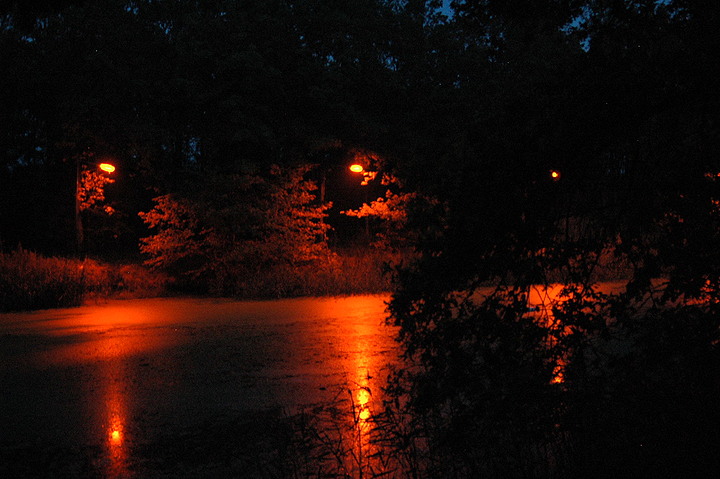
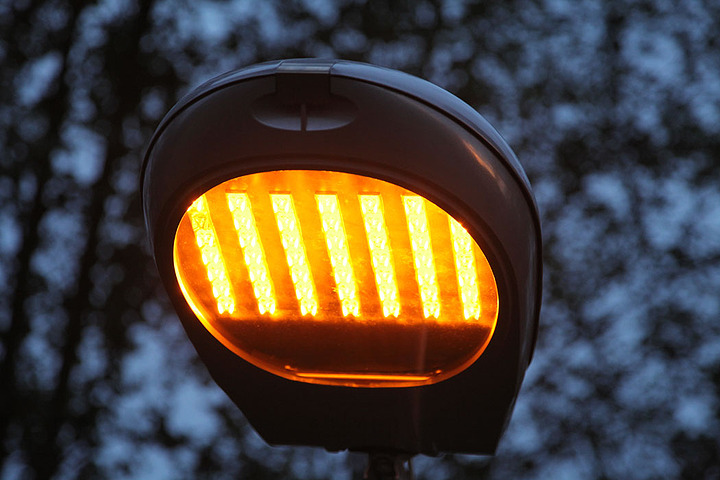
Light Watch 159: Bat lighting, Holland
Quo vadis lighting design
Singapore 8th September 2011
Like many of my colleagues in the lighting industry we read professional magazines to keep ourselves updated on the latest developments in lighting and other peoples’ achievements around the world. Some like me also regularly contribute through articles, write ups and blogs. Over the last couple of years certainly with the arrival of the IPad and other tablets we start reading instant news right from the internet wherever we are. Haven’t you noticed café’s were people read there Ipad’s rather than the good old newspaper?! Amazing how times are changing…
I still prefer the feel and touch of papers, magazine’s and books, but I have to admit I have succumbed to the Ipad craze and catch myself more and more reading the news electronically. But going to my local “kopitiam” with my Ipad…no not yet. Coffee and newspaper, the old fashioned way. I come to this subject as I finally got to read through the latest PLD magazine and specifically Joachim’s article about the state of our lighting design (ers), “Quo Vadis Lighting Design”. I can understand some of it is written out of frustration but in general I think Joachim gets it right. I started as a lighting designer 30 years ago and know very well the time before we had computers and it is true that many of today’s new and upcoming lighting designers are somehow a bit spoiled and arrogant, though arrogance is probably an integral trademark of a designer, ego or not. What is missing is the respect for our profession, where we come from and the people that have helped develop the profession as we know it today. It is a very young profession relatively speaking and no thanks to organisations like PLDA we have come a long way to where we are now. There is however still such a long way to go before the profession can be called truly accepted in the same way that architects, interior designers and electrical engineers are.
While the older generation, to which I count myself, may in some ways lack the dynamism and fresh look on what lighting design can be or should be in the future due to our emotional baggage and heritage, the years of experience and wisdom should be a rich pool and source of expertise for the younger generation to tap into. Like a father son relation…relationships are build on trust and respect. In the end we all want the same thing which is to establish the profession in the most respectful way possible.
In Light Watch some pictures of the last PLDC in Berlin in 2009. This coming October the lighting design fraternity will meet in Madrid, which should be a fanstatic event and will without doubt re-inforce our bonding with so many like minded people together! Pictures taken from the PLD website at http://www.pld-c.com/impressions-of-pldc-2009/pictures-2009/
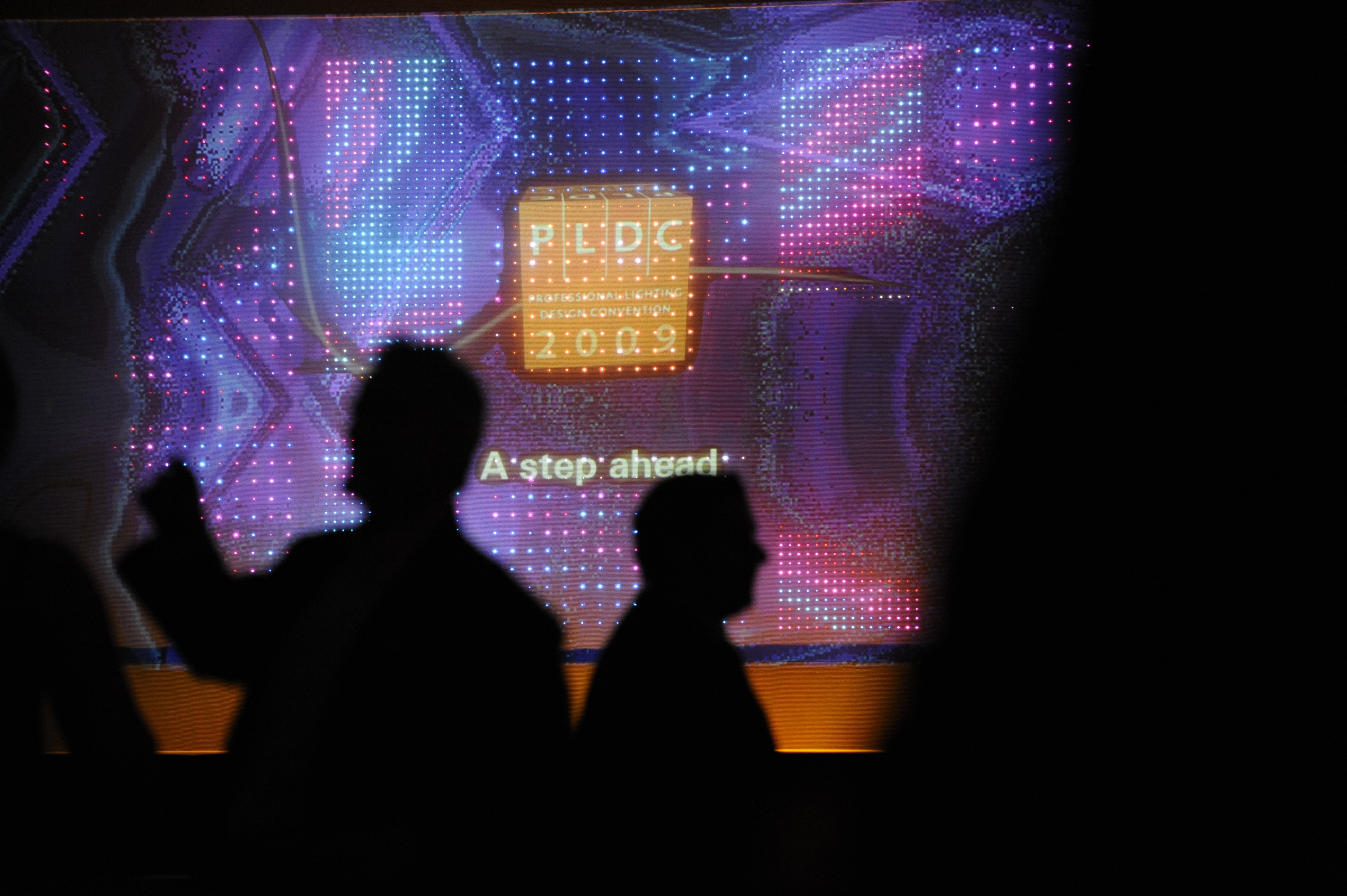
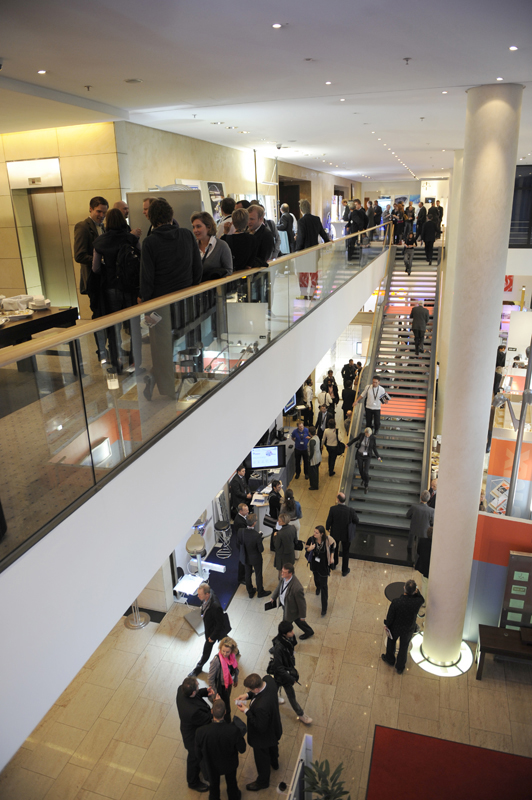
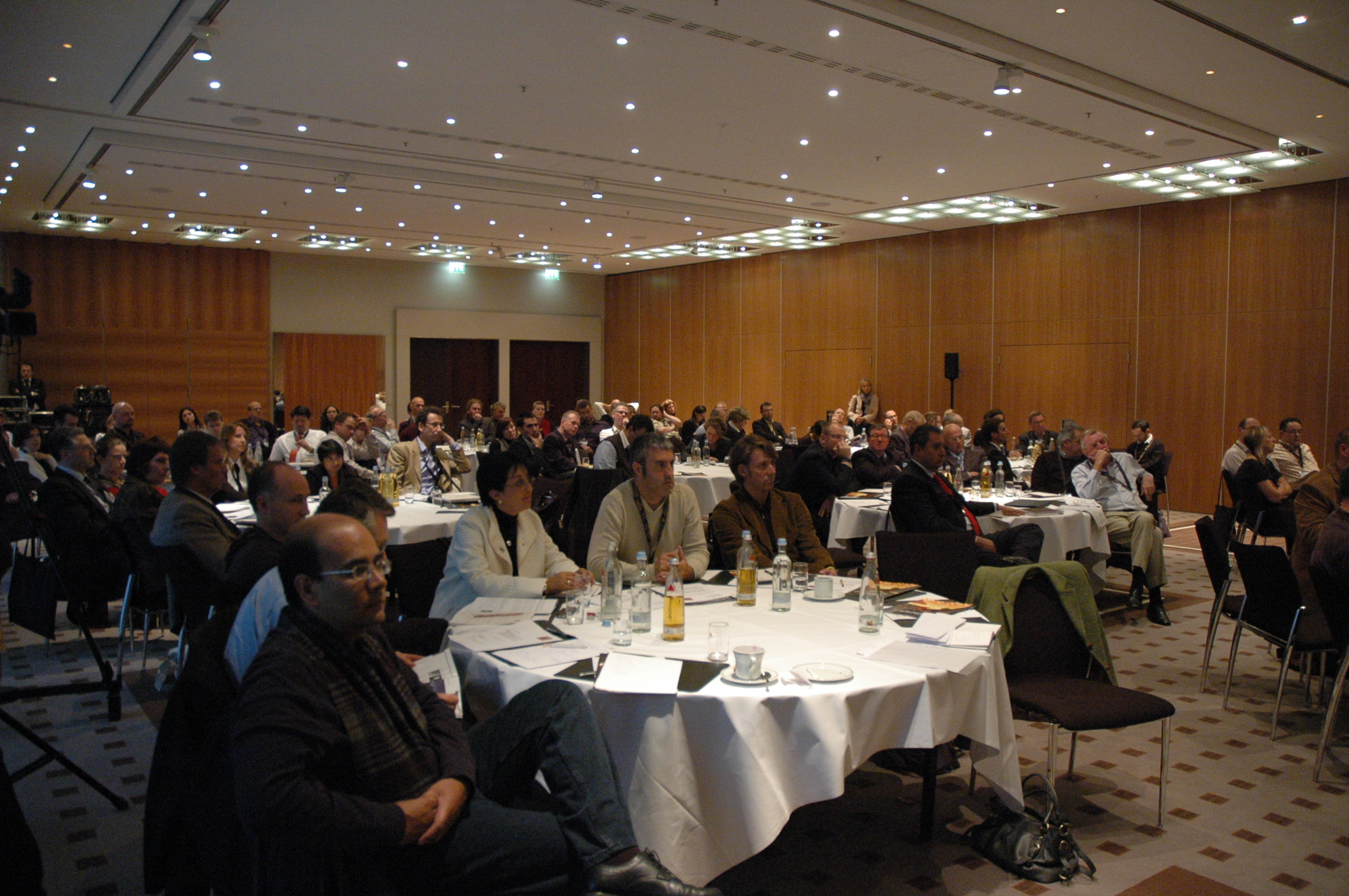
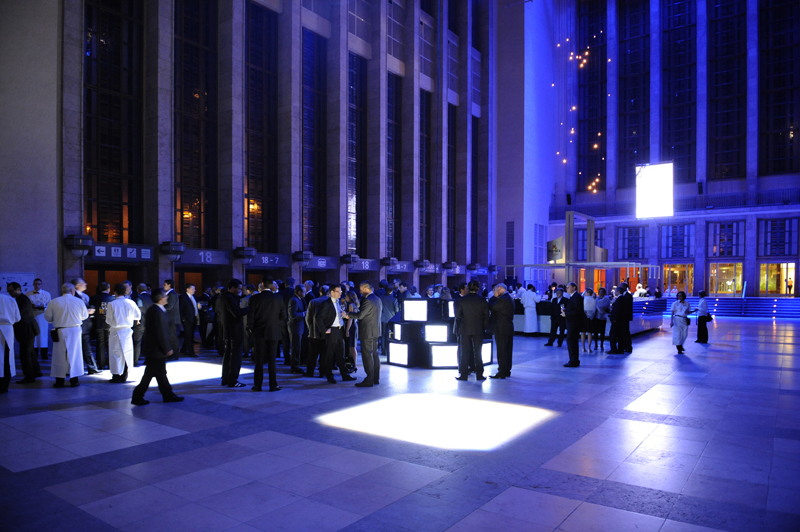
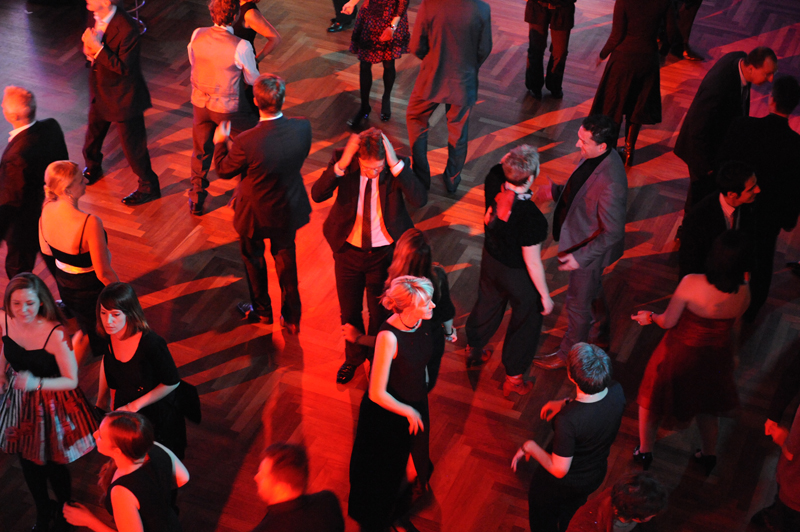
Light Watch 158: Mood pictures from PLDC 2009 Berlin and announcement PLDC Madrid 2011!
LED and quality
Singapore 7th September 2011
If you are not using LED’s nowadays you are considered being old fashioned and behind today’s realities of the world. Philips and others are already blasting advertisements via TV in the aim to reach out to the general public and tell them that the age of LED has arrived with beautiful and attractive pictures on how LED lighting can change your life. In an ideal world that is certainly
through, but in the real world we live in with the economy about to collapse again if we may believe the doomsayers, budgets are getting tighter and tighter and the quality and execution (installation) is suffering as a result.
I was walking on Orchard Road last night and was dismayed to see that several LED in-ground lights were obviously not working. Then this morning we had a product presentation by one of the local reputable lighting suppliers (good quality products!) but yet in some of the project pictures I did note the same… a few lights not working. This is specifically the case for outdoor lights which are much more sensitive to environmental conditions such as humidity and temperature changes. What is all the more sad is that the client already spending way more than with conventional lighting systems, yet the problems are many times over. It is clear that we need a shift in our thinking and the way we specify our LED lighting, with far more emphasis on the critical installation issues such as wiring, cabling, loading, connections and protection levels. We are progressing and engaging with the manufacturers and suppliers on these issues, but for the moment we still find ourselves largely at the mercy of the contractors capabilities and willingness to do a good job! It is obviously whinge week, but I believe many of my colleagues in the industry feel the same. It is a shame as in the process LED is building up a bad reputation, which the good products absolutely do not deserve.
In Light Watch some typical inground LED lighting applications, that are very sensitive to good installation. The product maybe good but without the proper installation practice, procedures and works the end result will suffer. LED lighting is a total package, product, electronic gear, installation and control. Because there are so many more components then in conventional lighting solutions, the chances for mistakes and malfunction are much greater…
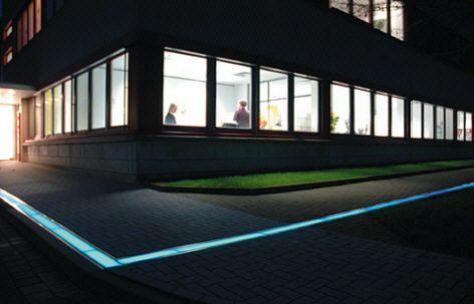
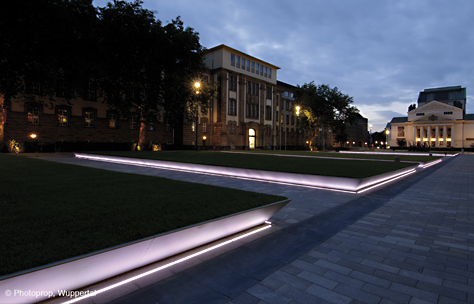
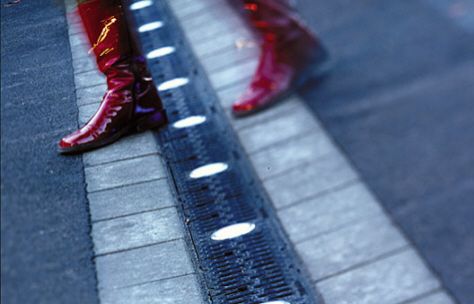
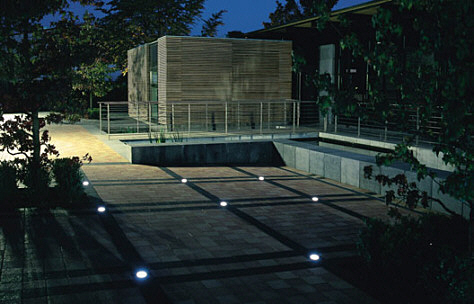
Light Watch 157: Some LED product applications courtesy of Insta Lighting
 The long awaited book compilation of Martin's first year of blogging is available. Order now.
 Feedspot Top 100 Lighting Blogs