
Patience and diplomacy
Chennai 4th October 2011
Working in other countries is often a work of patience when dealing with a culture clash. Asia,whether China, India or other definitely requires a set of skills that is a mix of authority and diplomacy. At the same time it is important to be respectful in order to earn respect. While I am a used to an appointment at 9am meaning an appointment at 9am, here it could mean anything, it could as well be 10 or 11am…Here the pace of life and the importance of punctuality and delivery of quality have a totally different
meaning! Working with the local contractors, suppliers and client representatives and their local culture, that is what my day has been all about today. Following yesterday’s site discussions we decided to explore some ideas further by bringing in some local lighting equipment to test our ideas real time…nothing beats visual mock ups. With the client and artists also present I was assured of a rich pool of “opinions”.
From the client side I had to deal with the “hierarchy” of apparent standing, with that I mean the higher “up the ladder” the more somehow these “VIP’s” feel they have to voice their opinion or at least an opnion. In this culture the more important you are the more you are expected to have an opinion. Unfortunately sometimes this results in confusing and non related comments with no real value other then being a comment that creates distraction and loss of time and effort. Diplomacy and authorative responses are needed to keep the focus.
Dealing with local suppliers had an added challenge of language barrier. I had to have my directions translated and communicated over several levels. From me to the “boss” who instructed his his assistant who then translated my requirements into the local lingo. You know what happens when you ask to communicate a message over several levels through several people! The story coming out at the end has little resemblance to the original story. I needed a lot of patience and diplomacy to get what I wanted. In fact I never really got what I had hoped to achieve, listening to so many reasons why it was not possible….
In Light Watch today some pictures from site today testing some lighting effects. Don’t ask me what we were trying to achieve…. 🙂
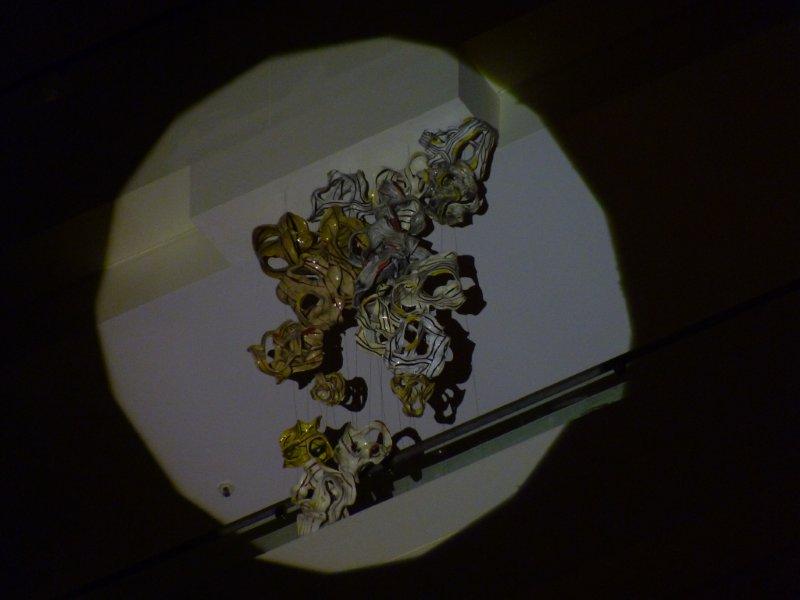
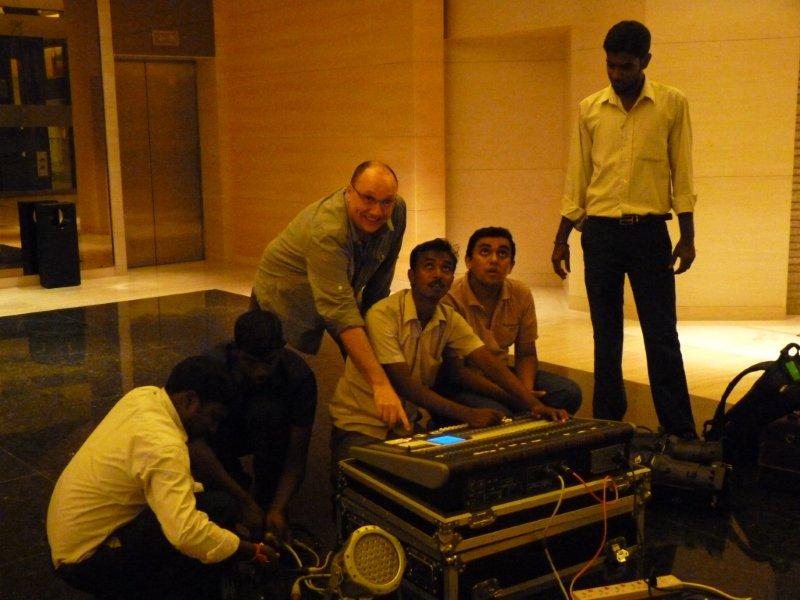
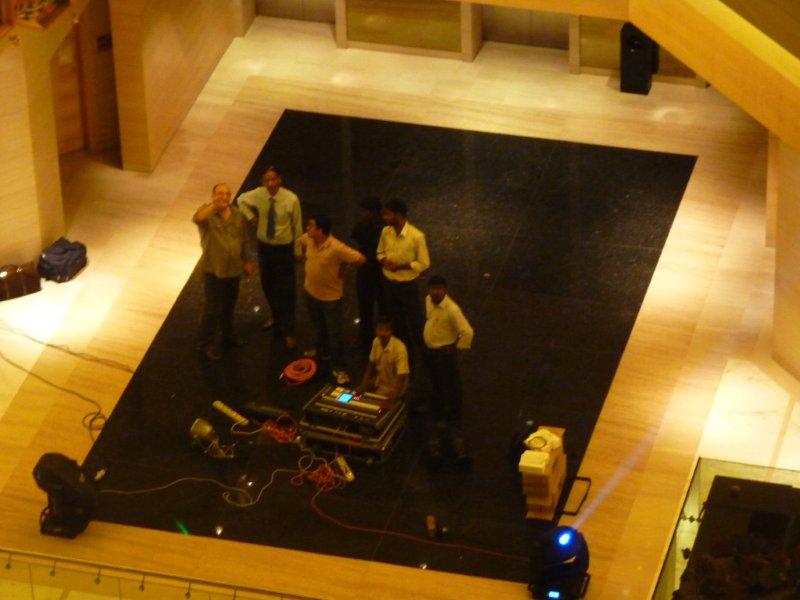
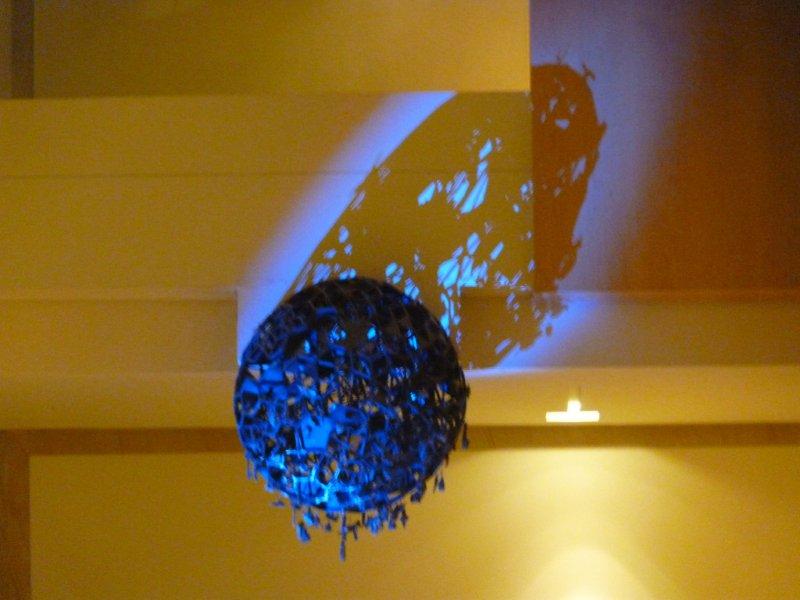
Light Watch 176 : Site action in Chennai
Reality bites
Chennai 3rd October 2011
Out in India again for some site commissioning work. I don’t know what it is but life here in India always seem to drag on endlessly not in the least because of the pace of life caused by traffic jams, the general mentality and work ethic. In India you either run or sleep…This project is now entering its 5th year (!) for me and still we are not fully completed and handed over. The Hotel is already “fully” operational, but funding issues have dragged the completion far beyond the initial targets and the end is still not in sight!
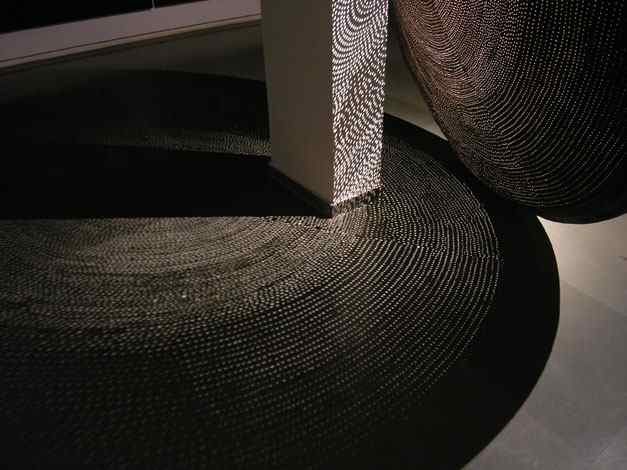
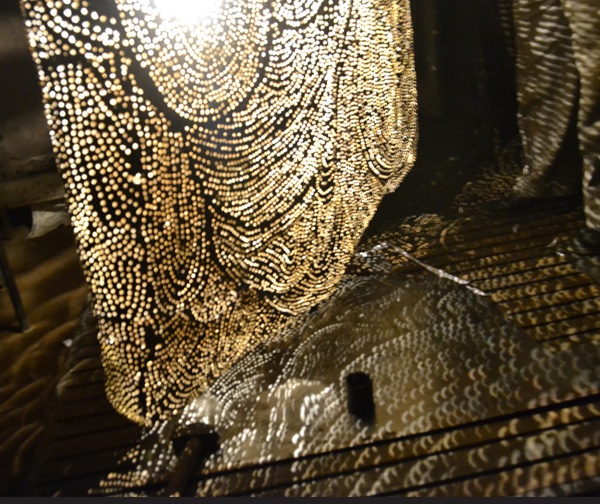
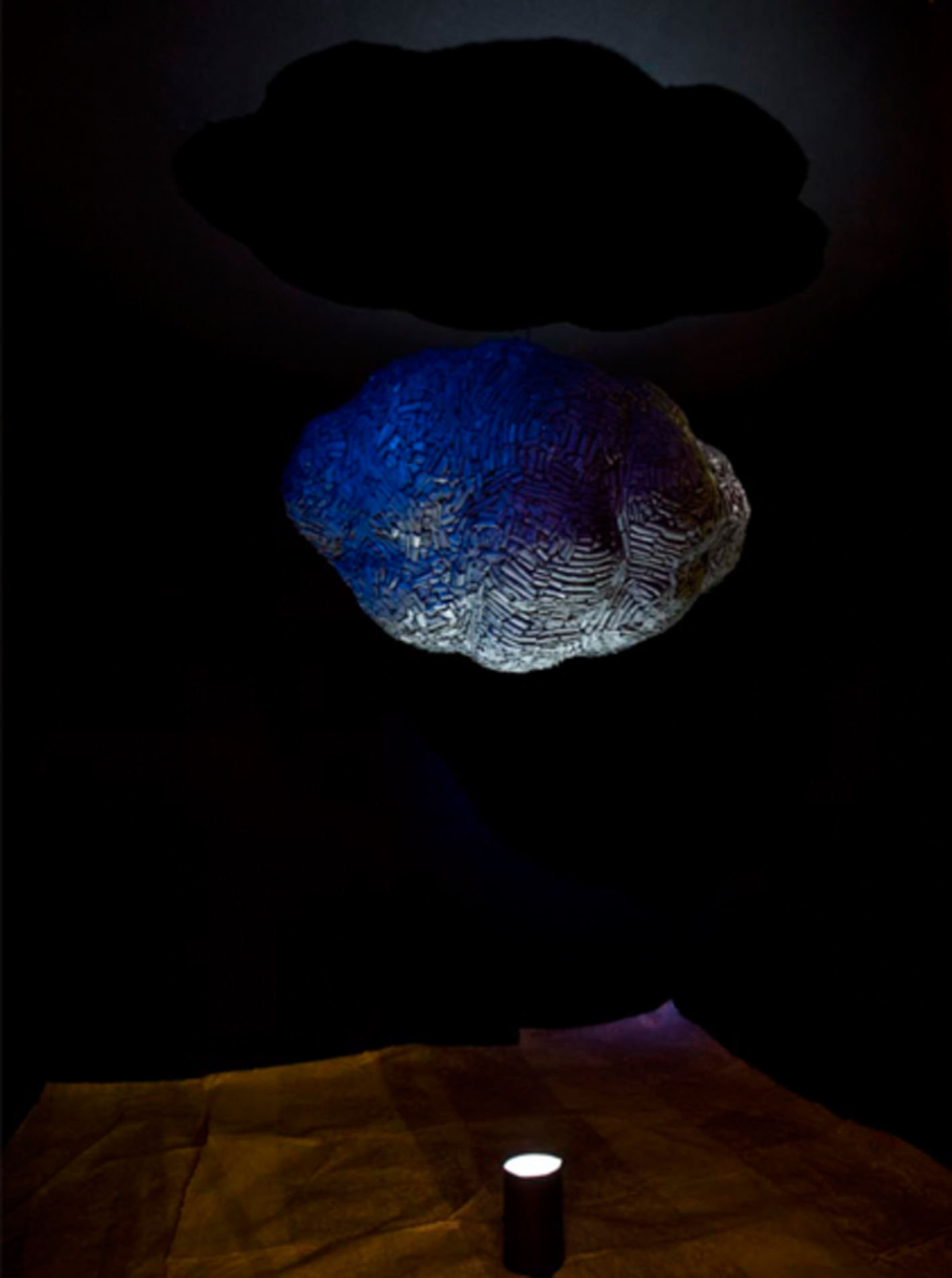
The hotel has a major art collection throughout the public areas (interior and exteriors!) commissioned from some of the most famous artists in India. The development of these art pieces happened parallel to our architectural design and while we had some prelminary ideas and provision for the lighting of the art based on reference photo’s only, now that most of the art is installed lighting has to follow put. Small little detail, the final art pieces are in many cases different in final shape, form and configuration some even in different locations. So basically all our initial provisions are sort of out the window. I am not talking about your average wall painting or typical art object mind you, these are major commissoned art pieces some strecthing over several stories
and modelled in 3D shapes. Good lighting can only be achieved by on the spot visual trials!
Where reality bites is that all comes at a costs. Talking to the artists today who’s heads are mostly in the clouds, their suggestions and their ideas for the lighting all sound fantastic, but the reality is that the hotel is more or less completed, certainly all the fit out and finishes, the spare power provisions are minimal, meaning that besides the actual costs of the suggested artwork lighting, the infrastructural costs of implementing it (basically as an add-on) will be prohibitive. We will have to find solutions that are realistically feasible, certainly with the client having limited funds or some how find some new funds! Reality bites, what a shame, but at the same time, what a challenge! I have my work cut out for the coming days!
In Light Watch today see some of the reference artworks and the lighting we are trying to achieve…
Light Watch 175: The reference art works
Plan B; How to define quality?
Singapore 30th September 2011
Last day of September already, time for the typical end of the month administration, salaries, bills, invoicing…as long as the positives (invoices to clients) are superior to the negatives (overheads) we are in good shape. A wise friend of mine once said: “Your overheads are guaranteed, but your income is not….”, hence we have to be always vigilant about our cash flow. Easier said then done!
My introspection for today is quality. I come to this subject through some catalogues handed to us from local suppliers full of “unknown” brands, some manufactured in China, Asia but quite some also in Europe, like Italy and Spain. The thing they have in common is that they are cheap. But interestingly some seem to be of fairly acceptable quality! I generally call them my “plan B” fittings, alternative lighting systems that are not as fancy as the high end stuff we tend to specify but good enough in quality and resulting lighting effects to be specified when budgets do not allow the A-grade type of fittings.
My biggest challenge is where to draw the line between what is still acceptable in quality and what not. Quality in the widest sense of the word, including performance, maintenance and other operational quality criteria. Many of these “unknown” brands are actually OEM companies for the big boys, so chances are that you get a similar quality fitting for half the price. Unfortunately we do not always know and there are also a lot of dodgy manufacturers in the market that are riding the fast train of LED. I generally pay not too much attention to these “unknowns” like they are wannabees that also want to profit from the LED craze, but lately with budgets really under fire in many projects, it is worth examining some of these companies more closely. It however requires from us good knowledge of the quality criteria that can make a break the performance and durability of the light fitting in question…
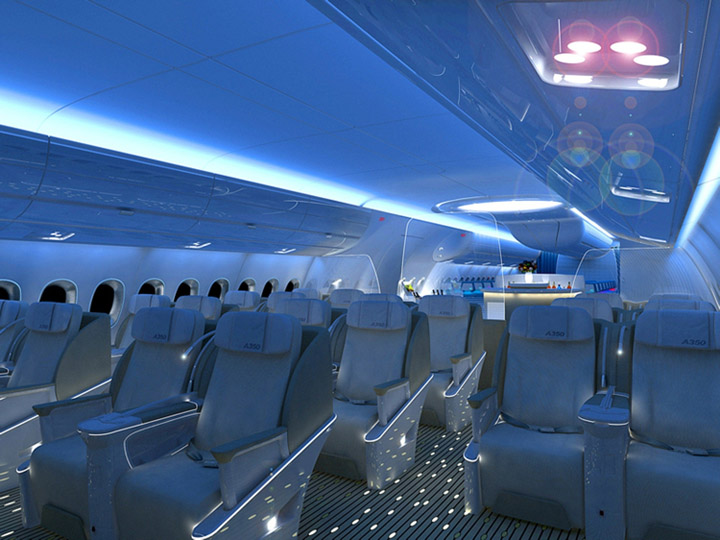
IIn Light Watch today a look at how LED is finding its way in floor coverings and carpets! One of the latest products amongst others applied in Boeing’s new Dreamliner jet has the LEDs
integrated in the carpet! What light fitting specification?…its just a carpet!
Have a great weekend 🙂
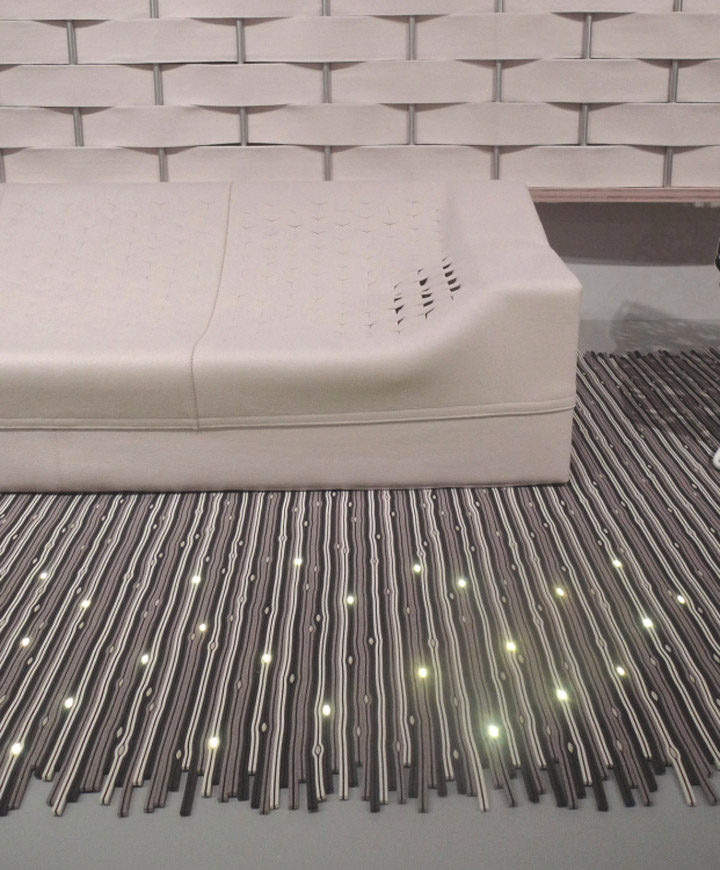
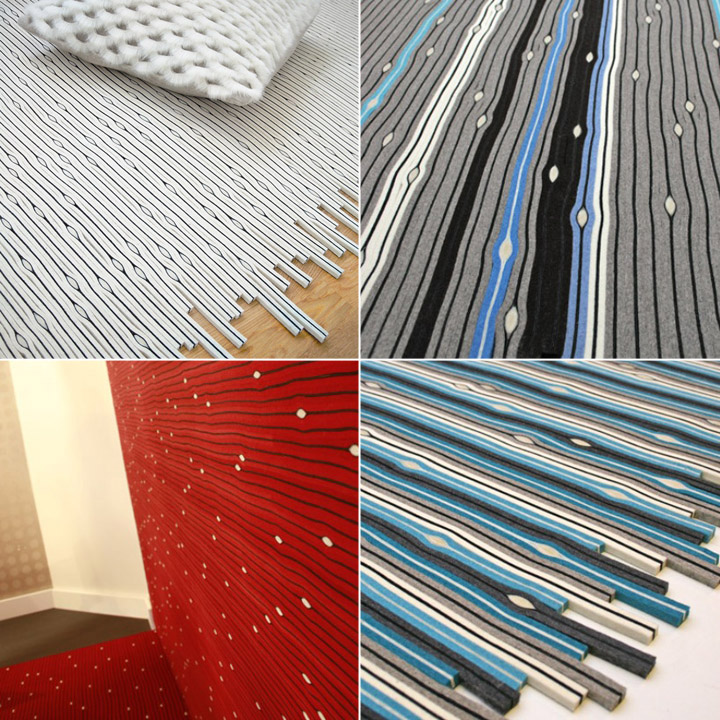
Light Watch 174: LED carpets!
Another (LED) bites the dust…
Singapore 29th September 2011
Some more developments on my experiences with the Philips 10W LED Master lamp. I have blogged previously about the temperature issues and the fact that the lamp has a mechincal fan inside to assist with the cooling of the lamp. We had already established that fan failure was the probabe cause, today I received some further information from the factory on what may have caused the fan failure after several lamps were disected, a sort of post mortum autopsy.
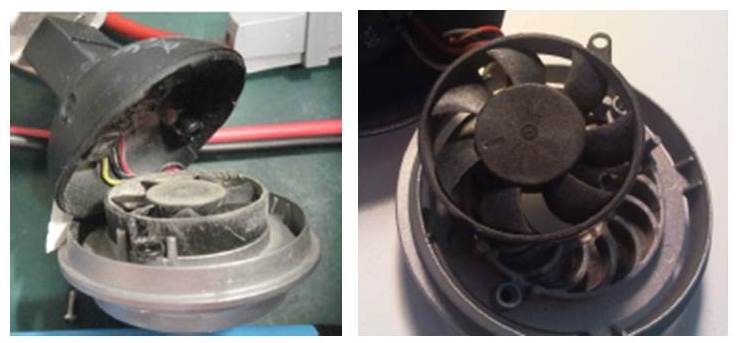
The engineers discovered an exessive amount of dust inside the lamp that had gradually settled on the fan and as such hampered its functioning. I have yet to receive the full report but it seems that possibly during the fit out before opening contractors at work in the areas that already had the lamps installed created considerable dust that found its way inside the
lamp. There was indeed a lot of (timber) floor sanding going on in the weeks before handing over and that may have been the cause. The lamp is designed with open slots around the front part of the lamp to allow additional aircirculation to help with the cooling. With hot air generally rising, dust from works on the floor could have easily found its way inside the lamp. It is unlikely that dust would have entered the lamp from the ceiling considering the lamp is closed at the back.
This is an interesting finding that I herewith share for the greater good and understanding for those planning to use LED MR16 retrofit lamps, certainly those using mechanical fans and with openings at the front. It is partly understandable that this issue may not have surfaced before (as is being claimed) as most retrofits are as the name says… retrofits in existing
installations. In our case we used retrofit lamps in conventional (new) downlights mostly driven by budget as conventional downlights with retrofit LEDs are still considerably cheaper then new technology LED downlight systems. The downlights were installed at an early stage and a lot of interior fit-out finishing (like sanding) happened afterwards.
A lesson learned. My thanks to Philips for their professional approach and support in helping find the cause of our problems. I am confident that we have herewith found the origin of our problems and after replacing the defective lamps the client can now fully enjoy its first fully sustainable restaurant.
IIn Light Watch today pictures from the restaurant now, hard to imagine that lamps could be so dirty. I add a picture courtesy of Philips showing the “dusty” lamp and fan as disected after just 3 months operation, compared with a lamp that has been operated “normally” (without dust) for more than a year.
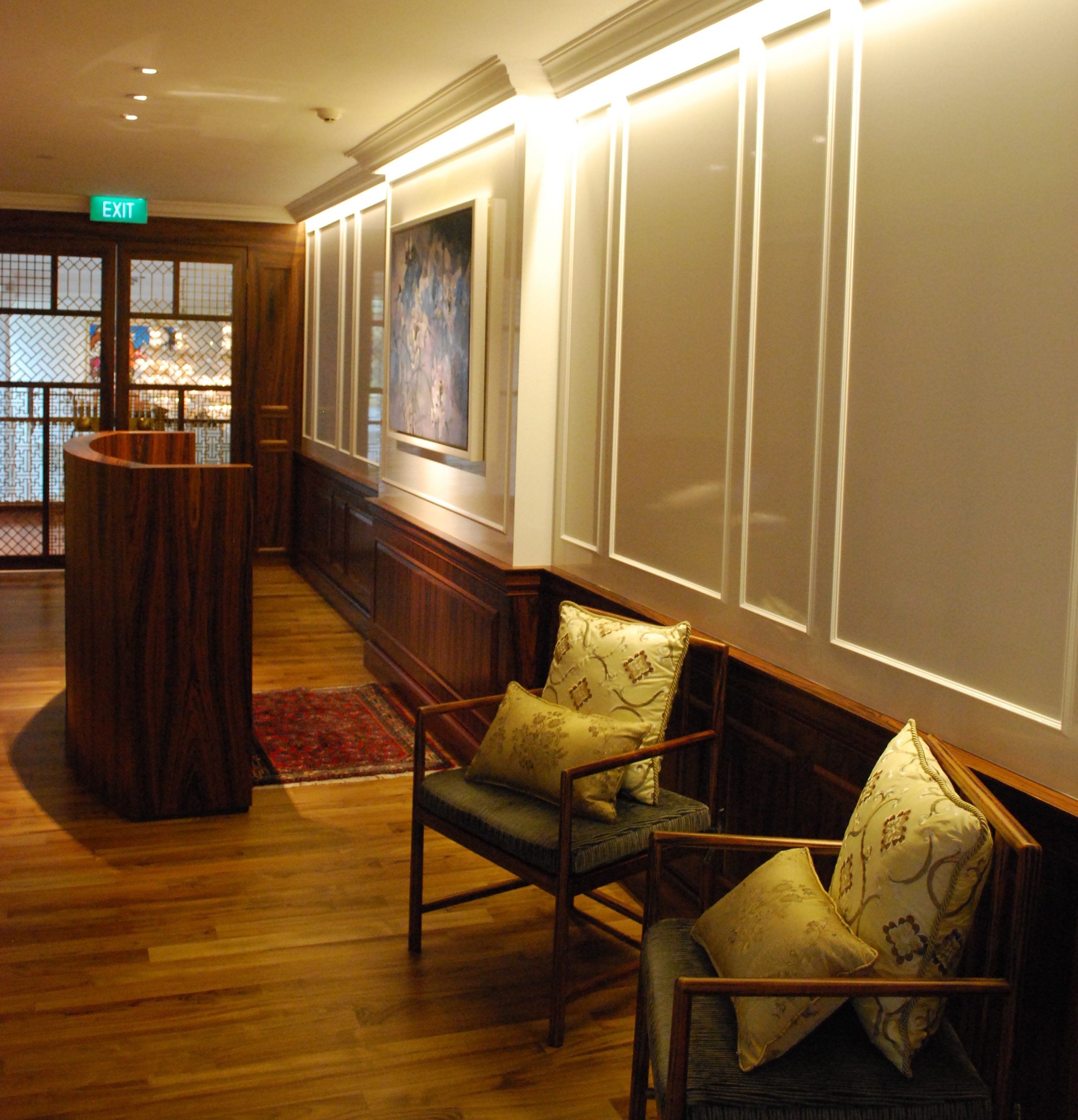
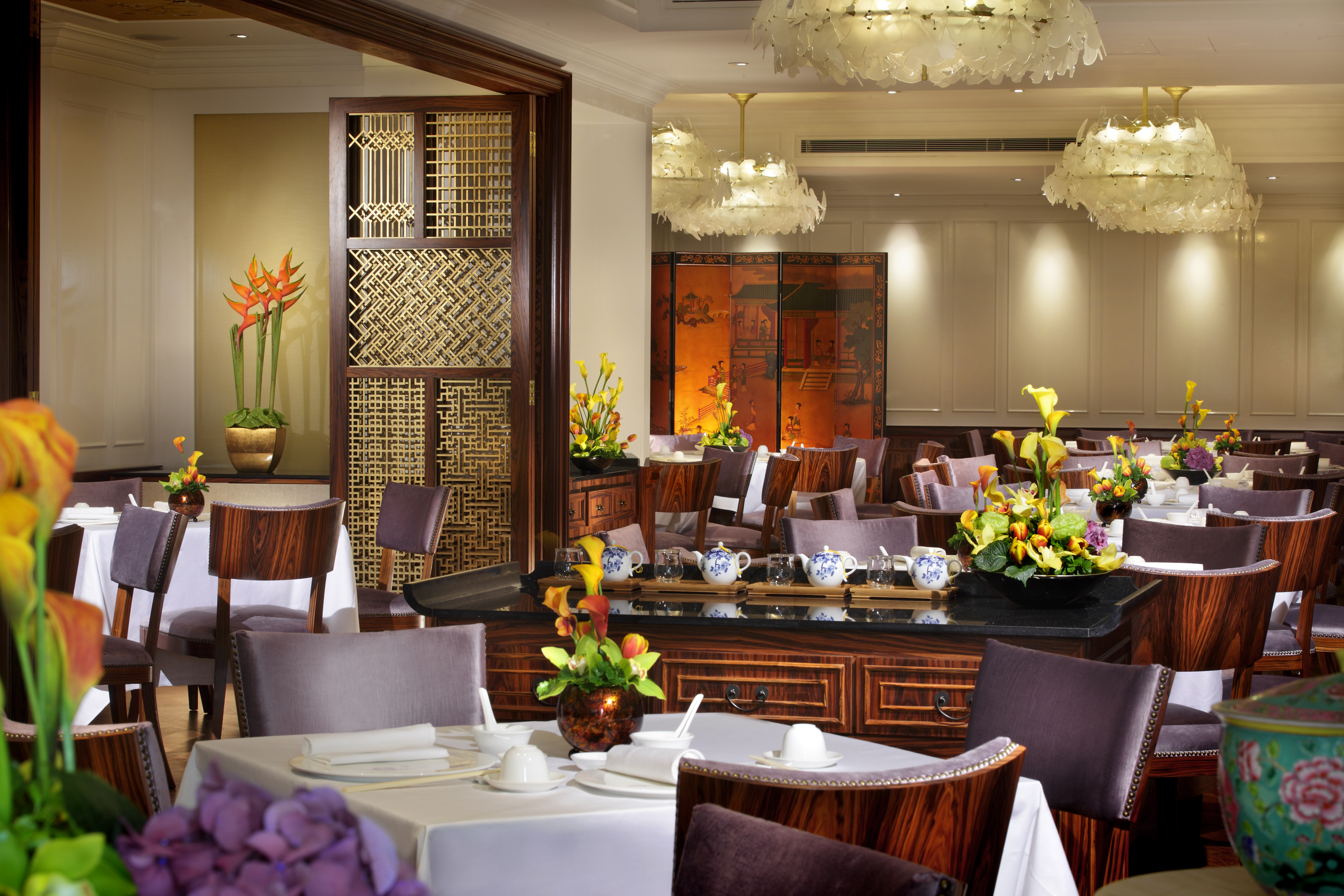
Light Watch 173: Man Fu Yan Restaurant, Singapore and the “dusty” LED lamps
E=Mc2
Singapore 28th September 2011
Now here is some interesting news from earlier this week. Scientists at CERN, Europe’s Centre for Nuclear Research, have managed to clock a minuscule sub atomic particle going faster than the speed of light! What? Until now the speed of light has always been believed to be the fastest speed obtainable in our universe, courtesy of Albert Einstein’s theory of relativity. The particle, called a “neutrino”, was measured going 60 nano seconds faster then the official speed of light (defined at 299,792 km/sec). And listen to this, the margin for error is stated at only + or – 10 nanoseconds…Understandably many purists point to a probable measuring fault, but apparently the result was confirmed through multiple tests, checking and re-checking. In most science fiction the assumption is if one can travel faster then the speed of light time travel would be possible(!)
I am not sure of the implications, but it maybe the start of a big thing! Right now it is just a marginal increase, but as so often with
records, once a seemingly unbreakable barrier has been broken somehow the floodgates open…in the future Einstein may be regarded in the same way we look back at scientists of the middle ages who claimed the earth was in the centre of the Universe, that the Earth was flat, and so on.
Imagine we could travel back in time in our profession as lighting designers, we could simply go back and rectify problems and mistakes in the lighting design and installation process, avoid or correct unsuccesful lighting concepts (not everything always works !), most of all with the “hindsight” knowledge we could go back to make our fee proposals just “right”. A bit like knowing the outcome of the Lotto…Or what about going to a meeting in time travel mode, back before you even left! If we can transmit signals faster then the speed of light could we save energy by switching of light so fast that lights would still be emitting eventhough it is already switched off?
I leave you all to ponder on the many things that time travel and transmissions faster then the speed of light could bring in our lifes… 🙂
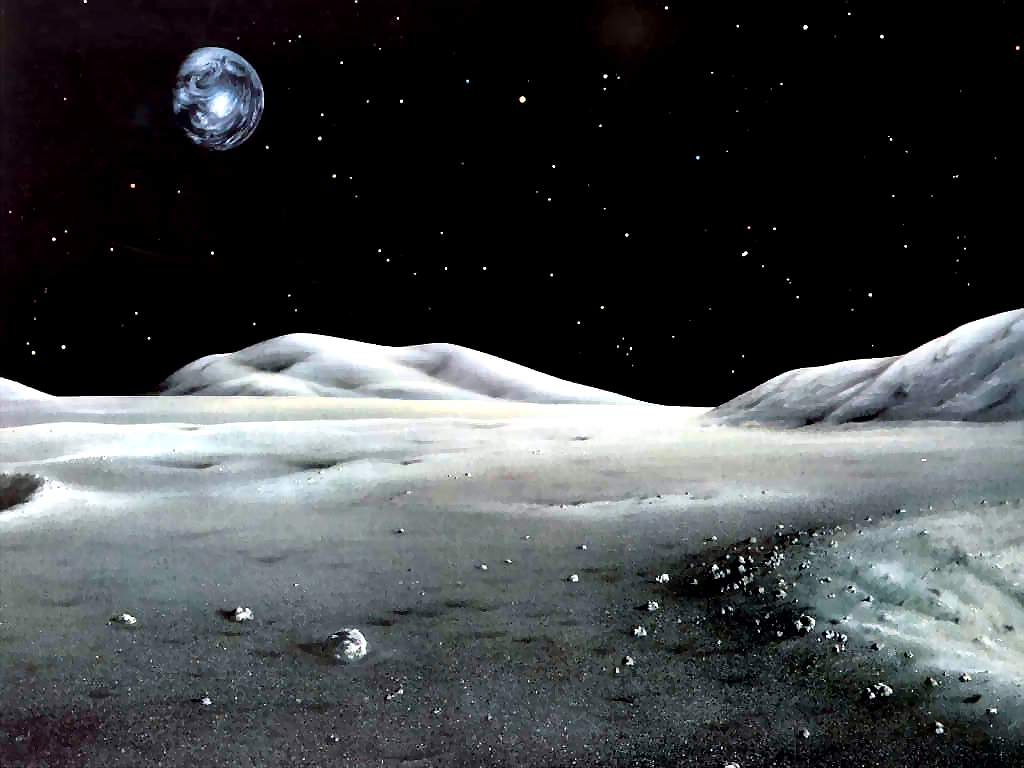
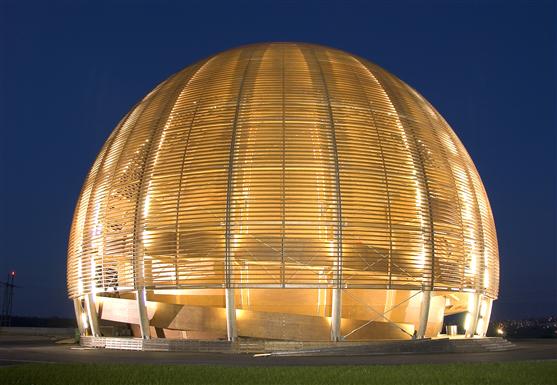
In Light Watch today some pictures from places where we Earthlings from this day and time will probably never go, views from the Moon and Mars. As well as a pic from the CERN globe building in Geneva.

Light Watch 172: Across the universe…
The art of lighting
Singapore 27th September 2011
Let’s take a break from LED’s for a change and talk about something else. With the I-Light Marina Bay 2012 art festival on the cards next year, expressions of interest have been sent out for artists to submit entries. I am keen to particiapte again and have a few arrows on my bow for my submission. Today I happened to meet with a passionate lighting designer with his background in stage and production lighting, which reminded that lighting is really an art form.
While I am scholed mostly in architectural lighting I have had my bit of experience in stage lighting, community theatre as well as set ups of larger installations for theatres, ballrooms and performance spaces. With todays lighting technology (sorry, yes LED’s again!) fast developping we find the lighting equipment for stage and architectural lighting slowly merging into similar systems and as a result the lighting techniques and effects. Lighting design techniques applied on stage are now finding their way into commercial archtectural applications and vice versa. The profession of lighting designer is moving that way as well.
Anecdotedly, my first lighting design for a play was sort of a disaster as I had mainly focussed on getting the set beautifully lit (like I would do in architecture) rather then exploring and reinforcing the expressions and emotions carried by the actors. The world is our stage is often said and I believe that more and more this is litterally becoming a reality. While much architectural lighting design is functional by defintion (form and function), the human factor is slowly but surely becoming integral to any design. Well
being, emotion, expression, comfort, mood, are some of the human elements that now have to be considered and I would like to venture that integrating the theatre lighting approach is becoming a must in the lighting design of any architectural spaces…
In Light Watch today one of the longest running musicals in Singapore at the moment; The Lion King. I have to confess I did not yet manage to go see it but it is on my to do list. Still running for another month! I specifically will be watching out for the way lighting has been applied to bring out mood, ambiance and emotional expressions…



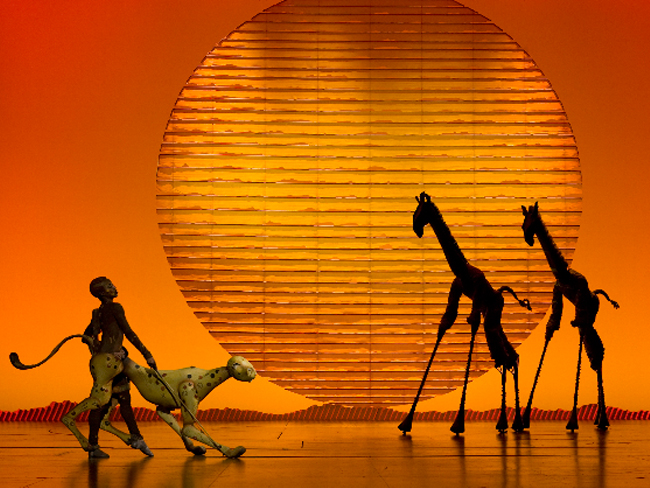
Light Watch 171: The Lion King
I feel the temperature rising
Singapore 26th September 2011
Back to LED again…the last few weeks I have been investigating LED (specifically the retrofit types, not so much the light engines) in depth to understand the limitations they have and the characteristics we need to look out for to achieve a successful installation. Today was another such day incorporating discussions with yet another lamp manufacturer. Note I say lamp (=light source) manufacturer, not fitting manufacturer, people who manufacture all core system components including lamp and all other essential elements such as driver and controls. Manufacturers have a tendency to put forward all the positive features of their lamps (conveniently) leaving out the potential negative site effects.
Today’s discussions centred mostly around the heat issues faced with LED’s, specifically after we discovered the problems with the Philips 10W Master LED recently. Now here is the deal…LED’s most critical point is the heat dissipated at junction point between LED and the circuit plate it is mounted on. Apparently it can get pretty hot up there (around 120 degr C I am told). The better the cooling the better the lamp works, so hence all these funky and ingenious heatsink designs we see apearing by various manufacturers. Philips went to the extent to built in a mini mechanical fan inside (!) the lamp to allow the lamp to be as compact as possible. A mechanical component in an electronic system? Seems like asking for trouble! What worries me most is that a 10 degr temperature increase can apparently cause a decrease in life of up to 50%! Really? So how do we control the heat dissipation in there? In the tropics it is hot and humid but at least the ambient temperature is reasonably constant. But Down Under we have day-night time temperature differences of more then 20 degrees on a day! Imagine the heat build up under tin-shed roofs…how is that going to work (or being controlled?). How do we define the acceptable light fittings for LED retrofit, as obviously enclosed types do not seem to be suitable.
The other issue relates to the compatibility between transformer and LED lamp. The transformer has wave curves, while LED has block shaped wave profiles. That obvioulsy does not match very well. No wonder there are so many non compatible transformers (!)…another subject for another day 🙂
In Light Watch today some pics of key players; Philips and Osram. I have added another (new kid on the block) player; Ecogreen which is a company that boosts ex-Philips and Osram engineers. Interesting to see how the products take shape…

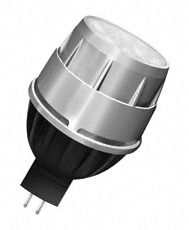
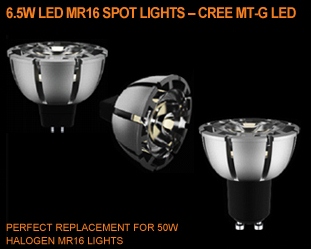
Light Watch 170: MR16 retrofits
Pacing yourself
Singapore 23-24th September 2011
A weekend edition for a change! One of the few things that I have told myself is to pace my life. It is often a “rat” race to survive and keep the company going but to slow down and take time out and enjoy more quality personal life has become increasingly important. There is life besides work only. It turned out late on Friday, one of the local suppliers threw a party at the occasion of
the opening of his new showroom and warehouse, always nice to catch up with colleagues and friends in the business and show support to the local lighting market. But as a result I did not have the pufff to write my blog. Hence the weekend edition 🙂
Pace is the key word for this weekend for two reasons; First pacing yourself is key to survival not only in the lighting design business but in any business is my belief. We have a Dutch saying: “hard lopers zijn dood lopers” which I believe translates as “runners are runners dead”. We are in for the long run, not just short term succes, at least I am not. Lighting design is my passion so I wish to be able to that for still many years to come! There are always new kids on the blog that start “running” like mad but I have learned that succes comes with a balanced life and most of all health! Hence the importance of pace. This links in with the second reason as this weekend sees the worlds only Formula 1 night race taking place here in Singapore. I was witness to the very first start in 2008 and will make sure I catch part of the action tomorrow night. I guess this is the ultimate expression of pace…it does not come much faster and intense then for a person racing in F1. From the drivers we hear that the classify this race as one of the toughest on the race calendar, not in the least because of the street circuit with his many turns, bumby track and high
humidity and heat. It should be a good race.
In Light Watch today some mood pictures of the F1 circus on the go at Marina Bay. Besides the actual race there are many other activities going on like rock concerts (Boy George, Shakira, Linkin Park) right on and around the circuit. All at night under the magic of light.
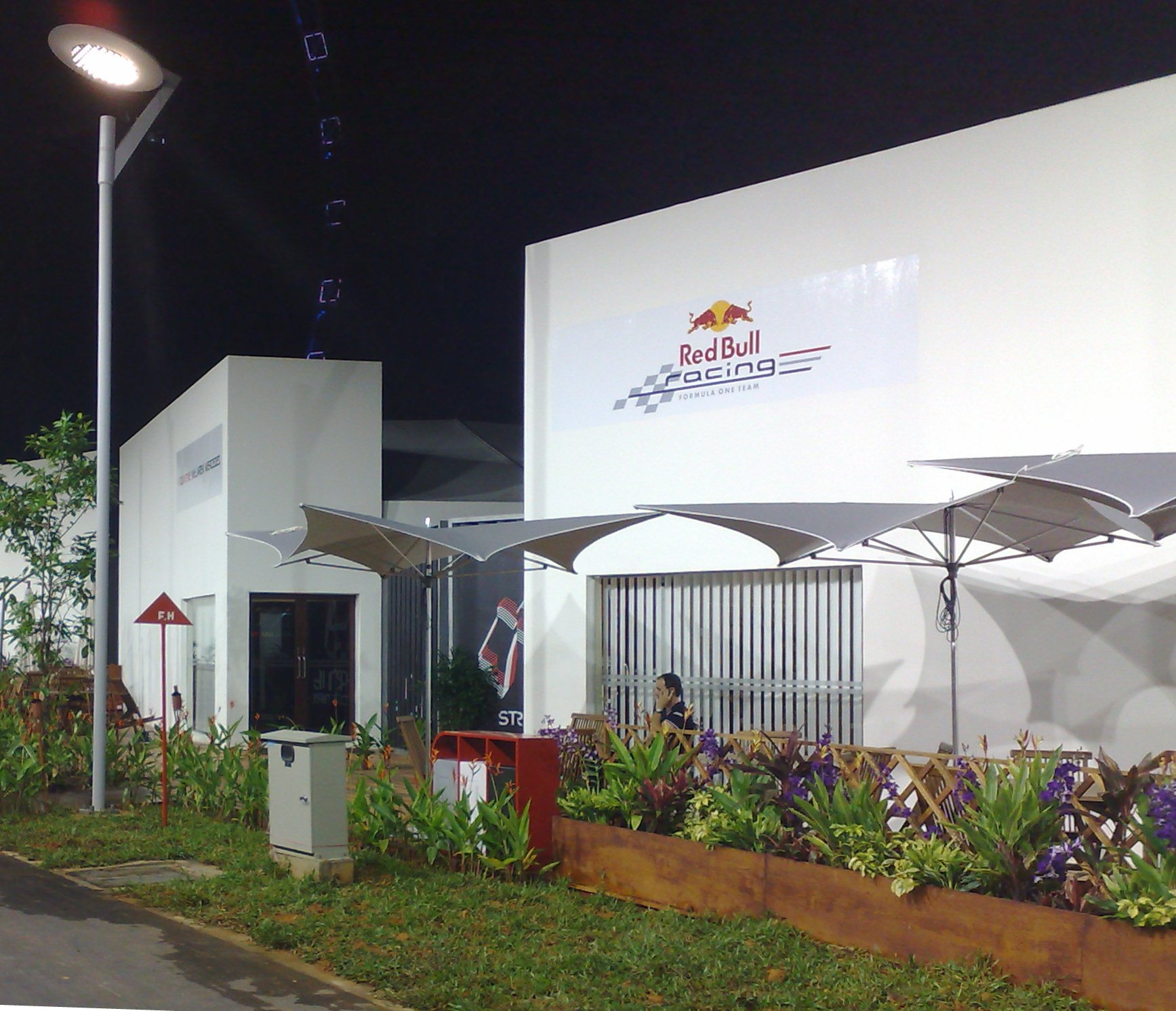
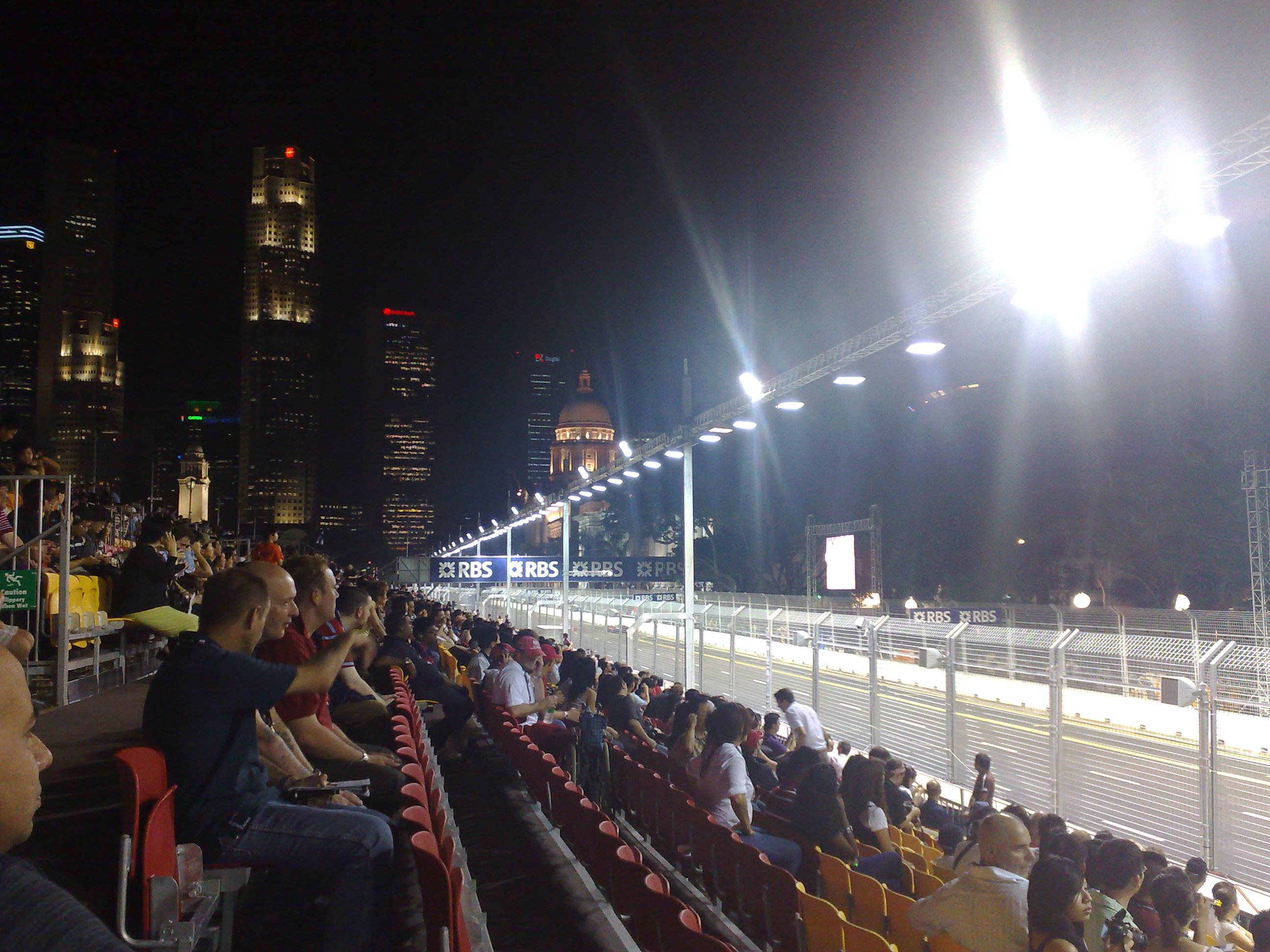
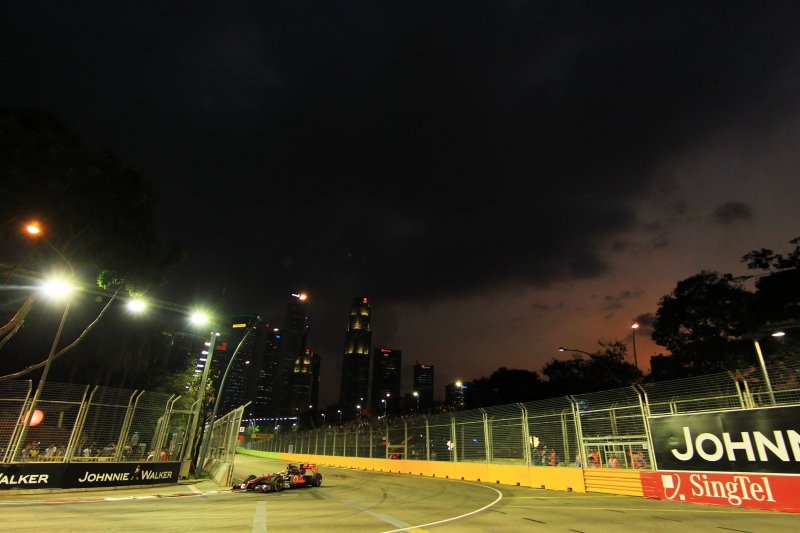
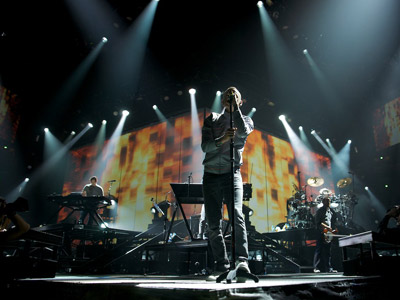
Light Watch 168: images F1 Singapore
The name of my dog…
Singapore 22nd September 2011
One of the most tedious processes is to respond to government tenders. Some one must have too much time on their hands in these departments as the amount of paperwork they sent out for you to study and reply to are scary to say the least. Some information that is being requested is so detailed that you wonder what they need it for. As I was going through the project write up, the submission demands and related questionaires so detailed I was prepared to find a question about what the name of my dog is. Not that I have one, but you know what I mean. All in the name of so called being able to evaluate the submissions
based on all these background “character” assessments. Sometimes I suspect it is pure curiousity using the tender to extract private and confidential information. I guess this can also be used as a reason to disqualify you if they “don’t like you”!…Hey! You did not specify the name of your dog, sorry disqualified!
I am exagerating but the amount of information to be provided is so intens that it will take more than a day to put it all together. There are a couple of tricky demands were they ask you to specify your fee per stage of work but at the same time elsewhere they ask you to provide a manpower chart for the duration of the project. In other words they can cross check your fee portions against the manpower proposed, so you need to balance this pretty sharply to avoid being caught out on price or manpower demands. Some stages are also presented as optional allowing the client to cut these out at later stages without major legal implications…
When I get these kind of tenders to respond to I am thorn between responding and just letting it go, just for the shear amount of work it represents and the relative chance of being successful in the process. But in this case we are asked as part of a larger consultants consortium with people we have worked with before and count on us to be part of the team so I guess we’ll do it…if only I had a dog and knew his name… 🙂
In Light Watch today a preview of Singapore’s Sports Hub, one of those gimongus government projects that are currently on the way. We did team up with one of the consortiums at the time but were not part of the winning team….

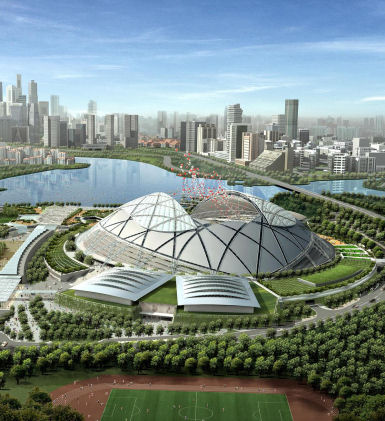
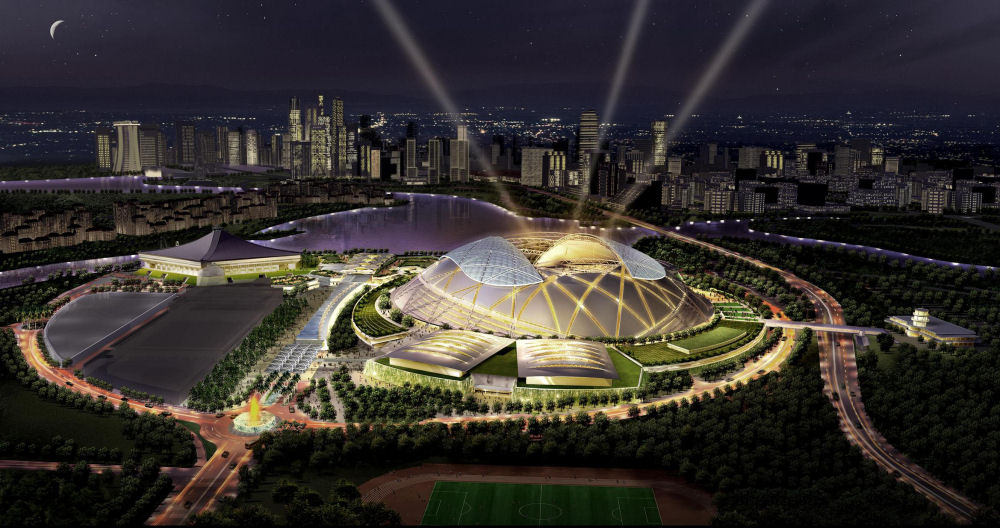
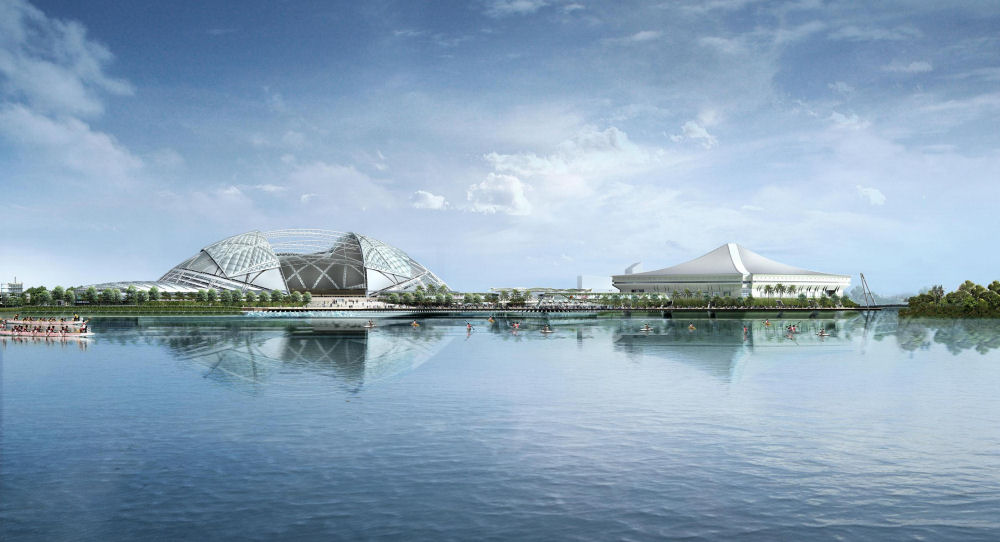
Light Watch 168: Singapore Sports Hub
LED and overheating
Singapore 21st September 2011
Learning something new about LED’s every day it seems! While it is nice from public relations point of view to have a 100% LED project with a short ROI (Return on Investment), we keep having little problems with the place in full operation for a couple of months now. First we had some humming issues in the decorative pendants, now we have some of the LED down lights flickering and going on and off impromptu without any clear indication why…
I have to state that we did our due diligence before specifying the down lights, LED source and dimming system. Considering we are using the latest 10W Philips MR16 Master LED, we had the luminaire manufacturer test the combination of LED lamp, transformer and luminaire before confirming the specifications to make sure it was all working well together. We then had the whole system tested (including the recommended transformer) with the proposed dimming system. All came back positive so we went ahead with the installation. Now after a few months operation we start having some issues with LED down lights flickering and going on-off.
We investigated the situation and narrowed down the probable causes. As not all LED donwlights in the same circuit are affected with the “symptoms, we can say that the dimmer is not at fault. This narrowed down the probable causes to either the lamp itself (it is a new lamp), the way it is connected in the lamp holder or the transformer. However after talking to Philips a new possiblity came up…over heating! The LED lamps have a built in “thermostat” regulating the lamp if it gets too hot. Philips is now saying this affects the lamp performance and issues like flickering or going off can occur. Apparently this seems to happen a frequently in new installations but was not brought up during testing by Philips. It seems now a consistent issue with these lamps…Tomorrow we we will meet to see if indeed this could be the fault causing our flickering and going off problems…
In Light Watch today some mega LED lighting point installations realised (mostly by artists Leo Villareal, Erwin Redl, Jenny Holtzer) to contrast with the relative simple issue I am facing with just a few down lights. Imagine having to fault find in installation with more than 40,000 point like the underground tunnel from Villareal. Pictures from Google.
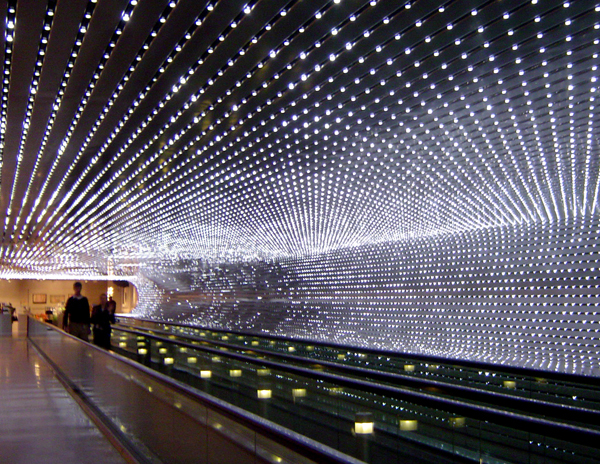
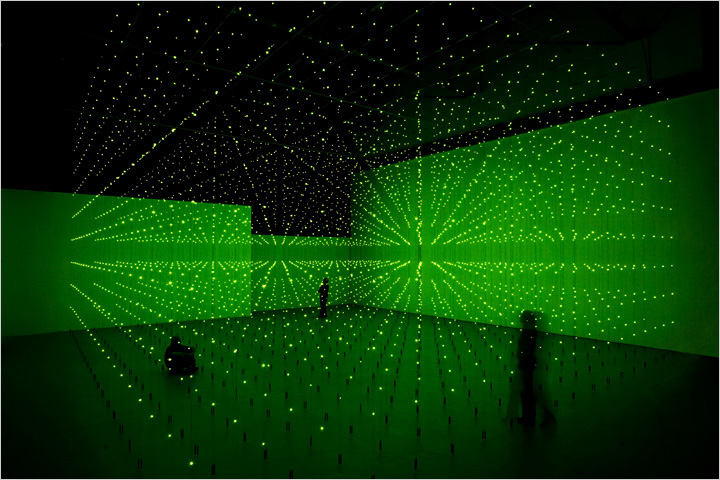
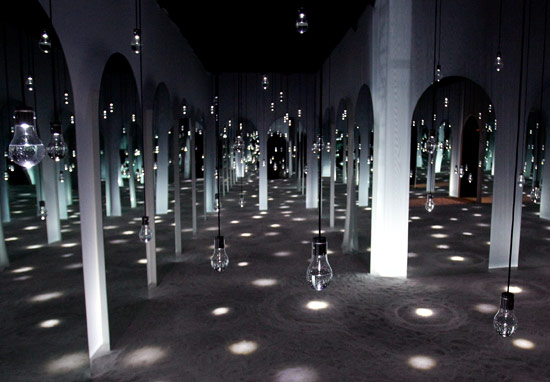
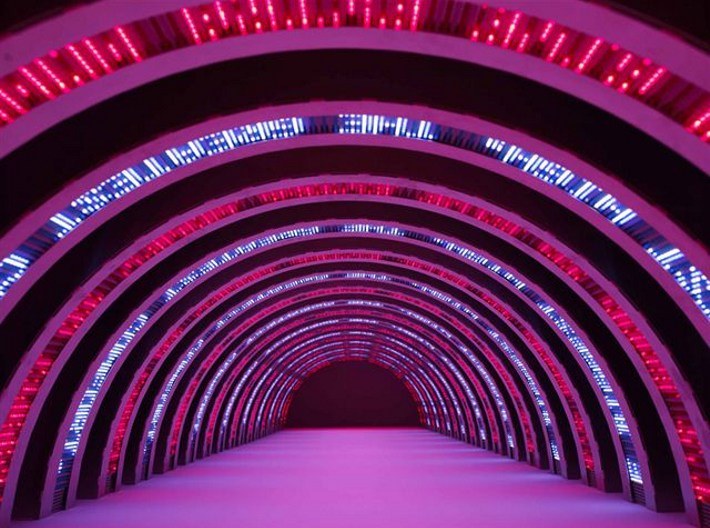
Light Watch 167: LED installations from Leo Villareal, Erwin Redl, Toshiba and Jenny Holtzer
 The long awaited book compilation of Martin's first year of blogging is available. Order now.
 Feedspot Top 100 Lighting Blogs