
Expert opinion
Singapore, 22nd March 2011
As lighting designers we are still are rare breed of people. The profession is still very young and the lighting designers associations like PLDA and IALD have the establishment and acceptance of our profession as one of their key goals. Joachim Ritter, a founder member of the PLDA, said last week: ”You know when your profession is being accepted by the professional market when you are able to get a professional liability insurance”…I thought that was a pretty interesting observation. We still have a long way to go in regards to the general public but we are slowly but surely getting there.
Another sign of our profession being accepted is when you are being asked to provide expert opinion or certifications as this also establishes you as an expert and professional in the field. I have been involved in both of these recently. Just a month ago I was asked to check out a suppliers bid for a lighting installation and the client wanted to assure himself that the proposed lighting installation was compliant to all applicable local lighting standards. The fact that their client wanted to have an independent expert opinion to certify that their installation was compliant was to me a clear sign that professional lighting designers like myself have gained real prominence. The supplier won the bid!
In another case last year a fatal accident happened on a 24 hour work site in the middle of the night. A worker fell to his death from a working platform and it was suspected that poor or inadequate lighting may have been a cause. To ascertain this we were commissioned by the owning company to investigate the accident site…a bit like CSI. They had left the scene untouched and reproduced the exact same lighting conditions as at the time of the accident. We indeed found the lighting to be wanting and could point out several potential lighting factors that could have contributed. We compiled a confidential report that we had to submit to the company’s lawyers and signed a confidentiality agreement not to disclose our findings. Our role in this incident was another proof that our profession is slowly being accepted as being professional.
In Light Watch today a place totally unrelated…other than that probably many professionals meet there for a drink and a bite. I had dinner in the court yards of Chijmes with its lovely setting against the backdrop of a heritage church.
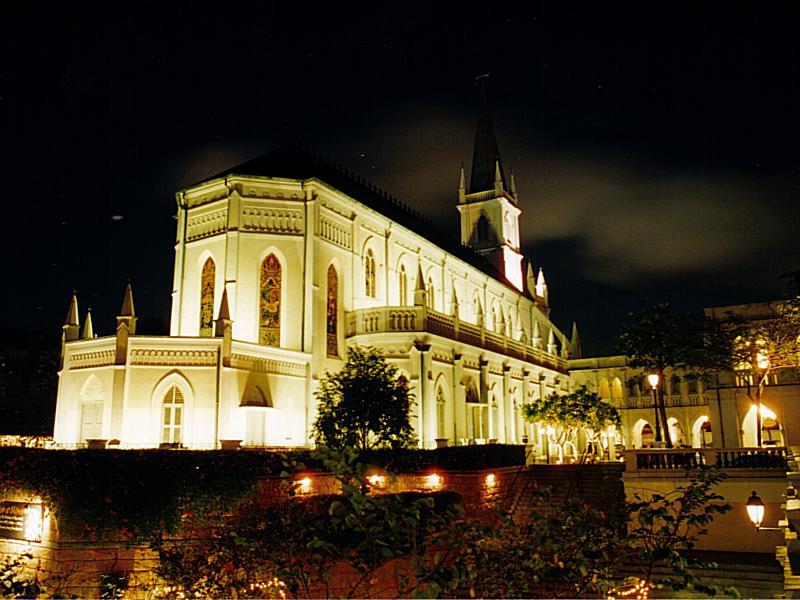
Light Watch 56: Chijmes Singapore
The art of learning
Singapore, 21st March 2011
It was nice to catch up with some colleagues in the lighting business during last weeks’ Lights in Goa event. I always enjoy listening to other colleagues and during the seminar sessions in Goa it was much the same. Even after having been in the lighting industry for so many years, I still learn. You always do. But learning, improving yourself and keeping on growing is an art. Too many people after reaching a certain level of knowledge (and status) stop growing. Complacency sets in and gradually they get disconnected with the real world. My point is that we should be on a journey to learn and grow continuously. Anyhow that is one of my beliefs in life…
So attending keynote presentations from expert colleagues such as Kaoru Mende, Paul Traynor, Roger Narboni and Steven Rosen was for me very motivating and simulating. I always find new points of view, other angles of approach, new ideas and solutions to our everyday lighting design challenges. Most of all the mix of cultures (East meets West) allows us to experience the global progress of technology against the backdrop of local and socio-cultural interpretations. As Roger highlighted in his presentation in the Chinese culture for instance the colours red and white have different meanings and associations compared to what they mean in the West. So when we use the latest (global) LED technology to create colour washes in our projects we need to understand these meanings and associations in relation to the local cultural backgrounds and make sure our design makes sense not only on a global scale but particularly on a local scale.
An interesting part of learning is sharing. I am also a regularly invited speaker at lighting events or at training courses and found that sharing my expertise is also a great platform to learn. Why? Because by sharing your expertise you trigger questions and sometimes they totally come out of left field and allow you to look at lighting from a totally different (and unexpected) angle. And let’s not forget we also learn from our mistakes…or at least we should 🙂
In Light Watch today just a reminder of some of common mistakes in lighting design such as unintended (reflected) glare, unintended scalloping of light on walls, silhouetting (too much contrasting daylight) or…
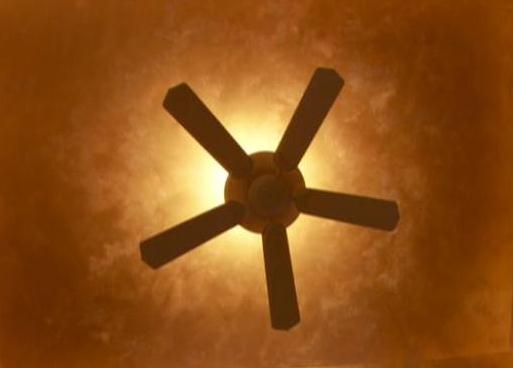
Light Watch 55: the stroboscopic effect of light caused by a ceiling fan…
Lights in Goa 2
Goa, 18th March 2011
Not much words today…after a long day of interesting seminars yesterday I went to tour the workshop installation where many teams were still working overtime to get it ready for today’s official inauguration. With today’s program also I am not sure whether I will manage to get back online so here are some preview pics of the seminar and workshop activities as part of Light Watch today.
PS: The pics were taken with my Iphone, so appologies for the quality… 🙂
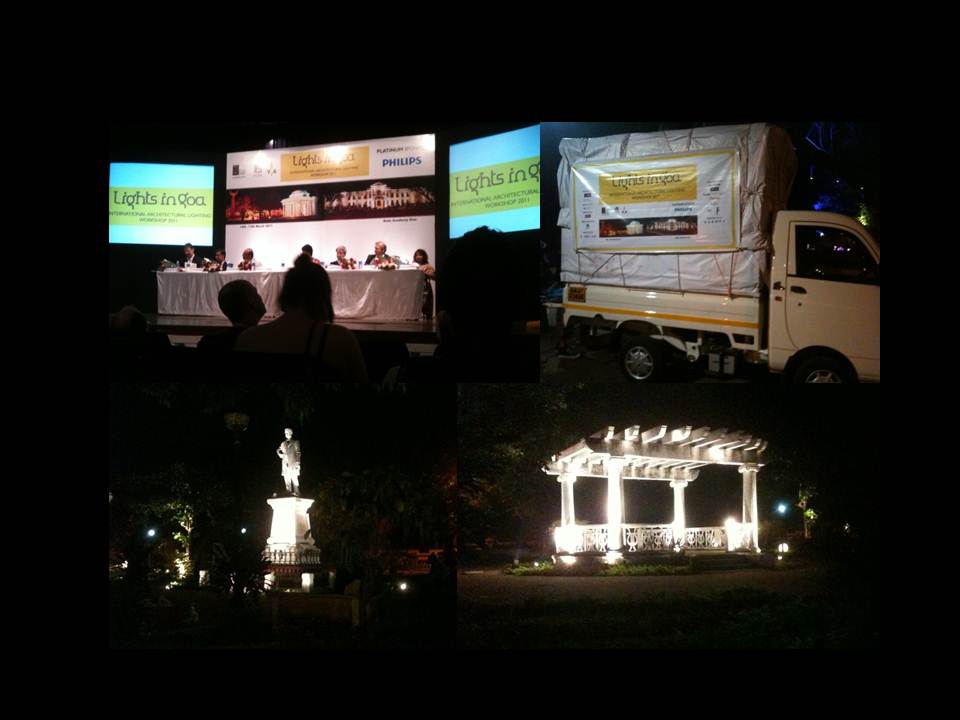
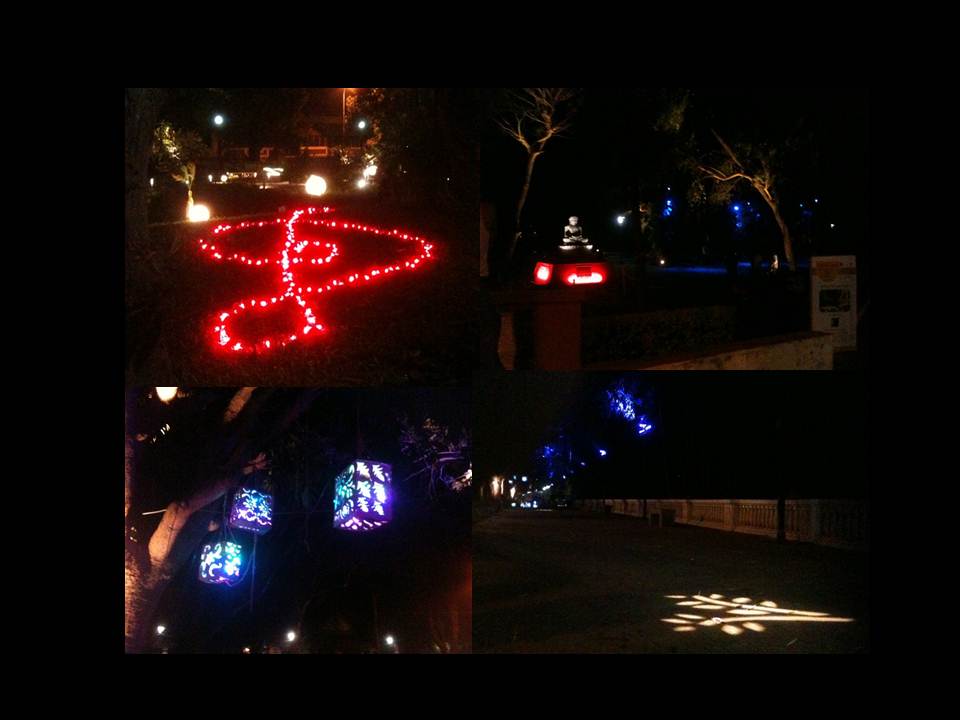
Light Watch 54: Lights in Goa – street installations 2011
Lights in Goa 1
Goa, 17th March 2011
These two days I am attending the lighting seminars which are part of the Lights in Goa event with some very interesting speakers and subjects lined up. Key note speaker was Karu Mende who has well earned his place in our lighting industry. From his presentation I noted a few interesting thoughts, most of which I personally subscribe to as well in my practice. While the theme of the seminar is about activating public spaces with lighting, Karu had a number of general key thoughts for the audience. His first was about that we are too fat when it comes to lighting and we should be doing “lighting dieting”. He refers of course to the overuse in lighting at a time where we should be considerate with our resources and closely related to this that we should really put quality over quantity…
One of the aspects that I really subscribe to is that we are at risk of globalisation and that as a result we are losing out on local culture. It is therefore important to research and preserve local culture as part of our lighting design where possible and with that create a local identity for the project rather then create a design that could be anywhere in the world. Originality is the key rather than imitation or reproduction…something easier said than done in a part world that has a reputation for copying things! Having said that not everything lends itself for local interpretation and there are many cases where internationalisation has its place in lighting projects. Let’s not forget that the lighting technology is global! Handle and apply with care and thought is the message.
Key to the promotion of our lighting design profession is education and with that not necessarily to students but most of all the education of clients. All of us face this continuously and it remains a challenging but rewarding thing to do and include as an integral part of our “services”.
There were many other interesting speakers and subjects but I would like to leave with some thoughts from Paul Trainor who brought up one of the key drivers that we all as lighting designers (should) subscribe to; we design for people not for lux meters. However the caution is that we may not always understand or identify with the people that will use the spaces that we design the lighting for as we all have different back ground and experiences…..
In Light Watch today tribute t the lighting workshops as are now being prepared in Goa. I dnt have pictures et hence tonight pictures from Alingsas in Sweden where this concept first started. More tomorrow!
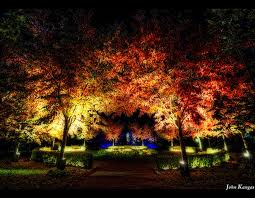
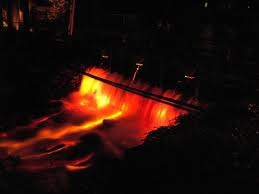
Light Watch 53: Lights in Alingsas
Being on the ground
Goa, 16th March 2011
Being “on the ground” is crucial for the success of every project. Our Goa hotel project is in the final stages of completion and checking the progress of the lighting is vital to assure all is being installed as per design specifications. It’s all in the details. The site team gets it 80% right, but it’s all those final little details that will make or break the end result.
One of the common issues is that the actual site team executing the works is not the person you generally communicate with, that is their manager. Regardless how good the manager is he does need to delegate and as a result little details are lost in translation. Something you only find out when on site. The site team has to move forward under the imposed deadlines of completion and have at times to make their own decisions.
I found out on site today that some circuits were not dimmable, that some lights were (or were not) installed apparently due to site following the ID drawings rather than the principal lighting drawings! Both architects and interior designer have a tendency to show lighting as design intent and somehow these lights still appear on their construction drawings even though we have a specific set of lighting construction drawings…
Our site architect is good and communicates well, but some others in the chain of command do not communicate that well (language/ cultural barriers) and move forward with their own interpretation rather than to double check. Seeming to be in control towards others in the team may play a role as well. Some show entrepreneurial sites by experimenting solutions where site constrains demand some inventive resolution. Unfortunately their lack of understanding of the lighting concept results most of the time in solutions that do not really work.
Finally we find ourselves at times with situations of no return (except at huge additional costs) where tiles have been cut for the lights and cemented into (the wrong) place, conduits have been chased and finished to the wrong location, etc. forcing your hand in this case does not always help…diplomacy and common sense does.
In Light Watch today I highlight the event that I have come to attend in Goa… Lights in Goa under the PLDA banner.
More about the event in the coming days.
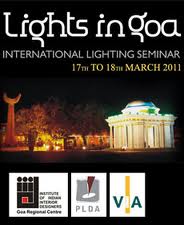
Light Watch 52: Lights in Goa!
Going Places
Mumbai-Pune, 15th March 2011
As lighting designer we travel and go places…most of all we meet interesting people. People involved in our lighting business but also people who are complete strangers to what we do. I have met some interesting people on my flights, some well-known figures from public life.
What is the difference between a celebrity and a lighting designer…? One seat…J Lighting designer seat 15D, celebrity star seat 15E. Last night I happen to sit next to one of India’s biggest movie stars, who introduced himself as Mr Kahn. I had no idea who he was, but when people (airline staff included!) were starting to take pictures and ask autographs from the man next to me I started thinking…mmm… he must be some well-known personality in India. So when everyone was belted up for take-off I started talking to him…and asked his name. It still didn’t ring a bell but I later googled his latest movie “Dabangg” and found out that he must have been Salman Khan, celebrity movie star with heaps of movies behind his name. He must have thought, what the…as it was like asking Tom Cruise who the heck was he….anyhow he was really nice and understood my ignorance about the Bollywood scene…Slumdog Millionaire was not really an Indian movie….
We started chatting about his movies and even flipped through the entertainment guide to check out if they carried any of his movies. I introduced myself as a lighting designer and found an interested ear about the work we do. As an actor he deals with light and mood and scene setting all the time so he could fully sympathise with our work.
On landing we said farewell and I promised to watch his greatest hit movie “Dabangg”, which happens to be the biggest grossing Indie movie from 2010 and the second highest earning Bollywood movie of all times (I googled this). No wonder people were staring and asking to take pictures with him….me, I just walked undisturbed through immigration :)…I don’t think we will ever reach the same status of celebrity as lighting designers , but who knows…..!
In Light Watch today I honour the lighting designers who do those great jobs in the movie industry creating the lighting settings for the picture shoots. Watching Bollywood movies is a culture by itself

Light Watch 51: Dabanng, the movie
Project administration
Singapore-Mumbai, 14th March 2011
I am slacking! This is the second time in a row I am “late” with my blog, but, hey I said I would be a bit more relaxed this year and not stress if I don’t make it in time for my daily blog. As I am writing this I am in the airport lounge but with little time left before boarding you will only see this uploaded on arrival in India…
Being a lighting designer is probably simpler than being an accountant, at least so it seems to me. But alas…accounting and project administration is part and parcel of running a lighting design practice and today was such day in which I had to do heaps of project administration prior to my trip. Contractual issues, billing and invoicing, project files for the trip, etc. The point is these are mostly non billable hours and if they are, they are somewhere hidden as part of our design work billing.
It has always been one of the most challenging parts of running a lighting design practice…how to bill for unbillable hours. Somehow you need to incorporate these cost in your overall budget planning and fee pricing cost. Getting hold and control of your overhead costs is key. Fixed costs can be budgeted for, but variable costs are unpredictable and can create big dents in your cash flow if not careful.
I have said it before our main commodity is time. Yes experience and expertise is the base of our services but in the end we deal in time. If we cant control or better be in control of our time we are in trouble. We need to define our service to the client in terms of deliverables against time… easier said then done as the client always wants more…Up to us to find the balance between reason and goodwill…
My pick for Light Watch is again related to LED… over the weekend they had a LED illuminated kite flying competition in Singapore. It is becoming popular all over the world….
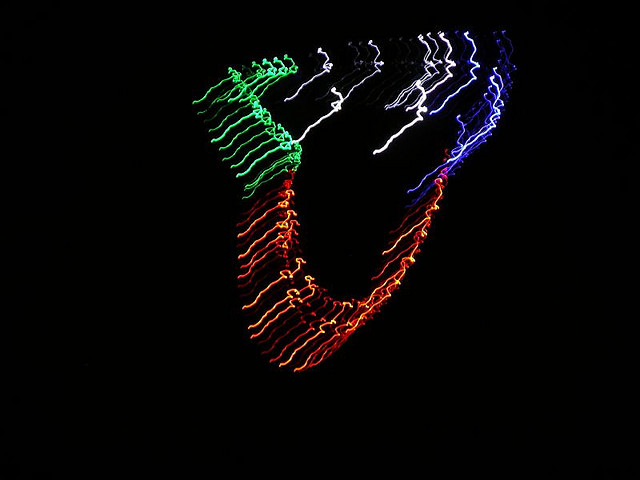
Light Watch 50: LED kite flying
National Disasters
Singapore, 11-12th March 2011
As you have noticed this season of my blogging is a bit more relaxed than last year. Last year I had set myself the task to blog each and every day on lighting which I did without fail. This season I am taking a more relaxed approach skipping the weekends and if I can’t make it like last night then so be it…tomorrow is another day 🙂
Can we ever prepare ourselves for natural disasters? As I was working yesterday to try meet the weekends deadline for one of our projects, I received the news about the monster quake that hit Japan. The live coverage of the tsunami that followed was a real devastating sight to watch! Needless to say that we were obviously distracted by the news and visuals.
Not long ago I was stuck in Bali for a little while due to the volcanic eruptions from Mount Bromo. National disasters are humbling…volcano eruptions, earthquakes, tsunami’s, bush fires, typhoons …the force of nature is hard to comprehend. I can’t but help thinking in how far our lighting designs can be prepared to deal with these extreme heat or extreme wet conditions. We can make sure we have the best quality and most of all high quality installations, but in all honesty otherwise I don’t think that there is much we can do. Electrical safety measures are probably crucial, which refers back to the quality of the electrical installations, wiring, and power cut off provisions to avoid high voltage electricity without control. The morale is we should not design only for the good times but always consider extreme and potentially dangerous situations our lighting installation may be exposed to.
In Light Watch today my thoughts are with Japan, New Zealand and other countries that have recently suffered the consequences of Mother Nature….
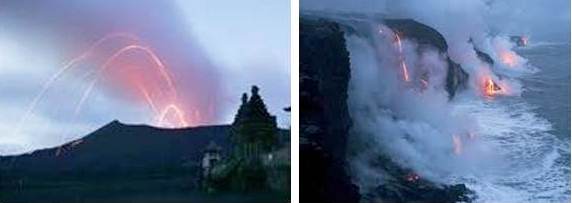
Light Watch 50: Volcano eruptions Indonesia and Hawaii
Who supplies?
Singapore, 10th March 2011
Working on an international scale brings along challenges of international proportions as well…we work our projects from our design offices in my case either Australia, Singapore or Indonesia, but our projects are all over the place. For same country design the supply issue is quite simple. I design in Singapore and I work with suppliers in Singapore. But for overseas projects it is a bit more complicated. I may design in Singapore but if my project is in India for example I will need to work with local suppliers in India.
While that in itself is no issue you may not always know the local suppliers, let alone be able to consult on an intensive basis about your local requirements. In the country of design you have the suppliers “on call” for help, assistance and samples as needed to work out your lighting specifications. Most suppliers do that with pleasure as they have the potential to follow up with supplies to the project at a later stage. However when the project is overseas it is a more complicated as they may not be the appointed agent in that country and after their hard work in helping us they end up empty handed.
Though it is not really our problem being considerate and supportive in this respect goes a long way in assuring continuing support in the country of design. Most manufacturers have reward systems in place to cover their respective agents for their efforts in helping us lighting designers.
Sometimes we wish to have the supplier from the country of design to supply in the country of the project location. Which again may cause some challenges as the local agent may need to be covered. In the end he will be the one that may have to come out for servicing and product warranty issues.
Then finally there are the situations where the client wishes to appoint one central supplier who then needs to source the various products from the original supplier agents. It is not surprising then that the final price the client pays has several mark ups considering the various people involved in the chain of supply.
In Light Watch today a peek into my own on-going work…I went out tonight to do some visual testing with different (LED) sources to see how lighting of trees in a park would come out….
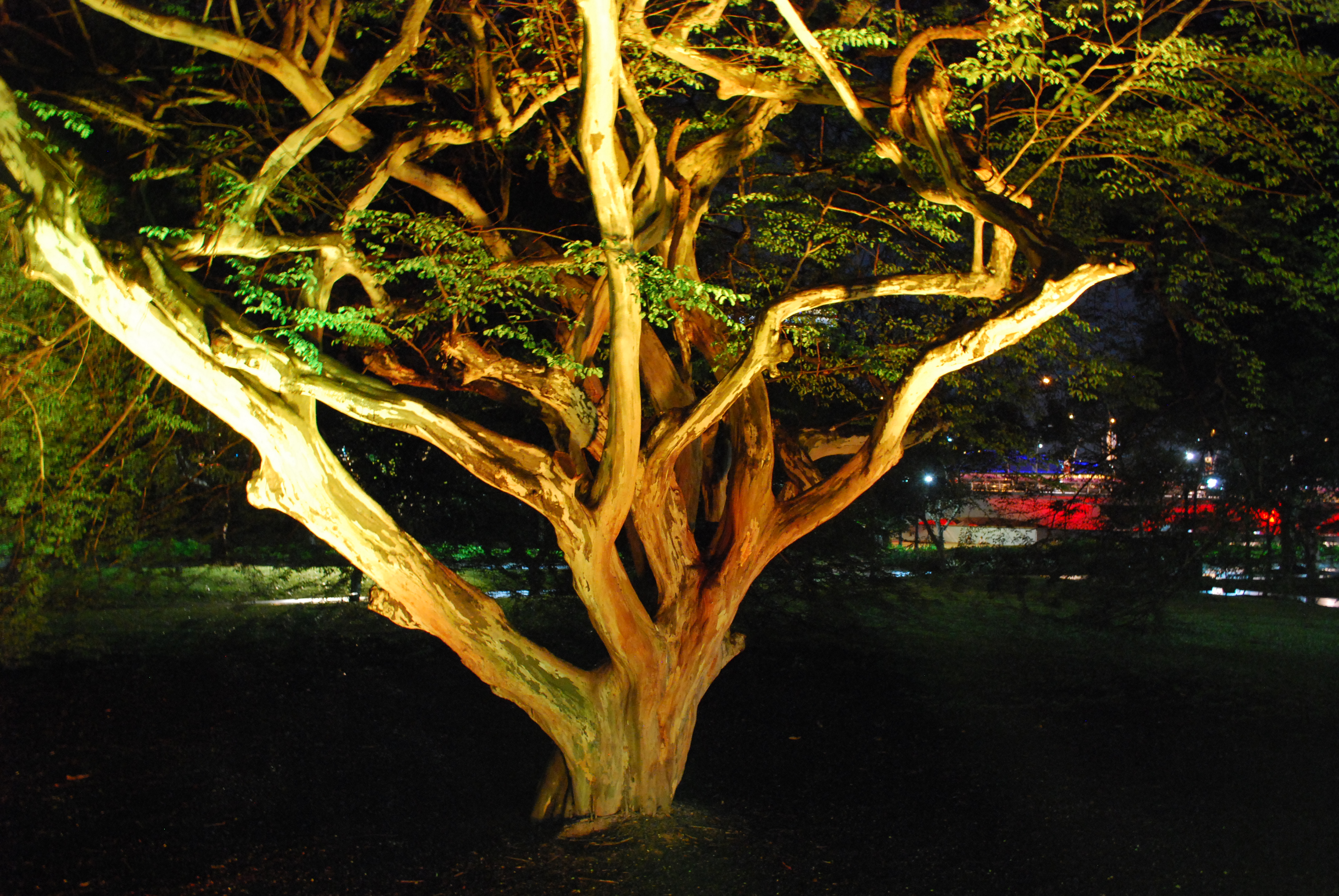
Light Watch 49: Visual testing tree lighting
The science of LED’s
Singapore, 9th March 2011
Specifying LED’s is a whole different ball game than the conventional incandescent, fluorescent or gas discharge lighting systems. It seems more and more that we need other dimensions of specifying to really get it right. I met with one of the LED lighting suppliers today and had a fairly in-depth discussion about the science of LED’s and all the variables that can determine the performance of the lighting installation.
Just talking about color for instance. We are used to specify two basic parameters, being colour temperature and colour rendering. But with LED’s it seems that we should be specifying the binning as well as batches from different bins produce slightly different colours. This is specifically relevant when it comes to future lamp replacement. While LED’s have a long life we still need to assume that lamp replacement may occur at one time in future. To make sure that we get the same “white” specifying the binning details of the LED lights is necessary.
If large quantities of LED’s are involved (in linear cove lighting for instance) we have to make sure all LED’s come from the same binning to avoid colour differences. It is likely that when we accept alternatives from different brands the colour may be slightly different. Hence logging in the exact binning type may help us define the color more precisely for now and in the future.
But the science of LED is more than just colour issues. What about lifespan. I blogged about the influence of ambient temperature on the performance. We now also know that with the increased performance of the LED’s comes the need to diffuse the heat through properly designed heat sinks. Bear in mind that LED’s are further specified by their amperage rather then by voltage. A higher amperage means a lower life span. LED has brought us a lot of joy in terms of new lighting design opportunities but with that also comes the need to understand ( and be responsible for) all the variables that determine the end result.
In Light Watch today some more LED innovations, this time water based … LED umbrella’s and LED lighting integrated in showers and water taps.
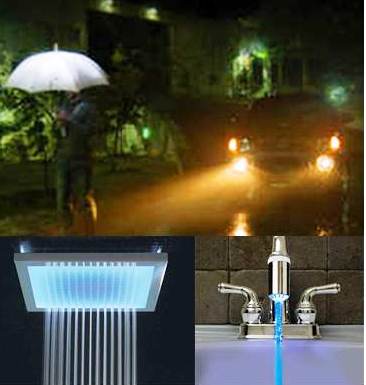
Light Watch 48: LED and water
 The long awaited book compilation of Martin's first year of blogging is available. Order now.
 Feedspot Top 100 Lighting Blogs