
Lighting levels
Singapore, 5th April 2011
As part of our lighting documentation we include areas that are to be controlled by scene setting, generally the case in hospitality, general public spaces, spa’s and the like. Our control schedules indicate the “looping” of the lights, in other words how the lights are to be switched or controlled. That is ok when we talk about on-off switching only. But to give the client an idea of the mood or scene setting we produce a so called dimming control matrix, where we indicate the proposed level of lighting through dimming. While the clients like us to produces these, it really does not say much other then give general impressions about the mood setting.
Do you know how much light 100 lux is? No, most of you don’t! I have done this test in my seminars and courses a hundred times asking participants to tell me how much light there is. Invariably you get people guessing anything between 10 and 1000 lux. When I then actually use a lux meter to show them it’s very educating. I then move the lux meter a few inches to the left or the right to show that I get considerably higher or lower levels! This is the eye opener, as visually the levels look pretty even to the eye. My point is that our eye has much difficulty in discerning differences of 10-20%. It only becomes really obvious if we are halving the lighting levels. Ever dimmed a T5 to 50% of its output…it visually hardly makes a dent!
So back to my dimming control schedules. We really produce them to satisfy the client as the real scene setting can only be done visually on site with all lights installed, all furniture and artworks, etc, in place. Setting scenes with some lights still missing is a waste of time! But if done with experience the schedules are a good help to describe the design intent of the mood setting and it will help the programmer later to set levels close to our design intent, rather than those brainless 100%-75%-50%-25% pre-set scene settings
In Light Watch today one of my own projects, the Oriental Hotel in Singapore. Mood setting in the lobby is critical in regards to day-night time arrival settings. However dark materials look dark, not much that light can do about it!
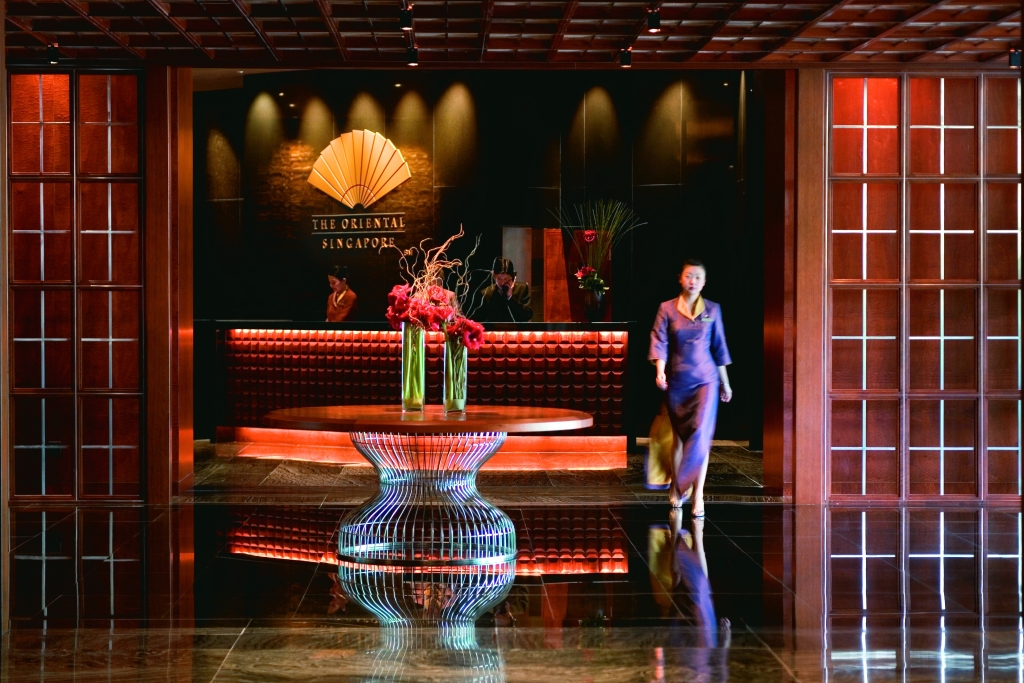
Light Watch 66: Mood setting at Mandarin Oriental Singapore
April Fool’s Day
Singapore, 4th April 2011
April Fools’ Day came and went. This year somehow I did not really hear of any noticeable prank, let alone lighting pranks. None was played on me…If some of you have been the butt of lighting jokes please share with me!
We are always serious in our work, but we need to keep up with the lighter side of life as well…”always look at the bright side of life” as sung by the cast from Monthy Phyton many years back. People who know me, know that I like to keep the spirits up by being cheerful and joke around. There is enough misery in the world; we do not need to create another misery at work. We are serious about what we do, but we do it with a smile. At least that is my philosophy. A happy customer talks to 3 other people about it, an unhappy customer talks to 10 other ones about it…so may as well be cheerful and create positive energy at the work place!
The one practical lighting joke played on a colleague that I always remember was many years back when I worked in Philips. One of the relatively new staff, a nice but serious guy, had been working on the floodlighting of an indoor ice skating rink and had been doing many lighting calculations to make sure his lighting levels and uniformities, etc were complying to the applicable standards and requirements. The lighting had just been installed and he was waiting for feedback from site. We decided to play a prank on him. At the time telex was one of the main methods of communications (yes it was a while ago 🙂 ) so we went to the telex room, as you had, and fabricated a message so called from the client with the message that the lights had been installed but the heat generated from them was so much that the ice had melted! The client was upset and wanted to know what he was going to do about it…we were all secretly watching him receive the telex…priceless.
In Light Watch today Singapore’s newest ice skating attraction at Marina Bay Sands…bright during the day with daylight, moving intelligent lights at night for the ambiance.
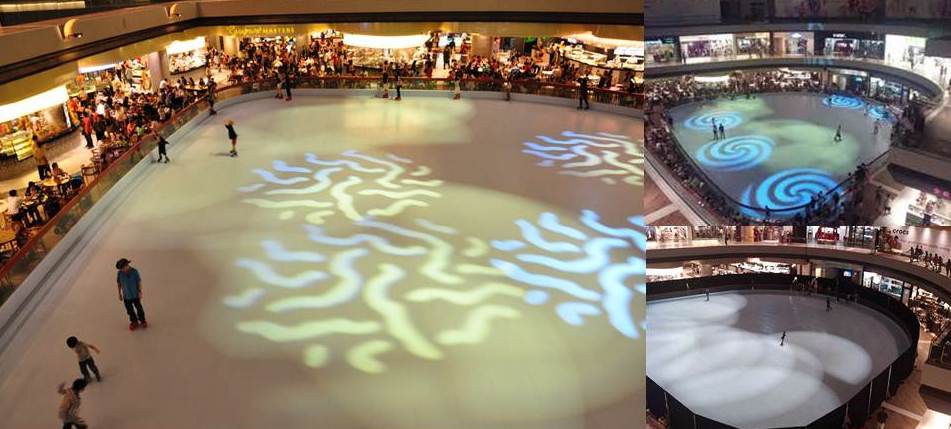
Light Watch 64: Ice skating at Marina Bay Sands, Singapore
Drinking
Singapore, 1-2nd April 2011
Drinking is an integrated part of socialising….and in most professions like ours this is linked with networking…or should I say “bonding”? Last night I came back late after a “bonding” session with friends in the industry and this morning I can still feel my “head”. I must say I am not a drinker, never really have been one. I like a beer or a glass of wine with my dinners or when socialising, but going out to beat a drinking record is not my thing. Also it does not feel particularly healthy and honestly as you grow older health and fitness becomes much more a priority. But occasionally I “succumb” to invitations to join for a drink. It’s not so much that I don’t like joining in for a drink, it’s more the discipline of not go get dragged into over drinking… honestly I don’t know how some keep up the speed of drinking! Having said that I did enjoy the evening (which started late afternoon) with for some our partners joining us later on as well.
One of my first experiences with really drinking happened when I started working in this part of the world (80’s). As some of you know drinking (or toasting) is a big part of Chinese diner customs. Your host invites you for diner and during the diner the hard drinks come out and you keep toasting to each other. The so called “yam-sing” (bottoms up) can be lethal if you are not prepared for it! Specifically as you generally need to toast to all others as a token of appreciation. So at a table of 10 you have had 10 drinks by the time everyone else has had one! Argh! Somehow it also is part of showing your “mettle” if you can survive the drinking. What you need to do to “survive” is to make sure you drink lots of water in between the drinks to dilute the impact (I learned this the hard way!). But once you survive you have gained considerable status!
In Light Watch today one of Singapore’s first hang-out places along the river…Boat and Clarke Quay. In the back ground one of my early lighting projects in Singapore, Riverside Point Shopping Mall.
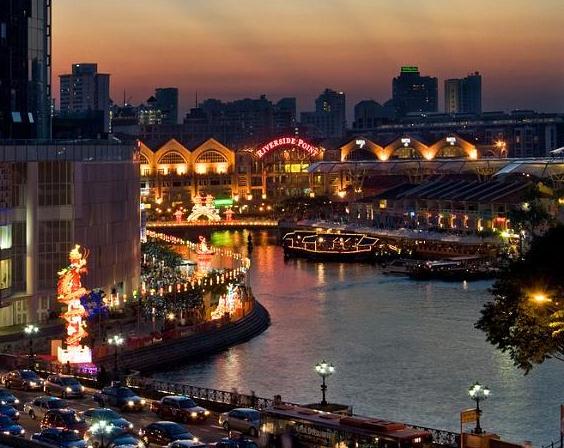
Light Watch 64: View to Clark (left) and Boat Quay (right
The value of our services 2
Singapore, 31st March 2011
I am in the middle of doing several fee proposals…something I keep doing mostly myself as this involves more than just quoting for our fees. It also involves business strategy, looking at building long term client relationships and preserving our name and identity in the process. Much in continuation of yesterday’s topic it is about quantifying the value of our services, finding the right balance between what you should quote and what you think you can quote to achieve a successful outcome. When the two are in sync there is no issue, but when there is a serious gap between the two, then the thinking hat has to go on and a decision has to be made. Am I going to stick to what is financially profitable for the company or am I willing to compromise (the profit on) the fees to increase the chances of being appointed?
There are two major unknowns in the whole thought process. First of all the truth is that we generally don’t really know the clients mental assessment process, their appreciation towards quality and the value of our services. Hence it is hard to say how much they are prepared to pay. Often the lack of awareness of the value of our services will create a serious gap between reality and expectations. We therefore need to convince the client we offer value for money. The sting here being that after having successfully convinced them to pay your desired fees you obviously need to deliver as well!…Under promise, over deliver…otherwise there is no comeback.
The second part is (certainly with new clients) that we have no way of really knowing how the project and its demands will develop. Yes we can limit our exposure as much as possible in our contractual terms and conditions plus from experience we know what we will need to deliver, but does the client have the same understanding and expectations. It often hinges much on the professionalism of the team and the competence and management skills of the project manager…I guess that is where experience comes in and that is why I still do most of the fee proposals…
In Light Watch today I want to honour visionary designers who have that extraordinary creative touch for the new and unexplored. I have no idea if these designers are as visionary with their fees, but my point is that once you have reached such level of recognition, clients are probably prepared to pay your fees regardless.
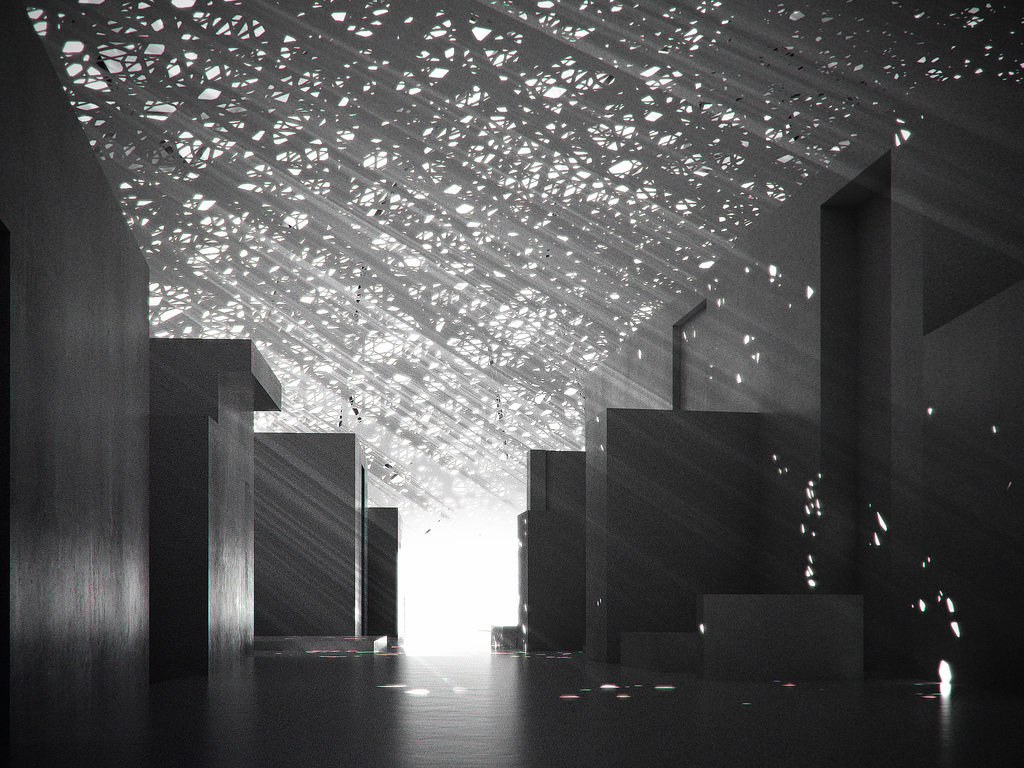
Light Watch 63: Proposed Louvre Museum in Abu Dhabi by Jean Nouvel
The value of our services
Singapore, 30th March 2011
An issue frequently haunting us is inevitably linked to our fees. How much or how little should we ask for our (professional) lighting design services? This debate has recently been stirred up in relation to Vivid Sydney were the IES ANZ (Australia and New Zealand) are inviting lighting designers to provide their skills in lighting up selected buildings in Sydney as part of the festival. The issue here being that the equipment is to be sponsored by the manufacturers, whereas the lighting designers more or less has to operate on a FOC basis…sort of honour and pride thing. I experienced a similar situation in Singapore last year where the main return from the organisers was (and I assume here is as well) the “publicity” that you will get from participating. Well, all I can say from my Singapore experience is that there were a lot of promises, but little came through. There was certainly no equal opportunity or exposure for everyone. Promised write ups and interviews never materialised, except for a few of the perceived “top attractions”. I am sure there is an explanation and reasons and in the end I had to do my own publicity and promotion.
In our project fees we encounter the same thing over and over again. Clients who wish to have our services basically for “free” or at very little fees. Most of the time with promises of future work, public exposure and a high end reference project to boost about. Promises are easy to make, but seemingly easier to break! The point in fact is that they simply do not know or understand the value of our services and that we provide these services for a living! While architectural services are well accepted, lighting design services often don’t even appear to be included in the budgets!
Education of the client in regards to the (added) value of our services is thus important but unfortunately that does not happen overnight. It is therefore important to take a stand whenever possible whether it is towards speculative design or providing services at unreasonable low (read non- profitable) fees.
In Light Watch today nevertheless my mention of Vivid Sydney to be held 27th May- 5th June 2011, as despite the non-valuation of our services the event by itself is laudable, enjoyable and interactive.
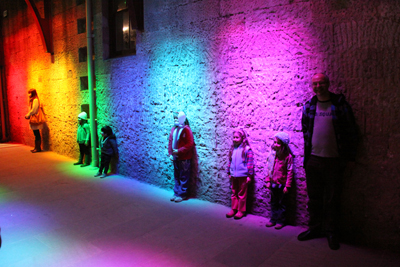
Light Watch 62: Pictures from Vivid Sydney 2009
Is our profession seasonal
Singapore, 29th March 2011
One of the questions I have never really been able to answer is whether our profession as lighting designer is subject to seasonal influences. Over the many years I have been practicing my profession I have not been able to put my finger on a clear seasonal effect on work load other than the typical holiday periods. And these are culturally influenced as well. While Xmas/ New Year maybe a typical lull period for Western companies (we generally close our offices at that time anyhow), the same is not the case for Chinese companies. Project demands basically disappear from the horizon for at least a week during their Chinese New Year holidays.
So a Western company operating on a project in China may face a bit of a challenge as there is generally little consideration when it comes to project deadlines. Requiring project deliveries over Xmas and New Year has been common place in this part of the world when it comes to Chinese companies and projects. Even more, you may be rushed to have all delivered the day before Chinese New Year even though everyone knows very well that nothing is going to happen until after the holidays.
Summer holidays are also sacred for Western companies as are some of the religious festivals in this part of the world. On a smaller scale we also have the difference in work week between the Middle East and the rest of the world. While most parts of the world have their (suposedly work free) weekend on Saturday – Sunday, Middle Eastern countries mostly celebrate their weekends Thursday – Friday, leaving effectively only a 3 day window to “communicate”.
When it comes to new projects and project activities if any seasonal “peak” effect could be pointed out it would have to be March- May period and the September- November period. But it is not really a hard fact. Most of all our profession is ruled by the state of the economy. All is driven by money and the availability of cash to develop and keep supporting the projects. The economy crashes of 1997 and 2008 are clear examples of how strongly our work is linked to it.
In Light Watch today the sky is the limit when the economy goes well…developers building higher and higher. I myself am now involved in the 720m high India Tower in Mumbai! Many others are in the pipeline.
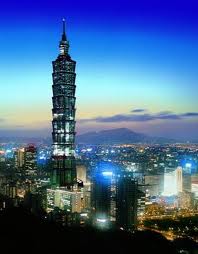
Light Watch 61: Sky scrapers…101 Taipei, Taiwan
Earth Hour Singapore
Singapore, 28th March 2011
I don’t know about you but Monday to me is always a mixed back of emotions. The excitement of a new week’s work (I love what I do!) and the sadness of another weekend passed. It’s like being on adrenaline during the week, but on relaxed mode in the weekend. I managed to buy, read and finish a 500 page book over the weekend! No, it was not about lighting, just one of those typical good guy- bad guy thriller stories….
Anyhow I did go out Saturday night as announced to have a look at how Earth Hour would be celebrated in Singapore since I was in town. And where better then Orchard Road, right? The epi-centre of screaming facade lights and high end retail malls. So, did they do it? The answer is yes…many did. But also many didn’t switch off their lights. Most of the major shopping malls like Ion Orchard, Orchard Central, Centrepoint, etc, did switch of their façade lighting, including some of the non- essential canopy walk way lighting. And you know what? It was pleasantly “dark” walking on Orchard road… Added to that were several Earth Hour locations where people were given the opportunity to light up candles. It created a sort of “campfire ambiance”. Orchard Road with candle light! Much more pleasant than those high powered metal halide streetlights and pulsating LED media facades! It would be interesting to know if the crime rate went up during that hour! Does anybody know? It is well known that lighting deters crime. What is not said is what deters more…a metal halide street light or a candle light 🙂
Some building owners went the extra mile towards the 60+ campaign by keeping their lights off for the rest of the night. There were some glaring exceptions, such as the Gucci store at Paragon, who stood out as a sore thumb with its bright façade lights. It made me wonder whether it was just intentionally not participating or just too complicated to switch off the lights?
At the end, with my lovely company, I went back into one of the malls’ restaurants were we fittingly had a candle light dinner…:
In Light Watch today a mood picture of one of the candle light stations along Orchard Road in Singapore.
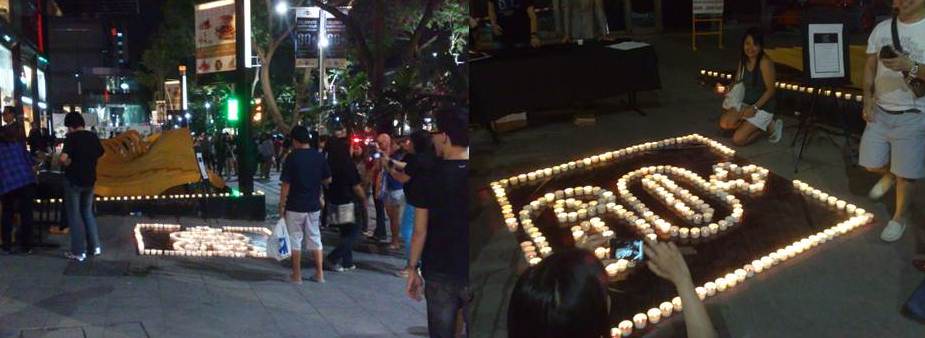
Light Watch 60: Earth Hour 2011 Singapore
Earth Hour 2011
Singapore, 25-26th March 2011
Yes I am taking it more relaxed this season, I went out last night and did not really felt like blogging when I came back :). It seems like today is more appropriate anyways as tonight we will see the Earth Hour 2011 edition take place at 8.30pm local time. This year more than 4000 cities in over 128 countries will take part in this event. It seems to have become the largest community driven campaign in the world by now. I blogged about it last year but it remains a major event that now has the new 60+ campaign urging people to go beyond the 60 minutes and look at ways to save energy in ever day life.
What does it mean to us as lighting designers? Should we stop designing light? No of course not, as Kaoru Mende said in Goa, we should be slimming down, go on a lighting diet. Get fit and healthy. We have become “obese” in terms of lighting and should be looking at where we can skim of the “fat” in lighting.
Walk down Orchard Road in Singapore and look at Orchard Ion or Orchard Central and you definitely get a feeling of “too much”. I am not aware of whom the lighting designers were nor what the design brief was, but to me it does not show much restraint nor consideration for our environment. Not only from energy point of view but particularly from lighting pollution point of view…yes Orchard Road is a major shopping and tourism attraction, but does it need all this “uncontrolled” illuminated facades? On top of that many media facades (like Orchard Central) can hardly be seen because of the trees!
Design with measure, purpose and intent is probably a slogan that we need to all adapt as lighting designers. It should be our credo anyhow as professional designers but often in the middle of everything we get lost, distracted and overexcited and end up with something that does not fit today’s real world anymore…As lighting designers we should be leading the way…I will be going down to Orchard road tonight and have a look personally to see who “got the message” 🙂
In Light Watch today the focus is on Earth Hour. The official Earth Hour 2011 video as can be seen on You Tube at: http://www.youtube.com/watch?v=4Mxjbip6y04&feature=relmfu
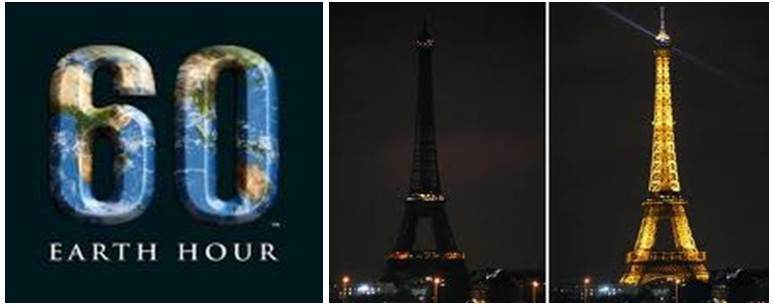
Light Watch 59: Earth Hour 2011
Conflict of interest
Singapore, 24th March 2011
In any business there are moments that a conflict of interest may arise. It is not always obvious and it also takes a strong and principal stand to identify and face these situations. In our lighting industry it happens as anywhere else. Sometimes it may even be a perceived conflict of interest even if there is actually none. People like to assume if they don’t know and have a tendency to make up things. It is a sensitive subject, but it can affect business if not properly tackled.
We like to work with people we know and have previous good experience with, right? But to others this may seem like favouritism and people at the short end of the stick, those who lost out (those who feel they had the goods and capability to be considered but didn’t make it) often will hint at some irregular process or even kickbacks that got someone else in rather than them. Typical sore loser syndrome…it is therefore important to be professional at all times and provide clarity and transparency of any selection process. Checks and balances, due diligence.
Conflicts of interests are nearly always driven by money, sometimes by loyalty. For instance take a lighting supplier who represents many brands with all similar lighting products and performances. This can be a good thing or a bad thing. From the designer/specifier or client’s perspective that maybe a good thing…like going to a super market and shopping around for the best deal, a one stop shop. For the brand manufacturer this may be different. Who is the supplier going to favour when it comes to recommending a brand. Unlikely he will give an objective advice, as he will recommend the brand that will make him the most money, surely. So from the perspective of the brand manufacturer this may seem like a conflict of interest as the supplier may not have his brand and interest at heart.
In Light Watch today branded cars and their LED head lights. Gradually but surely LED lighting is taking over the automotive market as well, possibly even faster than in our architectural lighting world.
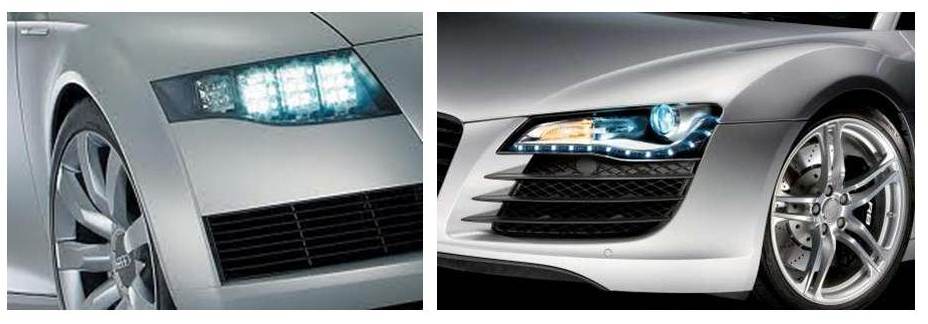
Light Watch 58: Branded cards with LED head lights
People Business
Singapore, 23rd March 2011
Lighting design is still very much a people business…at least that is what I think. It is about who you know (not necessarily what you know, although you need that as a base) and the relationships and trust you build with people. I have said before that a supplier may promote the best product in the world, but if the people behind the product are not compatible (for lack of a better word) then specifying the product becomes an issue. We need to have confidence and a feeling of comfort with the people behind the products. We need to know whether the people behind the products have the right competence, if not at least the right attitude. Satisfaction is a word that comes to mind…
Same for the people we work with, be it the client, consultants or our own staff. Relationships are based on trust and respect and when that is established it follows on with loyalty. We like to deal with people we know, people who respect us, people we feel we can trust. It takes a long time to build up trust, but it can be destroyed in seconds…I have experienced this myself too often. Today I dealt with people, lighting suppliers, potential new clients, fellow consultants and of course my own staff. The common denominator for all was trust and respect and with my staff the most important of all…loyalty. Finding good staff is very difficult in our industry, so I am grateful for and blessed with my team.
When it comes to dealing with new clients there is also that instant feeling of like or dislike…first impressions are important, though can be deceiving. Some people are masters of deceit! I think we all may have come across these people at one point of time…While we can be choosy with the projects we work on, but we do not always know who will be involved along the way. It would not be the first time that initial joy turns out into bitter frustration. Having a social drink is not the same as working together under pressure….
In Light Watch today something unusual…UV art. Today I came across the works of Edd Aragon, who has just opened an exhibition in Manila. He specialise in UV paintings that only “come to light” under UV light…check it out.
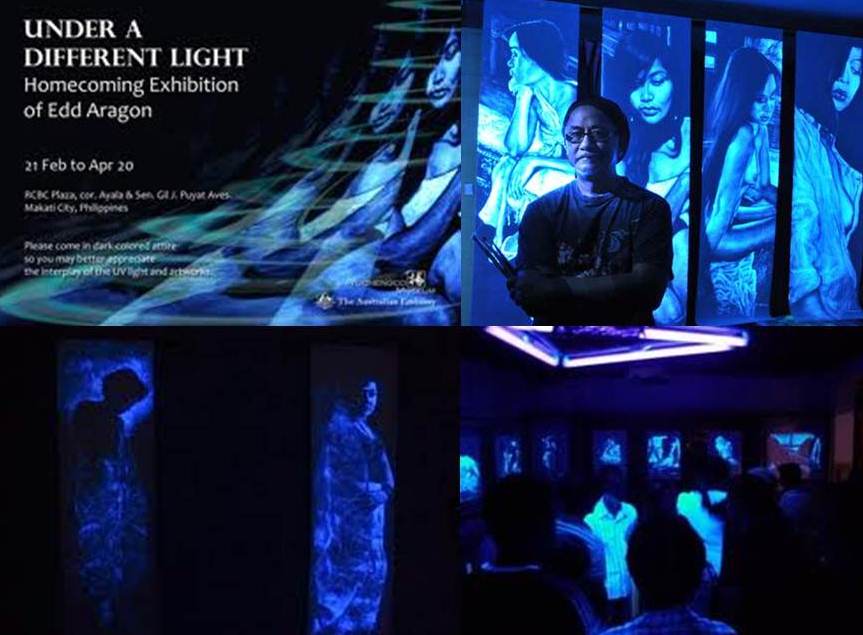
Light Watch 57: Edd Aragon’s ultraviolet light-reactive art
 The long awaited book compilation of Martin's first year of blogging is available. Order now.
 Feedspot Top 100 Lighting Blogs