
Is the economy slowing down again?
Singapore 4th August 2011
From my recent travels in the region and the feedback received from clients and colleagues in the business it seems like the world economy is slowing down again. The debt crisis in the US, the problems with the Euro zone in Europe are not helping the situation and are probably at the root of all. Add to that the many scams and fraudes discovered in China and India (just to name two countries) and it somehow seems to affect the general mood in the market. Being a lighting designer (and not a financial analist at a bank) it is hard to pinpoint the cause and know what is really going on so we go by what we read and our gut feel about what is happening in the market. We have barely recovered from the 2008 economic meltdown so a new crisis is not really what we are looking for!
Why am I bringing this up? It is just that over the last few weeks I felt that clients were slowing down on their payments, taking much longer then usual in contract negotiations some of them not even responding to communiction. On top of that it seems like our fees are getting squeezed (see my pevious blog) to the last drop and even beyond. There are still heaps of projects seemingly in the pipeline and on last count we have close to a million dollars worth of fee proposals in serious negotiations but until you have a
signed contract and your first appointment fees in the bank it remains only an opportunity. Even a signed contract has proven in the past not to be a job (and cashflow) set in concrete!
And cashflow is what we need to run a business, as our overheads are guaranteed, month after month! The balance we need to find is the number of jobs we take on (if we have that luxury of choice) as we know that for every ten projects we taken on a likely 3 to 5 may die a premature death or be shelved at one point of time….we have to remain vigilant and not take anything for granted, that s for sure, certainly in the current economical climate.
In Light Watch today a peak into the latest ego-spending sky scraper development, the Jeddah Kingdom Tower, which was announced yesterday. Dwarfing the current highest buikding, the Burj Khalifa Tower in Dubai, this new development will reach 1km in height and will cost $1.2 Billion! It is part of the larger Kingdom City project that is billed at $20 billion! Guess nice if you get to do the lighting design, but do we need this?? Does it really make financial sense? Or is it just another ego project from some rich Saudi tycoon?
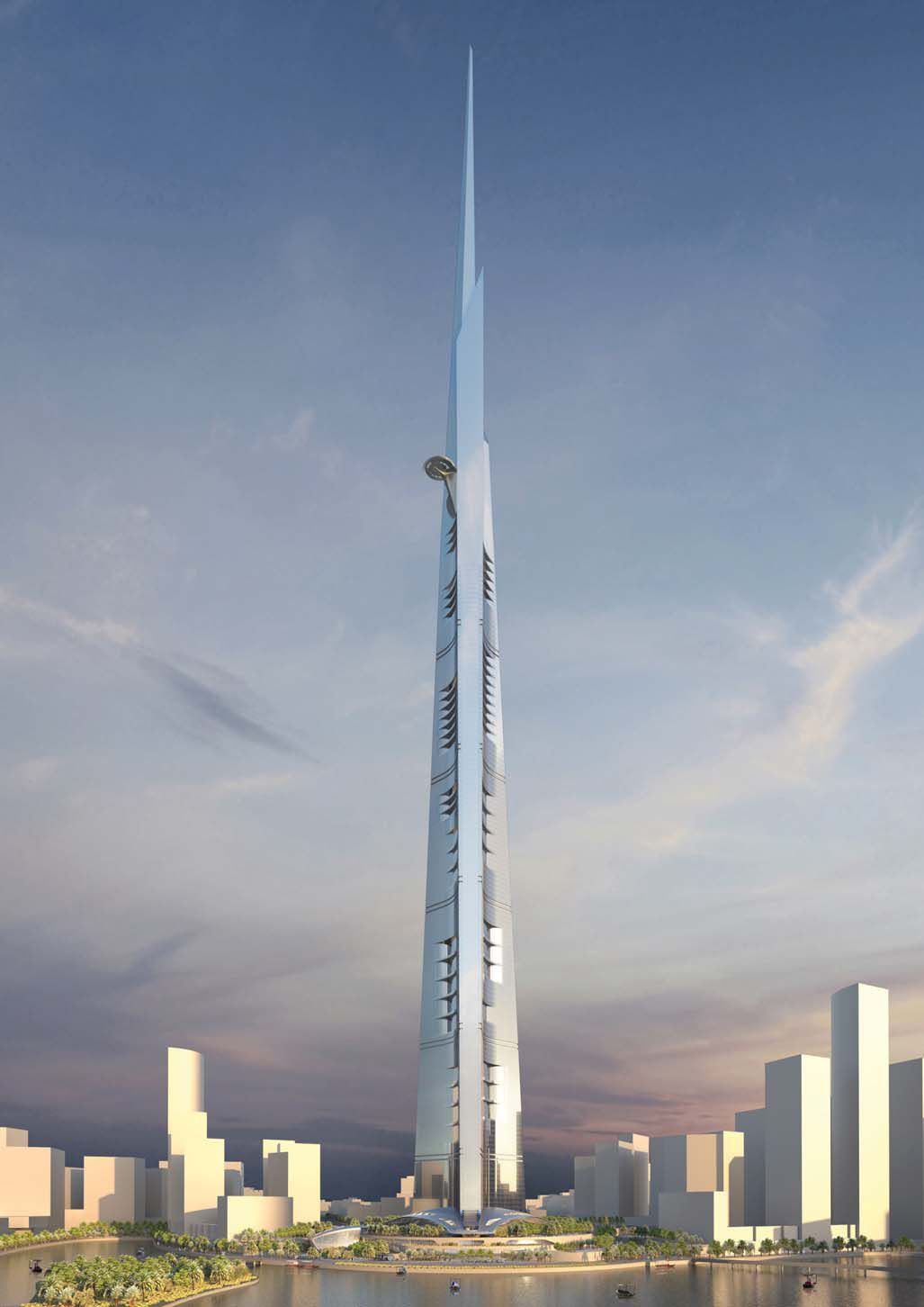
Light Watch 136: Jeddah Kingdom Tower (from www.skyscrapercity.com)
How low can you go?
Singapore 3rd August 2011
Negotiations, certainly in Asia, are probably the hardest thing to do. You need a kind of bluf poker attitude at times when negotiating your professional fees with a client who is determined to squeeze you to the last drop of juice. I am in the middle of two such fee negotiations and it has become really a matter of how badly do I want it. There are so many factors of influence that will determine the outcome of a project and many are unknowns, leaving it to our experience to assess the potential pitfalls.
First there is the client, I have not worked with either of them before but I have been refered to them by close business associates. Back ground checks (a bit of due diligence never hurts) also show positive results. They seem to be good paymasters…critical to have a good reputation in that department. Clarity in regards of scope of work is another issue of concern. One of the projects only lists the areas in square meters, without much further indication of the level of sophistication required. The more general the scope,
the higher chances are surprises will spring up along the way with expectations of work included in the scope. I have requested more details to get a better feel. Some renderings generally help to get a sense of the project proportions, rather then just a written area listing. Then there are the demands in terms of time, such as the construction schedule and attendance to meetings etc.,all this needs to be clear. It wouldn’t be the first time that a 2 year project ends up taking 5 years of your attention! If you further also have control of the delivrables then at least you are in a position to negotiate.
As professional designers we earn our living solely through our fees so the sum we finally agree with the client must be such that we can sustain our services over time. Sometimes however we may make a commercial decision to go below the profit line when the effort is likely to generate long term relationships or other spin off projects. The decision is a hard one, and generally you will only know when you have reached the end 🙂
In Light Watch today a project that I discovered through Traxon’s new Ipad application. Using a wind turbine as the canvas for LED lighting, the most interesting patterns can be created depending on programming and wind force. Check out the application movie on the Traxon website at http://www.traxontechnologies.eu/europe/en/product-detail.php?id=5705
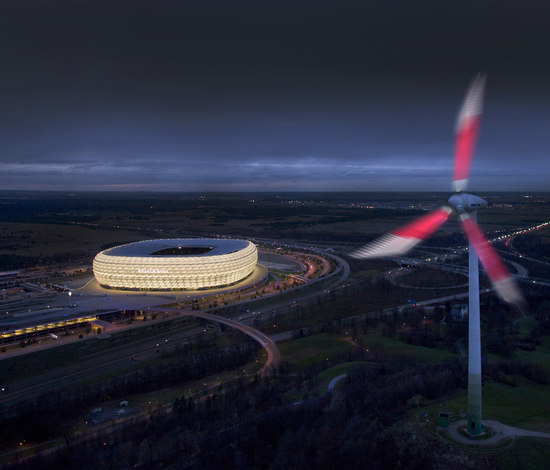
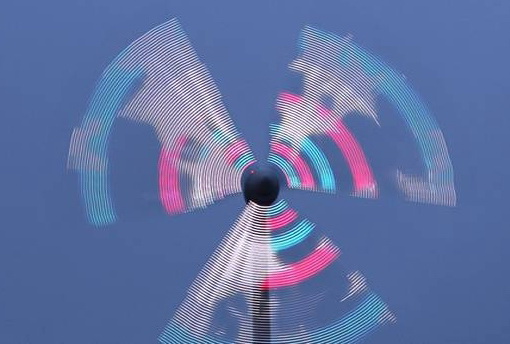
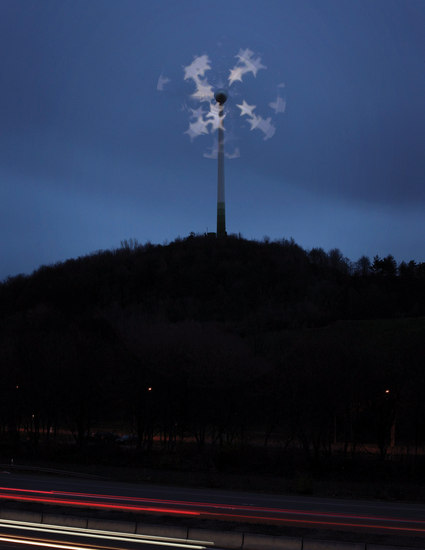
Light Watch 135: Project Hope, Munich Germany
Older and wiser?
Singapore 2nd August 2011
It is often said that you get wiser as you get older…I think we all like to think so, but I guess it is to those around you to judge and appreciate. Having been in the lighting design trade for more than 30 years now I definitely feel I have something to contribute with so many experiences from so many projects, so many countries, so may people. Hence I am always honoured when invited to guest lecture at major public events. With confirmed invitations for upcoming guest speaking events in Australia , India and the Philipines over the next few months I feel people value my experience and I am really grateful for that. Together with my blog and my regular articles in the professional media I find this vary satisfying and gratifying.
Over the years I know I have been able to impact many people in the lighting business and beyond through the sharing of my knowledge and today many of them remain in touch and are good friends. I have never been afraid to share my knowledge, on the contrary. I feel that through sharing I can only learn, grow and become better at what I do. I have never understood why some people are afraid to share their knowledge and expertise. What are they afraid to loose? The student overtaking the master?
Guest speaking, writing and sharing expertise requires you to be on top of your subjects, at least if you are serious about it. In order to present 100% I need to be 150%, to present the best I can. Sharing invokes reactions and questions and while things may be basic knowledge to you explaining yourself to an audience requires clarity and simplicity, not high tech talk that may look impressive but does not necessarily help the cause of explaining. I want my audience to be involved and leave satisfied and hence I derive as much pleasure in preparing my presentations as in presentng them. A good preparation is half the work and creates that confidence to expertly lead your audience through the story you want to tell…
In Light Watch today some more pictures from my Goa project. This time however these are cropped and resized to just show some visually pleasing compositions. It is interesting how you can create images (in this case from some of our decorative chandeliers) that makes you dream away in the magic of light.
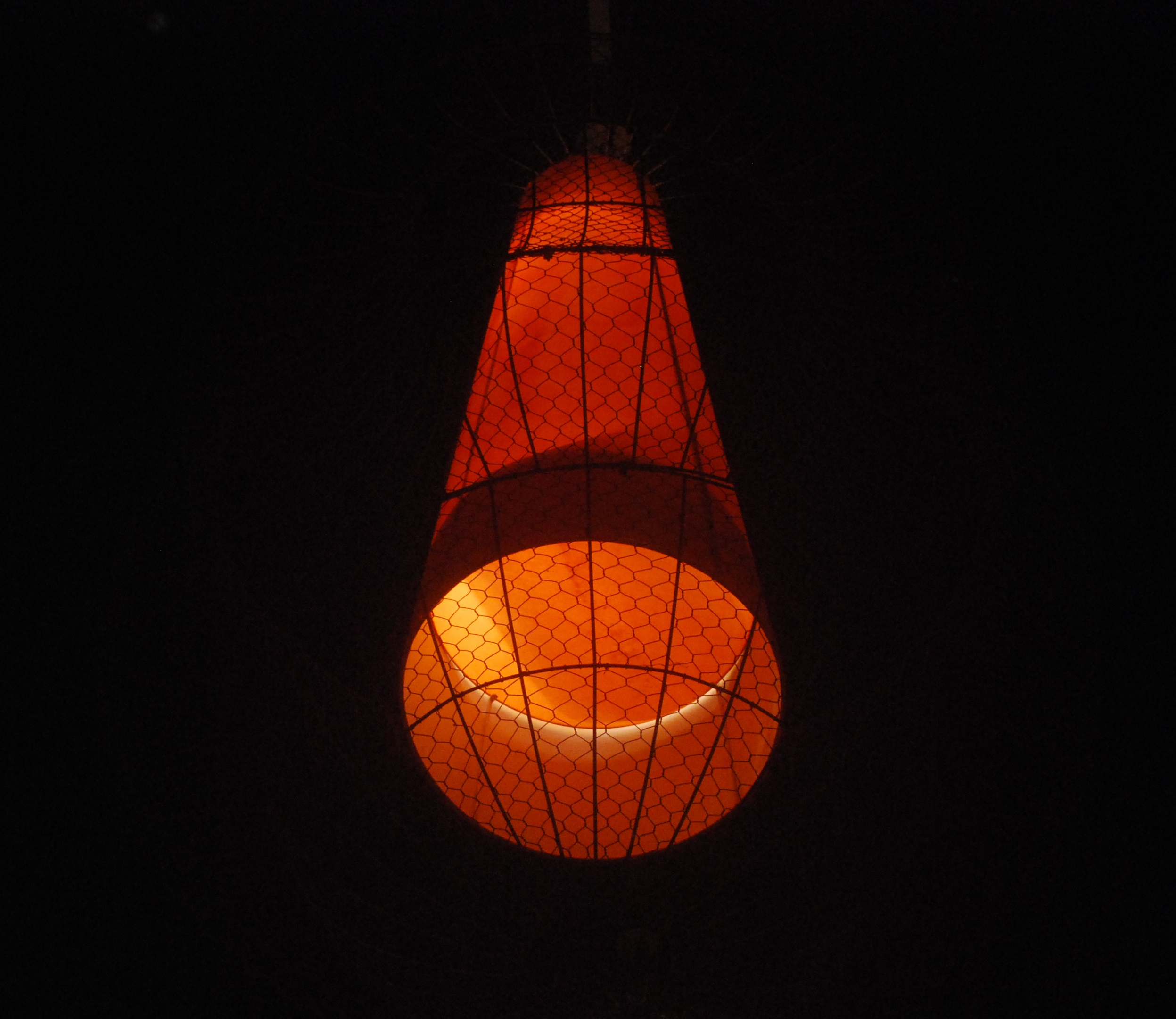
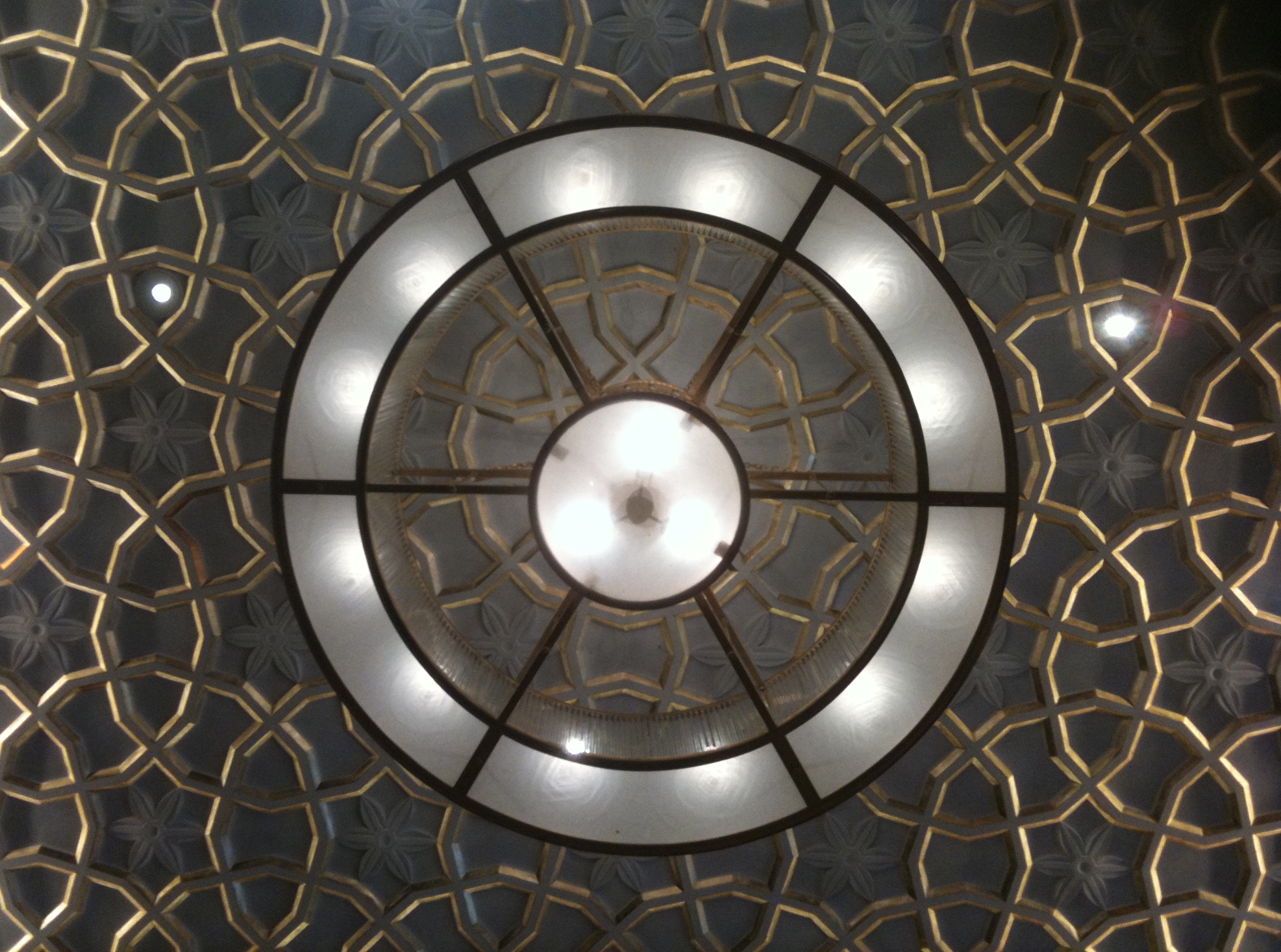
Light Watch 134: Lobby (top) and ballroom chandelier close ups
A very soft opening
Singapore 1st August 2011
Back in Singapore after a long day and along night with little sleep. After working Saturday night till the early morning hours I had another full on day Sunday in Goa before heading straight to the airport for my connecting flight to Mumbai and onwards overnight to Singapore. On arrival in Mumbai it was pandemonium as it was raining heavily and with no taxi’s available there was a monster queue for the international transfer shuttle, some having waited in line for nearly 2 hrs. Luckily I was not on a tight schedule and with some clever “manoeuvering” managed to cut my waiting about 30 mins only…but still.
Meanwhile the hotel has soft opened today in Goa with a major function with about 1000 delegates this coming weekend! Just before I left I had a last peptalk meeting with the site team and sub contractors to make sure every one was on the same page and left them with a long “to-do-list” to follow up on. In my long career I have commissioned many hotels and have come across many challenges but I must say this one is surely one of the biggests and toughests. I can write a book about it and already shared some experiences in my blog over the last few days.
To recap some of the issues that are affecting the progress and end result. First I found out that the drawings used on site are not our final construction drawings in some case they were working of 50% DD drawings! Don’t have to spell out what that means… Further in procurement some short cuts were take to safe as much as possible with as result alternative or stripped down light fixtures to deal with, obvioulsy not really helpful in achieving the desired lighting effects. Some one decided that energy saving was important and had all the decoratve fixtures such as chandeliers,pendants and wall sconces fitted with compact fluoresent lamps! Not really helpful if all these circuits are wired to our dimmig system. All that of course without any consultation with us. I already blogged about the covelights and the wiring mess…
But it is not all doom and gloom, in Light Watch today some nice mood pictures from the site. It will look stunning when completed but we still have some road to travel to get there. As the designers we know each and everydetail and know how it could look like, perfectionists as we are. But newly arriving hotel guests don’t and those who already came in were full of praise…
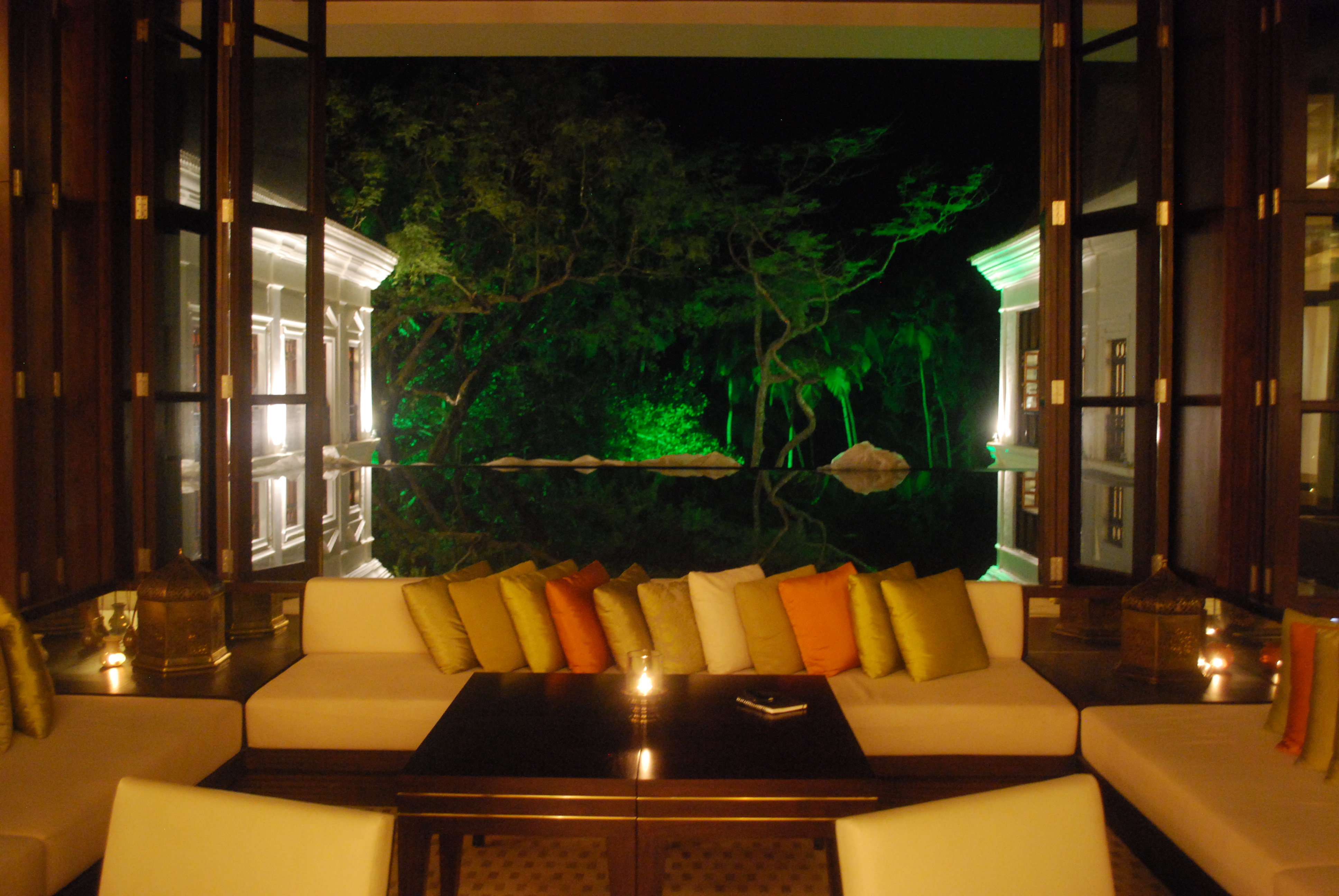
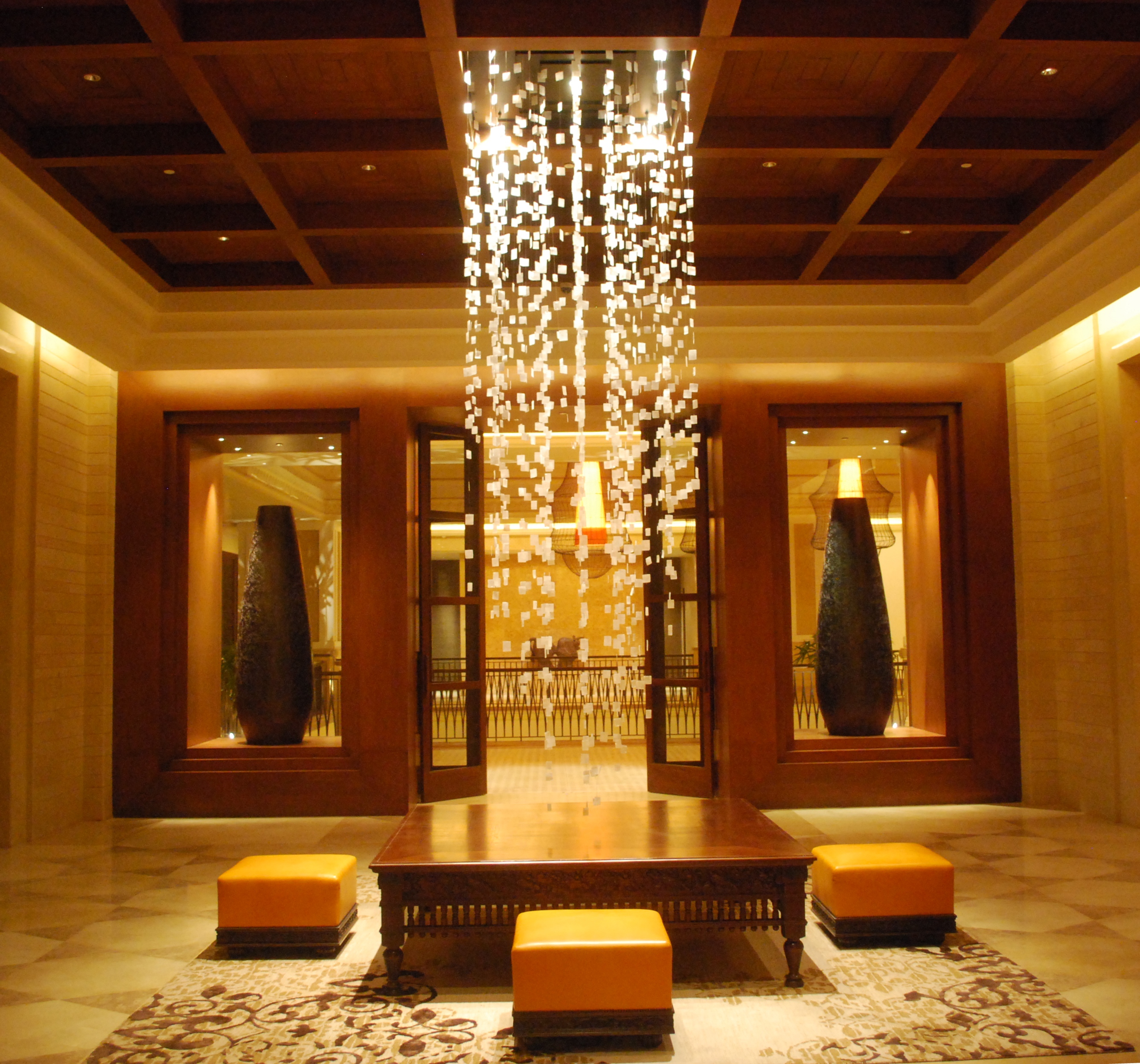
Light Watch 133:
Tea lounge and reception area at night
On the move
Delhi – Goa 28-29th July 2011
It does not happen that often but yesterday I wasn’t in a state to write my blog. I was on the move all day in Delhi visiting clients and ended up having drinks and diner with some friends taking me to late in the evening. The amount of alcohol consumed, combined with a quite hectic and long day, had me fall asleep the moment I returned to my hotel and hit the bed sleeping. Today again I had a full on day in Delhi with meetings. Throw into the mix the notorious traffic jams going from A to B (I was told that Delhi has the highest density of cars of any city in the world…I believe it!). I don’t know how people do business in these cities (Jakarta, Bangkok, Mumbai, etc) because it is practically impossible to make appointments and stick to the timing. I feel like I have spent as much time I the car as I have attending meetings and doing my presentations.
Being on the move is part and parcel of our profession. We don’t run our business and design from behind our desk only. We meet potential clients to introduce ourselves and show off our capabilities face to face, we attend design coordination meetings with the project team, we meet with suppliers, manufacturers, check out factories and light fairs and are on site to test and commission the lighting installation for a satisfacory hand over to the client. As principal of KLD I have added responsibility towards the client and need to show up when needed to take ownership on behalf of the company and the commitment we have taken on. The bug stops with me, right?
Travelling can be very unsettling and stressfull certainly when stranded in a traffic jam with a plane to catch, but I have learned over the years to take my time and not to stress when on the move.
In Light Watch I would like to high light a project in Delhi I was involved with many years ago (more then 20!) when still with Philips and working with Philips India. The Bahai Temple located on the now outskirts of Delhi. At the time it was located well outside the city but nowadays the growing city has caught up with this beautiful temple build as a lotus flower. The building is considered iconic as it faced similar structural challenges when it was build a the Sydney Opera House. The lighting however was a bit easier to accomplish. I did not have time unfortunately to go visit though I passed nearby and saw it from a distance. I have to assume that the lighting has been upgraded since it was first installed.
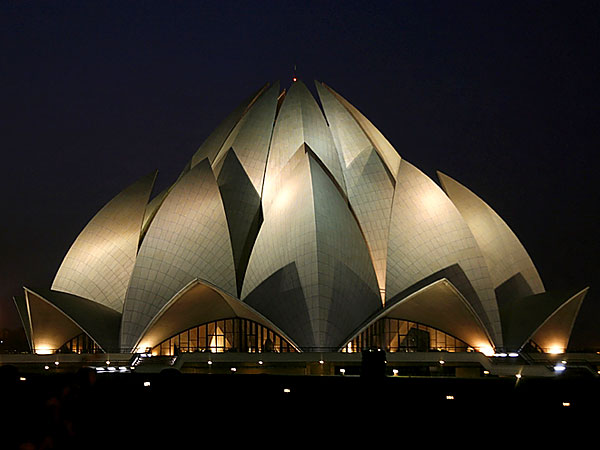
Light Watch 132: The Bahai Lotus Temple New Delhi (Google pic)
Taking ownership
Goa 27th July 2011
Day 4 in Goa and things are still moving slow. It’s confirmed I will go back to Goa over the weekend to complete at least a part of the works. The main issue that has dogged the progress during the last few days really is the unclear definition in regards to scope of work and thus ownership and responsibility. All in the end of course boiling down to money, fees and bottom line company profits, etc.
I came to do some testing and commissioning, primarily the programming of the lighting. What I found were several parties blaming each other for the lack of progress. First there is the clients own site team, project management and electrical engineer and his team. Then there is the sub-contractor, a (local) third party who provides all the additional manpower. And finally there is the supplier/manufacturer (in this case for the dimmer controls). As a result I find myself with a lighting installation with faulty wiring, lights that can not be addressed, unfinished dimmer racks, missing control panels and people blaming each other for the situation.
To me it is all about taking pride and ownership in the endresult. For that it needs to be clear who is contractually responsible for what! Who is responsible for the installation of the lights and physically conecting them to power and data cables, who for the cabling/ wiring from the lights to the switchboard? What about the control cables between the dimmer racks, light fittings and control panels? This has clearly been lacking and had to be sorted out. Only with clear directions, targets, responsibilities and ownership will we be able to achieve a satisfactory end result.
I have now left the site for my trip to Delhi, leaving the site team behind with a long list of works to be completed by the time I return this weekend. Fingers crossed!
In Light Watch another sneak view into the site. Have a look at the unbelievable amount of wires. How can someone in his right mind find its way through this mess and manage to connect each cable/wire without mistake? This kind of work demands discipline and methodology, step by step.
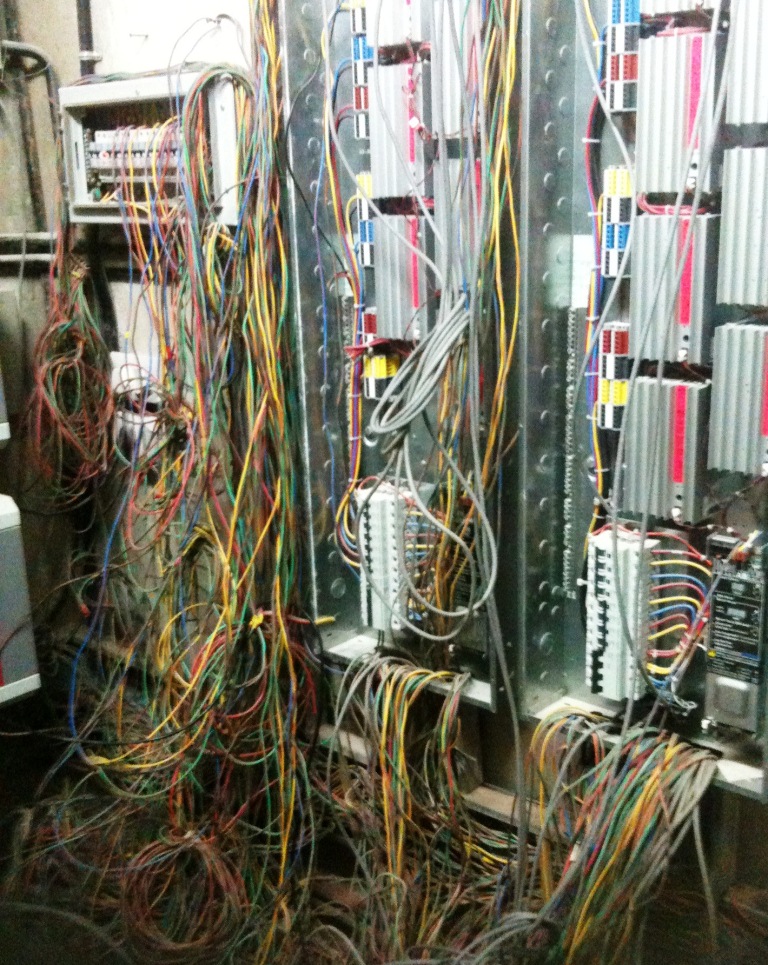
By example
Goa 26th July 2011
Day 3 in Goa and things are moving slow, looks like I may have to return back via Goa again after my Delhi visit, before heading back to Singapore. I had hoped to be able to start with some preliminary programming and scene setting, but it turns out that there is still so much electrical work to be done, such as termination of wiring in the dimmer racks. My meticulous testing of the circuits one by one to identify any malfunctioning, wrong connections or system failures brought more to the foreground then I wished for. As not all circuits were on or properly connected I could not really detect any lamp failures. Many things became clear that has prompted me to reschedule my India trip and loop my return back through Goa again and spent some more days here.
First of all lamp failures; though hardly installed more then 1-2 months I found at least 10-15% of the lamps already failing. I have ordered all lamps to be replaced. If the failing is due to faulty wiring they will find out soon enough. Secondly I found out that some circuits were incomplete, wrongly connected or not responding to any control address. The boys worked overnight to rectify as much as possible (and that was just the restaurant area!). One of my main bones of contention nearly always is cove lighting as there are few contractors that know, understand or even have the will to install linear lights properly. Ever climbed up and looked into a cceiling cove? The mess in there is scary! As contractors think it is out of view they don’t bother cleaning up or even properly wiring and cabling the lights.
To bring things to a good end there is only one way and that is to lead by example. Go up there and show them how it is done. It is amazing how much some good will and supportive explanatory action can motivate people to do things proudly! I hear some stories of colleagues screaming and scolding the site staff for ther sloddy jobs. But have they been properly shown how to do it? Have they been encouraged and instilled some pride and ownership? Leading by example has been my credo today 🙂
In Light Watch a sneak view into one of the ceiling cove lights. It shows the total mess and haphazard installation of fluorescent tubes. Try to shape some order and consistency in this …
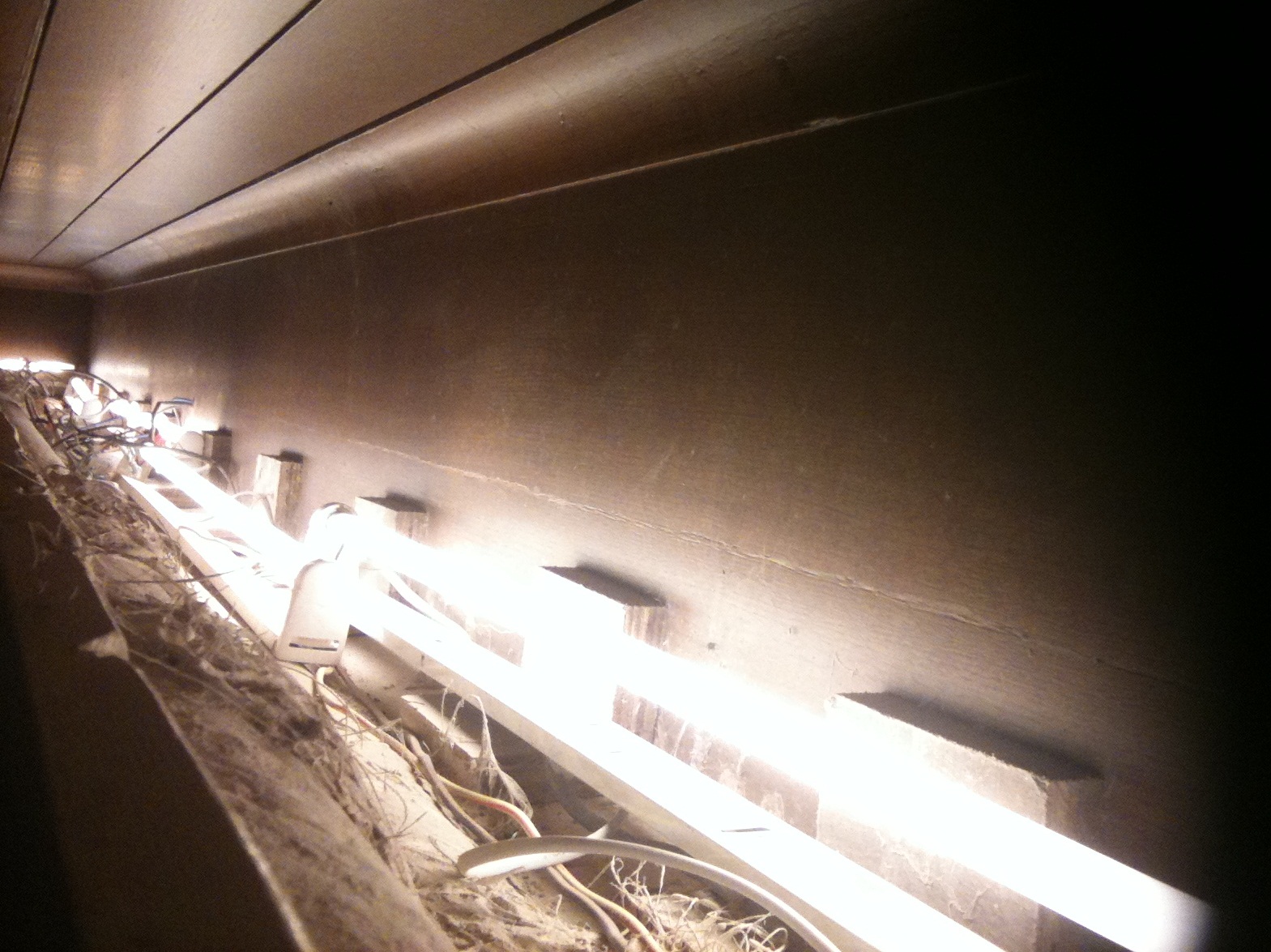
Light Watch 130: Cove light horror
Power of presence
Goa 25th July 2011
This week I will spent my time in India partly in Goa to continue the commissioning of a hotel project, part to meet some other project and potential clients. I arrived yesterday in Goa after flying in via Mumbai. Surprisingly, for those in the know with domestic flights in India 🙂 my flight from Mumbai to Goa was perfectly on time, so much so that we started boarding 45 mins ahead of departure time and taxiing to the runway 10 mins ahead of take of time! Quite typical for India, sleeping or running, somehow there is no in between state…
On site here the situation awaiting me is quite similar. Without disrespect, things happen when you shout (figuratively speaking) and if not attention is distracted and somehow previously agreed work becomes less of a priority. On my fist day on site yesterday (after not having been to site since March!) I spent all my time combing the site area by area from interiors to exteriors to get myself a “realistic” picture of the state of affairs. In company of the chief electrical engineer and the project manager I roamed the site during the day and same again during the night and made my notes for todays meetings and work.
Started the day with meeting the project manager and site team to review my assessment, get a team feedback and subsequently set out a work schedule for the coming days. I find that in most cases progress and quality of work is directly related to the pride and ownership that the site team takes into carrying out the works. For various reasons the team has changed composition several times, so it was first a matter of establishing responsibility, motivating those involved and make sure all the right troops were mobilised for the works at hand.
The next step is to tackle area by area identify, eliminate or remedy any fault or malfunction that is encountered. These are things like replacing/ repairing failing bulbs or fittings, checking and signing off on each and every circuit as activated by the lighting controls and so on. Subsequently the “troops” are brought in to action on this. Only when all this is in proper working condition, can I start programming scene settings for the various lighting moods required. Today the restauants and reception area were our first target, tomorrow I plan to tackle the ballroom…
In Light Watch a mood picture of the project by day taken during my last trip to give you a feel of the project. Its big, with 10 guest blocks a spa building and some more presidential villa’s.
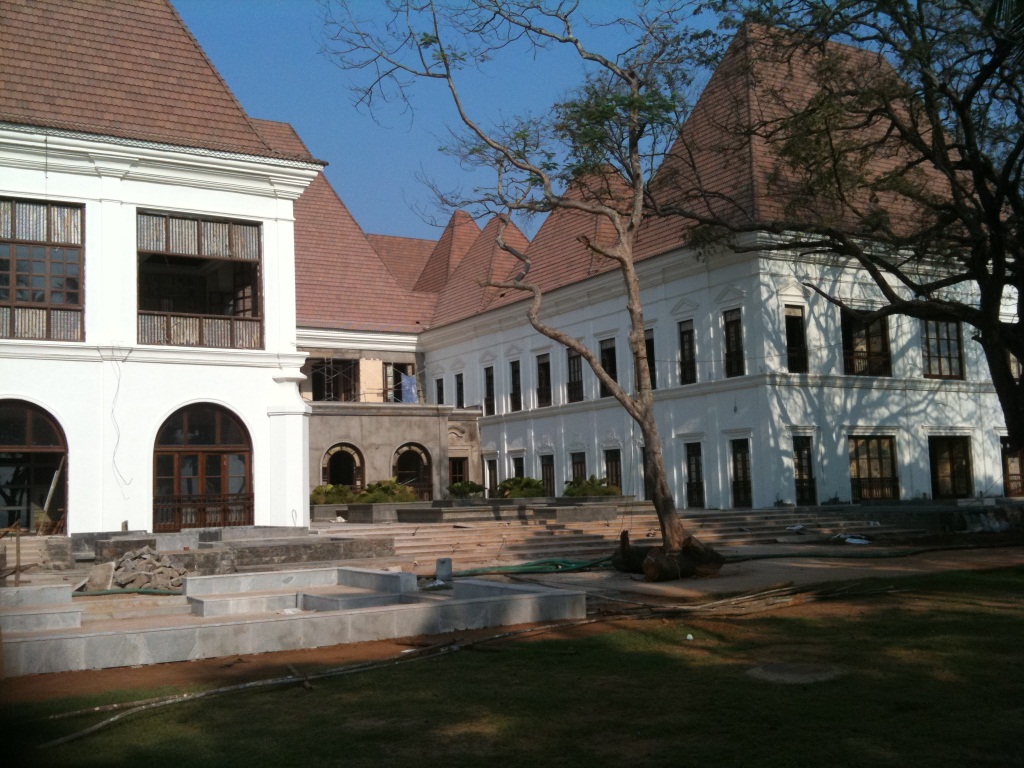
Light Watch 127: View to the main block housing
lobby and restaurants
Power of presentation
Singapore 22nd July 2011
It has been one of those days where I was mostly submerged in the preparation of presentations. I have a a couple of them coming up over the next few weeks. Generally it is last minute work but this time it is nice to have a bit of a head start for a change. A good preparation is half the work as the saying goes! Powerpoint has been the main driver used for our presentations and with the bells and whistles the latest versions provide we can add some dynamics. I have seen somepeople also adding sound and music, but I think that is a bit too much. Less is more. A presentation is always about simplicity and leading your audience step by step and getting them excited along the way.
I have done many presentations over the years and know that a good presentation is about anticipation. Know your audience and know what they want, what they expect. We are in command of that aspect. Lighting is very visual so inherently any lighting presentation is about visual interest, no matter how much technical details you wish to convey. A picture tells a thousand words. The rest is up to our expertise in filling in the dots.
While my team is putting the base presentations together I involve myself personally in the fine tuning of the presentation as I have my own way of presenting and normally up to 5 mins before I go on “stage” I may still tweak the sequence depending mood and feeling in the audience. In the coming weeks I have a pitch presentation for the lighting of railway stations in India, a lighting concept presentation for a hotel client in Indonesia and a key note adress to local governement authorities in Australia about upgrading lighting for sports and recreation facilities…different lighting applications, different audiences, different countries. The power of the presentations however if well done is the same!
In Light Watch ode to the end of an era. Last night saw the final landing of the Atlantis space shuttle marking the end of the Space Shuttle program after some 30 years. I have been a space enthusiast since my teenage years, its amazing how far we have come since Yuri Gagarin’s first space flight! Fittingly the landing occurred at night under guidance of artificial lighting and electronic radar systems. See the landing at: http://www.abc.net.au/news/2011-07-21/end-of-an-era-as-atlantis-returns/2805206
courtesy of ABC news.

Light Watch 127: Atlantis returns to Earth
Easy does it
Singapore 21th July 2011
Installation and maintenance are not always at the forefront of all designers but it should. Before something can look nice it has to be installed and in order to still look nice when you come back it should be easy to operate and maintain. Sounds logical right? But unfortunately as part of the ongoing quest by so many to do things on the cheap both of these issues often bite the dust.
Easy installation does not mean cheap installation, on the contrary. Note that I am talking about the quality of the lighting product not the actual lighting design. Part of our lighting design is of course location and accessibility, but assuming we have done that right, I am talking about the fitting quality. Today we had the visit of the WE-EF representative in the region who came to demonstrate his latest inground fixtures. While performance has always been at the core of this brand one of the features that has gone from strengths to strengths is undoubtedly the ease of installation and maintenance. The thouht behind it not necessarily being to make life easier for the installation/ maintenance contractor (though it ofcourse is) but most of all to eliminate as much as possible any possible mishaps that always happen along the way.
Typical issues with inground light fittings are location and integration of the fitting with the ground works. WE-EF was one of the first in the industry to provide block outs as part of the fitting design allowing you to install the block out at an early stage to integrate with the soft of hardscape and electrical works. The actual fitting then being poppd in at the very last moment to minimise exposure to dirty and damaging site conditions. One of the key issues in inground fixtures is further the integrity of its IP classification. Covers are often sealing of the lamp compartment but undoing the bolts/ screws that hold it together and refixing them properly afterwards have always been a weak point certainly with contractors wo generally have little ownership with the project, let alone the fitting. So creating a fitting where the cover can remain in place for installation and lamp replacement, minimising any impact on its IP rating is a real feature that should support prolponged quality of the lighting effects! Something we as lighting designers really cherish!
In Light Watch an example of inground lights as applied in one of my lighting designs; The Line Restaurant in Singapore’s Shangri-la. Maintaining the integrity and perforance of the lights is key!
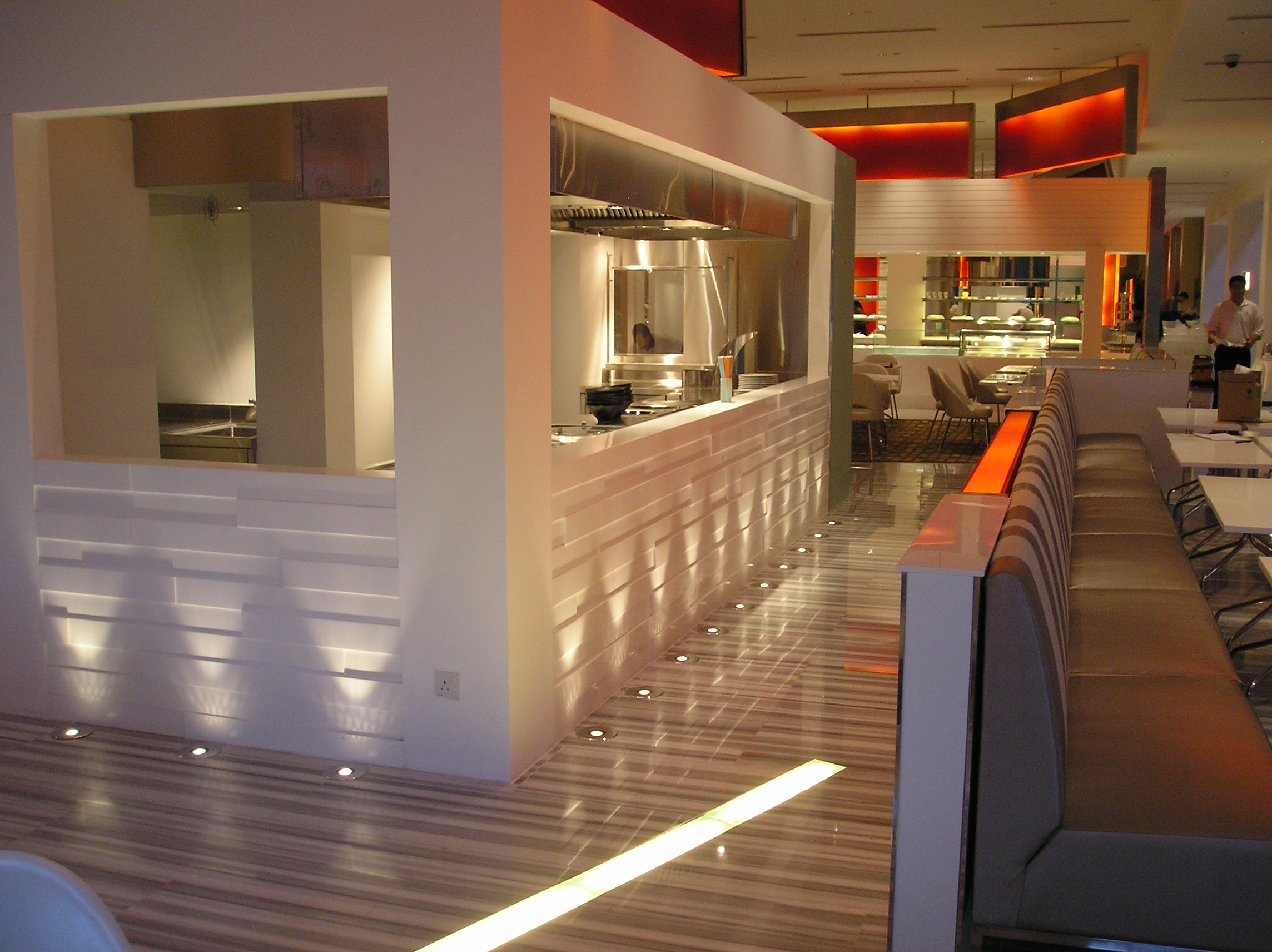
Light Watch 127: In-ground lights at The Line
 The long awaited book compilation of Martin's first year of blogging is available. Order now.
 Feedspot Top 100 Lighting Blogs