
LED…again
Singapore 24th May 2011
As lighting designers we are only at the beginning of really understanding the “physics” of LED lighting and its effects when applied in space, at least I do. With the technology continuously changing, improving, it is hard to build up some experience as today’s knowledge is yesterday’s history tomorrow! Every project has different needs and I am still building up my experience “porte-folio” using LED lighting technology in different applications.
Today I spent a good part of the day in experimenting in dimming LED. Being used to the fairly linear dimming characteristics of incandescent, LED MR16 retrofit lamps have quite different characteristics, at least the latest Philips type I am using. Dimming this LED from 100% to 50% hardly makes a dent, only when reaching about 30% is there a noticeable change in lighting intensity. The lowest level I could reach was about 10% before it sort of cut off. Overall not bad but it’s just the different characteristics I need to get used to. I also tested LED candle lamp replacements which again have different response curves, this time the real impact only happened in the last 10%, but allowing me to dim down to 1% (!).
The main thing is that we still have very little experience with LED when it comes to the long term effects as we only have the technology at our actual disposal since very recently. Even with a proclaimed 50,000 hours life span it would take more than 10 years at 12 hours usage a day to find out what happens over its life. It is not surprising that still many companies, developers and government authorities are still testing the impact of LED lighting before committing themselves to massive LED replacements.
In Light Watch today a test road currently in use in Singapore were for the next 3 years the Land Transport Authority (LTA) is testing LED road lights to better understand the long term benefits. Issues like performance, energy saving, durability and maintenance challenges are part of the trial study. Key of course is to compare apples with apples, in other words achieving the same lighting standards in terms of light quality, lighting levels, uniformity and glare control. At the heart of it all will certainly be a value for money assessment and the actual savings that can be achieved. A story to be continued, for sure…..
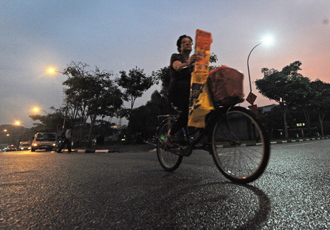
Light Watch 95: LED lighting at Tekka Lane, Singapore
Scene setting
Singapore 23rd May 2011
Probably one of the more difficult challenges of a lighting designer is scene setting. I have been playing around all afternoon with aiming and programming for the commissioning of the Chinese Restaurant, part of the Intercontinental Hotel renovation in Singapore. It all starts with the lighting design of course. The design needs to anticipate the lighting effects and more specifically the interaction between light, space and material finishes. Drawings and specifications are one thing but a 3 dimensional space with finishes and furniture is a totally different experience. This is when you find out whether your anticipation and mental visualisation of the lighting effects and overall mood comes out or not.
Once the contractor has installed the lights all is still messy. The lights are aimed without purpose, the space fit out is not completed, floors and walls are mostly still bare, so inevitably the lighting still does not come out to its value yet. People have a tendency to start commenting right there and then, which is a dangerous thing as the space has not been validated by proper aiming, focussing and mood setting. Until such time that all furniture and other loose items, decorations and artworks are in it is hard to comment and only experienced lighting designers know how it will more or less turn out. I say more or less as there always seem to be last moment surprises. Artworks being smaller or bigger than originally planned, material finishes turning out glossier then originally specified, space planning being adapted by the interior designer or operator because in real 3D it looks more busy than on the drawing and so on. A classic situation is “unexpected” ceiling space constraints, limiting the installation of downlight. This afternoon I found out I could not adjust some down lights as ceiling ducts prevented me from tilting the reflector! Any how we managed work it out and got all lights aimed and focussed. The dimming schedule specified is close to our liking but will need some tweeking over the days to come. Looking good!
In Light Watch today one of the typical LED issues, the multiple scalloping. The restaurant uses 100% LED, all nice in warm white (yes real 2700K) light, but the LED source (Philips 10W Master LED) produces a multiple scallops. I show the picture below for your reference. As it turns out it sort of looks decorative and I like it…but it was not fully planned this way 🙂
(apologies for the bad picture quality, snapped with my Iphone on the run)
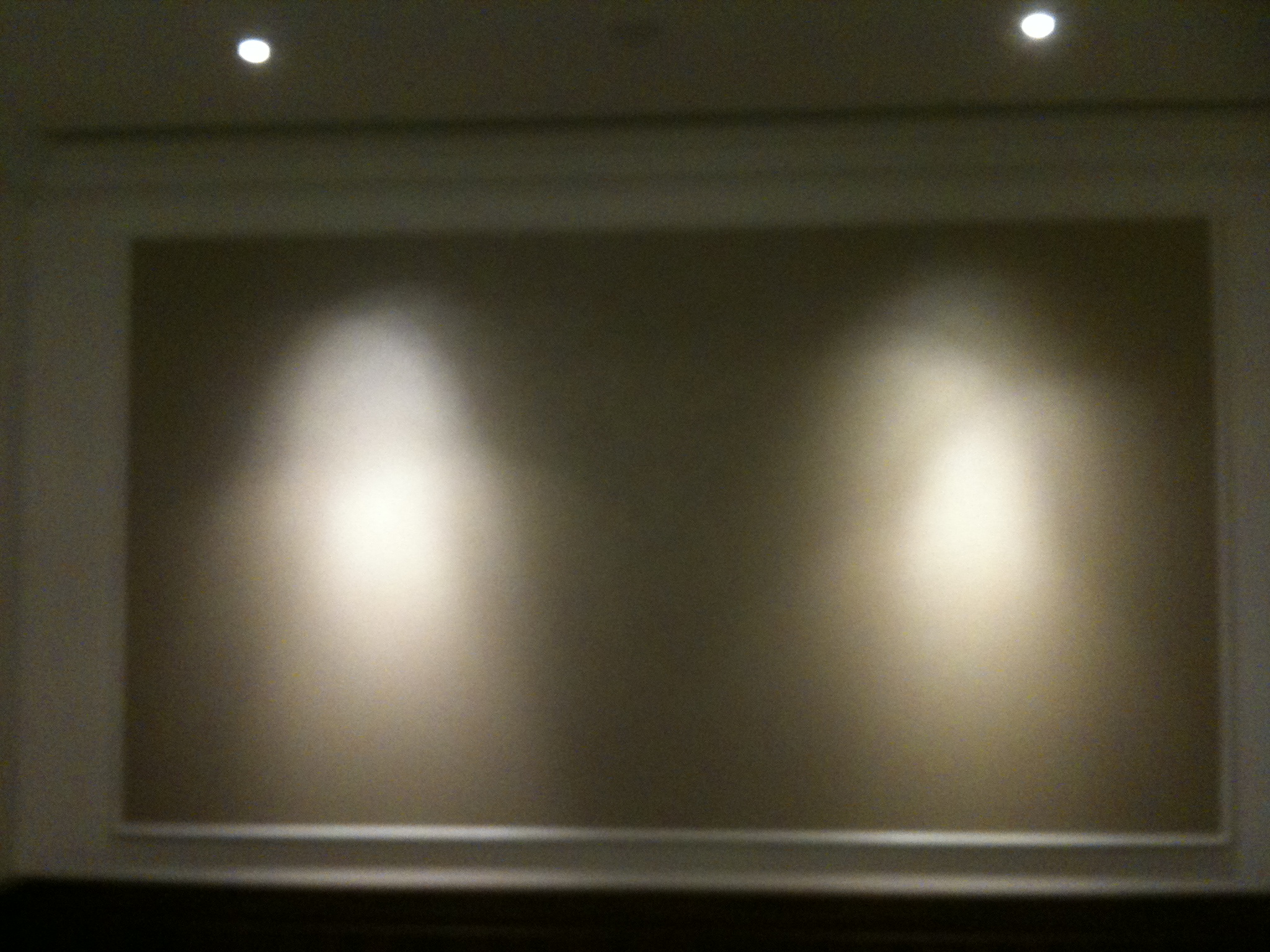
Light Watch 94: LED scalloping on wall
Perceptions
Shanghai 20th May 2011
Perception is a real subjective thing. I pondered on this while listening to the news in regards to the arrest of and accusations against Dominique Strauss-Kahn, the head of the IMF. There is the “victims’ side of the story and there is the “offenders” side of the story, guilty versus innocent. Who is right, who is wrong? We shape our opinions based on our interpretations of the news I guess combined with our own cultural beliefs and subjective perception of the situation. It is all in the eye of the beholder as they say. It is very hard to stay neutral and not form an opinion until proven guilty…
This phenomenon happens all the time in our lighting world as well. Without knowing all the ins and outs it is hard to judge lighting installations. We judge by our perceptions and subjective interpretations of what we see. The funny thing is we always seem to think bad things first in our assumptions. We are quick to criticise and point out the shortcomings or what we would have done “better”.
The truth is we don’t know what has driven a project to its end destination. I have been involved in projects were communication between client and ourselves broke beyond repairs when for instance budgets were reduced to impossible levels to create a satisfactory end results. The point is that these realities and background stories are not known to the outside observer who only perceives the end result. When lighting blends in well and is in harmony with its environment, it feels good and in balance. Therefore people don’t fee l compelled to comment. I often say the best comment is no comment!
As to commenting on other peoples lighting designs I have learned to be careful and not do that other then with caution and clarification that I do so purely on visual assessment without knowing the details or project history.
…Never judge a book by its cover 🙂
In Light Watch today one of my own projects from a few years ago in Shanghai. The light up of several buildings along the famous Bund. We mainly beat the local companies by our energy story. Most building lights were using heavy duty floodlights (1-2 KW) but with very low efficiency (and a lot of pollution!). Our design catered for the same but with one fourth of the energy (250-400W) but with 80% efficiency…
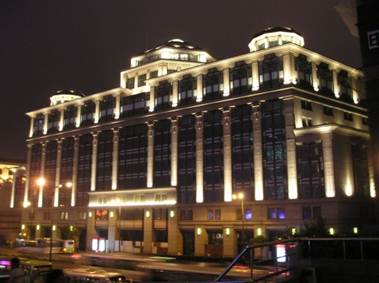
Light Watch 93: Shanghai, the Bund façade lighting
Electricity woes
Shanghai 19th May 2011
Two of the biggest economies in the world, China and Japan, are both facing huge electricity woes, but each for totally different reasons. China is plagued by drought and as a result electricity supply, which for a great part consist of hydro-electricity, is suffering. I do not know the exact figures but at least 20-30% of the electricity supply in China comes from water based electricity production. In Japan it is the direct result of the earthquake, the subsequent tsunami and damage of the nuclear reactors in Fukushima. Here as well it is estimated that the elimination of the nuclear power supply affects about 20-30% of the country’s electricity needs. Interestingly both have been caused by natural disasters.
With the summer about to start in full force both countries are trying to think out of the box to reduce power usage. Specifically in Japan people suddenly realise that there is no unlimited abundance of energy and everyone is asked to do his bit. As a result there is apparently a rush on the much more energy efficient light sources, energy saving gadgets and so on. Cities are looking at ways to reduce the night time usage of public lighting. The challenge here is to do so without affecting the legally required minimum lighting standards. Therefore I would not be surprised that in the coming time lighting standards will be reviewed and some standards lowered. Though not always said aloud, many of the lighting standards have (in the past?) been driven my commercial motives considering that manufacturers are also part of the councils deciding and putting these standards together. Let’s see…
In an interesting twist the Japanese came up with the idea to ask business people to rock up at work in T-shirts and sandals this summer rather then the usual business suits and ties so the offices can reduce the need for air-conditioning and so reduce the need for power.
After the Bund yesterday in Light Watch today the opposite of history, Pudong, the sprawling and dynamic financial centre of Shanghai. A few decennia ago this was a just some waste land. It is amazing to see how quick the skyline has changed and is still changing. I was here in 1995 for the first time…gee…how it has changed!
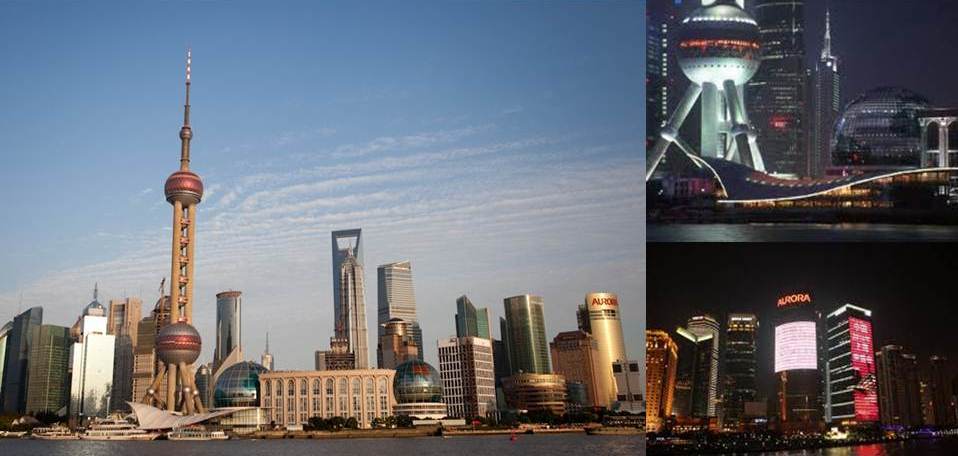
Light Watch 92: Pudong skyline, Shanghai
Black box
Shanghai 18th May 2011
I know it was quiet from my side the last few days…due to some public holidays in the region. Yesterday was Vesak Day and we collectively decided to close the office Monday to have a nice long weekend. Meanwhile I have travelled to China where I have not been for quite a while, since I started with KLD. Nice to be back…Over the last few days I read that they found the black box of the fatal Air France flight that crashed in the Ocean about 2 years ago and where now analysing the data that could explain why the plane crashed.
This made me thinking ( I may have even blogged about it before) that with computer and chip technology so advanced these days that we could probably develop a “black box” for our light fittings. How difficult could it be to develop a little computer chip that records the usage of each light fitting? I know we can track a lot when lights are connected to a control system and computer, but I am just thinking, why not a little chip in each light that can tell us (and the manufacturer obviously) why the light finally failed. It could keep track on burning hours, switch and control patterns, voltage variations, surges, light output variations, lamp replacements and so on. I am not sure how well we already can track this, but it seems something that could be highly interesting and educating to improve the quality of lights and pinpoint behaviours and other matters that could precipitate failure. Something to watch out for, I am pretty sure something like this is or will be available soon.
In Light Watch today Shanghai’s famous Bund, the old historic waterfront walk along the Hang Pu River. A stroll at night is a must just to take in the sights and sounds of Shanghai. Many buildings date back from the old days, a stark contrast to the modern skyline of Pudong with its many skyscrapers. The Peace Hotel is one of the historic buildings recently refurbished and now operating under the Fairmont brand. Its green pointed roof is a well known landmark feature.
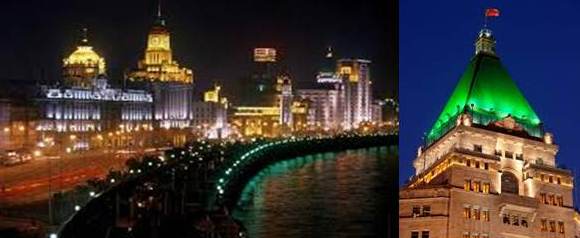
Light Watch 91: The Bund and Peace Hotel
Light therapy
Singapore 14th May 2011
I am not superstitious and the fact that yesterday was Friday the 13th was not the reason I stayed out of blogging, just had a busy day and late night. With a relaxed weekend ahead I now have all the time to write my blog 🙂
A subject that seems to be worlds apart yet very close to our job as lighting designer is light therapy. We focus day in day out on placing our lights in space with the aim to improve the environment we live in, but some people specialise day in day out in the treatment of our human body with light, fighting diseases and rejuvenating our body. I happened to catch a program on TV on light therapy. It basically spoke about how LED technology has made progress in this area with skin treatments focussing on LED lighting rejuvenating the collagen in our body. Collagen is a type of protein, fibrous in nature that is a sort of “glue” in your body connecting and supporting things like the skin, bone, ligaments, muscles, etc. (I googled this…). So it is easy to understand that “healthy” collagen is imperative for a healthy body!
And there is where LED lighting technology is making its entry. By radiating red LED light (apparently in the 630+ nm range) on the body it penetrates the skin to a certain depth and the collagen is regenerated. When applied to the face it apparently does wonders and is sold as a revolutionary anti-aging treatment! The regeneration seems to firm and tighten the skin resulting in a reduction of lines and wrinkles. Not surprising it is popular for facial treatment. While red light seems to rejuvenate collagen, blue light (in the low 420+ nm range) has a photosensitive impact to acne.
In a broader way, it supports the view that we need to be exposed to the full spectrum daylight daily. Daylight has all these colours and giving your body a daily dose of (full spectrum) daylight can only be good. Designing our lighting environments with maximum daylight and full spectrum artificial lighting has to be one of our key considerations always.
In Light Watch today some LED light therapy products that you can find in the market. They range from small handheld devices to large scale panels.
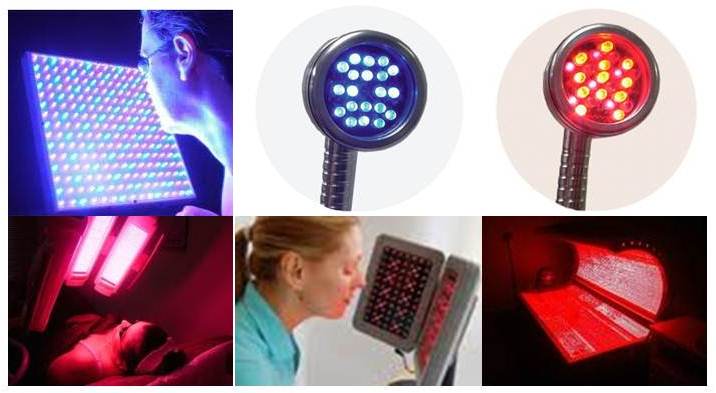
Light Watch 90: LED light therapy products
Brand representation
Singapore 12th May 2011
Not all lighting suppliers take short cuts in case my blog yesterday was misunderstood! Let me elaborate a bit on lighting suppliers today. They are generally the local representative of the principal brand manufacturers. They have an office in the country or main city (depending on the country size) and serve their clients’ principally in three different ways; through direct project sales, through wholesalers/ contractors and through public retail. Some suppliers focus their sales on one or two target groups only; others choose to serve all groups. Obviously sales in public retail require different knowledge then supply in professional architectural lighting projects.
The thing with lighting suppliers is that the mix of product agencies can change any time. Today they represent brand X, tomorrow this may have changed and they represent brand Y. While they have a control to a certain degree over the brands they wish to carry, it is mostly the principal manufacturer that decides who they want as representative agent of their brand. Choosing a good supplier/ representative agent is not an easy task certainly when you are based in Europe as manufacturer and wish to find a sales representative in Asia for instance. It is therefore not surprising that many manufacturers turn to lighting designers like myself to get advice and recommendations on suitable suppliers.
To me a good supplier/ agent is one who has managed to weather storms (read recessions) over the years and proven to be a stable and reliable point of support. There are many lighting suppliers who have been long and loyal representatives of a brand for years. As lighting designers we know what product we need but the product is as good as the people supporting it. Suppliers/agents need to act responsibly in the interest of both the manufacturing principal as well as the client, they are the critical middle man. They need to be responsible, flexible and focussed on a satisfying end result. Failing to do so result in both principal and client being unhappy which is not good for the brands’ image.
In Light Watch today some more on under water destinations…I mentioned the underwater restaurant in the Maldives yesterday. Today I mention Dubai. The recently completed Atlantis Hotel on the Palm in Dubai has many under water attractions, their restaurant only being one. I heard that Dubai is planning a full scale under water hotel in the middle of the sea…
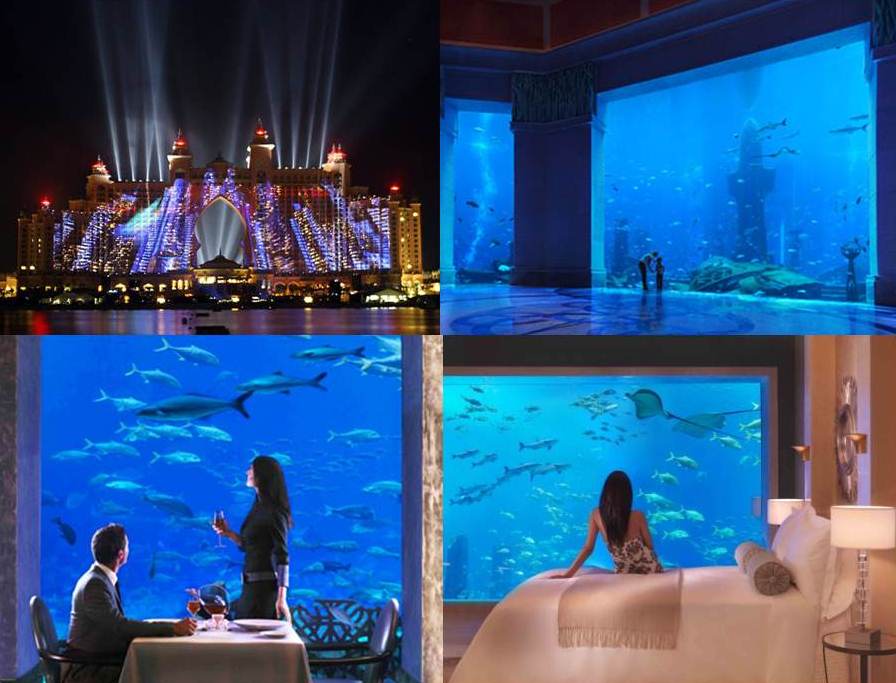
Light Watch 89: Atlantis Hotel, Dubai, The Palm
The short cut
Singapore 11th May 2011
Today I want to share some of my site experience with contractors, more specifically lighting suppliers. Somehow they always try to take a “short cut”. While I can understand you want to minimise input/work and maximise output/profit, it needs to be done with the overall project success in mind, not only your own. Unfortunately not many contractors/suppliers see it that way. On the project site today the project manager spotted one of the contractors putting a cracked tile on the floor, obviously thinking it would not be noticed and that he could get away with it (saving one tile in the process). He then suggested to “fill the crack” and then sanding and polishing it invisible. Not wanting to listen, the project manager then grabbed a big hammer and broke the tile into irreparable state, forcing the contractor to replace the tile.
On the lighting side I discovered that the supplier had only delivered 1200mm T5 tubes for cove lighting. To create a continuous linear wash without dark spots, the tubes have to overlap each-other a bit (we generally recommend 50-100mm, not more). But with the coves varying in length we found some tubes overlapping more than half a tube’s length! That obviously defeats the purpose as instead of dark spots we now create bright spots where we have the extreme overlap! The reason…supplier trying to take the easy way out, rather than to figure out where to put the shorter 600mm versions he just went on to put the 1200mm everywhere!
This approach to work delivery is very common in all projects and that is why we need to check site and be on top all the time. Contractors and suppliers always look for the easy way out, the short cut, and unless you spot the fact in time it often is too late when you do discover it as then all is already done and installed. Getting them to rip it out and redo would then seriously compromise the completion and handover schedule…then what to do?
Continuing on yesterday’s under water theme, in Light Watch today one of the first under water restaurants, presumably the Hilton in the Maldives. I would assume it is a seafood restaurant…Can only imagine the stress these fishes go through seeing their mates being eaten up…As too lighting and effect you would not do this in one of the busy (dirty) harbours of Hong Kong or Rotterdam… 🙂 !
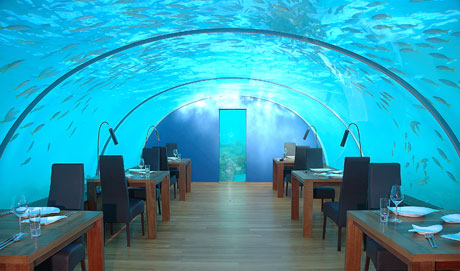
Light Watch 88: Under water restaurant, Maldives
Under water
Singapore 10th May 2011
One of the most challenging applications in terms of lighting design has to be the lighting for water features. First of all lighting, electricity and water do not really mix. Secondly the extreme conditions of being underwater, with heat generation in an enclosed and sealed environment really is putting high demands on the design of the fitting and lastly the corroding nature of water eventually mixed with chemicals also require the highest quality of materials and finishes. It is therefore not surprising that very little lighting manufacturers venture in this type of light fittings. Many manufacturers produce high IP – rated light fittings, IP65 to 68 types, but most of them are not really suitable for full and permanent submersion. Some can only withstand water pressure up to a certain depth.
Today I had a really interesting meeting with a company specialised in the manufacture of water features and who is now in the process of developing a great range of LED water based fixtures, a logical step, right? But the key to underwater fixtures is the installation. Having prototypes that produce a cool lighting effect is nice but that is only half the work. Specifically under water the installation is critical. Recess mounting in pool walls, base mount on pool floors, linear arrangements, etc. The main challenge is the power supply to the lights and the ability to maintain the light fittings from an underwater position. In addition the underwater fixtures need easily installable casings that be fixed neatly. Many underwater lights currently available are rough, big and cumbersome, often not a pretty sight. But with the coming of age of LED lighting many new opportunities are presenting themselves to develop neat small and really flat lights (easy to embed, recess or attach), lights that can be incorporated in water spouts and other water features without the bulky attachments and brackets.
In Light Watch today one of those under water attractions that would not see the light of day if not for lighting: Under Water World. There are many of those around the world. One is located in Singapore’s Sentosa island; the aquarium has a glass tunnel that warps around the aquarium under water. Lighting has to be designed such that it looks and feels like daylight. Most of all bring out the beautiful colours of the many fish, coral and other under water species.
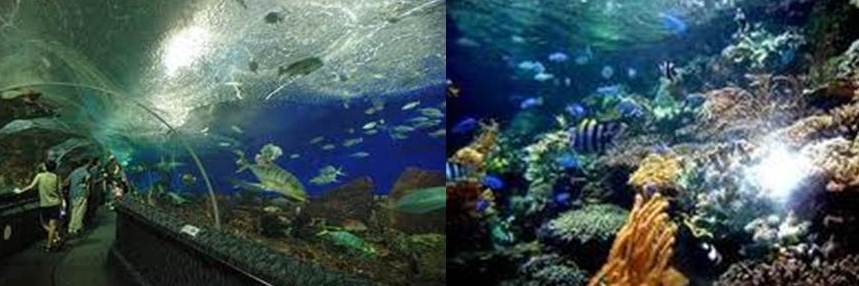
Light Watch 87: Sentosa’s Under Water World
Variations!
Singapore 9th May 2011
Variations seem to be a good theme to blog about today. Not only are we looking at some “variations” in the Singapore electoral landscape after the opposition won a remarkable (for Singapore standards!) 6 seats in Parliament, today I spent some time on site of one of our projects talking to the contractors in regards to variation claims. The difficult thing for every project is to log in a budget, come what may…No matter how much time we spent in ironing out all the details and coordinating with all parties involved, somehow there is always something slipping under the radar.
In this project we went to great length to make sure we had a grip on the budget costs and any subsequent variations. Recently all changes and variations were approved and signed off. Last Friday however when walking the site with the contractor we discovered that not all changes had filtered through! The electrical contractor has everything covered through the coordinated ceiling plan, our lighting layouts, control schedules and fitting specifications. The ID contractor has everything covered through the same coordinated ceiling plans, the ID layouts, ID details and specification schedules. So how come a detail can still slip through the net?
The origin of this seems to be that the lighting detail involving change in the interior design came from us. We suggested a new lighting effect when we came into this project, it was welcomed by the interior designer but not captured as a change in their drawings, even though we produced a schematic detail for the installation. So their drawings went out for tender without our lighting detail (in this case a cove), our drawings went out with the detail, with all light fittings procured, all electrical cabling laid to location accordingly…but no cove. We will now have to be creative in finding a solution.
Who is to blame? I guess we all are …It’s a long story…
In Light Watch today a picture I just took earlier at sunset of a work site. The colour of the sky at sunset silhouetting the cranes hovering over the site. Contractors have a knack of playing the variation game, I guess the only constant in life is the sun…it comes up in the morning and sets in the evening 🙂
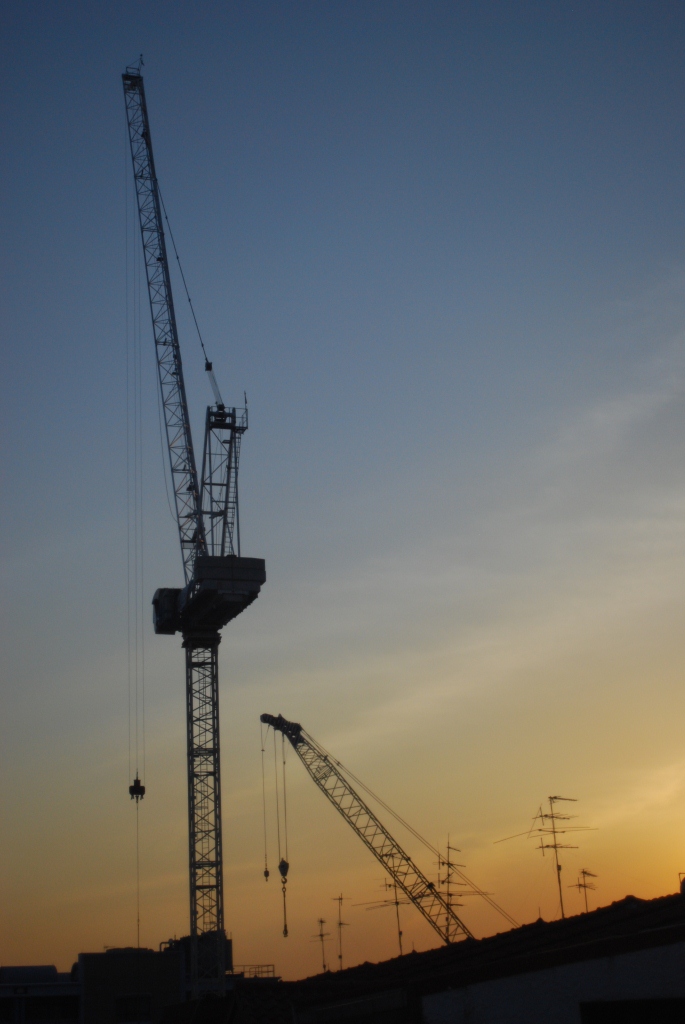
Light Watch 86: Sunset at work
 The long awaited book compilation of Martin's first year of blogging is available. Order now.
 Feedspot Top 100 Lighting Blogs