
Earth Check
Singapore 7th June 2011
When I recently attended the Hospitality Architecture and Design conference (HAD) I came to know about an organisation called Earth Check. I probably should have known about this company long ago but I didn’t. Their website states that EC is a web-based solution that provides tools to track and measure resource usage and waste output, enhance design and operational efficiencies and encourage corporate and social responsibility. I found out that my client (IHG) has been using them already for quite a while.
I am particularly interested for two reasons. First they apparently involve in predesign testing of models and concepts to assess the feasibility and potential success rate of the proposed design. This is helpful as it can help steer the sustainability of the design in the right direction. Secondly they provide “after sales” support by monitoring the company’s peformance on a monthly basis benchmarking the monthly results and signalling any positive or negative change. Basically keeping the finger on the pulse in regards to the benchmarked performance indicators.
While we are probably well equiped to develop the lighting concepts towards maximum sustainability, energy saving and profitability, it is specifically the monitoring of the performance after commissioning that interest me. Most of the time once we have commissioned a project we move on to the next project and rarely involve in after sales service. But with sustainability and environematlly responsible lighting solutions high on the agenda of many clients we should be involved in the actual operations part of the project so we can first hand experience how well (or not!) our design actually performs. The proof is in the pudding right? We are master (lighting) chefs at work but if we never taste our master pieces how can we improve our skills? I am now engaging with our client to get involved in this part as well as I want to know how well our design stands up against the performance indicators that benckh mark the project as green and sustainable, not just at commissioning but in the long run as well!
In Light Watch today the link to Earth Check’s website for more information: www.earthcheck.org. One of the hotels in Bali that has been receiving EC certification for good sustainable practices for years is the Alila Villas Uluwatu, which I feature here as reference. I should go and visit!
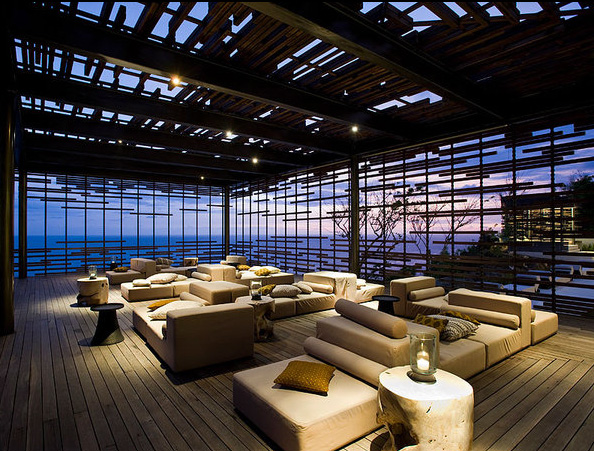
Light Watch 105: Alila Villa’s Uluwatu, Bali
Due dilligence
Singapore 6th June 2011
How far do you carry out due diligence? I was confronted with this soul searching question when I finally found out today that the company that was awarded the contract for the bedroom dimming system in one of our hotel projects had no previous experience in dimming LED lighting. I have to clarify that when we came on board the dimmer supplier was already brought on board by the owner, so working with them was sort of a given. It has happen before in other projects where the owner has certain preferences in regards to suppliers and manufacturers they wish to work with. As the brand is well known and established in the lighting control business I did not query there appointment, even though I personally had no previous experience working with them or their products.
I was told that the company was briefed about the hotel standards and the fact that we would have LED lighting in the rooms. So to make a long story short we did go ahead assuming the company with international repute would be competent in dealing with LED even though LED being a relatively new technology. At one point of time they did flag that they suspected their dimming system may have problems dimming LED, so we instructed the lamp manufacturer (Philips) to provide them with the same lamps as we had specified in the project to do some testing. When we received the test results we learned that they had successfully dimmed most lamp types except one which we subsequently took out of their dimming control system, so all good we thought.
But as the sting proved to be in the tail and now that everything is installed the LED pendant hums, some LED lamps flicker and the dimmer response time is very slow. All this came out in the last few days of commissioning. Though we have meanwhile found the solutions to rectify the problems, we have obviously been a guinnae pig for this company and taught them along the way how to do the dimming properly. But at the heart of this all remains the burning question whether I should have applied more due diligence to avoid our frustration at this late stage even if it had meant recommending against the owners wish. The morale… never assume anything! But I knew that of course.
In Light Watch today the famous 101 Tower in Taipei. I have had the honour to work with the architect CY Lee in the past and met with his team over the weekend when they stopped over for a study trip in Singapore…..
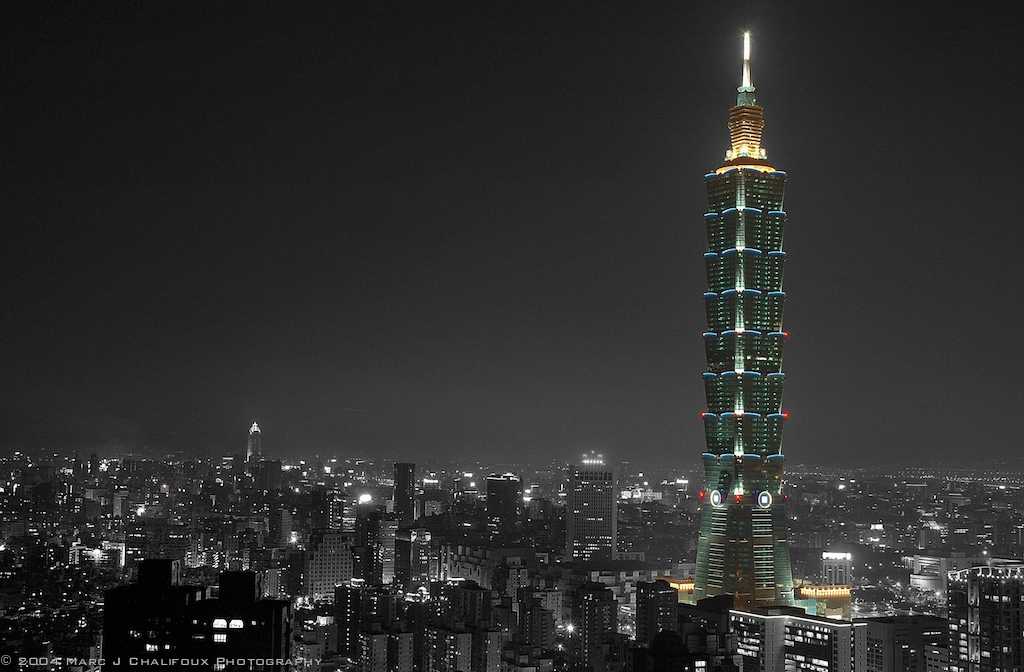
Light Watch 104: Taipei 101
Fish tan
Singapore 3rd June 2011
You read it correctly, it is not fish tank, but fish tan. Today I read about a fish dealer who has come up with an artificial tanning light for fish! It fits on an aquarium and aims to make his fish look brighter and more vibrant. The LED light (what else!) was developed by the fish breeder over a period of 2 years and claims that if the fish is exposed over a period of 6 months under the light the tan will last about 5 months. More importantly for him the “tanned” fish sell for nearly double the price!
It seems well known to the initiated that some type of fish (Arowana’s or dragon fish) deepen in colour when exposed to sunlight, so creating an artificial device like these LED lights that emulates the sunlight (including the ultra-violet light) will allow controlled tanning of the fish. The species apparently are one of the top fish export products of Singapore…see, we learn something every day!
I am not sure what to think of this. First of all I am principally against artificial things if I can help it. If we already warn people not to expose themselves to sunlight too long for the risk of potential skin cancer, what would six month continuous exposure to a “sunlight” equivalent do to the fish? Aren’t there other ways to create deeper colour effects? I am no fish expert, just thinking out loud…
On this note I have to mention my friend’s 3D TV products. He recently developed with his company a software program for 3D TV to recreate a “live” aquarium, pretty amazing. The 3D effect really brings depth to the TV making it look like a real aquarium. What is more you can actually “feed” the fish (virtually of course) and the fish snoops down on the food. I thought it was really clever. The only drawback of the 3D TV is that you need to be about 3m+ away to have a sharp picture but the 180 degree viewing angle is really cool.
In Light Watch today pics that were shown with the before and after effects of the LED tanning light.
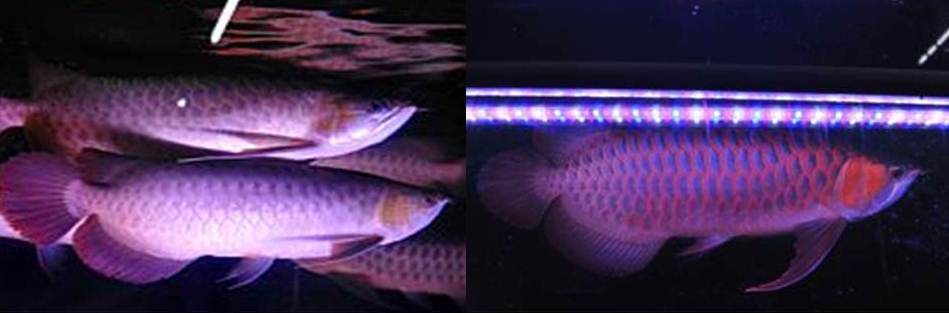
Light Watch 103: Fish tan; before and after
India
Singapore 2nd June 2011
Now here is an interesting country…those who have travelled there probably know what I mean. After China, India is the biggest economic engine of this region, a country with more than a billion people. China and India together represent about 1/3 of the human population on earth. They form part of the so called BRIC countries (Brasil, Russia, India and China) and are huge economies…Today I read that while all these economies are slowing down (but from double digit growth figures) India was the only one to record a drop in investments.
Now this has my interest as I am quite invested in India myself with several projects on the go there. It specifically caught my attention as it happens against the background of several high profile scandals, fraud and scams that has hit the country in recent times, like the Commonwealth Games, the 2G scam. It is therefore not surprising that business confidence is down a tat. It seems these figures support that view.
I can personally testify as I am sort of a a victim of the 2G scam too. It does not happen every day that your client is sent to jail, but one of the casualties of the 2G scam, that saw the former telecoms minister land in jail, is also my client. Besides his real estate and hospitality business he also runs a telecommunications company which has been implicated in this 2G scam and which has landed him and his partner in jail too. I can’t comment on whether he is guilty or not, I really don’t know. I do know his company is very well respected; one of the biggest in the country and their appreciation towards us as consultants has always been excellent. However we find ourselves now in a situation where banks may be thinking twice about extending any further credit for his projects and it is therefore not surprising that pending the investigations most of their projects have been halted or slowed down.
Always expect the unexpected! India remains however one of the super powerhouses in the region and even though I am personally affected by this particular case, it has not reduced my confidence and enthusiasm for doing projects in India…just one of those things 🙂
In Light Watch today a tribute to India which undoubtedly has to be the Taj Mahal. I had the opportunity to visit Agra many years ago on one of my trips…The Taj is said to be particularly beautiful at full moon. The building itselfs reflects light in an amazing way…
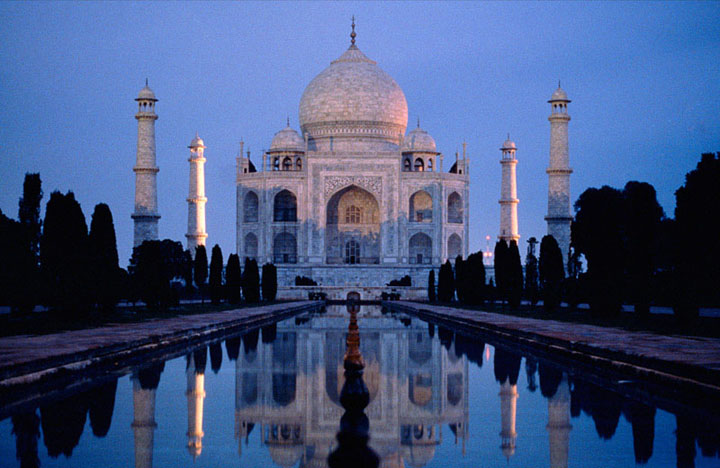
Light Watch 102: Taj Mahal, India
Electricity
Singapore 1st June 2011
The stories about electricity scarcity keeps filling the news, specifically in high demand areas such as populated countries like China, India and Japan, I blogged about it not long ago. Today I read that China is to phase out electric bicycles to combat the scarcity? Now that is interesting as electric cars and other modes of transport are being promoted as environmentally friendly in order to reduce our oil (petrol) consumption, air pollution and so on…? I find this quite intriguing, I must say.
It points to the pure fact that we need to reduce the use of our natural resources to a minimum, whether, electricity, oil or water. Not to forget that our whole food supply system is also under threat from the changing climate. As a result some resort to desperate measures to keep their food production going like in China where recently farmers “drugged” their water melons only to see them explode like balloons! Where are we going…?
The more I read these stories, the more I am committed to make my designs as environmentally friendly as possible, with minimum energy and minimum wastage. This all results from a good and thoughtful lighting design, that is obvious. We select the lowest possible wattage, the best possible optics to reduce light spill, create the best possible lighting layouts and make sure we minimise usage to only when we need the light. But what is less obvious is the intangible side of all this. We need to educate the client, other decision makers and stakeholders. If they are not “with us” they may not spent the money to achieve this.
In that light another challenging issue is that of lighting standards. Over the years the comfort and quality standards of lighting have steadily risen, assuming abundance in energy supply, but we should not forget that some of these standards have also been driven by commercial reasons rather than actual needs. Do we really need 3000 lux vertical in a soccer stadium for TV-broadcasting? Today’s cameras are highly sensitive and maybe 1500 lux would work too (…I know it does)…my point is we should continuously be vigilant in our designs and strive towards energy excellence in our lighting proposals always!
In Light Watch today a clever concept developed by Philips called the Light Blossom, a street light that collects energy from the sun and wind and glows brighter when it senses motion…is this the way to go?
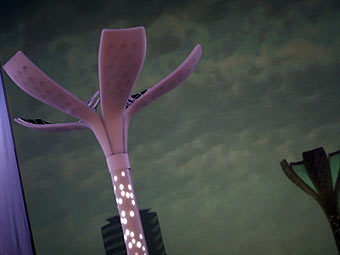
Light Watch 101: Philips Light Blossom street light
Networking
Singapore 31st May 2011
Today I spent the whole day at the HA+D (Hotel Architecture and Design) conference listening to interesting topics regarding the future of the hotel industry and networking with people I know, people I had not seen for ages and people I had never met before but had heard of and people I had never met or heard of before…it’s an interesting (and small) world we live in. It’s hard to believe that there are easily more than 100 hotel brands out there in the market. Only a small amount was represented in the conference. The conference was conducted in a ‘round the table” style with a moderator asking questions and the panellists from different back grounds giving their views, interspaced with questions from the audience.
The topics on this first day covered issues such as positioning, brand identity, the relationship between the brand and the designers, the rise of new brands, the influence of designers on the brand development and so on. Very interesting, specifically considering the varied back grounds of the panellists from leading brands such Raffles, Shangri-la to niche brands like Alila or more budget oriented brands like Onyx. A question from the floor on positioning asked what car they would be if their hotel was a car, benchmarking Raffles and Shangri-la as a Mercedes. An interesting question as it forced the panellist to actually think about it. Some wanted to be a Ferrari but admitted they were not much more than a Toyota… J
It was great to see that many mentioned good lighting design as one of the key components for a successful end result. It is a fact that lighting design definitely has found its footing in the hospitality design industry. What struck me is that there was not much talk about the impact on our environment and or the sustainability of the hotel developments, possibly due to the selected topics. As an exception one of the hotel operators (Alila) shared with the delegates that they were using a company called Earth Check in Australia, to monitor their sustainability on a monthly basis. After the conference we all adjourned to a watering hole were the real networking began…. J
In Light Watch today a link to the HAD EXPO and Conference. It is held yearly I believe and travels around the region. Last year’s one was in Macau. Check out the website at www.haplusdexpo.com
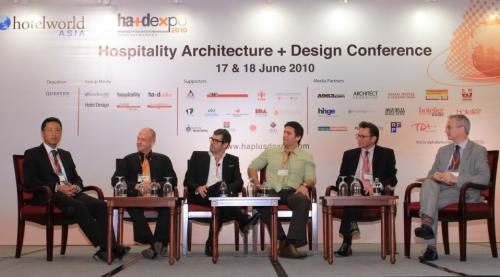
Light Watch 100: Picture of last year’s HAD Conference in Macau
Subjectivity and objectivity
Singapore 30th May 2011
It is that time of the month where I am writing my column for Lighting Today magazine again. I have been doing that for the past 8 years or so and always enjoy sitting down and reflecting on life as a lighting designer. This blog is a daily short form, but the magazine article allows me to spend a bit more time, sit back and reflect. My next subject will be about subjectivity and objectivity. Lighting designers are professionals who are supposed to make objective decisions based on experience and technical lighting design knowledge. But yet their decisions still carry a substantial amount of subjectivity in their judgment. Commercial projects like branded retail shops, hospitality, corporate buildings and food and beverage outlets generally have little subjective influence as the design is directed by company guidelines, operator manuals and so. These design criteria and decisions are therefore fairly objective. It is more the interpretation of the design guidelines that is left open for personal interpretation…subjectivity in objectivity.
Designs in the private residential sector depend very strongly on the subjective likes and dislikes. In the past I have gone out shopping with the client’s wife to select table, floor and ceiling lamps, but it is difficult to argue about taste, now can you? The role of the lighting designer in the private sector is more to bring the objectivity in the subjectivity…
A third component influencing subjectivity and objectivity are someone’s personal relationships. We like to deal with people we know, right? Lighting designers are not perfect and therefore we need to work or recommend people who understand the design business. This means that our objectivity may at times be clouded by who we know, not necessarily guided by what we know.
Finally, while objectivity may show the value for money of certain lighting solutions, it does not mean that the “subject” can afford it. So, objective recommendations may become affected by the subject’s means.
While objectively this all makes sense, subjective influences like affordability, personal taste (still any people hang on to the good old incandescent lamp) and preferences may swing lighting decisions either way! People may think objectively but mostly act subjectively…
In Light Watch today my focus is on Vivid Sydney, the Festival of Light and Music that started over the weekend and will be on till mid-June. The 3D projections on the Sydney Opera House look awesome. Take a peek at www.vividsydeny.com
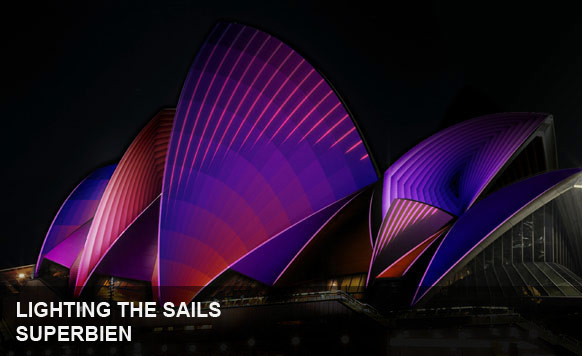
Light Watch 99: picture from the Vivid Sydney website
The art of lighting (artwork)
Singapore 27th May 2011
Most of our projects whether in a hospitality, residential or commercial/corporate environment have some form of art work displayed in the public areas, from simple 2 dimensional paintings to daring 3 dimensional art pieces. For us lighting designers we need to anticipate at an early stage as most of the time artwork only comes in at the last moment or is only conceptual on paper with the actual and final commissioned artwork only known when it is brought in for installation…an artist is an artist, isn’t it? Don’t ask them to give you detailed shop drawings!
How do we deal with it in the planning stages? If we are lucky the lead design consultant has some sort of overall concept with specific images in regards to the artwork, theme and proposed implementation plan, but most of the time we have a blank canvas with maybe some rudimentary indications of an artwork location, but no specific details in regards to type, size and look of the art work.
A good designer anticipates, he knows from experience what is likely to happen (budget cuts!) and plans his lighting in the knowledge that sooner or later some “blank” walls or “dead” spaces will be used for artwork. Architectural spaces need points of interests within the field of view and having no visual points of arrest will create a very boring and dull environment. We anticipate by creating brightness at eye level on walls, on objects, displays, features, with table lamps, pendants and so on. We paint the space with light in the knowledge that in some locations we will have an artwork that will create visual interest but if not at least our lights, wall washing and other effects will create some magic.
I have learned the hard way but now know what to expect. Again today I found out that I had done so correctly…thank god for lighting! It feels good when your gut feel indeed came through and you find yourself vindicated for your decisions 🙂
In Light Watch today I would like to share a special form of light art that I found recently while surfing the net…light graffiti. An artist by the name of Michael Bosanko creates these incredible images through his time based photography simply and only by using a few torches. Have a look…
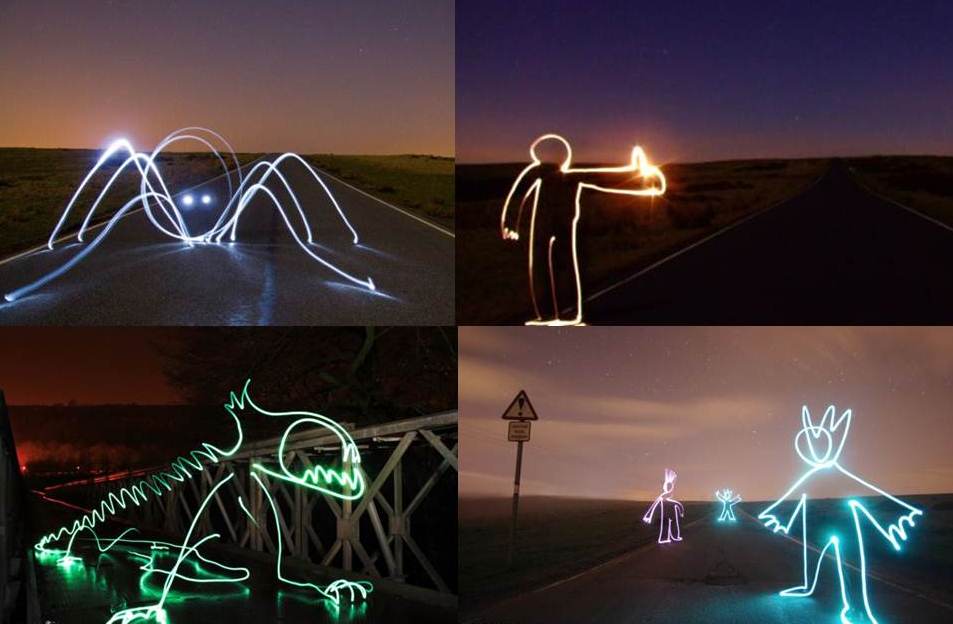
Light Watch 98: Light Art by Michael Bosanko
Moral ownership and copyright
Singapore 26th May 2011
Intellectual property is always an interesting topic. I am currently putting the last hand to our website (watch out coming out very soon now!) and as we are in the process of putting our company project references together there is always an issue of copyright, certainly in my case where I just started with KLD, but have a long list of personal achievements over the years in various companies. I have obviously a legitimate claim to all these projects from the past as I actually designed them. But my previous companies have a legitimate claim to the projects as well as the lighting designs were done by me when there and hence they are the intellectual property of the company, regardless whether there is still someone in the company with the project design experience or not.
I know it is strange and this afternoon when I visited an architect to introduce my new company KLD I was confronted with the fact that they had met my previous company as well. My presentation is open and transparent and I make it clear I was the designer and that the project was done when in my previous company, more so that the lighting design team that worked with me on these projects moved with me to KLD as well. In other words the project expertise to support and reproduce (!) the lighting design quality is truly in the company. A sort of moral copyright and ownership :). For my former company the situation is quite different, while they can claim actual copyright and ownership of the projects in reference, it becomes a more difficult proposition to sell the project expertise as the actual designers are no longer part of the company.
Since the key designers in my team were actually involved in many of the projects from our references I will list these projects as part of the company experience, as long as we are transparent about the fact that the projects were executed when in another company. Unfortunately not everyone in this market is always open and clear about their references…
In Light Watch today the invention that started all in lighting….the incandescent lamp. Many of us learned that Thomas Edison was the inventor of the long lasting incandescent filament lamp, but it is also well known that Joseph Swan also lodged a patent more or less at the same time for the same….
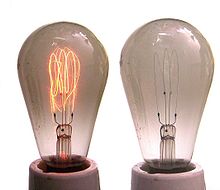
Light Watch 97: The early incandescent lamp
Link between fees and quality
Singapore 25th May 2011
The last few days I have been discussing our fees with client and operator for a project that is positioned at the high end of the scale, in other words a 6 (7?) star hospitality development. The brief calls for an international lighting designer with extensive experience in high end hotel projects. We did our presentation to the team and were very enthusiastically and positively received. We definitely fit the bill so to speak…
Having been shortlisted we are now in the negotiation stage and find ourselves confronted with an owner who does not match his commitment with his brief. After having submitted our fees we are now told the budget for the lighting consultancy is about 1/5th of what we quoted…what!!?? The budget mentioned is what we would quote for a motel or 2 star hotel or for just one restaurant in a 5 star development…while puzzling and frustrating this is the time to hang in and pull out the education registers. It is obvious that the client is not familiar with the operators brand image and related quality norms, at least the design impact of it. I contacted the operator who also fell of his chair when told of the budget. Anyone who would accept such fees would have to complement the fees with some other income which would obviously have to come from supplier commissions. The idea of appointing a professional lighting consultant is to obtain independent advise, value for money and cost saving quality solutions for the long run and not a design clouded by conflict of interest.
What worries me most with this type of client is that this mind set will undoubtedly translate into the budget for procurement later on in the project. Unless the client can be turned around and educated about the benefits of investing a bit more in consultant fees and product quality, the project is bound for frustration and disappointment. I have seen it all happen before…you keep your hopes up but it never happens. Get it right at the beginning, otherwise the end quality is doomed even before you start! You feed peanuts, you get monkeys…isn’t that the saying?
In Light Watch today one of those 6 star developments in Bali…I wasn’t involved but I did visit the place and brand image and quality definitely were taken seriously…
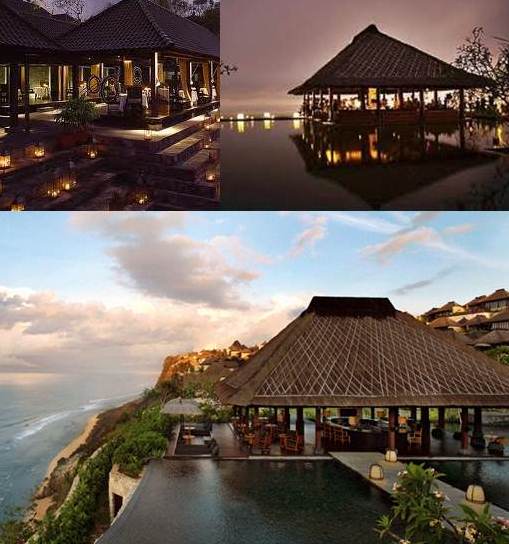
Light Watch 96: The Bulgari, Bali
 The long awaited book compilation of Martin's first year of blogging is available. Order now.
 Feedspot Top 100 Lighting Blogs