
Pre Light & Build 2012
Singapore, 5th April 2012
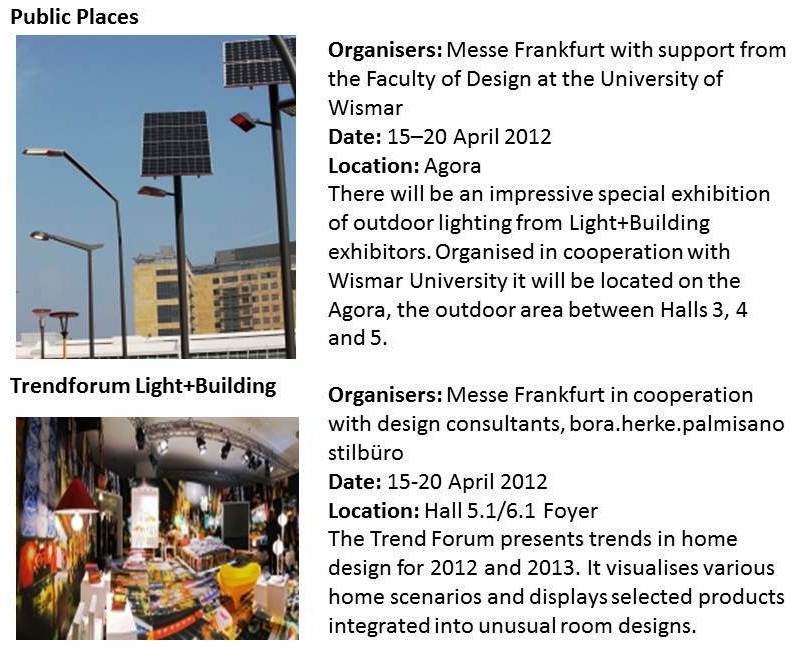
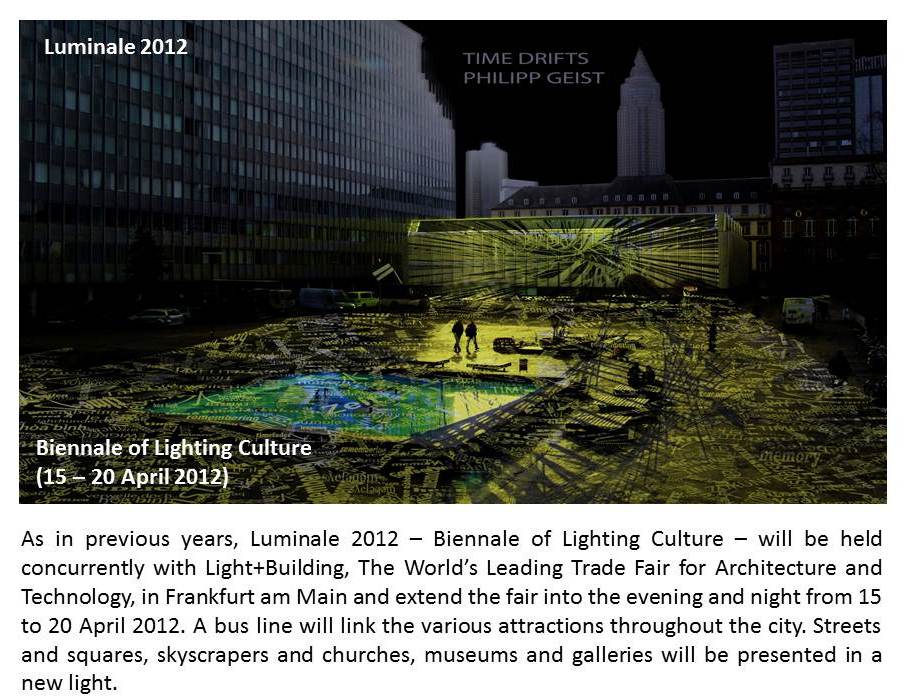
The excitement is mounting visibly for this year’s Light & Build at the Messe in Frankfurt (15-20 April). Since the last L&B in 2010 so much technological advances have been made that undoubtedly many exciting new products and systems will be showcased during world’s largest and foremost lighting fair. This is the space where each and every lighting manufacturer will want to be seen showing its latest innovations, the state of the art in regards to their company standing. With LED lighting now becoming such a must have product (probably for survival in the business!), cost nor efforts are being spared by the big manufacturers and key market players to make sure they are being seen as the “leaders and experts” in the technology. I am pretty sure that finding conventional lighting systems on display will be like looking for a needle in a haystack!
How do I know all this? Like no Light & Build before I have been literally bombarded over the last few weeks with invitations to the L&B exhibition stands and requests to attend related lighting events. Manufacturers stumble over each other to make sure you are aware they are exhibiting in Frankfurt, some wishing (pushing!) you to commit to firm meeting appointments on their stands. Never before have I had such a busy schedule already laid out even before I have even set foot at the fair! Add to that the various seminar events, PLDA’s annual general meeting all organised on the side lines and you can see that we probably need a holiday after the event the digest and recover from the tsunami of new products and information that we will be certainly receiving. Contrary to previous years I will probably not report on my findings on the day, rather using/maximising my time interacting and assimilating. I will then report/blog back the interesting bits and pieces that struck me as most relevant over the weeks following. I may change my mind but at this moment that’s my thinking…
With Good Friday and Easter Weekend ahead I will be of the radar for a few days…Happy holidays.
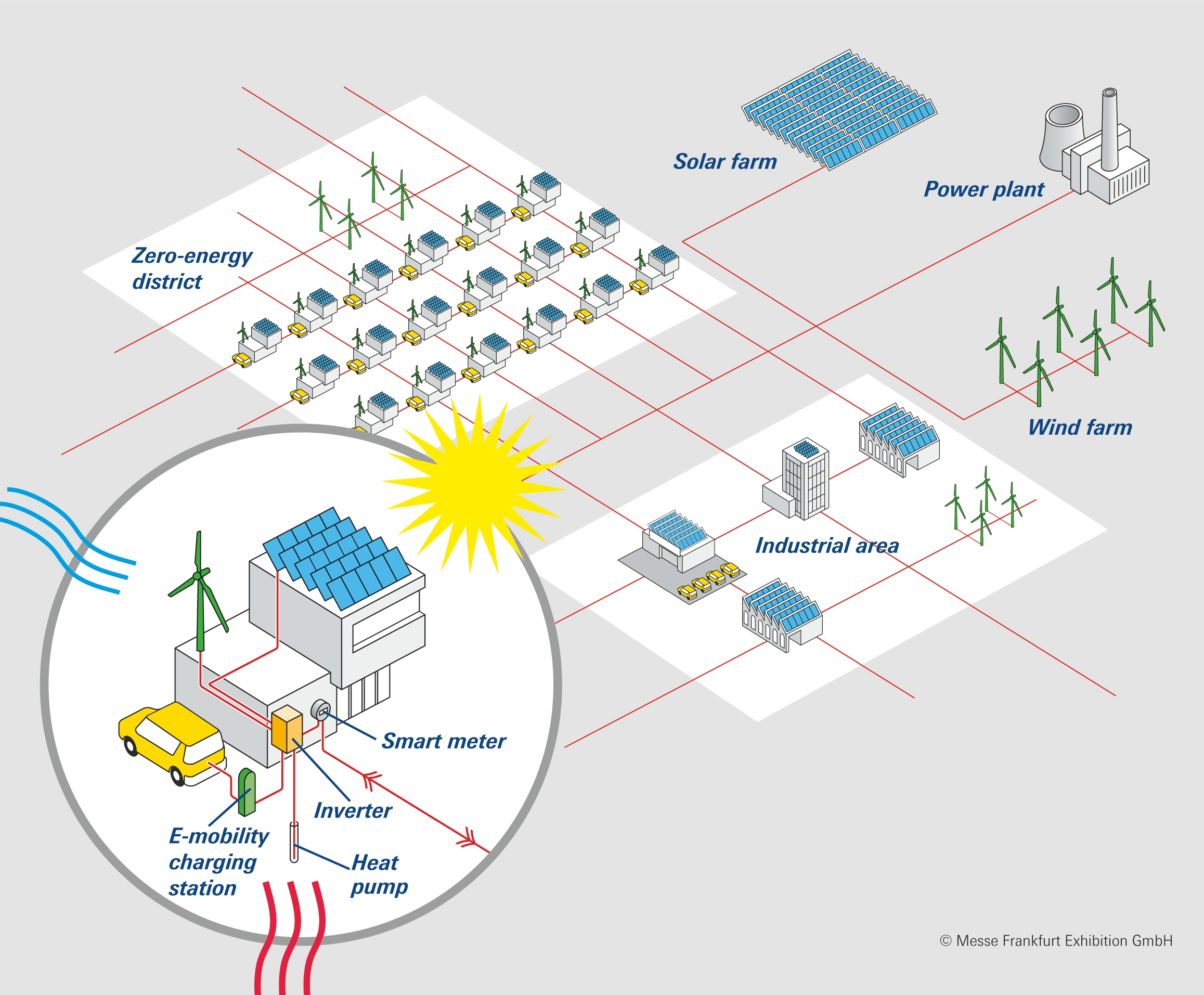
Light Watch 3-48: According to the L&B website, the main theme for L&B 2012 not surprisingly will be energy efficiency, with focal points on digitalisation of light and buildings and buildings as a green power station…no kidding…
The official L&B promo video from YouTube: http://www.youtube.com/watch?v=bBZpu7EEz0g&feature=player_embedded
Lighting, Health and Wealth
Singapore, 4th April 2012
It is undeniable that a good health is at the base of everything in life and as lighting can contribute to a better wellbeing, it is important that we do not forget to look at the holistic side of lighting. Philips, as many other leading manufacturers, has been instrumental in researching how lighting can improve our wellbeing. I attended with interest a presentation in our office today about the latest developments in regards to sustainable and holistic lighting. I headed this blog with the title lighting, health and wealth as of course all this in the end is done with the bottom line in mind. All these researches, lighting strategies and solutions are well meant, with true purpose and intention, but one has to realise (accept?) that if there was no money to be made with these, it would not be pushed to the limit by the manufacturers. LED of course is at the heart of everything nowadays.
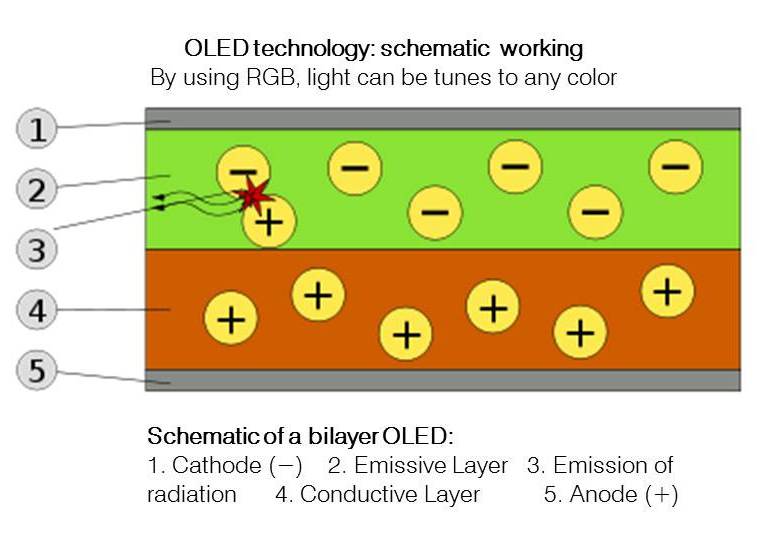
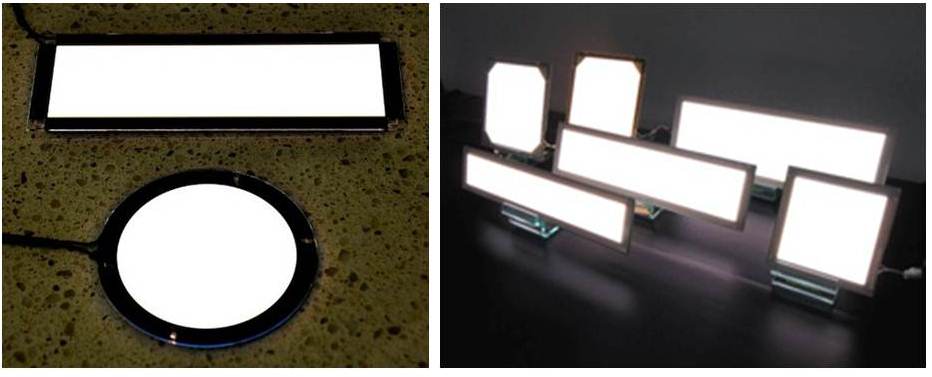
Having said that it is quite exciting to see how LED’s and OLED’s (at the centre of the presentation made to us today) will transform our life and the way we think about lighting. While many of us are still thinking in traditional and conventional ways (me often included!), we have to accept that this lighting technology has infinite opportunities. The fact that we can integrate the LED technology in building materials, fabrics, furniture and in the case of OLEDS can configure it to be transparent or reflective opens a whole new realm of applications. Set that against the background of the unbelievably fast developing information and communication technologies, social networking and you have a totally new mix of elements to create new lighting designs. The gap between your IPhone touchscreen information technology and the OLED lighting technology is practically bridged!
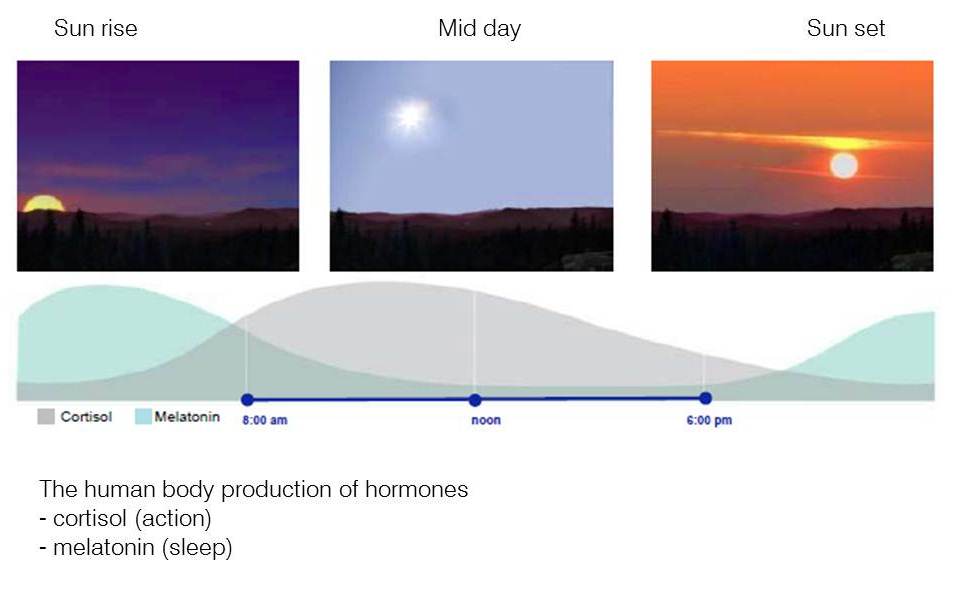
As to health we now have the opportunity to truthfully reproduce daylight characteristics as we tune the (LED) lighting to our needs in terms of colour, intensity, exposure together with its biological and emotional impact. All this wrapped inside the sustainability packaging of course!
Light & Learn 3-12:
About tuning the light to daylight characteristics to activate, melatonin or cortisol (picture courtesy of Philips).
 OLED technology
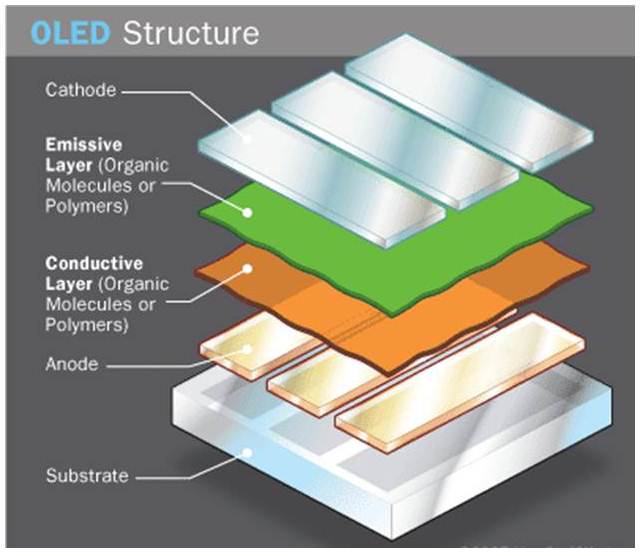
The Race to be Green
Singapore, 3rd April 2012
You can’t open a newspaper or watch the news on TV these days without bumping into a story about a city or corporation doing it’s bit “for the environment”. I say this with a bit of sarcasm as, though I am sure they have genuine intent, the real reason seems to be political or commercial. It is nearly like the anti-smoke campaign. Those who smoke are made out to be outcasts and the way we are going with being environmentally friendly is the same. If you are not seen to be “green” or putting into action “environmentally friendly” actions, you will soon belong to a group of antisocial outcasts! Over the recent days I noted several stories related to lighting.
I already mentioned the Sydney City Council (one of the many cities around the world) embarking on a multi-million dollar LED replacement scheme for their city street lights, no doubt driven and “supported” by eager manufacturers who provide the City with free of charge samples and visual test mock ups. Today I read the Singapore government through its Land Transport Authority (LTA), has embarked on a (surely costly) replacement of all the fluorescent (!) lights on all their 50+ overhead link bridges. The replacement comes with movement sensor driven controls to switch the lights on only when pedestrians approach the bridge. This would increase the savings further with another 15% according to the report, on top of the 50% which is claimed in savings from changing fluorescent to LED lighting. Of course it is claimed to be feasible and very cost effective to save energy, a great way to get public approval. No mention however of the costs and ROI, an increasingly common thing as now sustainable is seemingly becoming a must at all cost, which is most probably passed on to the consumer!
Operators, like recently Kempinski and Millenium Copthorne Hotels have also embarked on green programs. In fact Kempinski has set up a green consultancy arm that offers its sustainability services to the industry as well I believe. MC has just publicly announced a sweeping implementation of green schemes for all their hotels. It is obvious that being seen as sustainable has reach high stakes proportions as the sustainability angle on any project can now win you votes at the next elections or increase the value of your property!
Light Watch 3-47: Intelligent street lighting systems are coming your way and I am sure we will see more at L&B in Frankfurt this year…
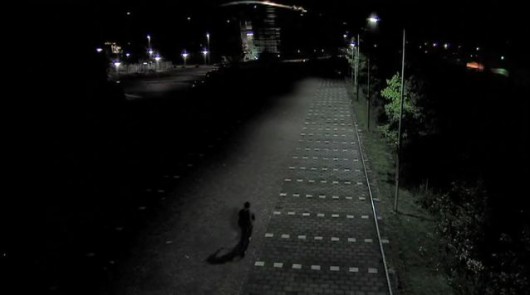 Sensor driven street lighting on a test road in Delft, Holland
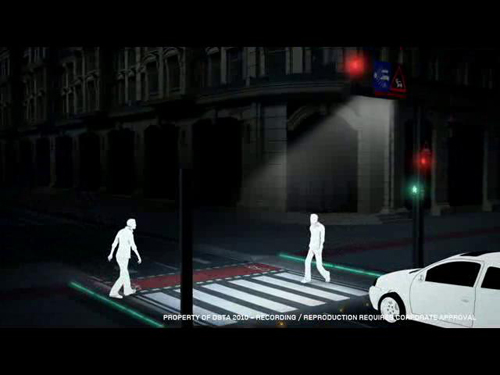 Intelligent street crossing lighting systems in the US
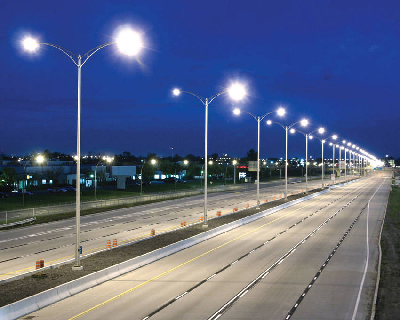 Dimmable, time controled street lights by Schreder
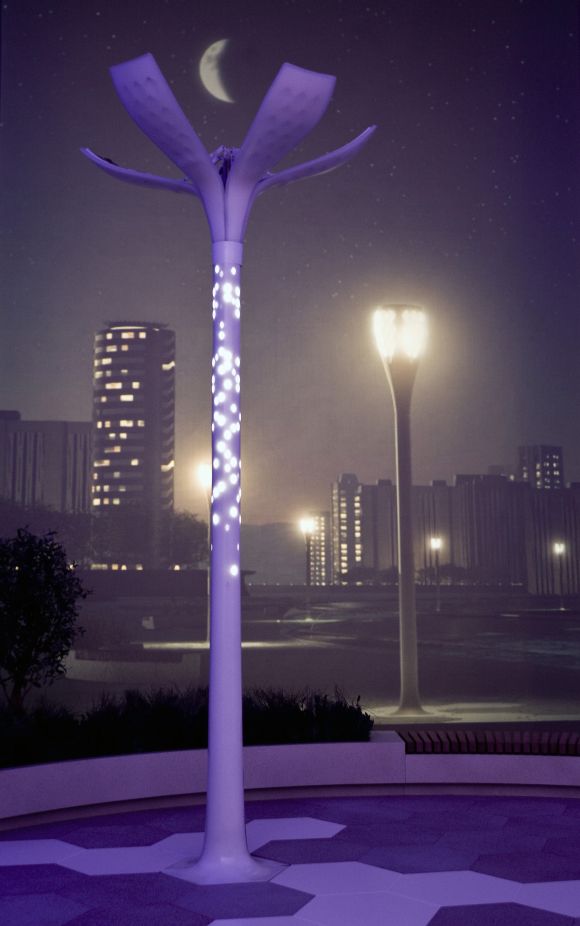 Solar flower street lighting concept by Philips
Day light saving time
Singapore, Monday 2nd April 2012
What happened to April Fool’s Day? Am I getting older and missing the action? I did not see or notice any big prank normally quite easy to spot on TV or in newspapers? Or was the LED replacement in Sydney the April’s Fool prank? 🙂 Anyhow, we are April already, incredible how quickly time flies.
It is also the time when many countries around the world have switched to or back from Day Light Saving Time (DLST) depending whether you are in the Northern or the Southern Hemisphere. In the light of all sustainable efforts around the world it makes total sense in my opinion to maximise life during day light hours. You could actually argue about the naming as we are not really saving daylight, we are maximising the use of daylight, so quite the contrary. I have always wondered about the “saving” bit. In fact in many countries it is often simply called “Summer time” or “Winter time”.
The main issue with DLST is the impact on the economy. While originally started (first implemented during WW1, nearly 100 years back now) to extend daylight for an hour after working hours with the goal to save on the energy of incandescent lighting, commercial (night time and other) interests have in some countries led to is abolishment. As the map below shows there are many countries who at one time have tried it but are no longer applying it. Some countries (like Singapore I believe) have never implemented it. Specifically for countries around the Equator it can be understood as there is practically no difference between summer and winter time, night and day being about equally long all year around.
Mixed with DLST comes also the various time zones around the world. Large countries like Australia and the USA for instance have several time zones inside their own country, even with half an hour difference! Interestingly China applies one time zone in the whole country, meaning that in the East the day starts early and in the West it starts late, but everybody runs in “sync” throughout the country.
I used to wonder what would happen if we would apply one time zone throughout the world? Some people would work at night, some during the day! Now I know that it would seriously mess up a human’s body clock, we are not really meant to sleep during the day as we need our daily dose of daylight!
Light Watch 3-46: Day Light Saving Time throughout the world of different time zones…
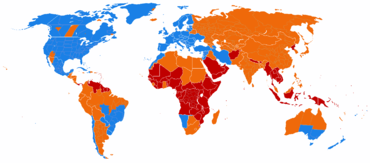
Blue = DST observed / Orange = DST formerly observed / Red = DST never observed (from Wikipedia)
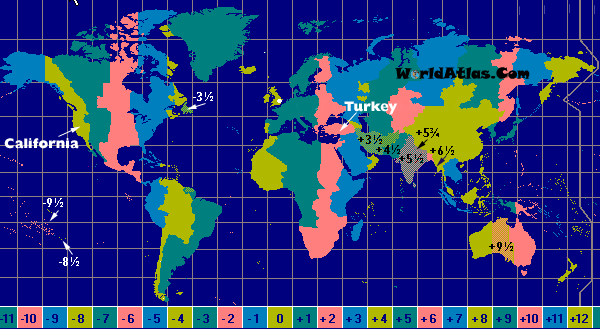
World Time Zones (Google)
Earth Hour 2012
Singapore, week-end edition 31st March 2012
Earth Hour has really caught on and like last year I happened to be in Singapore to experience the event. Celebrated on the last Saturday in March, more than 150 countries are now participating worldwide, a remarkable achievement for an event that started only 5 years ago in Sydney. I heard that Dutch astronaut Andre Kuipers, currently circling the earth in the International Space Station had the task to specifically observe the Earth during the Hour. It will be interesting to see if it has any real visual impact seen from space!
Earth Hours’ massive appeal is really interesting and brings up various thoughts, certainly in my mind as a lighting designer. We design lighting for a living so switching off lights as a trend has to make us think about what we are doing. It reinforces even more the importance for us designers to look further and more deeply into the sustainability of our designs and maybe review certain lighting standards and codes that specify amounts of lighting levels. Life nowadays does not stop after sunset, on the contrary, in tropical countries that’s when we come out courtesy of cooler temperatures. The fast pace of life and ever increasing consumption power creates higher and higher demands, some 24/7. People expect higher and higher levels of comforts, which comes with higher and higher demands for lighting. Yet when suddenly we switch of the lights for an hour, as I watched around Marina Bay last night, people cosy up together in nearly “campfire” ambience, to watch the skyline and enjoy this bit of peacefulness together.
I note that this is set against the back drop of the ever faster growing LED technology and market application and the rising cost of energy. Singapore’s energy company just announce a further rise in electricity prices, bringing it now close to 29 cents per kilowatt, about 22 US cents. Twenty years ago it was about half that and it will keep on rising. Meanwhile Sydney announced earlier in the week plans to replace the majority of its street lights with LED lighting. These initiatives must come heavily sponsored by the government and more specifically the lighting industry in a bid to promote and accelerate the market implementation of LED lighting as from my calculations compatible performance LED technology is still very expensive with long ROI’s. While I fully support all sustainable efforts I feel at times that there is a false sense of urgency and market push, possibly created by a feeling of guilt and wanting to be seen as being socially responsible…?
Light Watch 3-45: Earth Hour 2012 images from around the world.
Here is also this years official Earth Hour YouTube link: http://youtu.be/FovYv8vf5_E
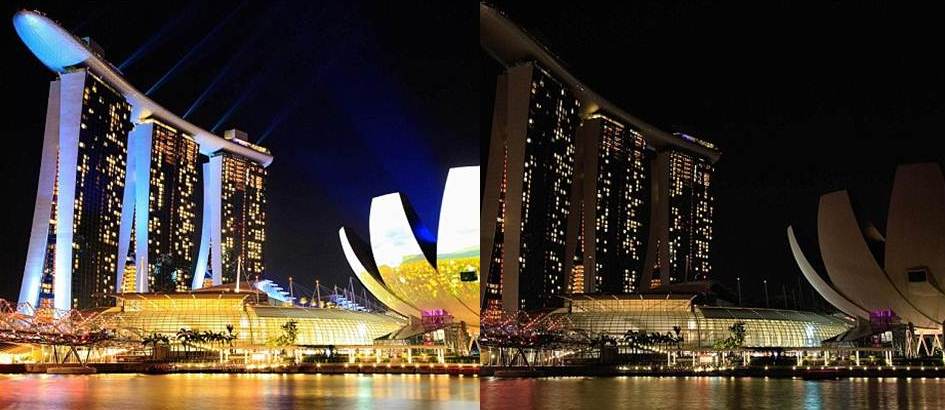 Singapore
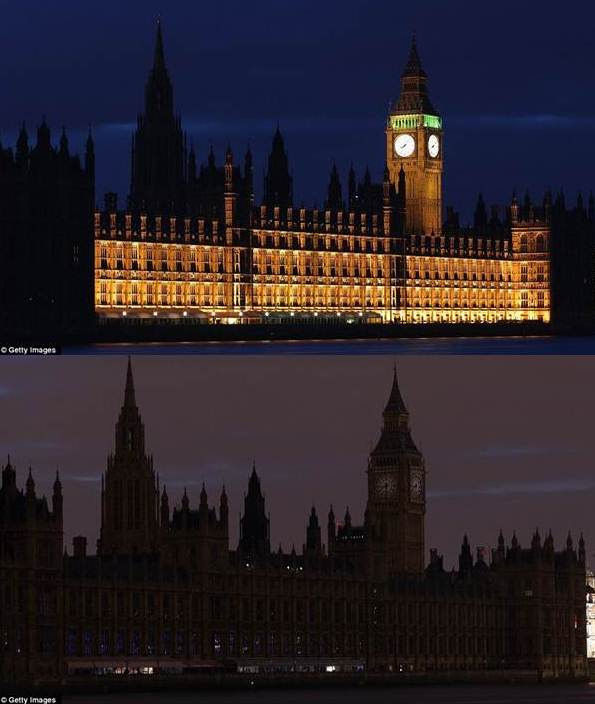 London
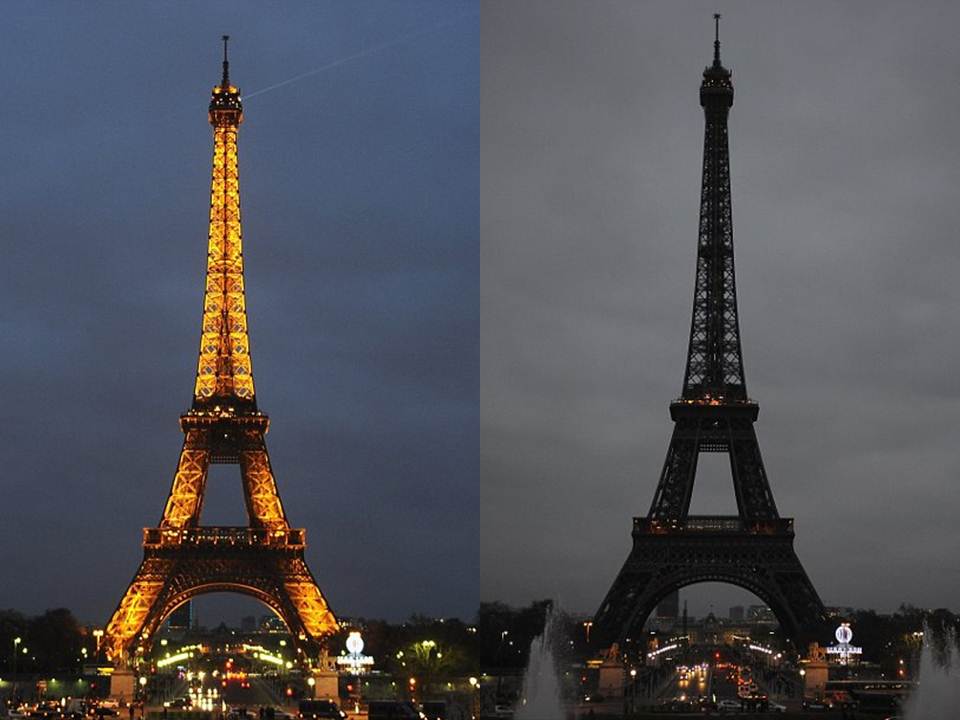 Paris
Paris
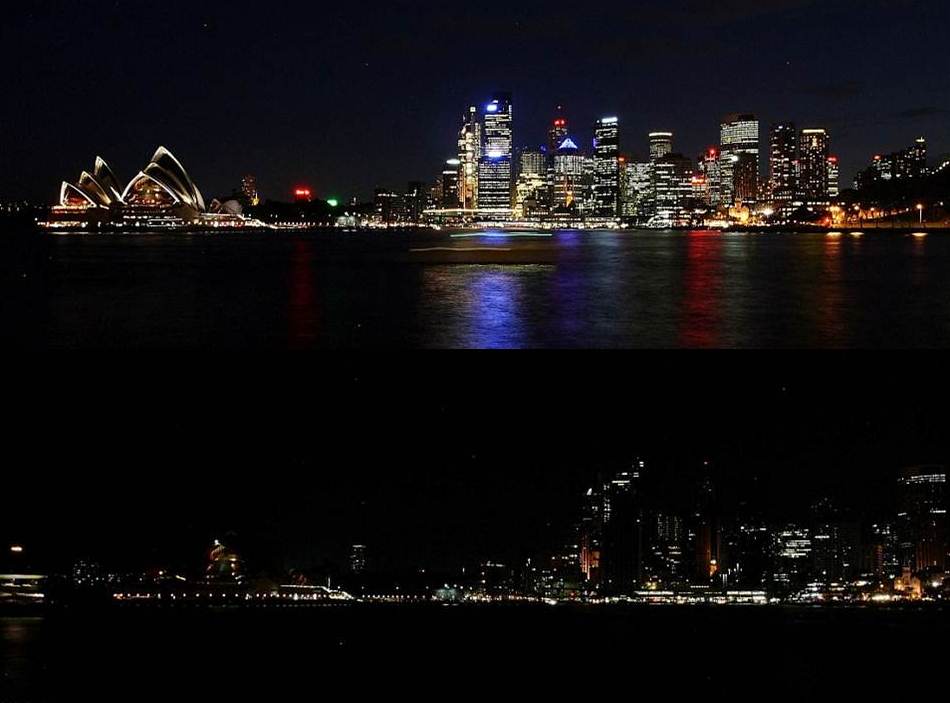 Sydney
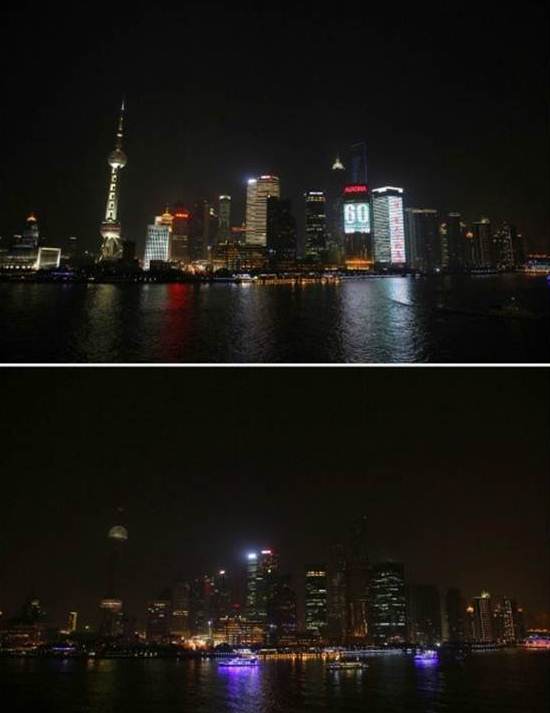 Shanghai
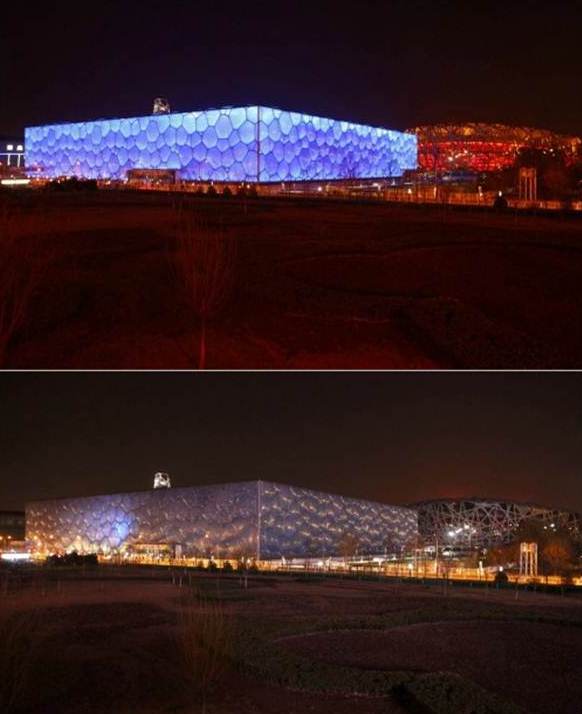 Beijing
The world as a market?
Singapore, Wednesday 29th March 2012
My thoughts today have really been consumed with project opportunities around the world and if and how I should go after these. As we get involved more and more with operators and developers operating worldwide, we are presented with project opportunities literally around the globe. Till now my focus has been on projects in the Asia Pacific region with a reach of roughly 5 hours flight around Singapore, reaching out to projects in Australia in the South, India in the West, China in the North and Philippines in the East, all with little or no time zone difference. Hence jetlag with my frequent travelling is not such a big deal and client contacts are all basically in real time.
I have mixed feelings about it as travelling to “far away” places, requires a much bigger time investment. Instead of a one day trip to Jakarta or Kuala Lumpur, or a 2 day trip to Mumbai or Manila, I am looking at being away possibly 4-5 days at the time, basically a week. Yes, there are the internet and teleconference facilities, but unavoidably design and site coordination meetings will in the end still be required. Time zone differences will be more obvious and impact on communications and jetlag when travelling. So should I or shouldn’t I?
In the same context there is the thought of expanding through offices…should I open an office in another “booming” region, or shouldn’t I? Clients always like local presence but do we really need it? Yes it may bring us some additional work, but as a result some clients expect some lower fees. The trade off is that I may be able to delegate more and travel less…really? I have just decided to start operations in India through an association with a local company in Delhi and am in the process of interviewing a candidate to be based there. Let’s see how that goes… 🙂
Light Watch 3-44: With projects around the world you get used to seeing different skylines of different cities in different parts of the world. Here are a few:
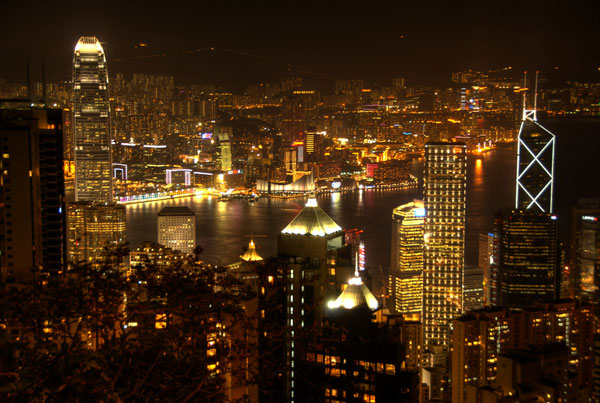 Hong Kong
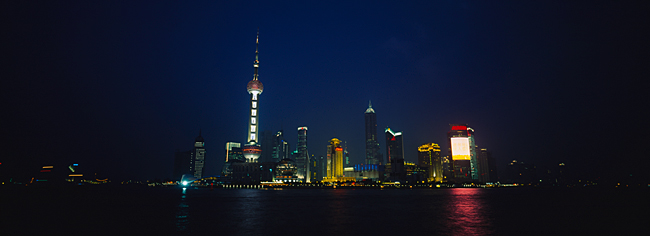 Shanghai
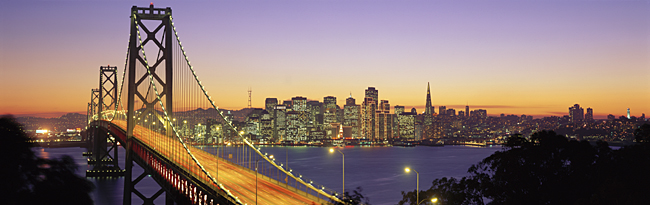 San Francisco
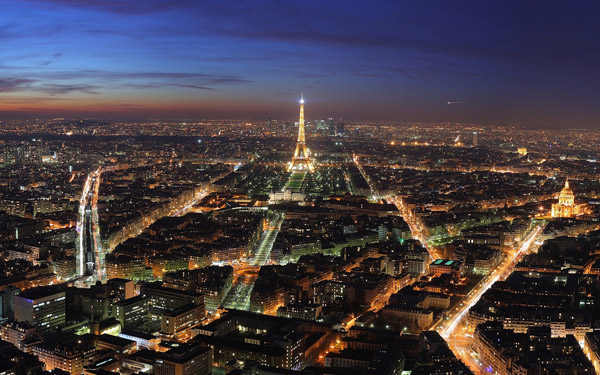 Paris
Paris
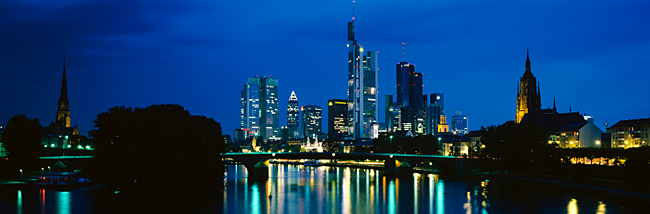 Frankfurt
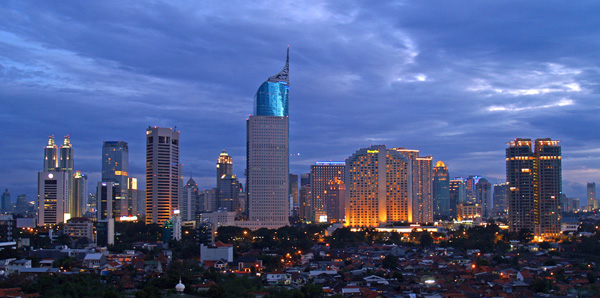 Jakarta
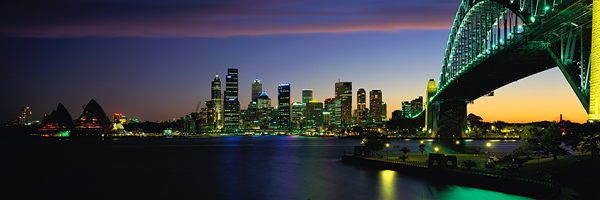 Sydney
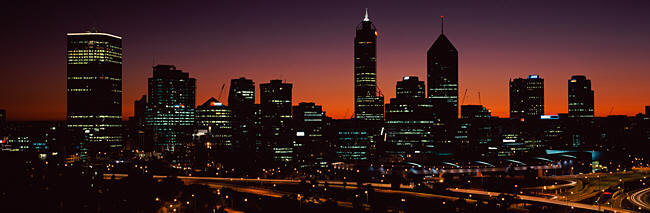 Perth
Perth
Valuable
Singapore, Wednesday 28th March 2012
Flying overnight is less and less my thing, even if it is business class. I used to fly overnight all the time as to not loose valuable time, but right now what is valuable is health so if I can avoid it no overnight flights for me. My flight back from Doha landed me midday back in Singapore so not much of a day left…a quick shower and around the table with my team to catch up on project or other issues. All is well…looks like they are very fine without the boss 🙂
Looking back on Qatar, how valuable was it to me as a lighting designer to sacrifice two nights of good sleep? What was in it for me? We were “lured” to the event with exposure and networking being the main benefits to us. However once arrived in Qatar it appeared little local promotion had been done and though well attended, I found most of the key players from the market missing from the participants. So without the media promotion and little key players (read potential clients) present I have to conclude that the exposure was minimal. Networking then? Yes I came back with a box full of business cards exchanged during the coffee and lunch breaks, but whether these will turn out valuable…probably the most valuable part was meeting and mingling with my peers in the business, my fellow speakers. Speaking in front of and to the appreciation of your peers is valuable.
Overall I have returned very satisfied but for many different reasons. I took control of my own destiny by not relying on the organisers, coming in a day earlier and leaving a day later as to allow me to explore the city/ country and create room to seek out potential clients on the side lines of the event. With more than 260 Billion Dollars of projects in the pipeline over the next 5 years (so I was told) you cannot ignore the potential of this country. Roughly 1/5th of my box full of business cards are actually unrelated to the event, but from (key) people I managed to meet outside the event, very much the 80-20 rule. These 20% of contacts are probably representing 80% of my opportunities in Qatar. Time will tell…to be continued 🙂
Light Watch 3-43: Qatar’s rise to fame has certainly been its winning bid for the world cup soccer in 2022. I managed to find the concepts that are being proposed for the stadiums yet to be build in Doha. Not sure if these are the final ones but certainly worth a look. Qatar is obviously too small a country to have all these stadium so as part of their bid they pledged to take most stadiums down after the event and donate them to poor coountries in need of such facilities!
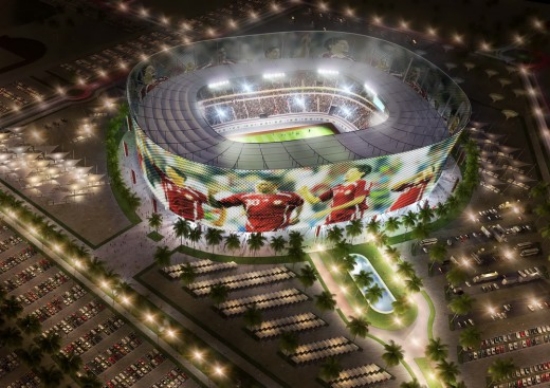
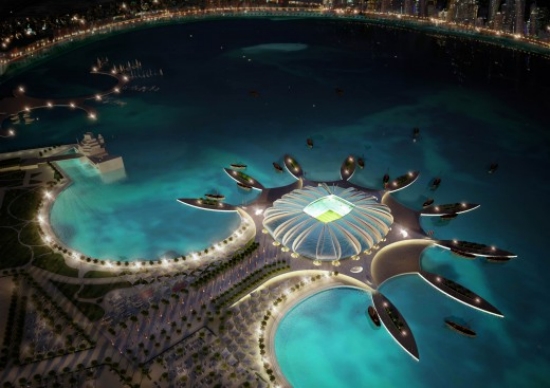
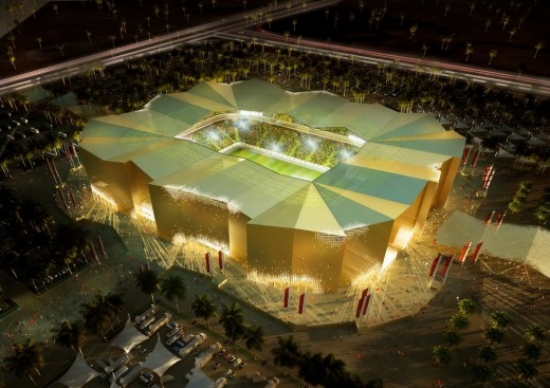
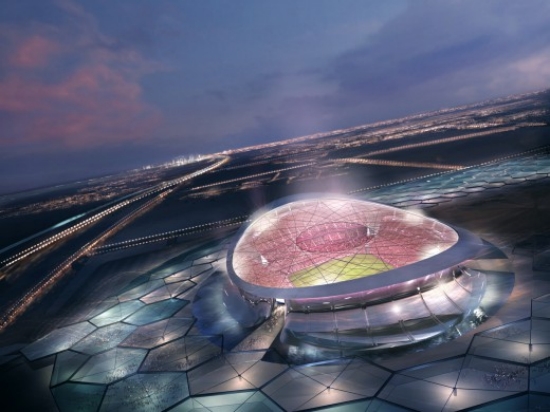
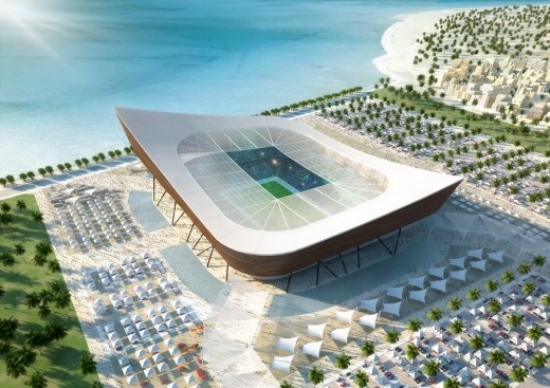
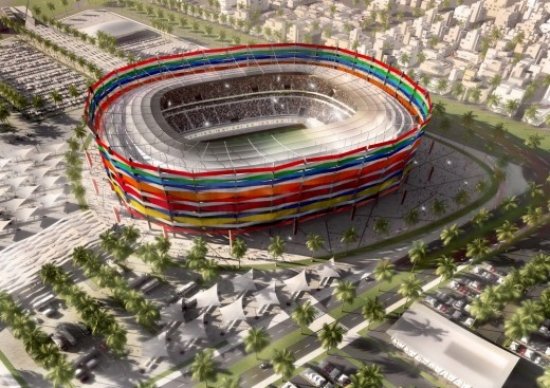
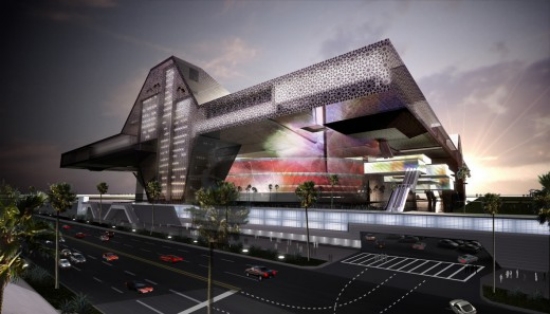
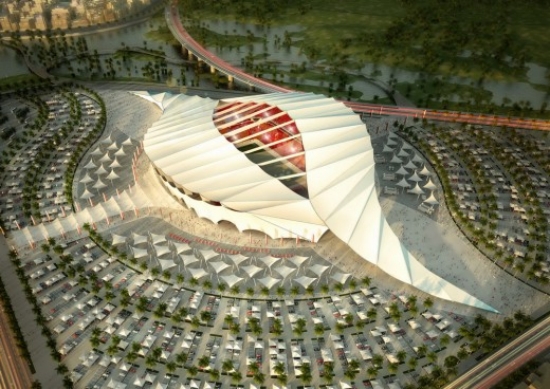
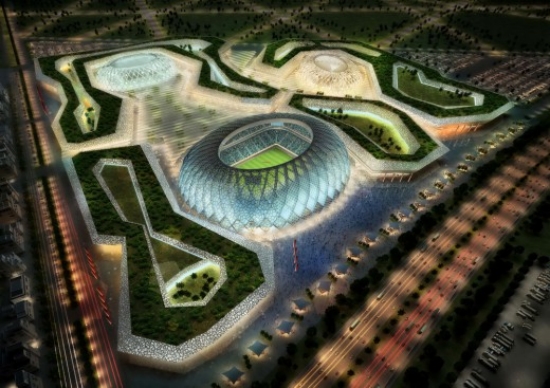
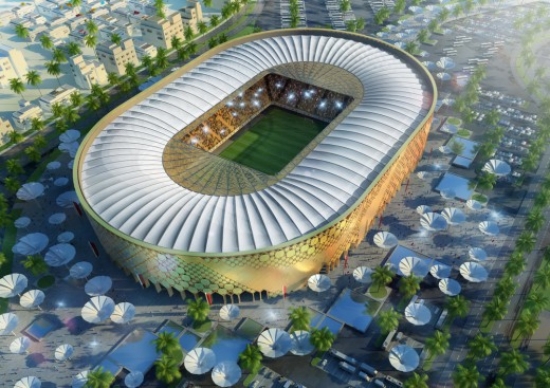
Light & Shadow
Doha, Tuesday 27th March 2012
My last day in Doha…I made the best of this day, on the side lines of this event, to go and visit some of the leading developers and consultants in this market to understand and explore potential project opportunities. Some of them I had met during the event yesterday. It is clear from my stay that over the next 10 years a lot is going to be build for the World Cup in 2022 and right now it is safe to say that Doha is one big construction site! One of the speakers yesterday told us that in terms of hotels alone they need to create 90,000 hotel rooms by 2022. I understood that this is a requirement by FIFA. That is a lot of hotels! Then there are the required infra-structure developments and all that on top of the regular developments going on which I mentioned in my earlier blog. I can see now why this country has more than 15% annual growth!
It is fascinating to see how different countries and cultures are. Two weeks ago I was speaking in the Philippines and now in Qatar, two very contrasting countries. While the Philippines very much relies on their human skills, as they are very crafty and creative people, the Qatar economy basically thrives on oil and gas revenues (which by the way is so much that no-one pays taxes here). So the whole country oozes the power of richness…there is clearly money to spent and thus the skyline is full of cranes with working sites everywhere. I once said that a measure of a countries’ economic strength is relative to the number of cranes you can see when you scan the sky line! When I come in a country where there is none or hardly any such activity to notice it generally means the local economy is weak.
I am leaving with a satisfied feeling… I have visited a country that intrigued me since it won the world cup bid and leave with the excitement of the many lighting opportunities in this country.
Light & Learn 3-11: I am inspired today by a quote from someone called Ruth Renkel, that was sent to me by one of the manufacturers recently which goes as follows: “Never fear shadows, it simply means there is a light shining nearby”. I think it is a great quote with a very positive outlook. I have “googled” some images in black and white to exemplify light and shadow. As lighting designers we sometimes seem to forget that there is no light without shadow!
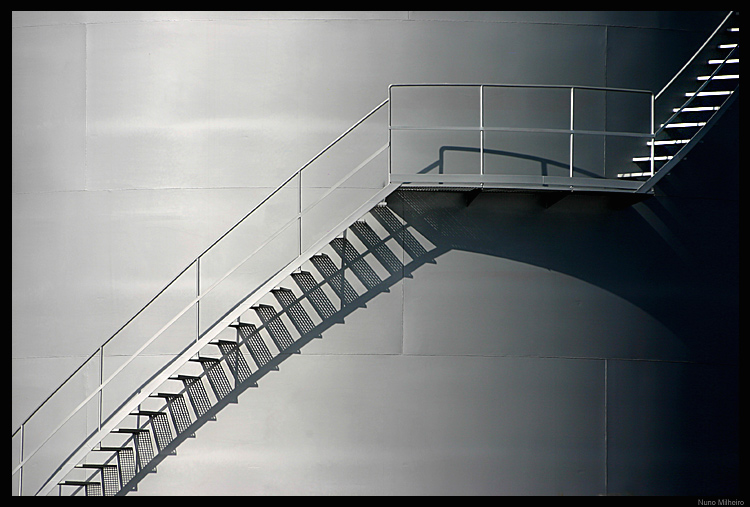
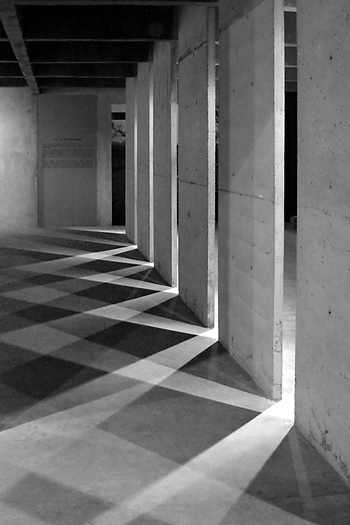
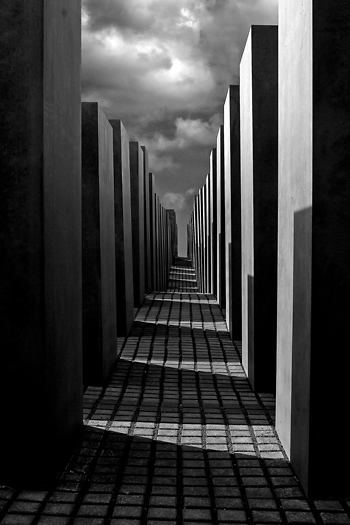
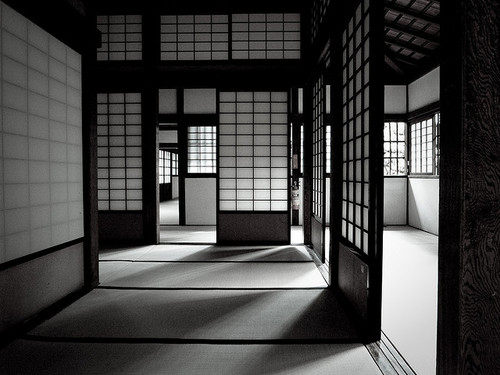
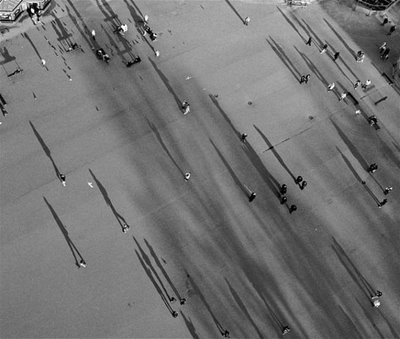

Qatar Architectural Lighting Summit
Doha, Monday 26th March 2012
Today was the Qatar Architectural Lighting Summit, the main reason for my being here. As one of the invited guest speakers I got to share my experience and expertise with an eager group of participants from different walks of life. Government officials, consulting engineers, project managers, architects, lighting designers and lighting manufacturers formed an interesting audience to the many presentations. It is hard to measure the success of this event as there are many ways to look at it. Let me look at some aspects that make such event successful.
From the participants’ point of view: did they get value for money?
I was told that participants to this event had to fork out a $1500 seminar fee to attend, so that comes with high expectations that a quality field of expert speakers has been assembled presenting topics of great relevance to the participants daily job. While the expertise was certainly there and topics presented had high relevance and interest, I believe that the chosen format of short presentations (30 mins.) with little interaction with the audience did not achieve maximum potential and thus did not achieve maximum value for money. I am sure that many of the participants took away valuable information, but I can’t help thinking that as a result it may have been to general with not enough debt and practical relevance. The value for money here is having learned something that you can put to beneficial use in your daily work life. The dollar and cents again!
From the speakers point of view: did we deliver the goods?
As a speaker I think I delivered with presentation from which the participants could learn. Not a “look-at-how-beautiful-everything-is” presentation but practical information with an honest sharing of the challenges we face in achieving the desired results. Let’s face it; we all learn and grow from our mistakes! Unfortunately I found that some presentations, though highly relevant and meaningful in content, failed to fully deliver due to overload of information and lack of communication skills. But also for the speakers it is a dollar and cents issue. We put in our time and effort with the aim to in the end connect with that potential client and making sure our audience is satisfied with many questions answered. Of course the response we get from the participants is the biggest boost for us
The idea for the summit was great and the attendance reasonable (I commend all participants who came), but I keep having mixed feelings thinking that it could have been much better with a clear direction and a more lighting committed organiser dedicated to the cause rather than the money they will make of the event.
Am I being too critical or just getting older and too much pampered…?
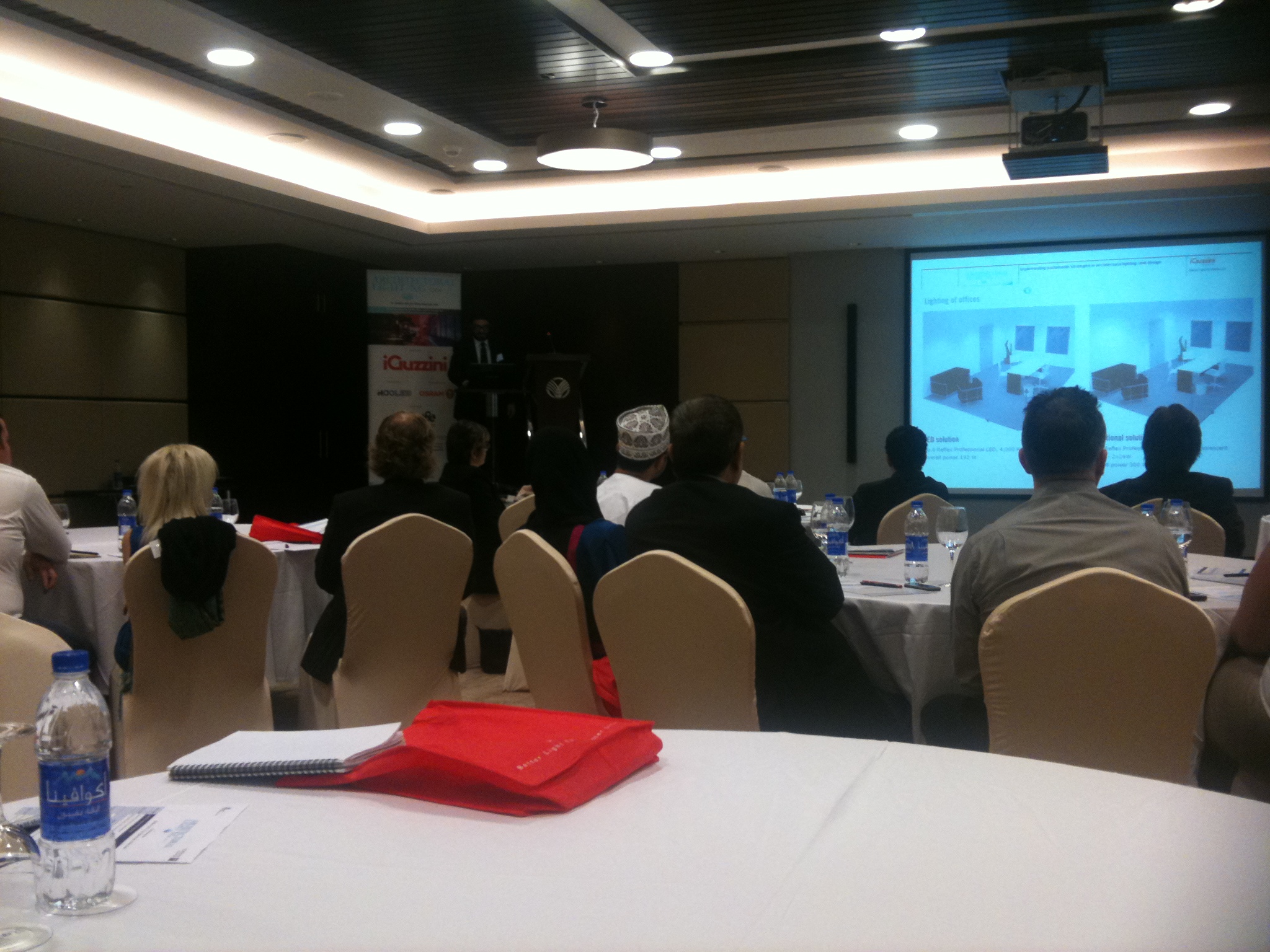
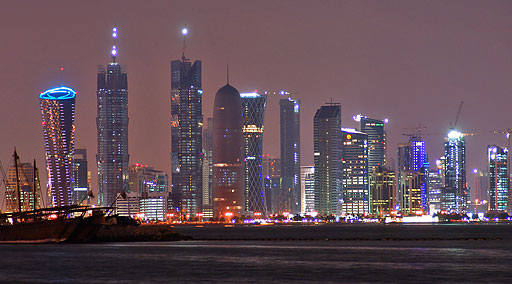
Light Watch 3-42: To celebrate the successful ending of the event we first had some drinks before embarking on a “night tour” around the city to get a feel of Doha by night. Here is a You Tube link from Doha by night.
http://www.youtube.com/watch?feature=player_embedded&v=PHPo5WqIe9o
Qatar 2012
Doha, Sunday 25th March 2012
While in Rome do like the Romans…my travelling brought me to Doha, capital of Qatar and in the Middle East, Friday and Saturday are generally week-ends with the work week starting on Sunday, so I have decided to follow suit by doing my blog on Sunday and give you some first-hand impressions of Doha, Qatar, a city I had never been before.
Qatar caught the world’s attention when they won with their bid to host the World Cup Soccer in 2020. Today we are in 2012, still 10 years away, but boy, oh boy, this city is one big construction site with many mega projects in the works. This morning I took the opportunity to drive around to get a good feel what the city is about and see what makes this city tick. While just over a million inhabitants live in Doha, with only one fifth being actual Qatari and the rest expatriates (!), the city is actually fairly small and easy to navigate through its well-tended roads. There is not much green and understandably the surrounding desert finds it way in the city as well by being very sandy and dusty (a challenge for lighting equipment!).
So what’s going on here… Besides the new airport there are projects in the pipeline like Lusail City, branded to become an example of an eco green city (Foster just won the bid to build a block of iconic mega towers), there is Education City with universities and other educational facilities, a complete residential township called Al Waab City, there are a couple of mega Towers being built like the Dubai Tower, The International Exhibition Centre Tower, supposedly to reach about 600m high, the new National Museum by architect Jean Nouvel, heaps of hotels amongst which the Four Seasons in the middle of Qatar’s answer to the Palm Resort in Dubai, called the Pearl of Qatar Island and not to forget of course the stadiums for the World Cup event.
Light Watch 3-41: So what about the lighting? There is a rich variety from the shopping mall with chandeliers in the opulent rich Pearl Island to the simple hanging bulb in the local (Waqif) Souq, from the over the top street lights on Al Waab Street to the straight forward street lights. I have not done my night tour yet but have been told that here in Doha LED has made its presence more and more felt, not in the least by the Asian Games held a few years back where the famous Torch Tower (which used to hold the Games flame) still stands tall wrapped in colourful LED lighting.
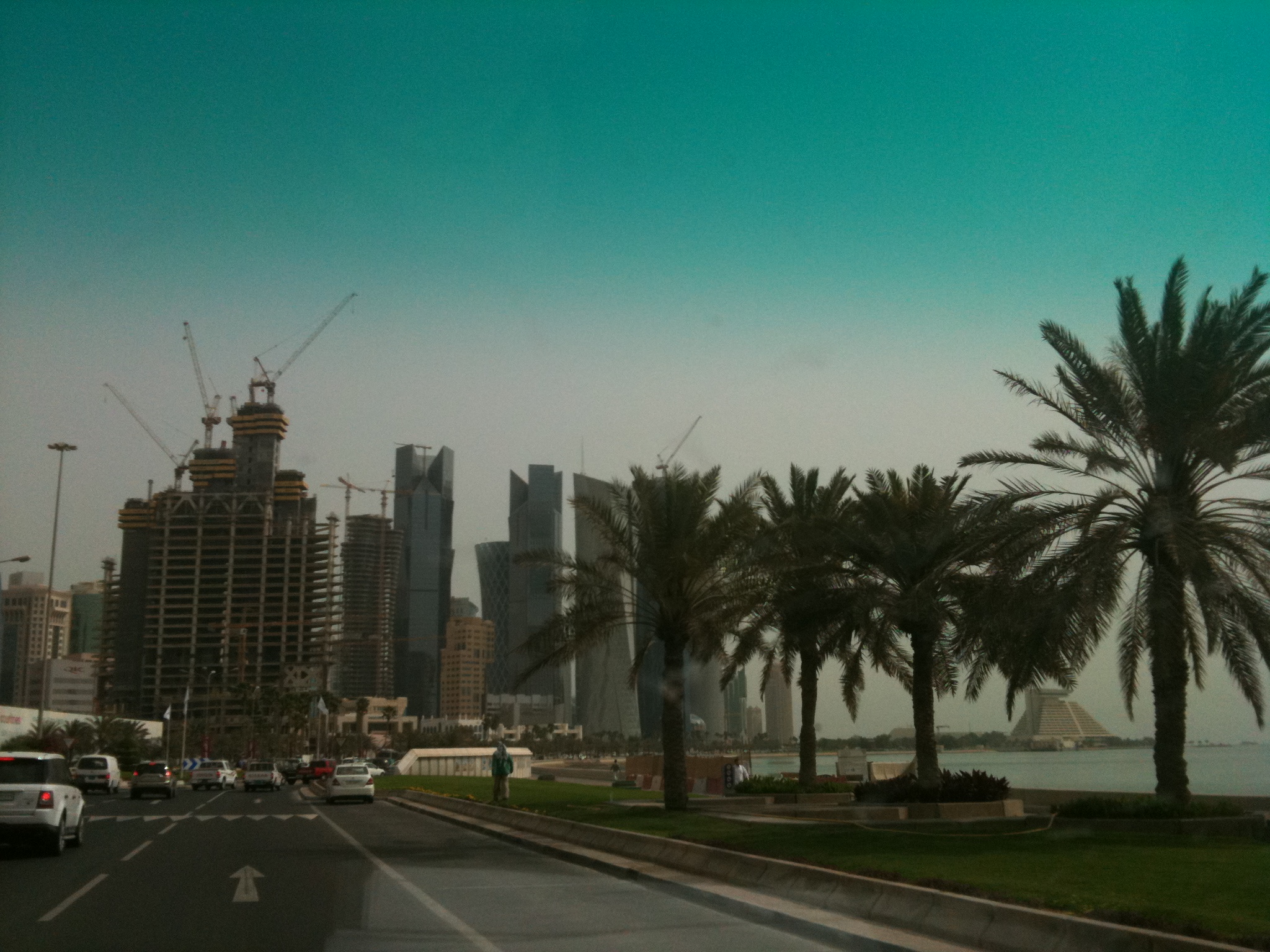
Corniche Road view to the business district (and the cranes)
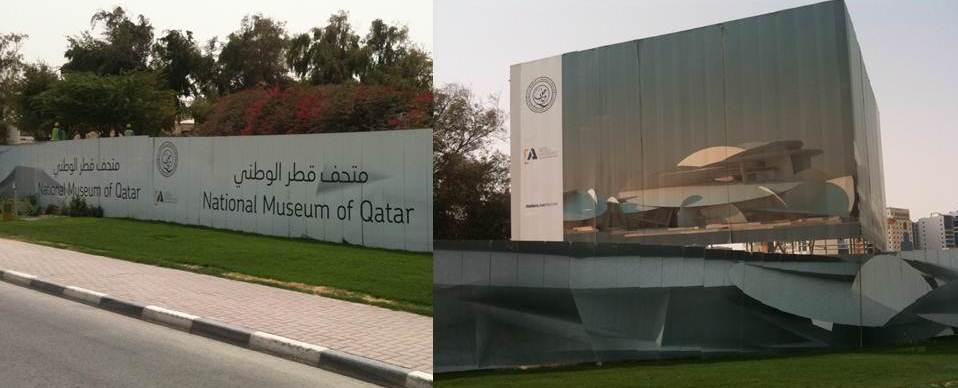
Qatar National Museum in progress
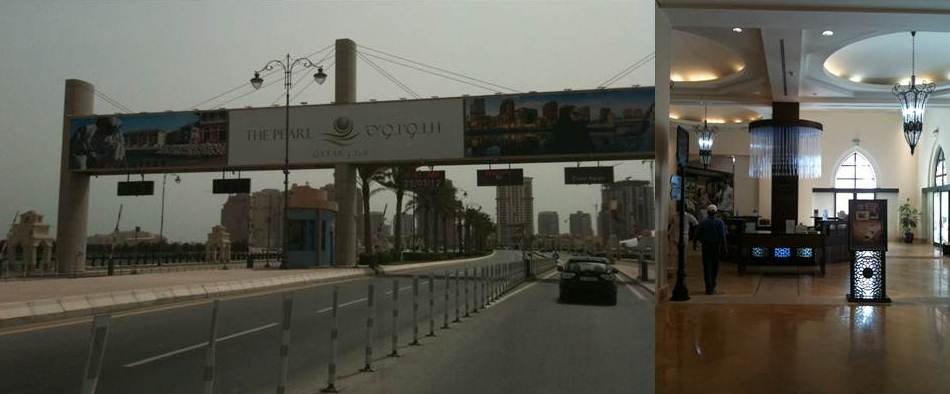
Pearl Island arrival and shopping mall (chandeliers)
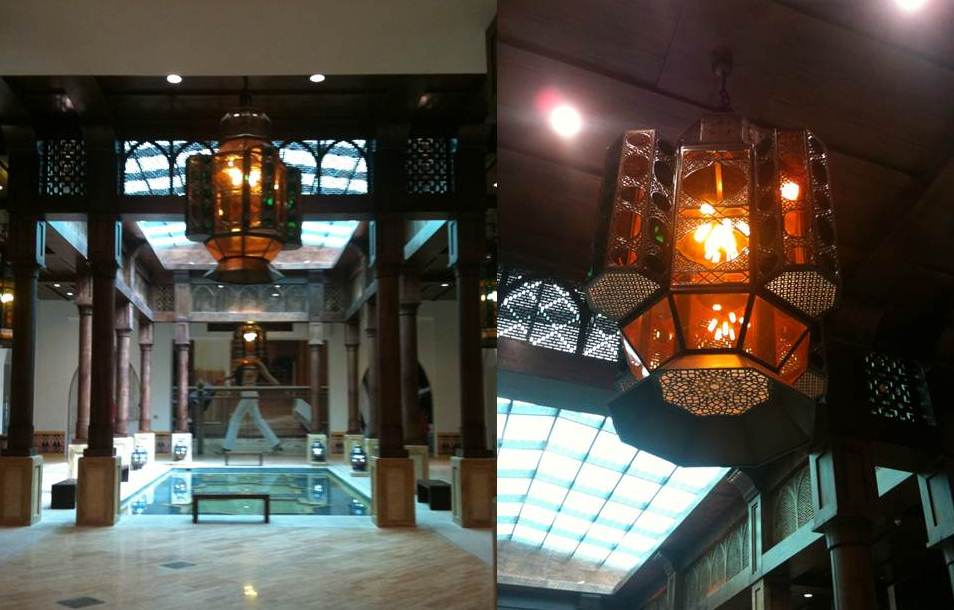
Shopping mall impression and chandelier detail (CFL!)
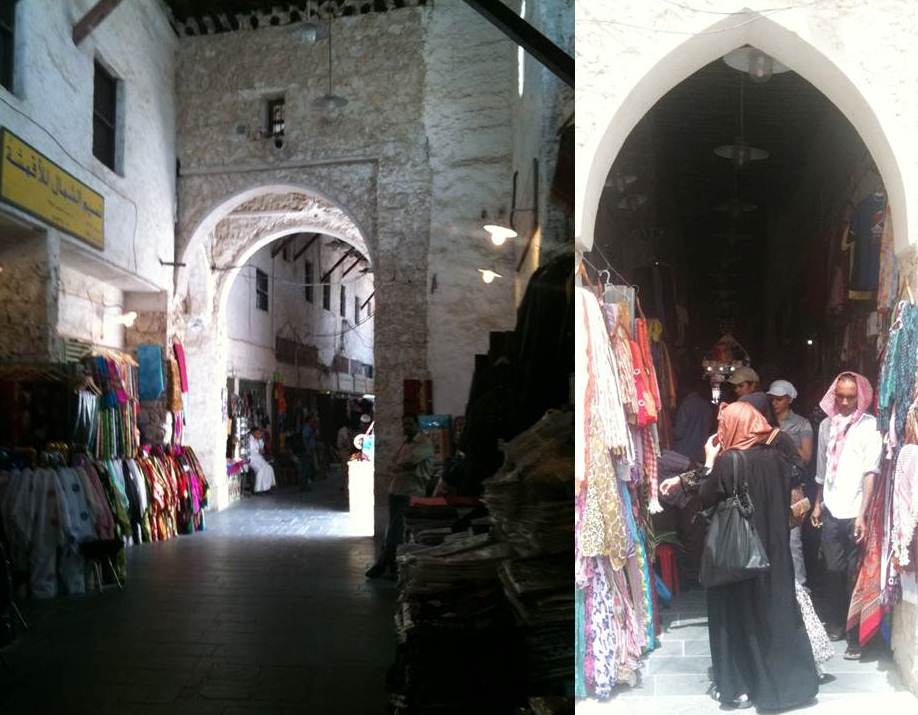
The Souq, artificial and day light
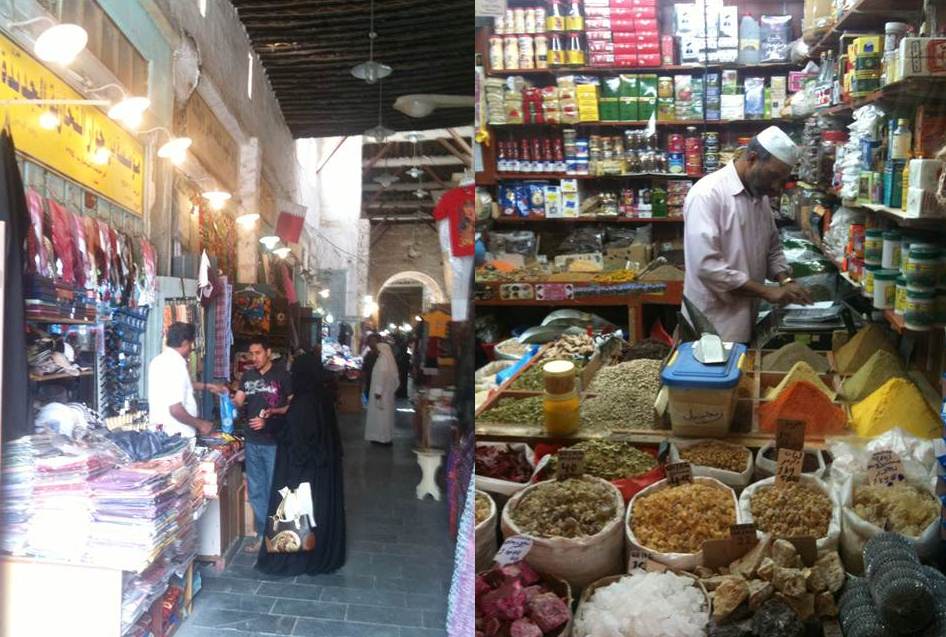
The colours of the The Souq
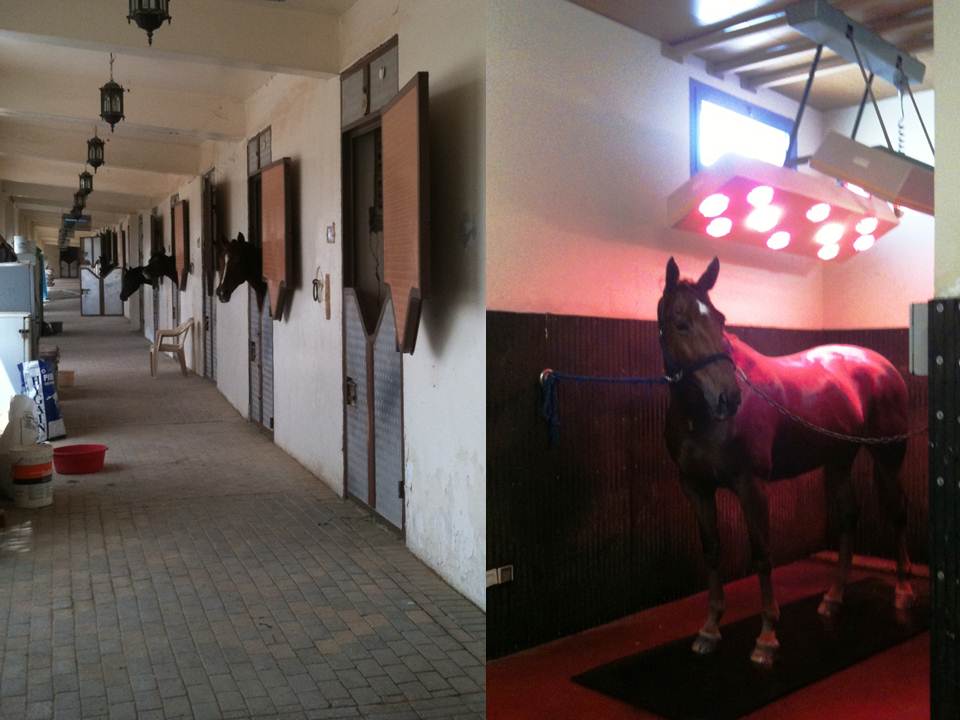
The National Equestrian Centre, note thr IR lamps for drying the horse
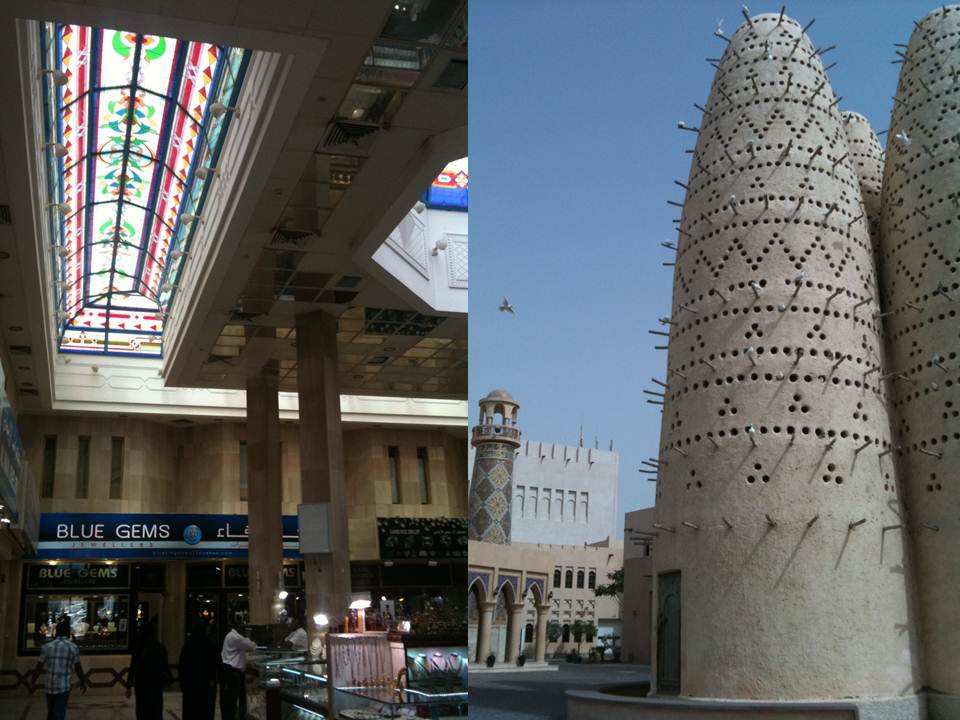
The Golfd Market sky lights and the Cultural Village (daylight)
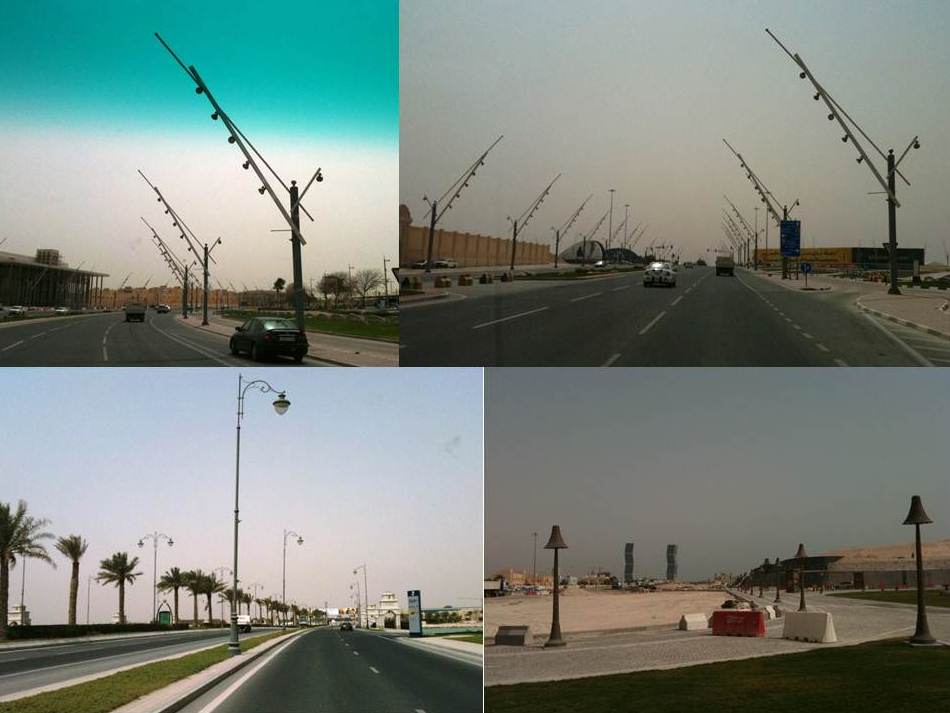
Street lighting impression (who approved this streetlighting “monster”?)
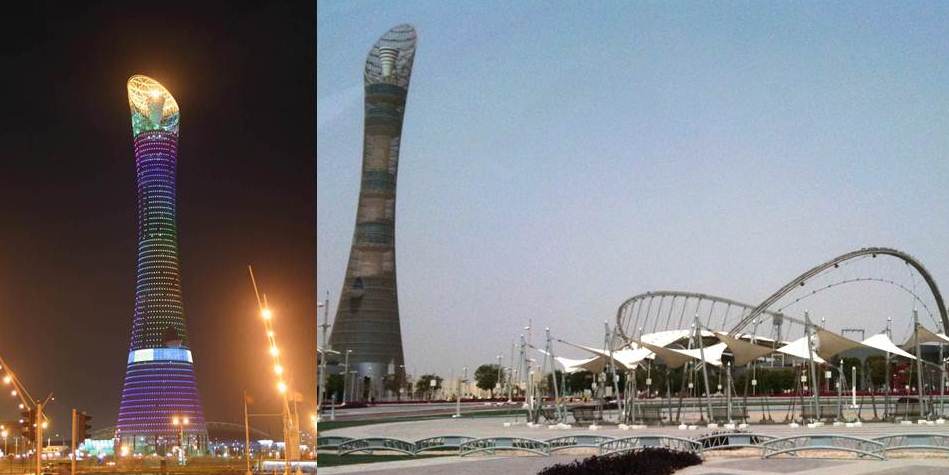
The “Torch Tower” Hotel (next to the Stadium) day and night
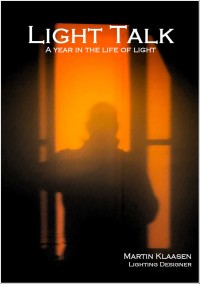 The long awaited book compilation of Martin's first year of blogging is available. Order now.
 Feedspot Top 100 Lighting Blogs