
Wheeling and dealing
Singapore, 29th May 2012
Making sure you get the best deal for your client seems a fairly straight forward exercise but in practice it is not. Certainly if your lighting design is worked out in Singapore and your project location is at the other end of the world! We are in the midst of such exercise for one of our projects making sure we have all ends covered and that the prices quoted to our client genuinely reflect the actual costs and that not too many players and layers are involved that unnecessarily jack up the price. We do appreciate that we need local after sales service and warranty and that hence we need to integrate the local supplier in the process. However we do not need the architect and various “other players” to be part of the chain.
We got a local price quote today for this overseas project that was way over the top and feels like the client is being taken advantage of. It was already strange that we could not get any quote from the local agent despite us requesting so for the last couple of months! Instead we were asked (by both agent and the architect!) to produce our budget costs based on Singapore prices. While we already had these prices it did not make sense to us to work on (or even submit) these other as to just use it for our own reference as what we really needed to understand is the chain of people and costs involved for the products to be delivered on site in the country of destination.
One of the benefits of engaging an experienced lighting designer as we are, is that we have direct contacts with the original manufacturers head office and its distribution network and have the professional cloud to negotiate project deals for specific clients. As we all know there are various levels and margins on lighting products, in some cases up to 200-300% when purchased to retail channels!! So by unpeeling the various layers of supply we can bring it down to reasonable and acceptable costs (including normal profit margins for the local suppliers). We do not want to short change anyone… including the client!
Light Watch 3-76: Getting good prices is no joke… 🙂
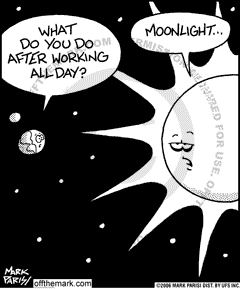
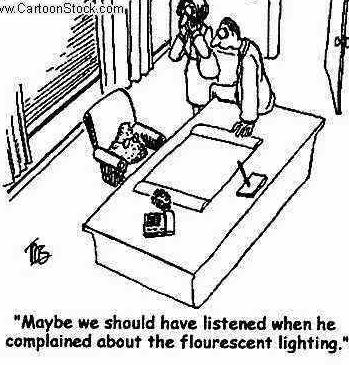
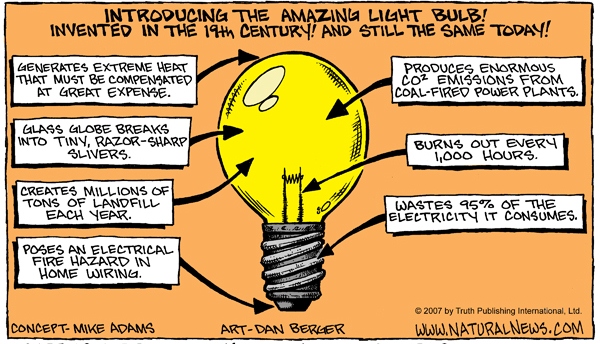
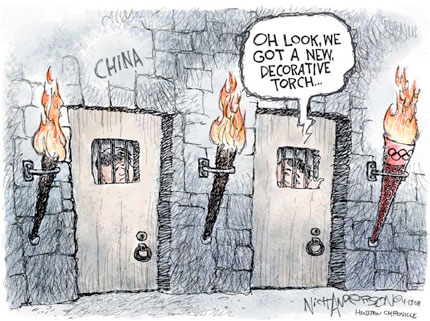
Here are some “jokes” about lighting googled from the net.
Room with a view
Singapore, 29th May 2012
We are in the midst of designing some penthouses and key to these must be the views. Located in the heart of a major Asian city, some 200m up in the sky, all lighting design should be geared to maximising views at night. There is a distinct difference in approach though whether you are designing for a residential environment or a commercial/ entertainment venue. In our case we are designing for a private owner, but one who will be entertaining guests for sure. So there is this relaxed residential feel but at the same time the magic of the views and semi entertainment. On top of that there is a great collection of art and artworks that spreads out to the outdoor deck terraces.
So my approach to lighting will be quite focussed. My first “design key” is regarding the views and vista’s. These have to be clear of any direct visible light. While for outdoors it is predominantly a matter of light placement, inside I have the added challenge of potential reflections in the windows. Technically if indoors is brighter than outdoors, the windows will become reflective like a mirror and it will be harder to see outside. So I have to make sure the lights are low to the floor or softly washing surfaces without creating disturbing hot spots. My only allowance for brightness spots is the highlighting of the artworks. This is my second “design key”; using the artworks to create visual interest throughout the various areas. Where possible the placing of the artworks should be on walls not facing windows.
There are many other lighting design components like energy conservation and sustainability of the design and so on, but my final major “design key” is all about lighting controls. Light only where, when and how much I need it. This involves zoning and localised control, possibly interactive or sensor driven. Lighting can certainly make or break such areas and certainly where the room comes with a view, lighting design is highly critical and challenging. I am enjoying designing this….
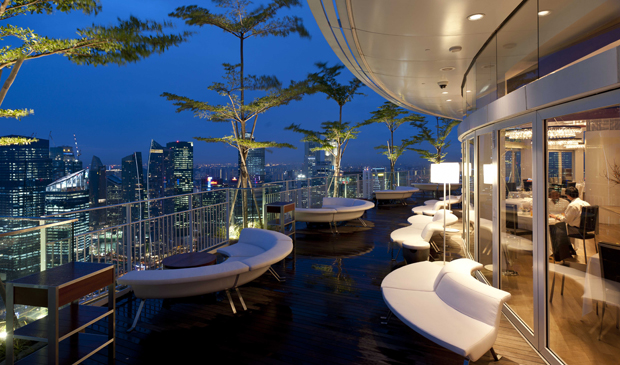
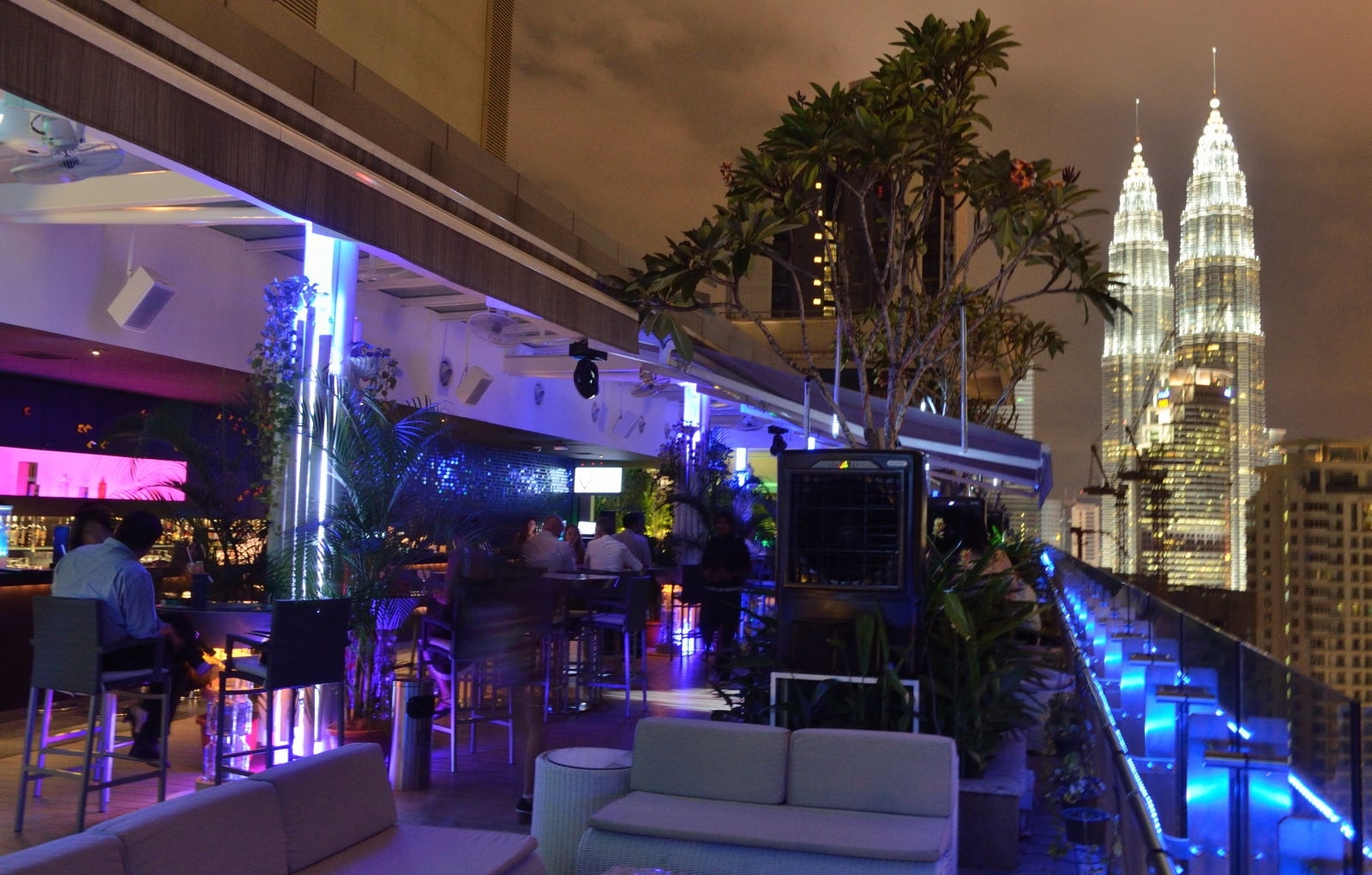
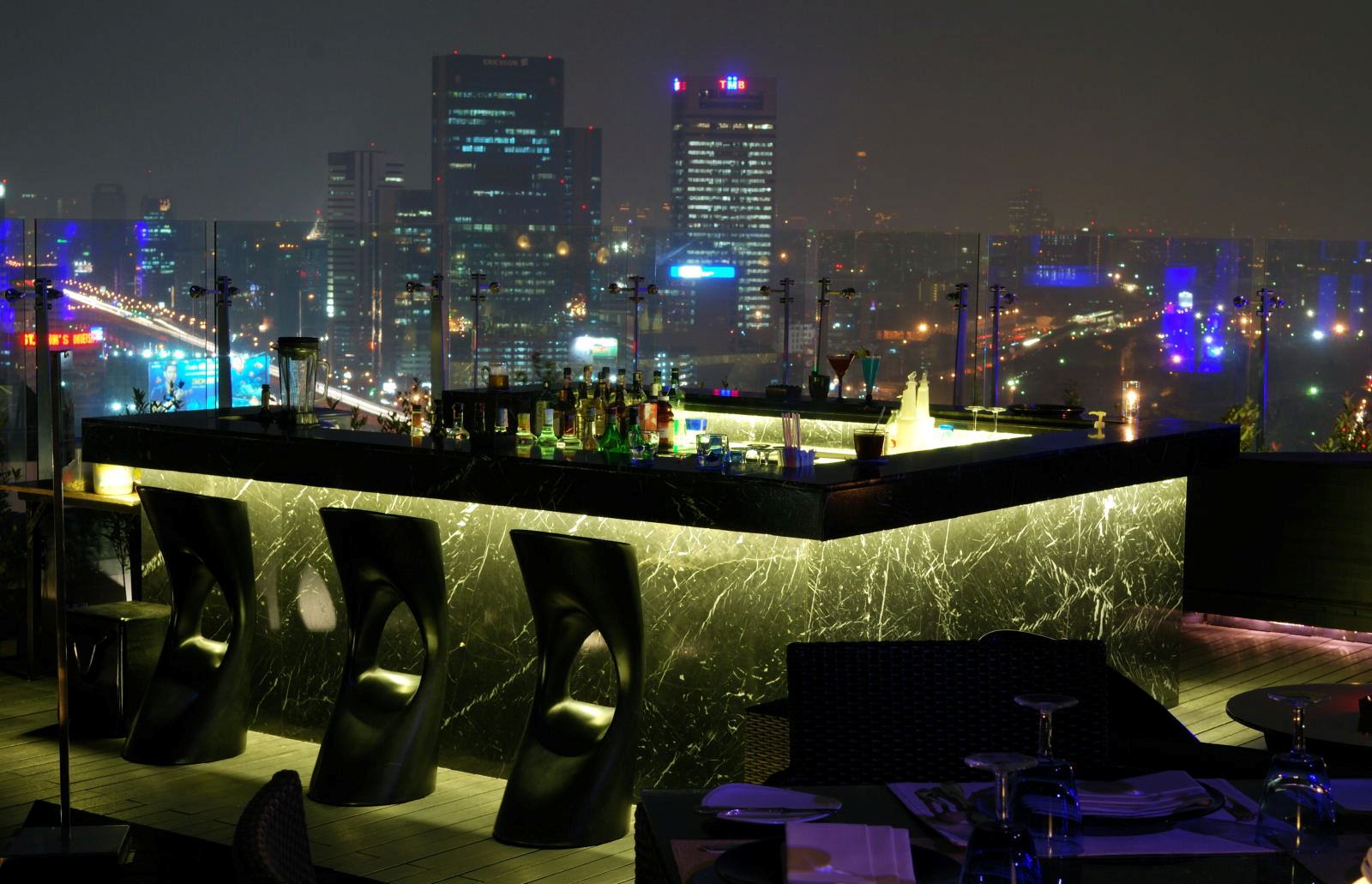
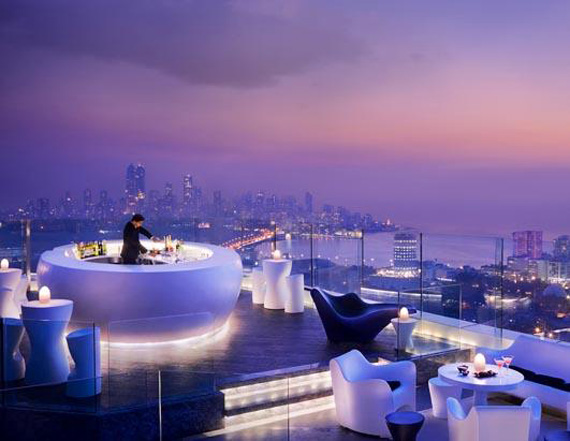
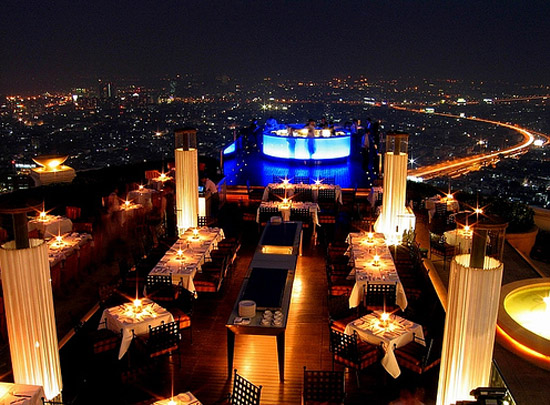
Light Watch 3-75: There are many “cool” places in the world and certainly around Asia there are quite a number of rooftop places to enjoy the view and have a drink!
Planning ahead
Singapore, 28th May 2012
One of my recurring tasks is to allocate capable manpower to new projects. It is a challenge not easily defined as each project has its specific demands and each staff has their specific strength. This capacity planning is crucial as projects can stretch over many years, like the ones we just signed off on, which have projected running times of 3 to 4 years. Projects come with different attention spans and generally for us as lighting designers, most of our work is in the first quarter of the project cycle. The first year is when most of our time is needed as we develop the design from concept into details and then on approval of the design direction develop that further into details and documentation suitable for procurement and contractor quotes.
As project schedules and speeds vary from month to month we have to make sure our staff allocation is maximised by having them run several projects concurrently in a team, so we can adapt the manpower to the demands of the day. As our work is very dependent on inputs from lead consultants like architects, interior designers, planners and needs clients’ approvals at various stages during the design development, our schedules have to build in these “uncontrollable“ inputs. Our forward work planning is therefore always based on what we know and can control (our own expertise, capabilities and capacities) but leaves provisional, undefined time slots open for other inputs and clients’ approvals. In this way we can make clear to our clients how much time we need to complete our deliverables, but leave the starting date open to project management so they can coordinate all inputs and outputs from various consultants and client into a complete project delivery schedule. Making sure you have the proper time, considering your own capacity and workload, is crucial for satisfactory deliveries to your client.
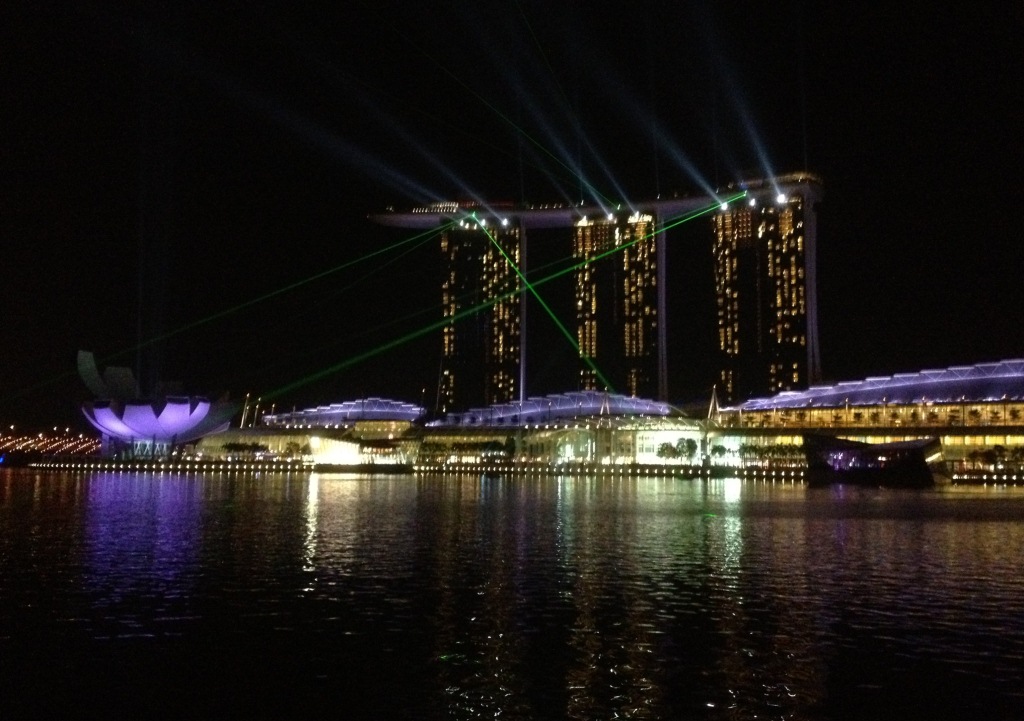
Light Watch 3-74: Singapore is one of those countries in the world that have to be credited with incredible foresight and forward planning skills. The way the country has tackled its public transport (MRT/ Changi Airport) and urban (road) planning shows of how well they understand and plan ahead for the future. Over the weekend I took a bump boat trip along the river and took some pictures of the city skyline…how much the city has matured over the last 20 years!
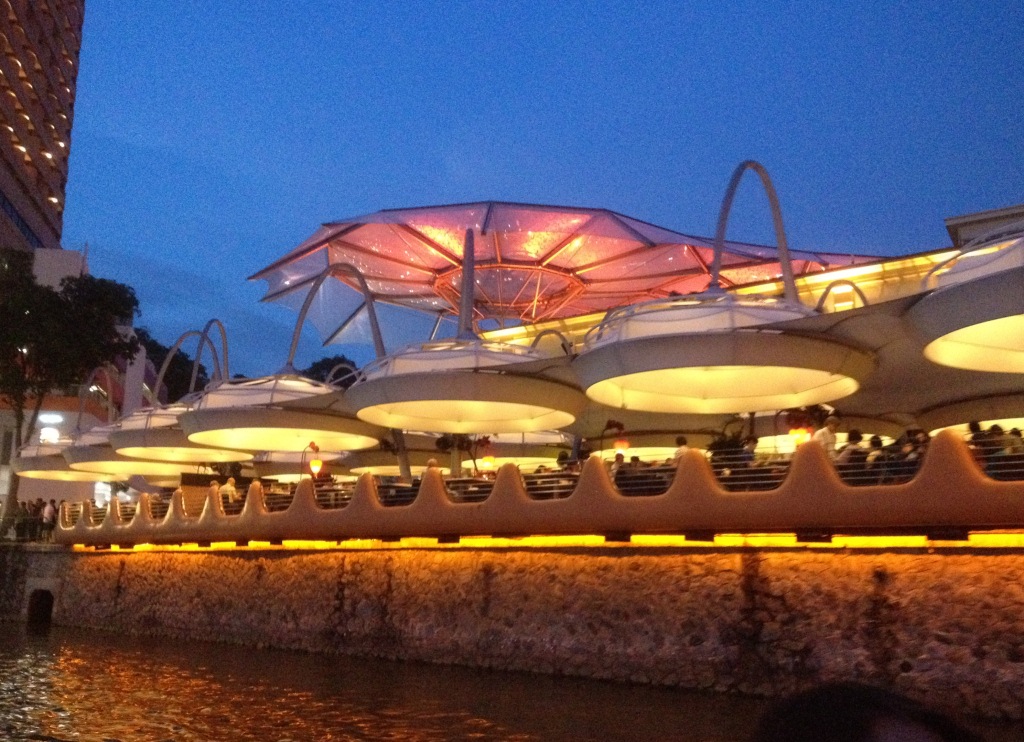 Clark Quay
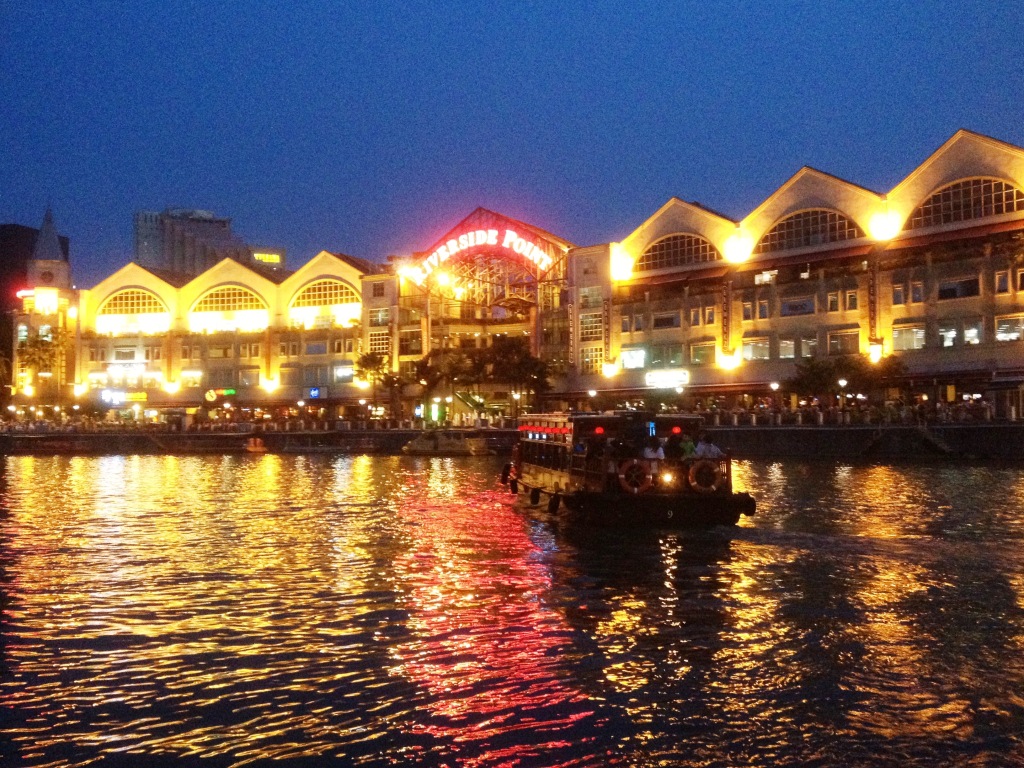 Riverside Point (one of my own projects many years ago!)
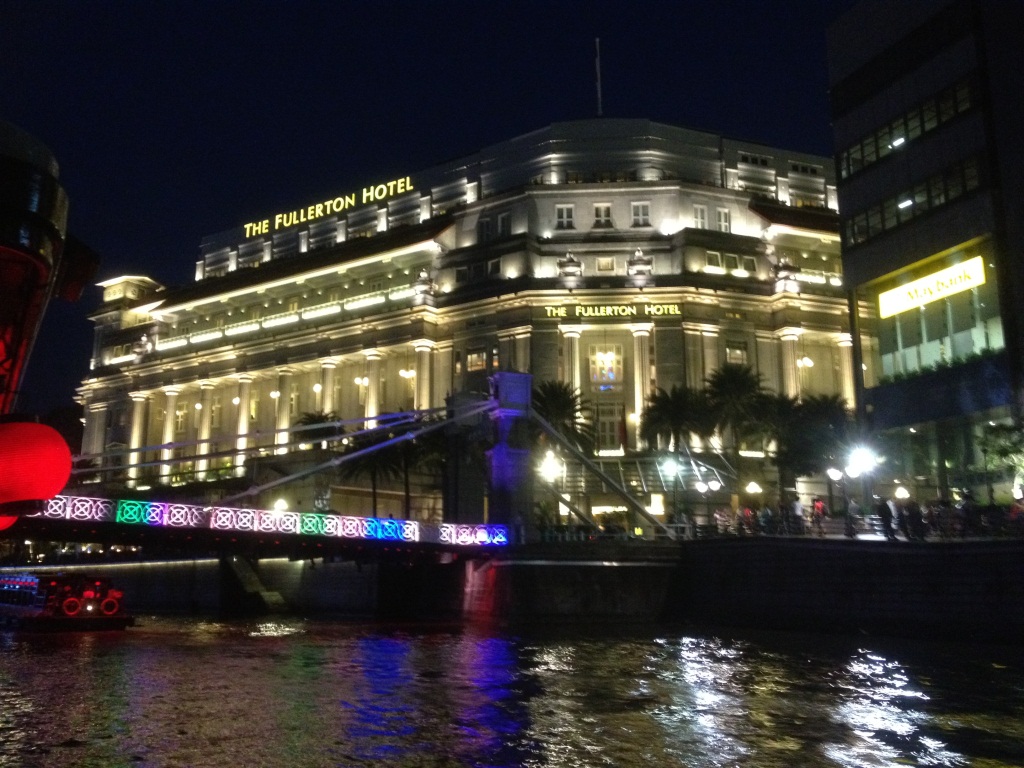 Fullerton Hotel & Cavernagh Bridge
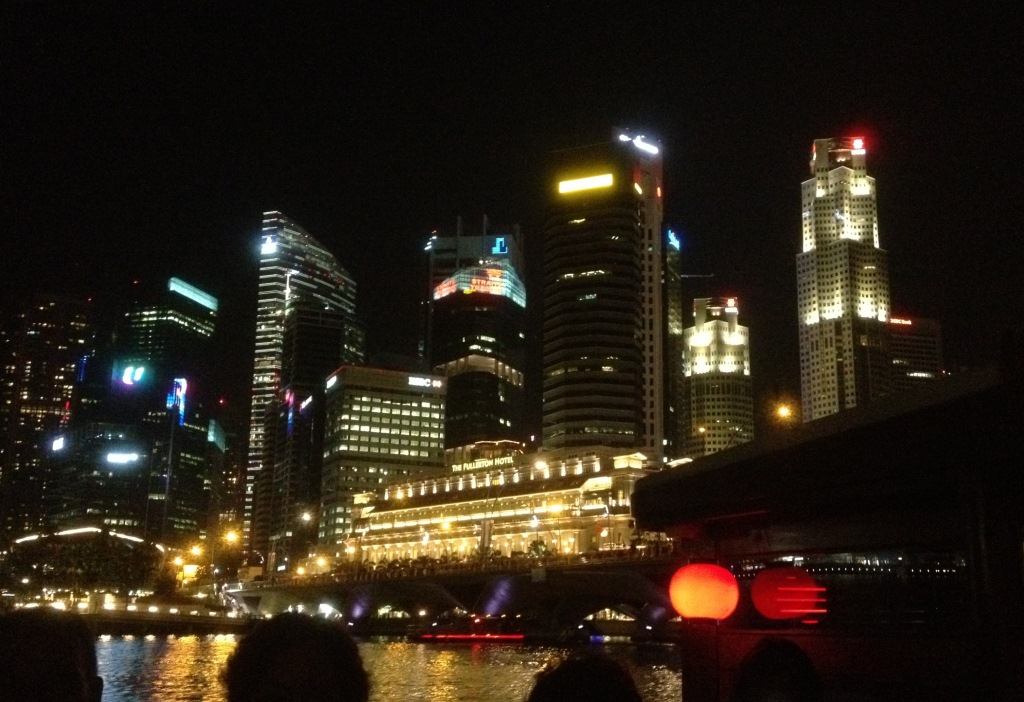 Central Business District
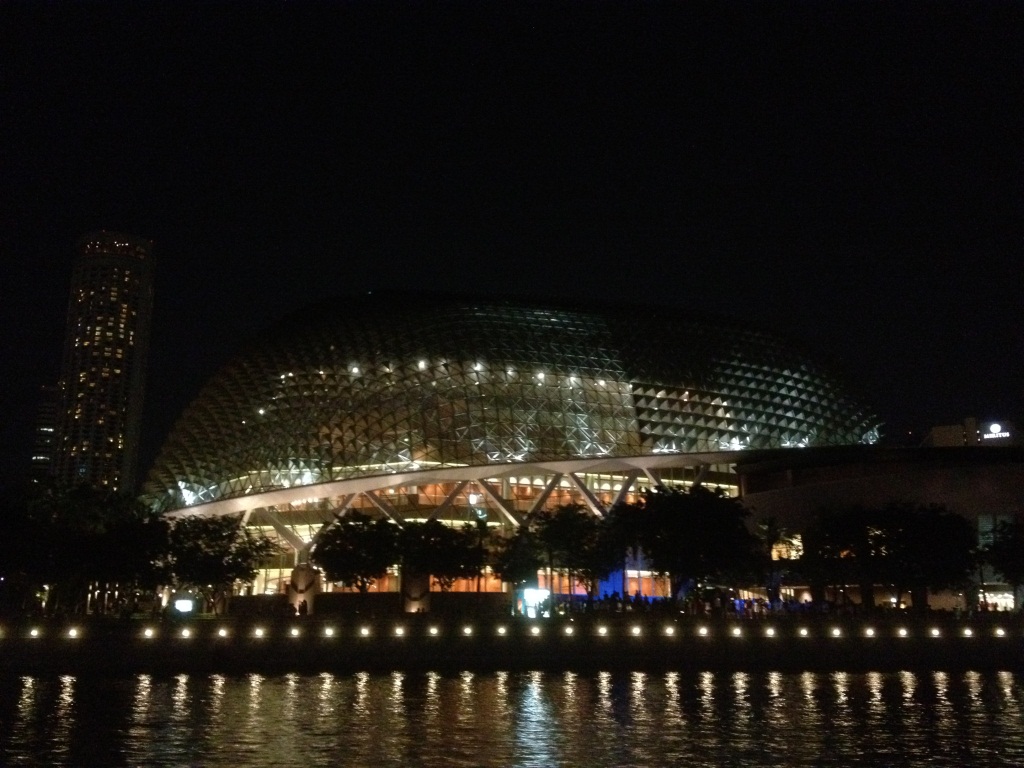 Esplanade, Theatres by the Bay
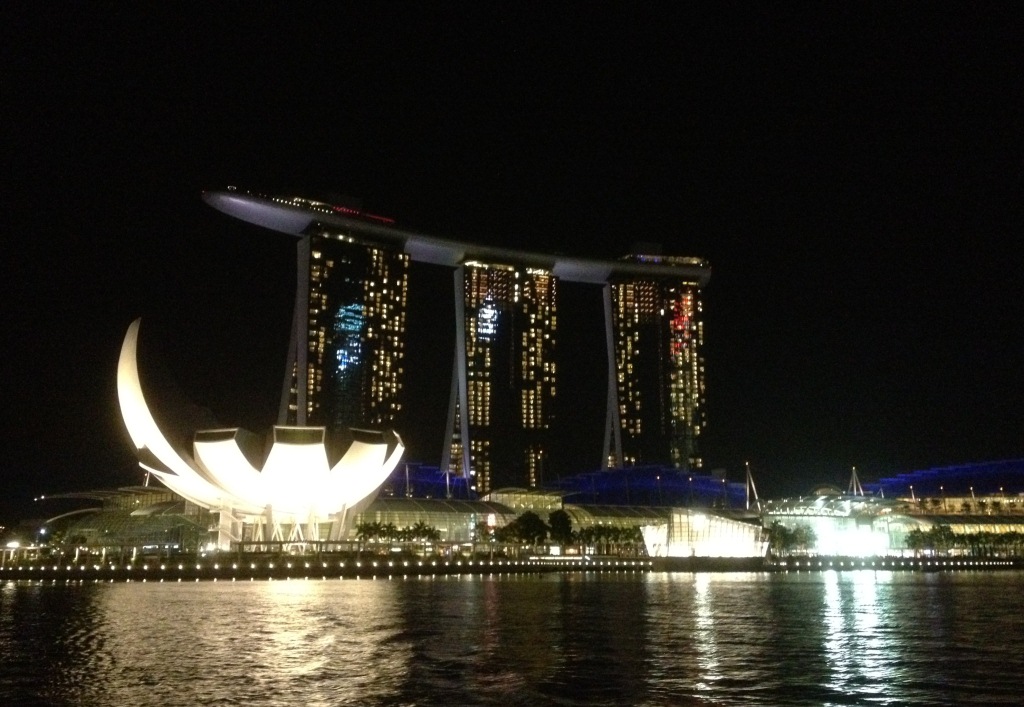 Marina Bay Sands
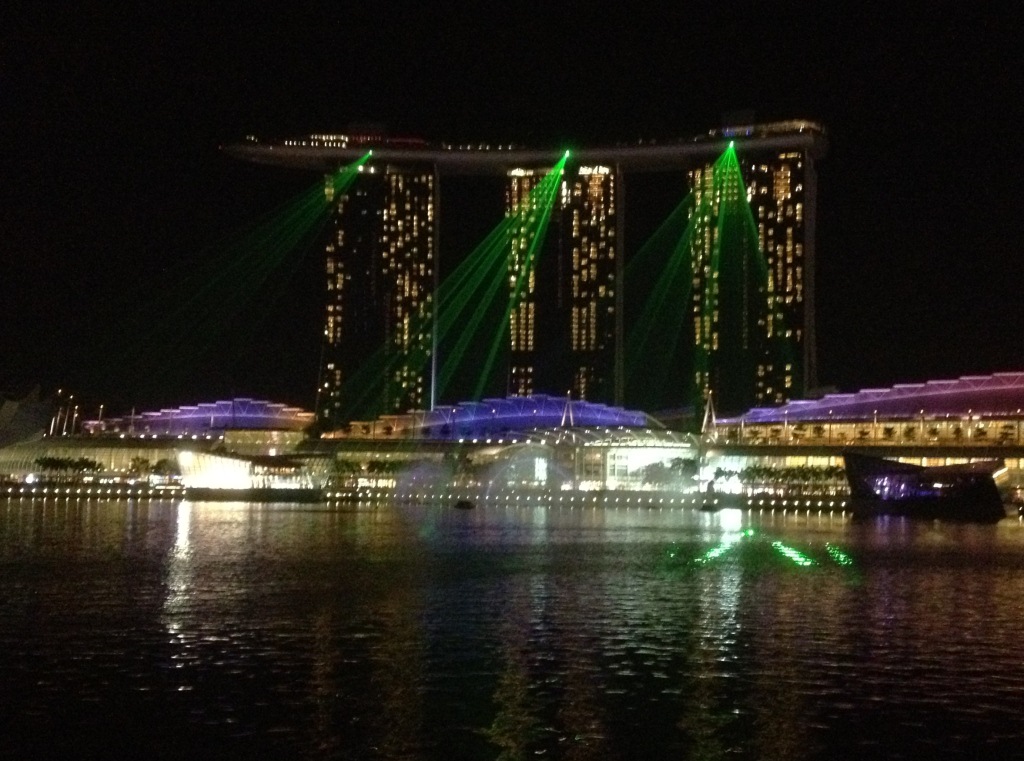 The light show
More or less
Singapore, 26th May 2012
Did not make it yesterday, too many things going on and then later in the evening I went out and did not have the energy to write my blog. It was a day in which I predominantly tried to get my head around finalising negotiations on several new project fee proposals. Meeting directly with the client as we did over the last few days for several projects, really helped to establish a personal bond and assess the client’s position towards your company in general and their expectations towards your services and their budget for your fees in particular.
We both want “more” for “less”, the difference being that their “more” is in regards to your deliverables and our “more” is in regards to our fees while their “less” relates to your fees and our “less” to our deliverables :). So we look for win-win solutions and often that comes out of offering more for less. What I mean is that we offer to take on more scope but at discounted fees. Am I starting to lose you?
For instance instead of 1 project for the price of 100 we offer 2 projects at the price of 180, effectively doing each at 90 offering a discount of 10%. It becomes even more complex when you are contemplating an offer to the same client for 3 or 4 projects at the same time as it hardly happens that they all run concurrently at the same speed and schedule. However there is definitely an economy of scale to be achieved, a long term relationship to be built and some security for the company to be achieved.
Preparing fee proposals is always an exciting thing to do as it comes with hopes and expectations, but finding the right mix of “more” or “less” is always the challenge…
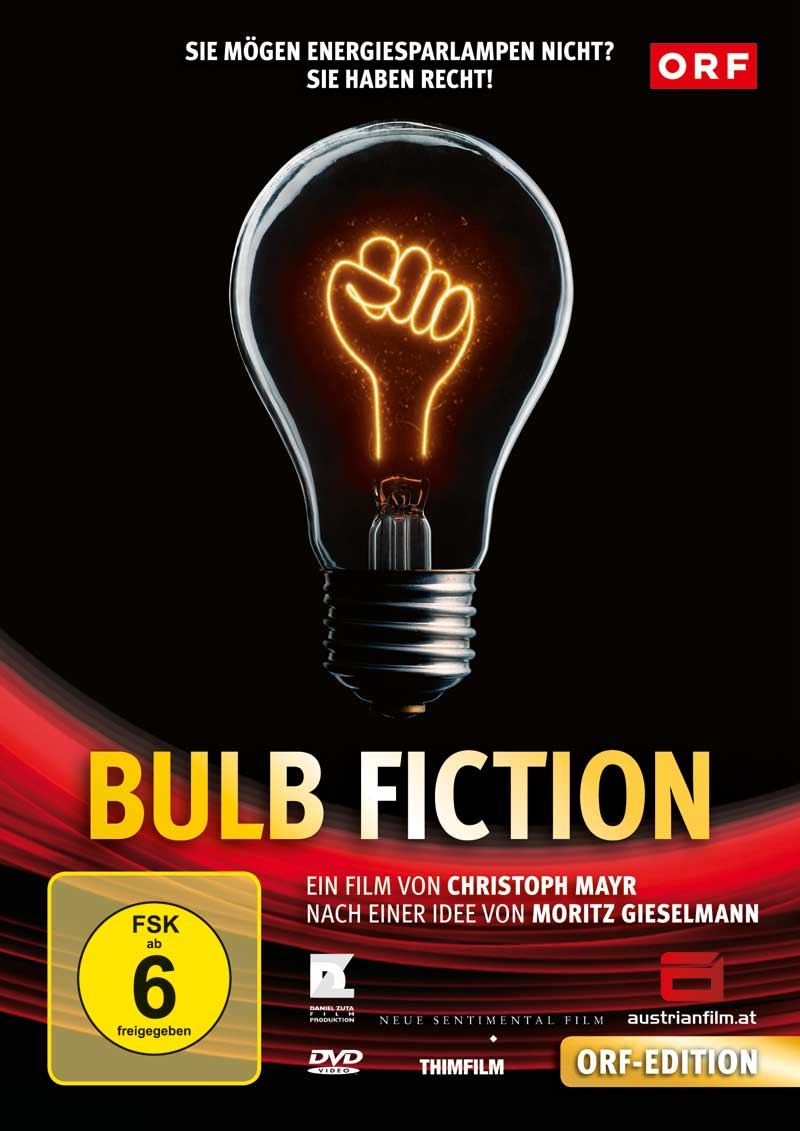
Light Watch 3-73: With the incandescent bulb “less and less” likely to survive we find “more and more” actions in relation to the phasing out of the bulb. I recently stumbled on one called “Bulb Fiction”, obviously a title borrowed from the hit movie Pulp Fiction, a movie about the incandescent bulb…
On the acquisition trail
Kuala Lumpur, 24th May 2012
Bet a lot of my competitors would love to know how I go about my project acquisition…I am in Kuala Lumpur for the day to meet some new clients and ick of new projects. Some clients want you to come out to meet them for interview, so if you can combine that with other project meetings in town you can piggy back these meetings and save on the flight and accommodation costs (if you stay overnight). Though trip costs to KL from Singapore are relatively minor, it could save you significantly once you start flying out to further away areas, like I recently did to Qatar for instance.
Today in KL I had the opportunity to meet with some new clients on the back of a scheduled project meeting. The thing with getting into new projects is really to get comfortable with each other as you potentially enter into a long term relationship, technically a sort of marriage. So this personal encounter, call it interview if you want, serves to assess each other. The client wish to strengthen his confidence in you (he must have had some by inviting you in the first place) and through this personalised discussion get a good feel of your experience, your attitude and most of all the deliverables to be expected. You at the same time get a feeling of their experience (you would be surprised how many clients are first timers never having done a project of such nature before!) their attitude and proposed management towards the job. You generally get a good feel of that in such first meeting. We of course ultimately want a client that has trust in and respect for your services (basic for any relationship!) and above all is the perfect paymaster! Unfortunately the latter we sometimes only find out (too) late in the process…
Being confident about what you can offer to the success of the project is of course key! Any one that is going to engage your services surely wants to have the feeling they got the best deal and a winner for the project! Will see if we managed to convey that to the client…
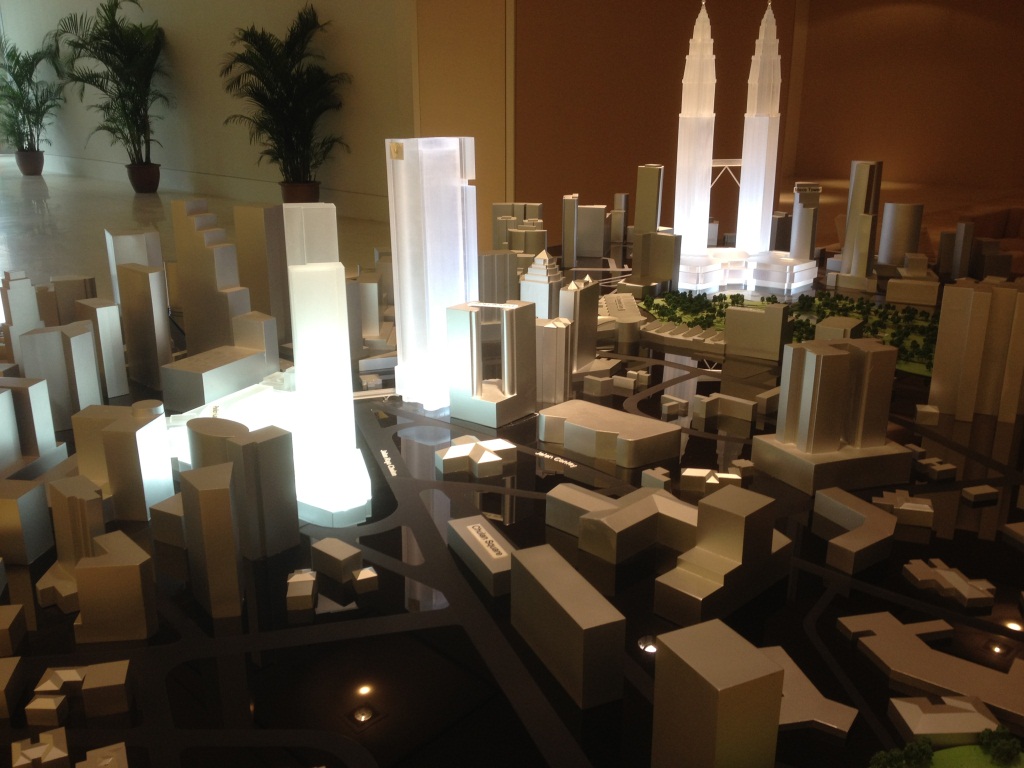
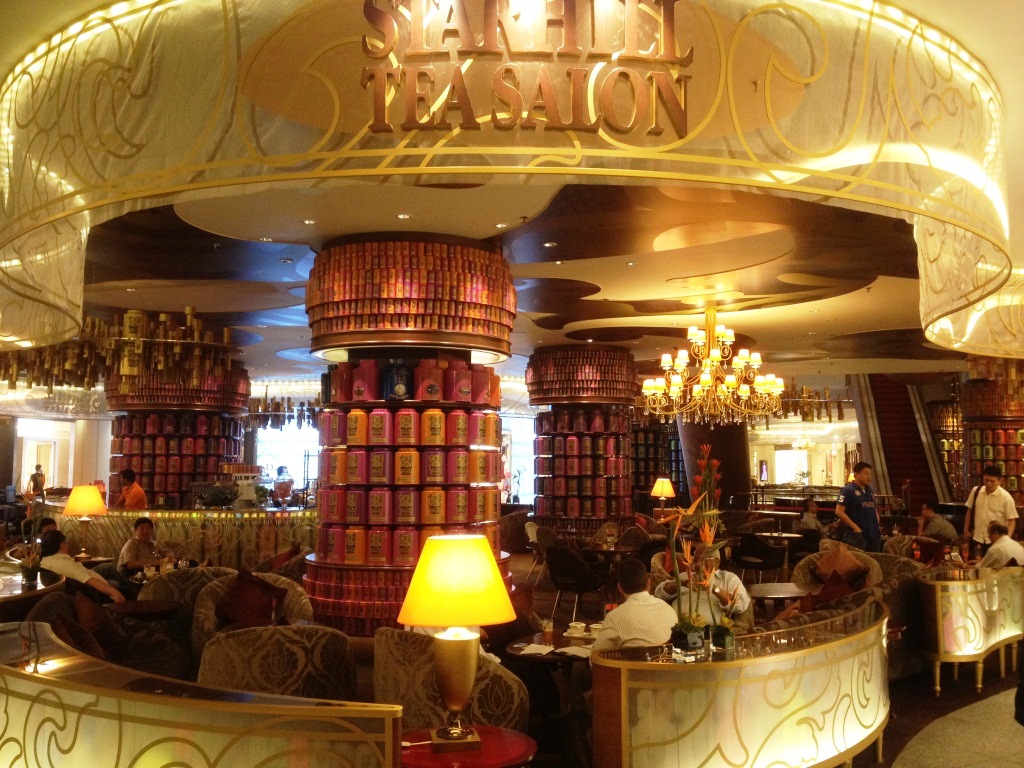
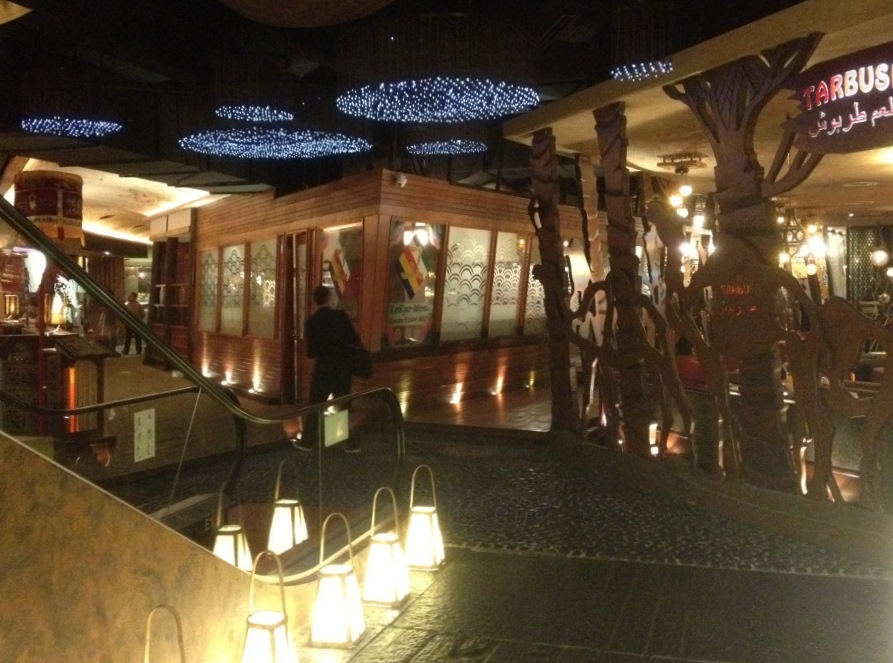
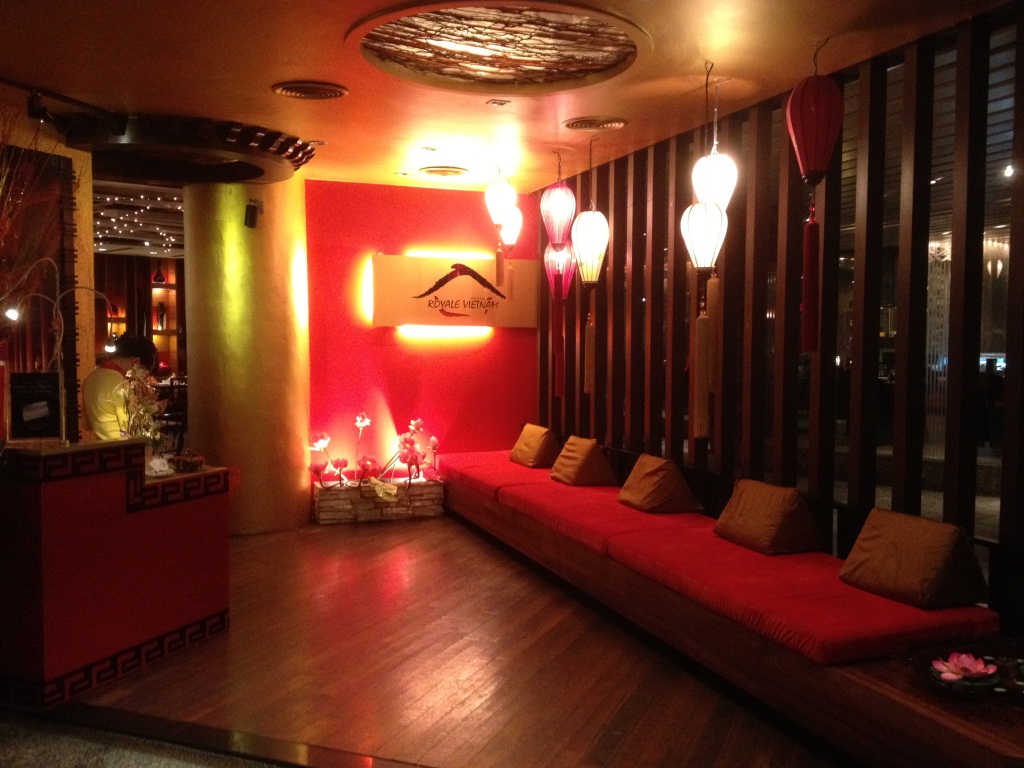
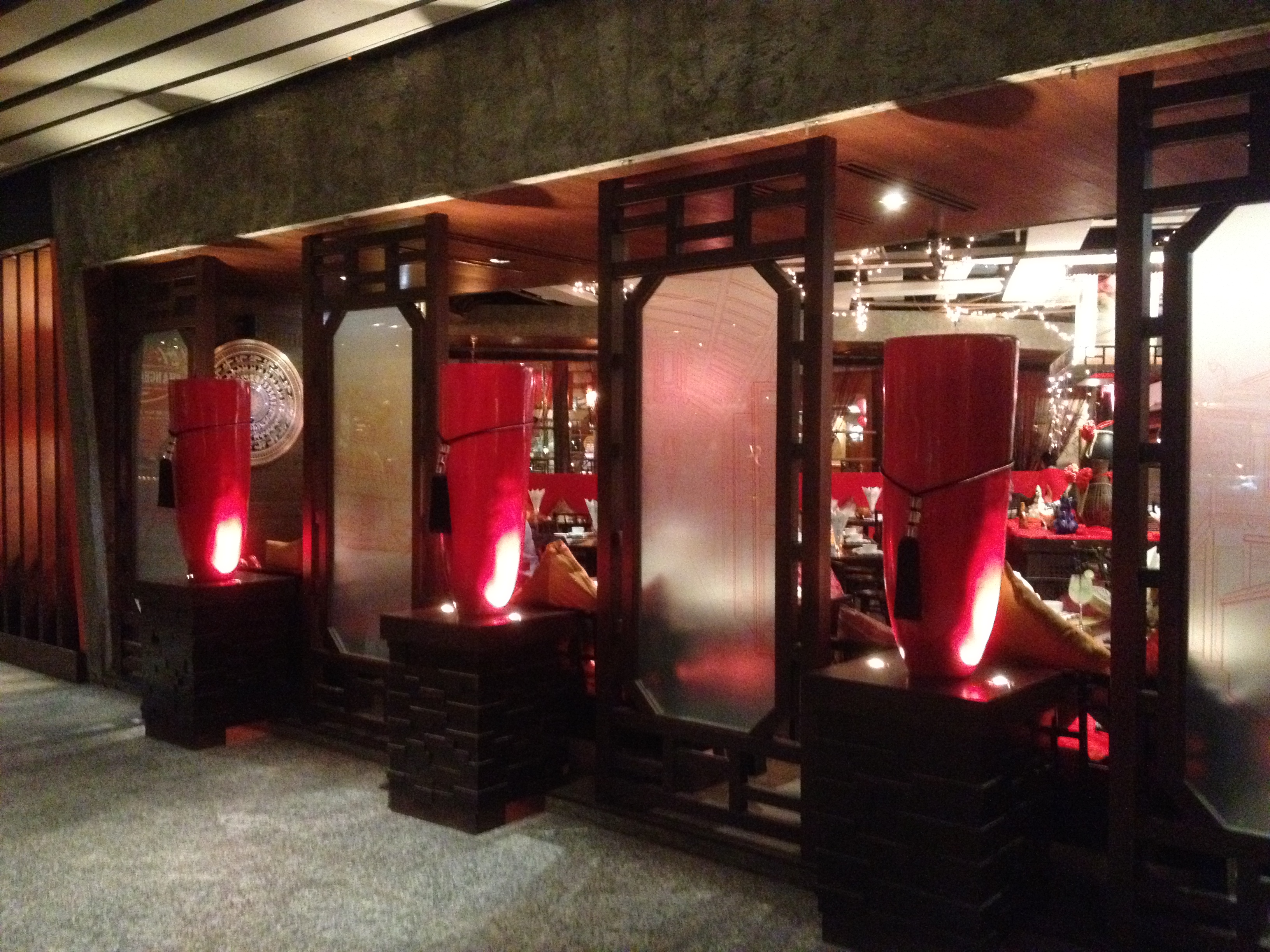
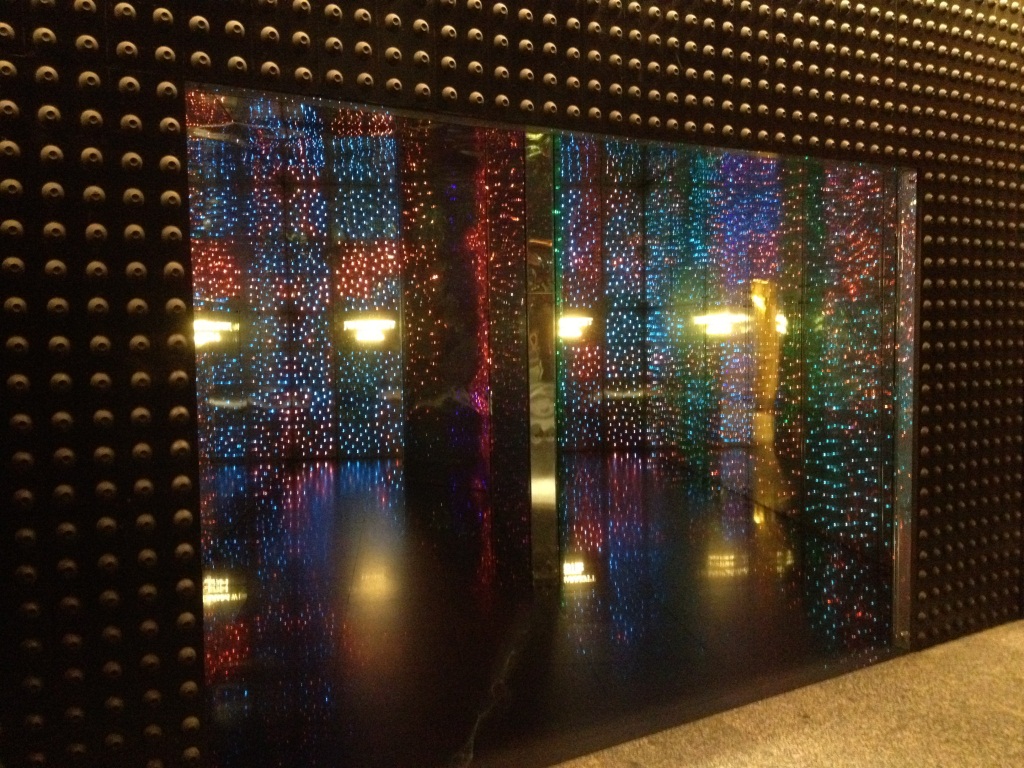
Light Watch 3-72: Kuala Lumpur has changed so much since they days I was working on the Petronas Twin Towers (mid 90’s)! After my meetings I went out for a little drink before catching my flight back at the Starhill Gallery Mall in central KL where the lighting is as good as anywhere else in the world!

Value engineering 2
Singapore, 23rd May 2012
After an early morning flight I am back in Singapore, as I have some meetings is KL tomorrow. I am taking a more and more relaxed approach to travelling for my own sanity. Taking my time to go from A to B is one of them. As a frequent flyer I have access to airport lounges so I prefer to arrive well in time and relax in the lounge rather than stressing over getting somewhere last minute. Even working in the plane is reduced to whether I am flying business class or not. There is no way you can properly work on your laptop when the seat in front of you is reclined into your face! So relax, watch a movie, read a book or magazine. The thing for my own health and sanity here is; relax, don’t stress!
This afternoon was mostly spent on further “value engineering” on one of our project designs. In continuation of my blog just a few days ago, I took a more pro-active approach in looking at value engineering. Many designers take the attitude that their design is perfect and nothing really can be changed. That of course can’t be true. There are always “ways”. So I looked at a few angles:
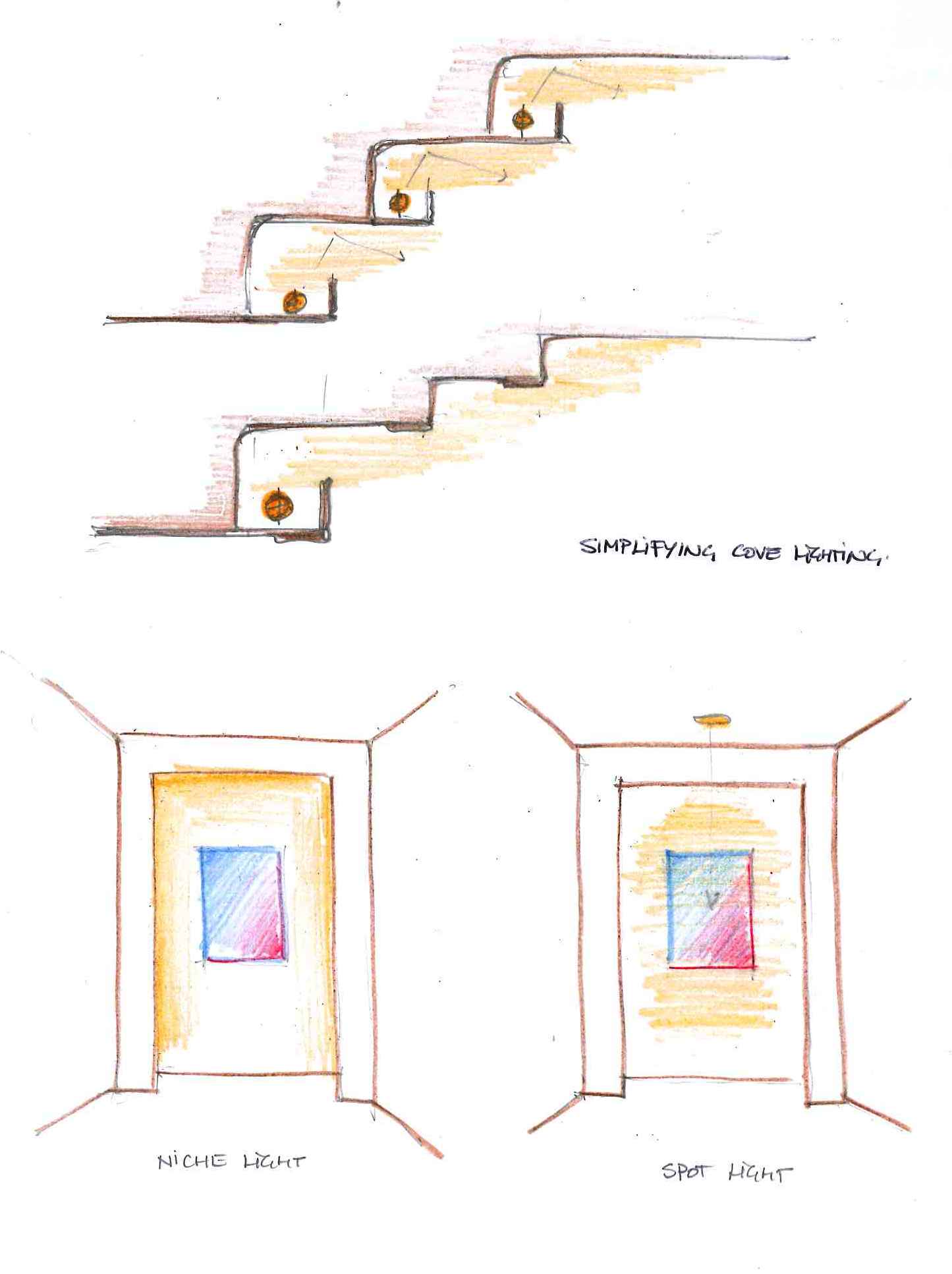
The first was the way lighting was integrated in the interior design. Multiple ceiling coves generally means multiple cove lights. So simplifying the ceiling design means we could simplify the lighting and reduce the cost of it. In this case a 3-tier ceiling coffer could be simplified to a 1 or 2 tier coffer with the deleted coves being reproduced as mouldings for instance. However to compensate the loss of light, there is a need to increase the brightness of the remaining cove.
Another approach is to replace a concealed linear framing lighting effect with just a simple spot for say an artwork located in a recess niche. This obviously involves a change of lighting effect, less sophisticated, but if carried out well still fulfilling visual impact.
There are many more “positive” steps that can be taken, but let’s not forget that scrutinising the suppliers quotations can generally achieve quite some more savings, often up to 10-20%. Value engineering is a team effort that spans all disciplines, not only design!
Light & Learn 3-13: Some examples of simplifications and cost savings
The lighting experience
Perth, 22nd May 2012
With the cut throat competition between LED lighting suppliers (nearly everyone nowadays!), there is an increasing need to create awareness for clients and end users to weed out the “profiteers” who offer below par quality LED at irresponsible prices and warranties. Today I met with a supplier who is going out of their way to educate the client about the basic needs in regards to good quality LED’s.
In a strategy pinched from the consumer market they are offering LED sets as a kit to actually try out, compare and assess. But rather than just giving sets away at no cost the kits are actually for sale, but with a money back guarantee if the product proves unsatisfactory. This gives value to the system and the comfort of knowing that in case the lights do not work out, for whatever reason, there is a no questions asked money back guarantee.
Education is one thing but in lighting you need to see and experience it (to believe it). It is very much a sensory thing, whether the lighting is purely for performance or just for mood setting. So offering “experience kits”, or however you wish to name them, seems like a clever thing to do, certainly if you are confident about your product. These guys are because they know they have a good and reliable product that can stand the test, but they fight end-users whose minds have been “brainwashed” by smooth talking sales people.
Many suppliers act like they are confident but in their heart know their product is not necessarily a good product, some of them praying that the lights will keep working properly past the warranty time! So finding suppliers who consistently work on proper education and awareness creation for their clients is refreshing and laudable. Responsible manufacturers and suppliers should follow suit and promote quality over (sales) quantity. In the end we all win because nobody wins by building up a bad name for the (LED) technology.
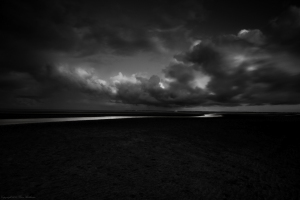
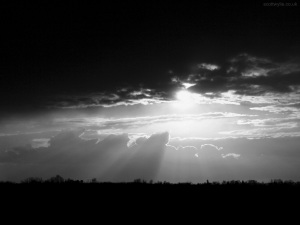
Light Watch 3-71: Following on from yesterday, here are some pictures showing of mother nature…daylight and darkness mixed with the clouds …




Noche Zero
Perth, 21st May 2012
Another beautiful day in Perth, we are lucky here with an average of 8-9 hours sun shine a day throughout the year. Add to that the (really crisp) blue skies and a Mediterranean climate together with the relative unspoiled landscape and relaxed lifestyle and you have great ingredients for living. It is not by accident that we have one of the few world network tracking telescopes up in the hills just outside the city. We are blessed with beautiful starry night skies and outside the city you generally can see the milky-way.
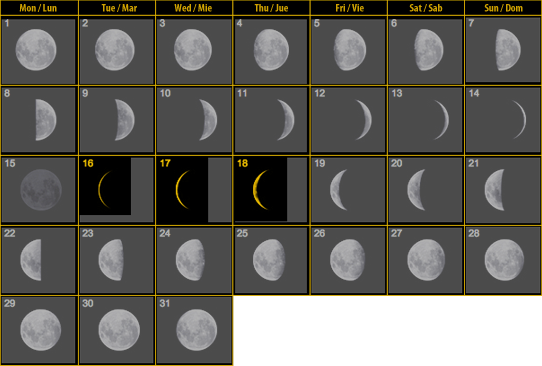
Most of us in this world however are not so fortunate and believe it or not there are people in big cities that have never seen stars other then in movies. Many of us do not even know what it is to be in real complete darkness. Darkness where on a night where the moon fully shines you can simply find your way even with 0.25 lux. As lighting designers we have to be conscious about our natural environment, but in order to design with a conscience we need to know the zero point, complete darkness. Only then can we create a lighting design that is in balance with our planet. Ying and yang…light and darkness.
Introduced recently during L&B in Frankfurt I am pleased to join in the promotion of the Noche Zero event that will allow those who can make it personally, but even others through the spin off awareness activities, to reconnect, rebalance and retune ourselves to complete darkness and undisturbed daylight. Like we need to calibrate our lux meters, this will be the opportunity to re-calibrate your-self, away from light polluted cities.
Light Watch 3-70: Details can be found on the website at: www.nochezero.org :
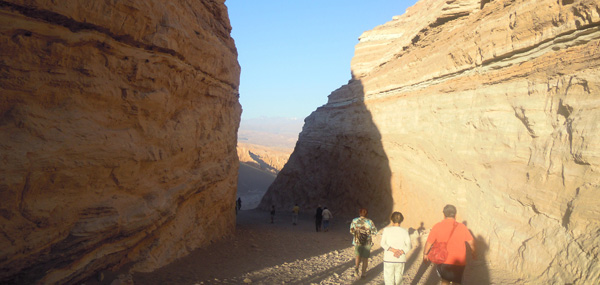
“Noche Zero will take place from 16 to 18th October in the Tacama Desert, Chile, the driest place on earth with the clearest sky on the planet and one of the worlds epi-center’s for astronomical observation. The most stunning starry skies will be the backdrop to this unique opportunity to hear the multiple view- points of leading experts and for you to contribute to a new way of treating and understanding the role of darkness in urban lighting design. Noche Zero will be the experience of a lifetime”…
Below some pictures taken from the website.




Team spirit
Perth, 18th May 2012
Good results come from good team work. I know it is an “open door’ statement, but remains oh, so valid. Before we engage in a project as lighting designers we generally do our due diligence in regards to the client, his reputation, his past track record and we enquire with those whom have or are working with him about their experiences and the client’s payment practice. So basically we want to know whether this client respects quality, trusts and follows through on the consultant’s recommendations and above of all whether they are a good and reliable paymaster.
If that all feels good, you move to checking out the rest of the project team you will be working with, who is the architect, the interior designer, the landscape consultant, the project manager and so on. Have we worked with them before, did we have a good experience or if not how is their reputation. We have just quoted for a project that has Foster & Partners as the architects and having worked with them before so we know the level of quality and details they demand.
Even more important are the people you will be working with. Yes the company has a certain image and reputation but so have the individuals in that company. I know clients who request specific individuals from a company to be involved as part of the contractual agreement, which makes sense. We like to deal with people we know or in whom we have faith that they will deliver. This is generally based on past experience, but sometimes based on reputation.
Today I had a kick off meeting with a new team of people, people I had never met before, people I never worked with before. I have dealt with some of their companies in other projects, but never with these specific people. Such first meeting is crucial as that is where the team spirit is build, relationship are founded, creating a base on which the project has to be built. After having spent the day with this team I have a good feeling that the right people are on board, that there is the right attitude towards the goals to be achieved and most of all that due trust and respect was shown towards the individuals and their expertise.
Now everybody of course is all smiles when the project starts and time will tell whether we all have what it takes to finish the project smiling as well, but as for now we are off to a good start with a great and highly spirited team!
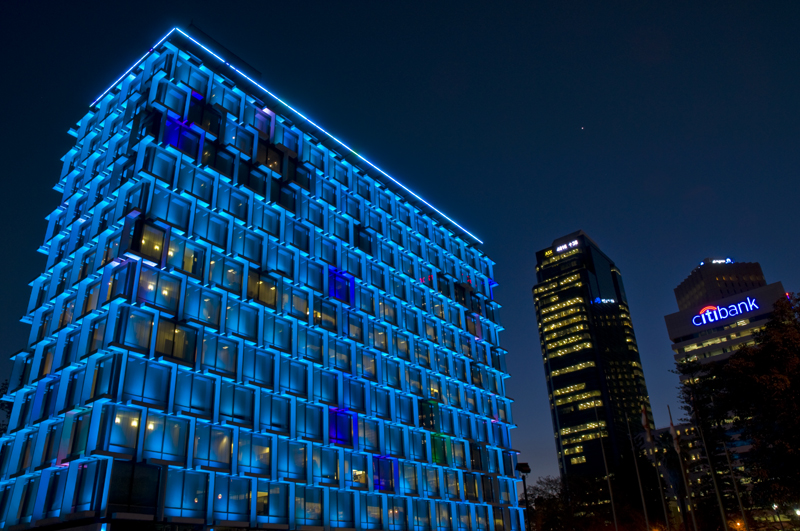
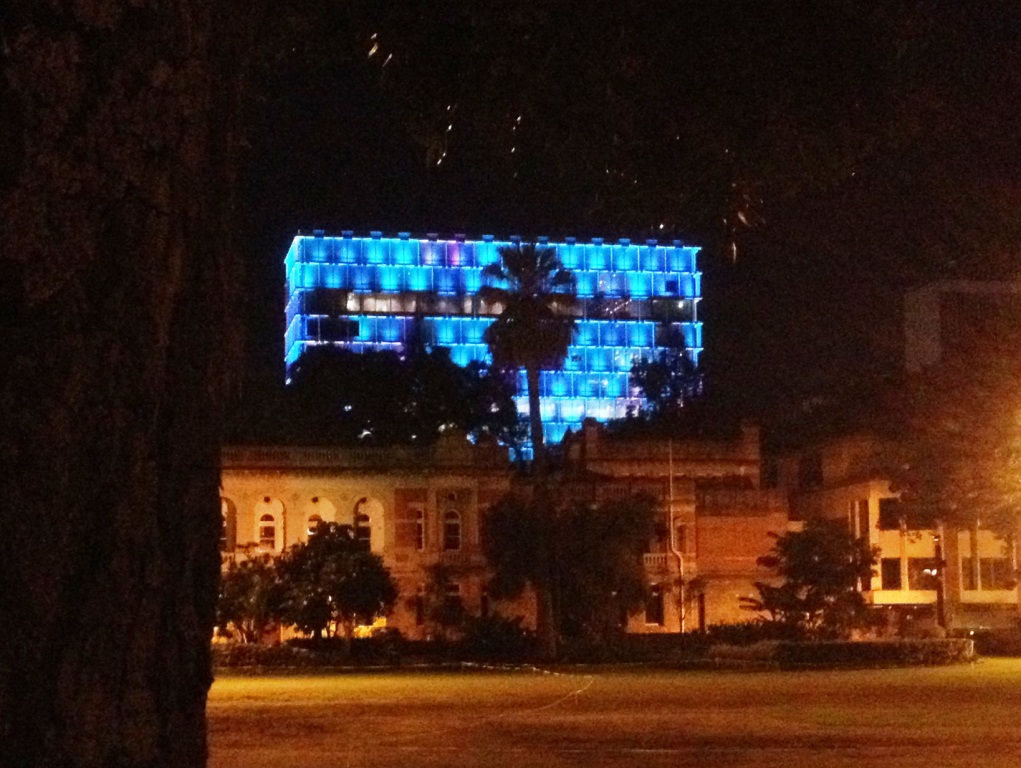
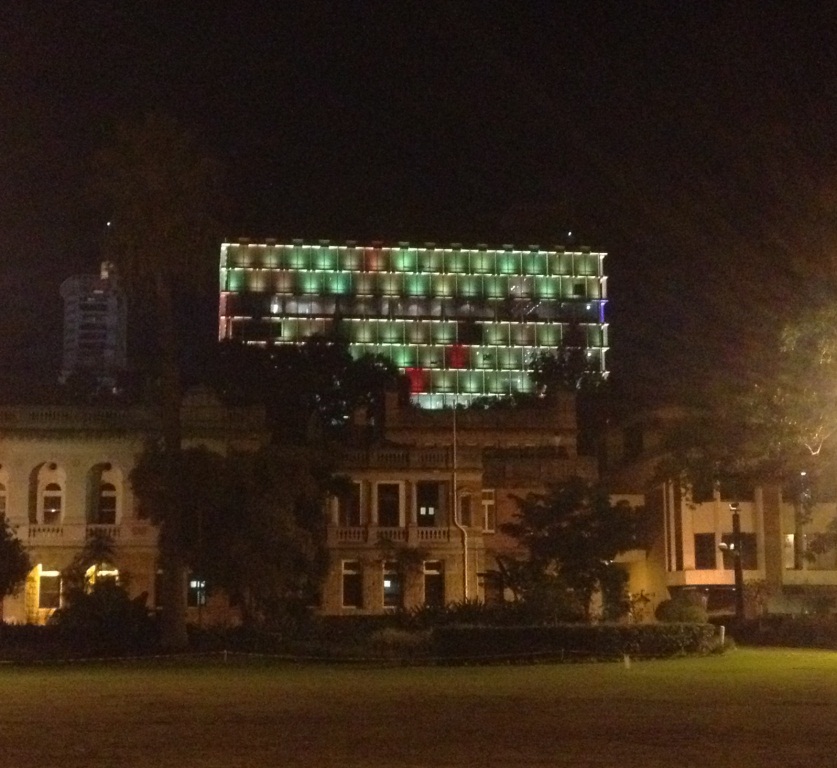
Light Watch 3-69: On my way back I decided to have a look at the Perth’s Council House, which to much fanfare and at a price of more than $1 Million had installed an LED façade lighting about 2 years ago. I had heard that it was showing signs of aging (already!) with many lights not working. I think it’s a real shame that such iconic building does not maintain and do more with its lighting, certainly considering the price it paid for it! Below the original press picture used at the inauguration and further down some pics I took tonight. Judge for yourself! Have a great weekend 🙂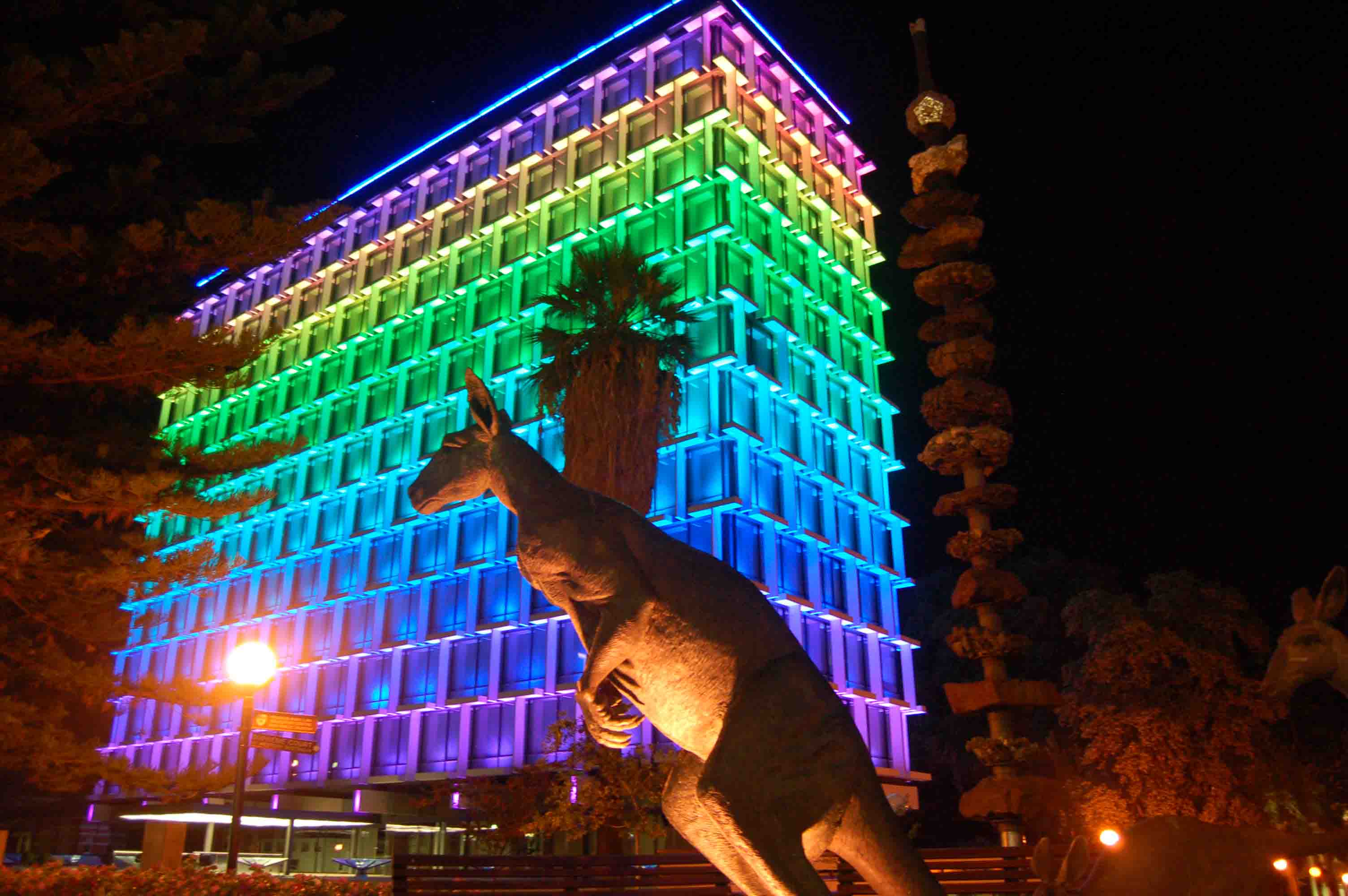
Value engineering
Perth, 17th May 2012
One of the trendy words nowadays is “value engineering”. Not surprisingly many companies warily watch the developments in Europe (will Greece be bumped out of the Eurozone or not, and what will be the consequences?) and how that possibly may affect the economy in Asia. Signs are already showing a slow-down in China and India, two of the major engines in the region. As a result all budgets are being reviewed and “value engineering” is the talk of the town. We are in the middle of some of these and basically it means: how can we seriously cut costs…?
In practice it becomes a catfight between the various consultants and project team members as nobody really wants to “down grade” their design specifications. It’s like the austerity measures in Europe, nobody really likes to give up their acquired status and comfort, certainly if the problems have not been caused by you. In our case it also means redesigning and extra work. So how do we go about it?
First of all we have to define responsibilities. Just recently we had an interior designer come out telling the client where to cut on lighting! Yeah, nice try! Look into your own garden first, mate! We will look after the lighting part! This tactic is of course applied by many…defer attention to other disciplines for savings as to avoid having to value engineer yours! So make sure everyone takes care of their own garden!
Then there is the need to assure that value engineering does not affect any owner/government/operator standards or guidelines, whether relating to lighting levels, comfort or other quality criteria. Of course you can get from A to B with a Bentley or a Suzuki, but don’t ask me to buy a Bentley with a Suzuki budget, make up your mind! So there is the need to establish the type of car (read lighting) that you wish to drive, if I may use a metaphor.
The key of this exercise is to focus on the big ticket items. You value engineer there and the result is felt immediately. Looking at small little components even if individually expensive takes lots of time and has little influence on the desired savings result. Finally I note that we generally design towards the best value for money (at least we are supposed to!). So anyone who can knock of some lights without pain had overdesigned it in the first place!
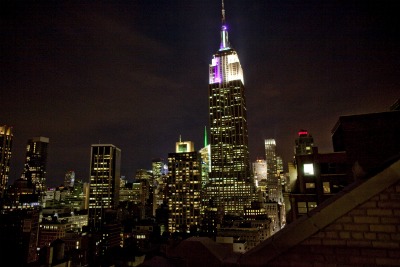
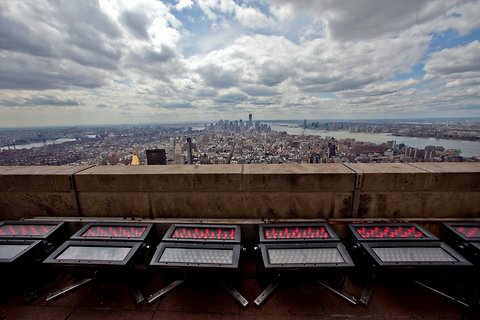
Light Watch 3-68: There is certainly no value engineering at the recently unveiled new (LED) lighting for the Empire State building in New York if you ask me. The installation claims a pay back of its millions of investment within 6 years… I would love to see that calculation…maybe I am to sceptical but I have seen many bogus calculations to appease public opinion. And do we really need all these colour options on this grand dame?
Have a look: http://youtu.be/AIXRTe5BzQc
 The long awaited book compilation of Martin's first year of blogging is available. Order now.
 Feedspot Top 100 Lighting Blogs