
London 2012
Perth, 30th July 2012
With Olympic Games 2012 in London well and truly on the way I can’t really ignore the opening ceremony, which, as Beijing 4 years ago, was spectacular in its own way. Held last Friday night (in the middle of the night in this part of the world) it was again a feast to the eye…imagine the ceremony without lighting! I should check out the history of the opening ceremonies as surely in the past it would have been held during daytime or perhaps with some fire and candles. Today’s ceremonies would be impossible without lighting and far less spectacular without the latest RGB LED colour and projection technologies. Funny how we get acustomed to all this luxury!
It made me thinking whether we should have an opening ceremony with our projects, a little light show to get our clients in the mood of the “fireworks” to come! In many ways we have to be at our best and outdo ourselves, set new standards time and again when we start a new project. It may not always be an Olympic Games stage in which we “compete” but every project is a competitive stage in which we wish to come out on top with happy memories!
Light Watch 3-114: Artistic director Danny Boyle from Slum Dog Millionaire fame, did a great job and while the storyline was very well done, my main interest really was the lighting and the fantastic scenery created, which made for great pictures as you can see below. Light is magic … no words needed
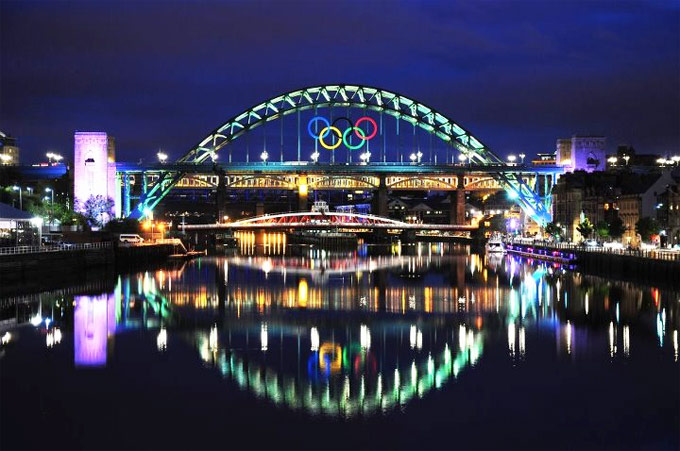
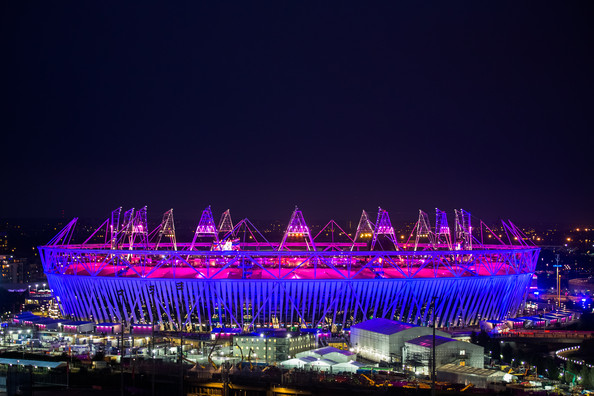
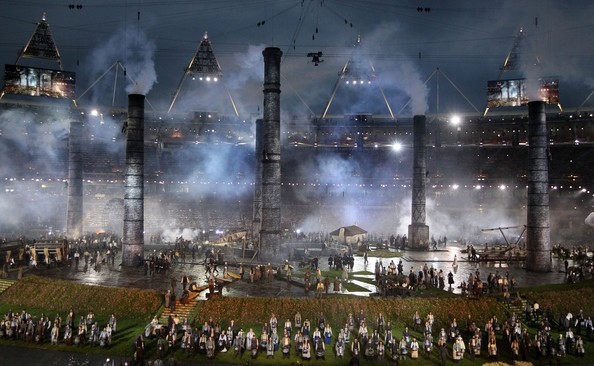
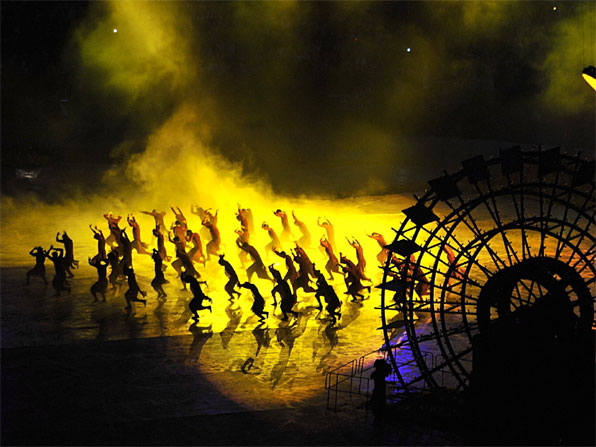

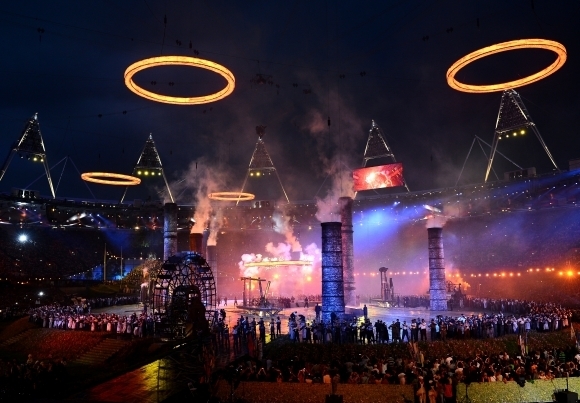
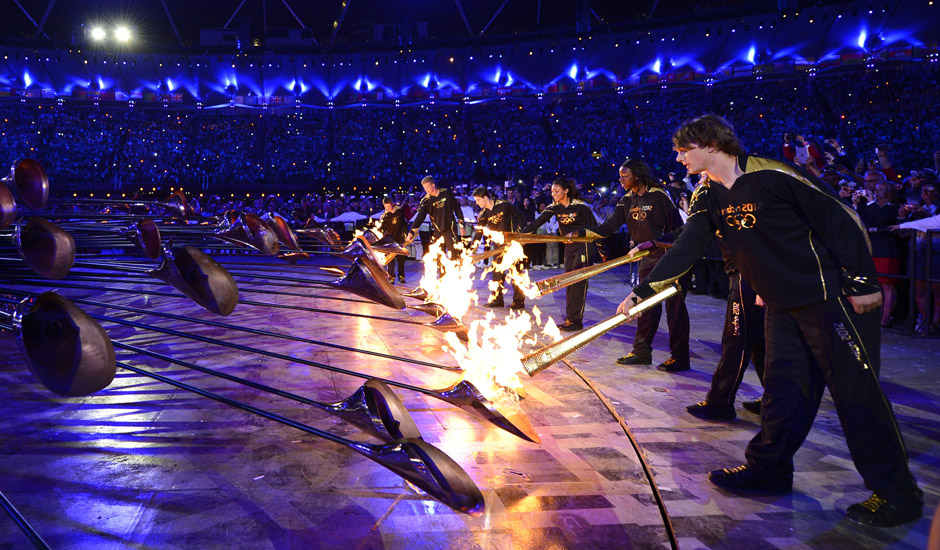
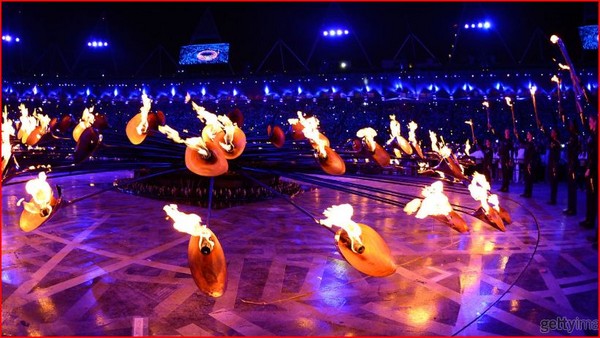
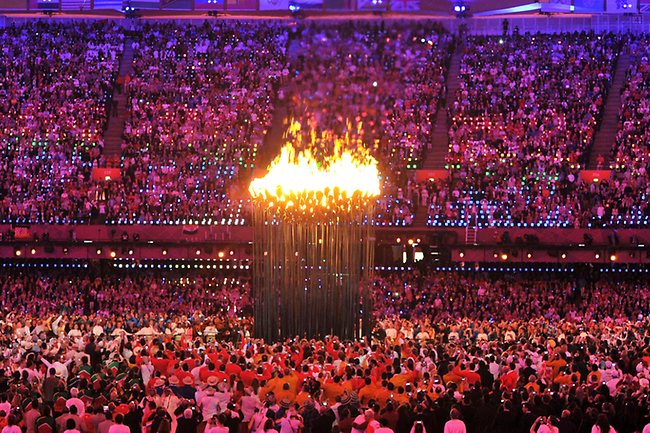
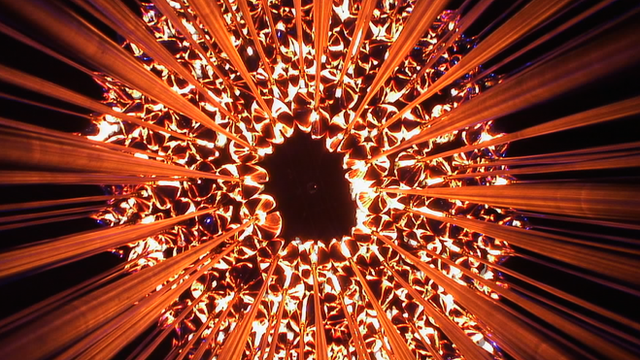
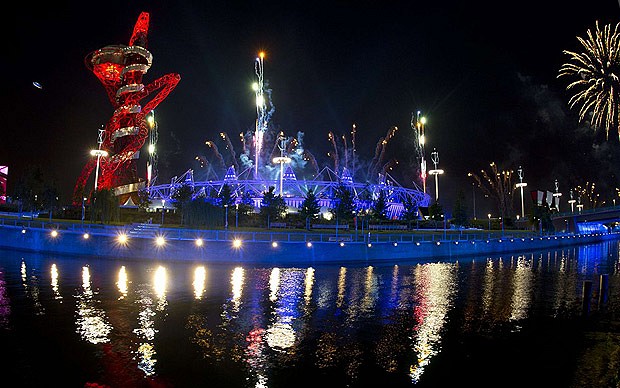
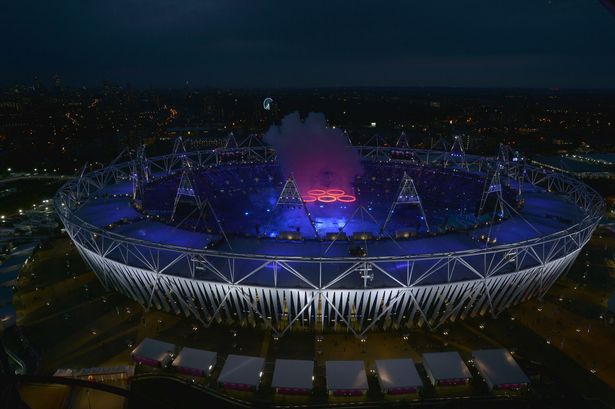
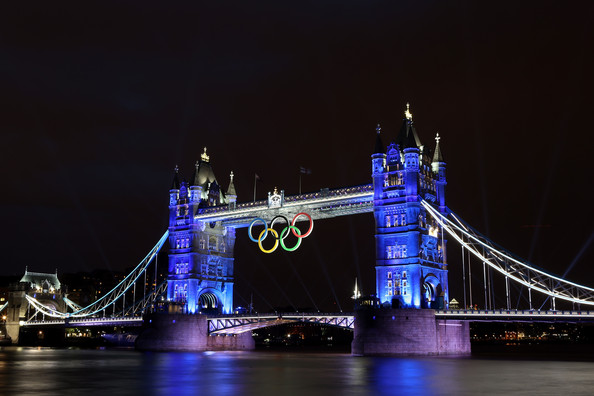
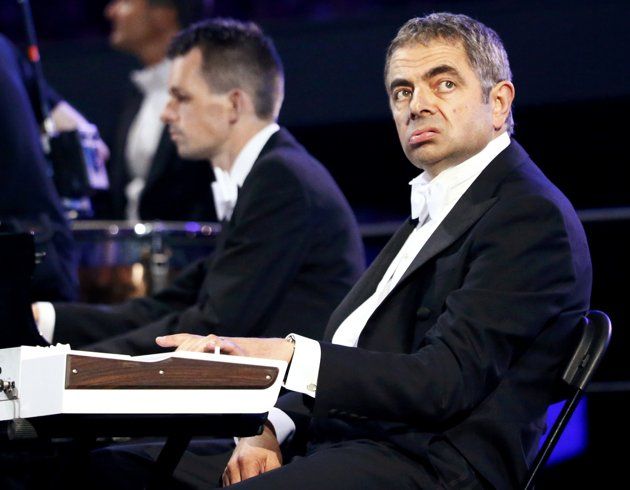
Photo genetic
Perth, 27th July 2012
With the weekend upon us many are looking for some “me” time, some time you can spend on yourself away from the office pressures. Not always easy, as some clients, certainly in this part of the world, chase you as if they have never heard of the concept of a private weekend. Did I ever share the story where one of my staff in Shanghai bumped into a client when on an outing at the zoo on a Sunday afternoon? As we were on a deadline for his project, he felt that we should be working overtime on his project (which we had done throughout the week) and basically forced the staff to head back to the office. Intimidated the staff obliged and the client actually accompanied the staff back and set with the staff in the office the rest of the Sunday afternoon, making sure we were all working on his project!!! I was not in town at the time but when the story came to my ears I was pretty upset! It is not to my client to decide how we organise our time and for good results we need a healthy balance between work and private time. Emotional abuse like he did was unacceptable and I did let him know that when we later met.
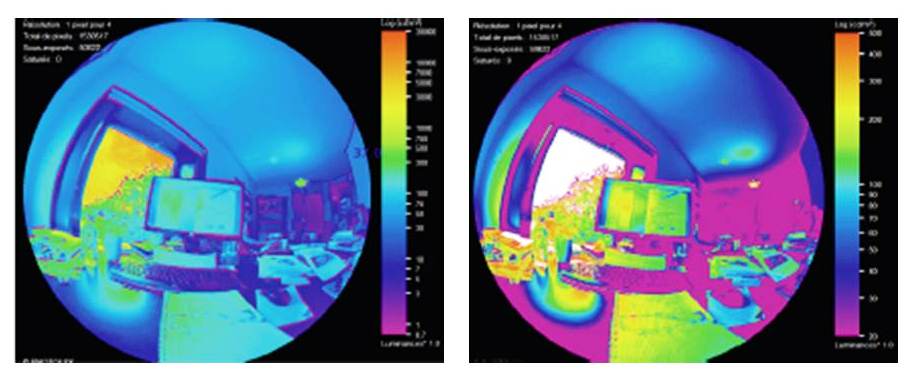
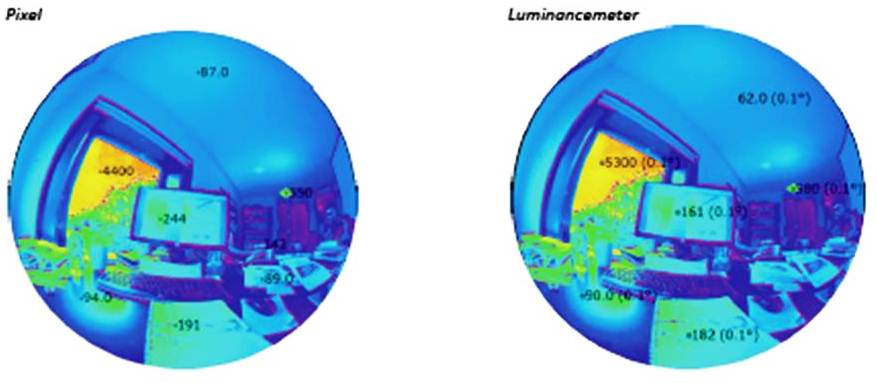
I came to today’s subject as I was forwarded some information about a software package that allows you to use your camera (it being promoted with Canon, but seemingly also available for Nikon and others) to snap photos and then download the pictures into this software in your computer to produce actual light measurements superimposed onto your photo’s. Pretty cool. I have only read the brochure and haven’t seen it working, but if truly performing as it says it can, it should be an interesting tool for lighting designers. You go to site snap a picture and you have at the same time a Dialux-like lighting plot when you come home. Think mock up room assessments, existing lighting system reviews, installation checks and so on.
Not totally sure how it all technically works , but I assume it uses the camera’s recorded incoming lighting intensities and with the camera’s ability to focus on individual objects, you can imagine you can get a fairly good reading of the light (brightness/ luminance) that is reflected of the various surfaces you snapped pictures of in a space. Don’t we all snap pictures on site when we visit? Well now you have your lighting level readings at the same time! Have a great week-end!
Light Watch 3-113: Here is some info from the brochure. The software is called Photolux 3.2 and produced by Soft Energy consultants.

Dirty Power
Perth, 25-26th July 2012
Yes, I am fine…it was just a hectic day yesterday, then travelling to Perth…by the time I got here I just wasn’t energetic enough to write my blog. Its’ cold (5 degrees on my arrival) but as nearly always here nice blue skies…
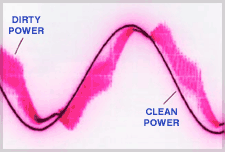
Today I had an interesting discussion that may show some further light on the issue of dimming instability (flickering) of LED, specifically retro-fit LED’s. Note that I am just thinking out loud and sharing my thoughts and that what I write is not necessarily the “truth and nothing but the truth”, but it seems to me that we should certainly spare some thought to the possibility that dirty power (electricity), some call it electrical pollution or electromagnetic noise, may be one of the factors that causes unexplainable variations and flickering in dimmable LED systems and with that I aim specifically at the LED retro-fit, which is one of my consuming issues at the moment. Electrical power is supposed to have one clean frequency wave, generally 50Hz, but most of the time there is a second or even a third wave (2nd and 3rd harmonics), of 100Hz or 150Hz. This somehow superimposes itself on wires and electrical housings and travels through space just like your wireless phone signals.
Dirty electricity is not something you can see or sense, or actually you can, figuratively speaking, as it is known to cause unhealthy side effects to humans such as headaches, ringing in the ears, trouble focussing and other symptoms, and is kind of difficult to explain let alone understand its’ origin. My focus however is more on the potential sensitivity of the LED electronics to the “rogue” frequency waves that are produced through the dirty electricity, directly or indirectly.
Dirty electricity can be measured and the amount seems to be directly related to the amount of and relationship between frequency and voltage (the higher the more “dirt”). Electromagnetic frequency waves can be measured on a power wire but also away from the wire or a light source. So if not properly controlled and filtered electrical pollution can be quite substantial.
I was related a story of a project where the team was examining the cause of dimmed LED flickering, similar as to what I am experiencing. When they came to site to test everything seemed normal, until somebody pushed the elevator button nearby and the LED started to flicker…coincidence? I am not an electrical specialist, but it does not take a rocket scientist to figure out that dirty power may well be one of the key factors causing problems to LED (dimming)!
Love to hear any feedback on this subject…
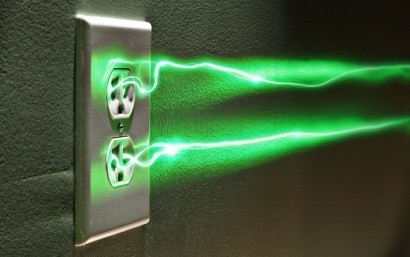
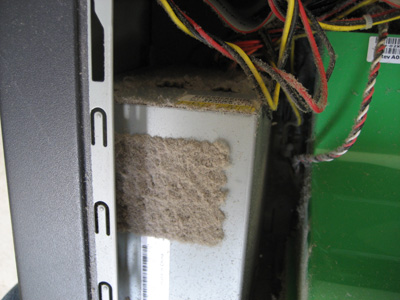
Light Watch 3-112: You can Google dirty electricity and find it explained on various websites. I also found a video on the subject.
PS: Dirty power is not dust on the wires! 🙂
http://www.youtube.com/watch?v=vbebpRvwd8k
Whose fault is it?
Singapore, 24th July 2012
When the end result of a project is not satisfactory, whose fault is it? Who should take responsibility and own up? As professional lighting designer this can be quite a burning question and in the light of yesterday’s (and previous) blogs I am now faced with a project where I need to do some analysing and directing to resolve this issue. Personally I feel I have done all possible due diligence in testing and specifying, yet I have ended up with a project where potentially I may have to recommend the client to replace all down lights. As the lead consultant I feel responsible, but at the same time I feel misled by the manufacturer. Maybe not purposely, as they are probably learning along the way as well and the local sales reps are just feeding on the information provided to them by the principal head offices.
Whatever the case no-one really comes out unscathed. We can defend ourselves and show how well we did our due diligence, but the perception will always be that as a consultant you are supposed to know…I wish! Things are always easy when you know! Is it fair to have the client pay? Not really as they are the least to blame and rely on our expertise. If it turns out to be an electrical installation problem than the electrical contractor will have to rectify at his own costs, if turns out to be a clear product failure than it is likely that the manufacturer will bare the brunt. There is a little complication as the product brand manufacturer sold his goods through the local agent who in turn took on the warranty terms and conditions, so he will have to front up and then deal with the manufacturer later. I guess that is why we have warranties and insurances.
But coming back to my tag line of whose fault it is, I would like to ask the manufacturers to take a more responsible approach in their advertising of specifically LED technology. Yes a great technology, heaps of potential but please inform us of the many potential limitations and drawbacks. Thanks!
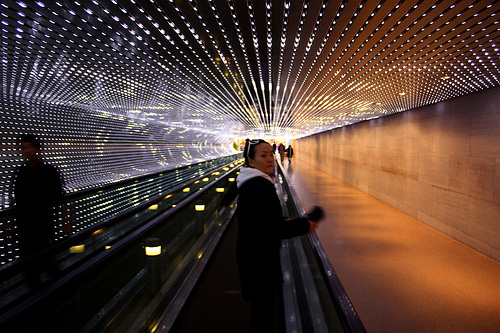
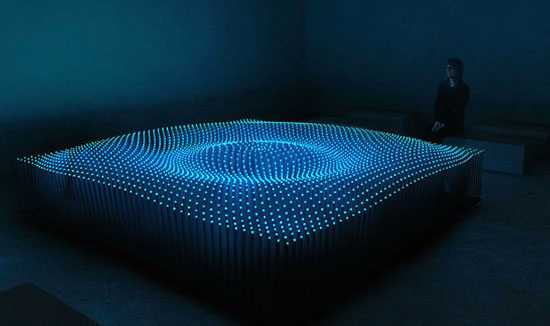
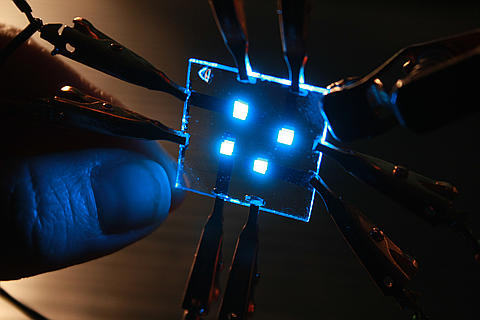
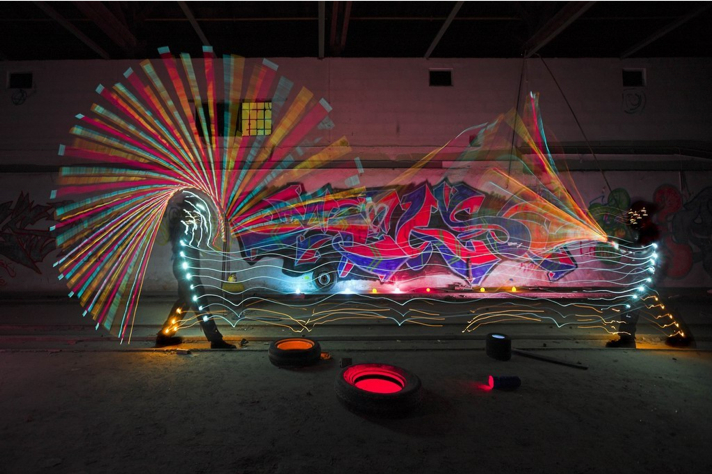
Light Watch 3-111: Some LED mood images…
LED retrofit
Singapore, 23rd July 2012
While I can sympathise with the huge commercial opportunities in the retrofit market when it comes to LED, I have come to the conclusion that for the moment LED retrofits (in down lights specifically) are not reallistically suitable for professional and commercial use. In other words, when it comes to professional lighting installations with high demands on performance and durability, the retrofit LEDs do not seem to match up with created expectations. Note that I say “created” expectations, as I feel the manufacturers have been guilty of hyping up the LED benefits while closing an eye towards the potential pitfalls and limitations. I have been engaged with Philips for more than half a year now trying to figure out why the retrofitted MR16 LED’s in one of my projects keep on flickering at certain low dimming levels, despite the extensive research and testing that was carried out indicating there should be no problems.
The fact is that one year past the official opening of my project I am still having issues with the retrofit LEDs. We have had a full lamp replacement (remember the dust/overheating issue in the fan cooled LED lamp?), we had further incidental replacements, but the problem keeps occurring. The dust issue having been settled, we are now investigating “wave forms”… really? Input and output voltage before the lamp, before and after the transformer, before and after the dimmer system, etc. We are testing with the A/C and other electrical systems off to see if there is possibly any magnetic or electric interference from other systems. So far no noticeable impact. But then we had already observed that in a same circuit the middle of 3 lamps was flickering and the others not, which would point to a lamp issue rather than an electrical or dimming fluctuation issue.
We are now also been told that the lowest programmed dimming levels (we had tested and found out that 7% was about as low as we could go without flickering at installation) have to be “upgraded” to higher values as we now observe that the flickering now starting to occur at higher levels…feels like trial and error approach! At the rate we are going in few years’ time we can probably only on-off the lamps! It nearly looks like the lamps are subject to fatigue! Story to be continued…
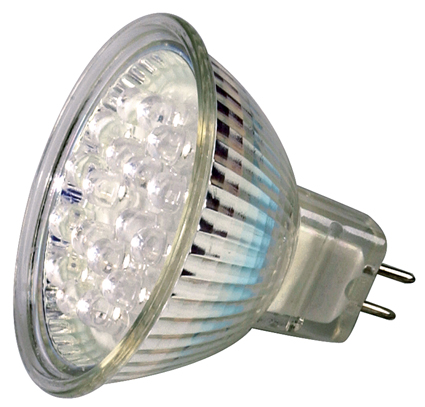
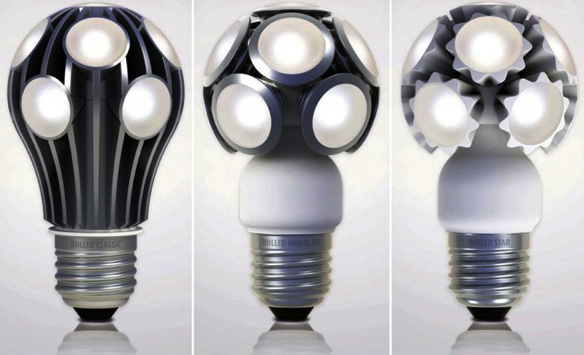
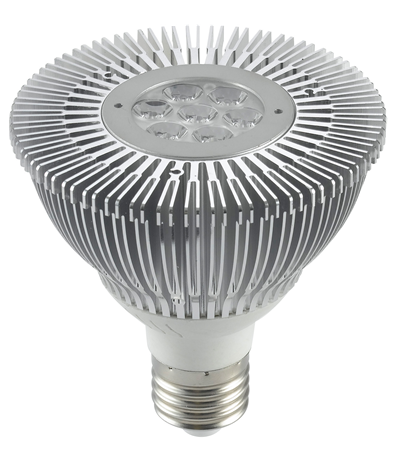
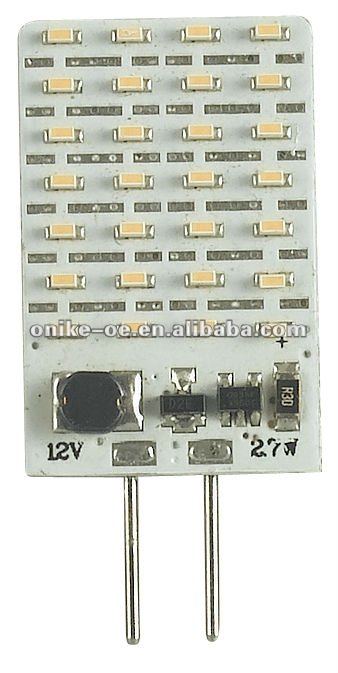
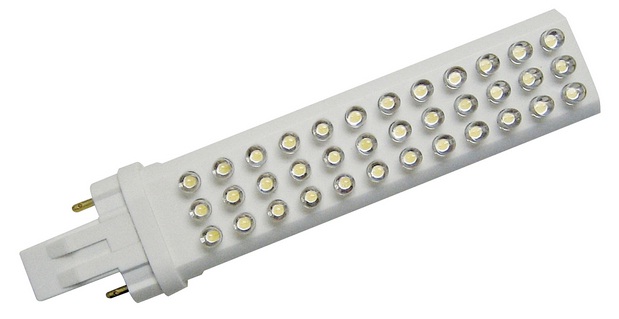
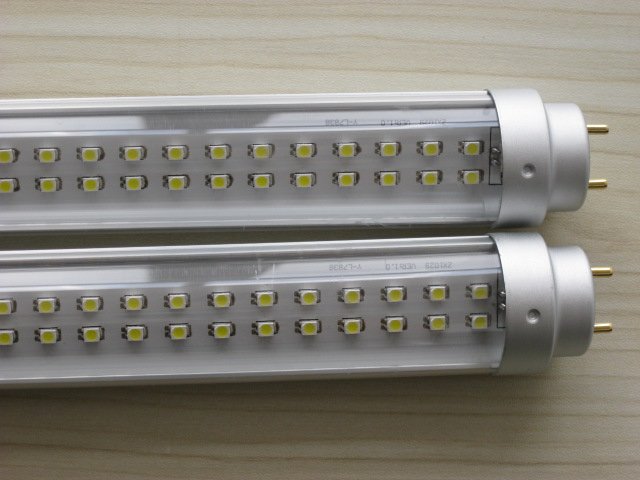
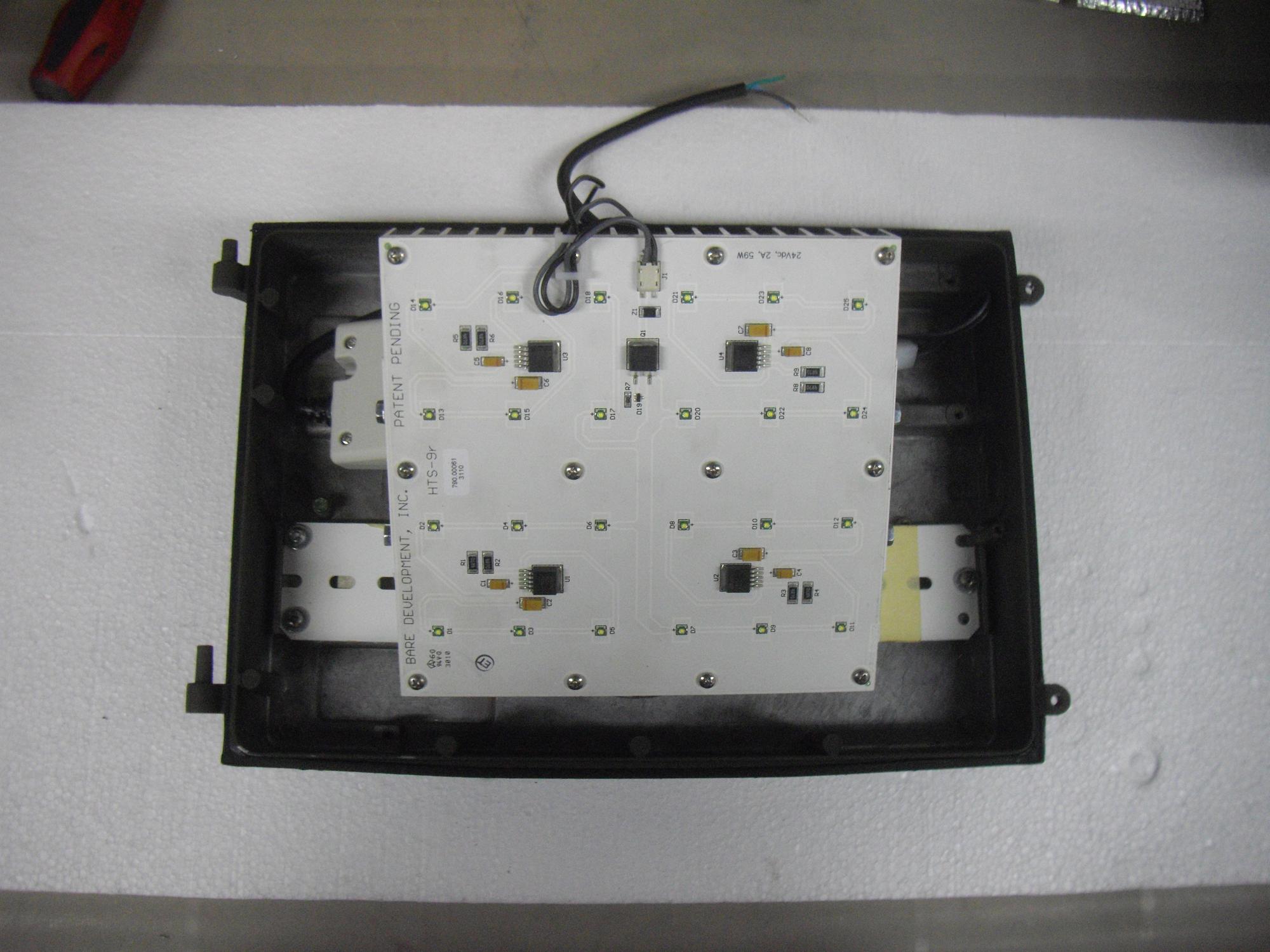
Light Watch 3-108: Here is a selection of retrofit attempts, from GU4 to GLS and MR16, from T8 to CFL…some are pathetic.

Professional lighting design
Singapore, 20th July 2012
As the Professional Lighting Design Association (PLDA) is re-thinking its future away from Via-Verlag, complete with new logo and website, it is a good time to think about the importance of an impartial, independent and professional lighting design association. So much is said (and thought) and so many interests interwoven, that it is not always easy to see clearly through the woods. There are many national organisations in different forms and configurations, some including manufacturers and other professionals sideways linked to lighting design, but on an international scale there are little. International organisations with purely lighting designers as members are basically only the PLDA, with European origins, and the International Association of Lighting Designers (IALD), with its American origins. Otherwise we have organisations like the IES (Illumination Engineering Society), the CIE (Committee International de l’Eclairage) and more, but none of these are solely aimed at promoting, protecting and developing the lighting design profession.
At this moment lighting designers, unlike architects, are unprotected. Basically anyone can call him or herself a lighting designer and unfortunately (in my opinion) that really affects the perception of what professional lighting designers have to offer. Too many people (and with the LED rage it seems now more then ever) jump into the fray, never mind their experience, they know the difference between an incandescent bulb, a fluorescent tube and an LED, so they think they can call themselves a lighting designer!
It is not for nothing that a full scale lighting design course takes several years complete with internships to further practice your skills. But I have said it before, in my opinion if you want to call yourself a professional lighting designer you need at least 5 years experience in the field! Mark my words: In-The-Field! Yes because many projects take several years to complete and unless you have gone through a few project cycles from start to finish, you do not have the proper experience to advise the client. You design is as good as the completed end result!
Like car drivers have learner and practice permits, in lighting design we should have the same. Airplane pilots need a minimum number of flying hours, doctors need similar practice hours before they can call themselves pilots or doctors. Hence accreditation by a professional lighting design association becomes of prime importance to re-assure our clients that the lighting designer he has hired is vetted as a “professional”, from which he can expect due diligence and professional skills in lighting.
Light Watch 3-108:

(new logo being developed)
Lights in Perth
Singapore, 19th July 2012
Its official, I will be heading one of the workshops of the inaugural Lights in Perth event, organised by the IES, the Lighting Society, and endorsed by the Professional Lighting Designers Association (PLDA) later this year. It will be organised in the same spirit as the hugely successful and popular Lights in Alingsas or Lights in Goa events. Western Australia and Perth particularly should provide a great canvas for the lighting workshops. The timing is also perfect in November which generally has fantastic weather! The beautiful sunsets should be a great addition to the event! Thanks to James Wallace for bringing this event to Australia!
It is an honour to be invited and a great pleasure to participate, allowing me to share my expertise and years of experience with a select group of lighting design enthusiasts. It is also a unique occasion to mix with other great lighting designers and bring a bit of a competitive spirit into the mix. I guess a bit like the oh-so popular TV show The Voice. The workshop leaders like myself will be the mentors of the teams with the aim to come out with a masterful lighting installation! May be we should call this The Light!
The team leaders have yet to be informed about the lighting locations and the general thoughts/ themes that we should follow but knowing Perth I am absolutely sure we will be able to do some great things certainly as I noted that Heritage Perth is involved. We are currently working with Heritage Perth for the re-lighting of the façade of His Majesty’s Theatre, one of Perth’s proud heritage icons. There are some great historic buildings and locations in Perth.
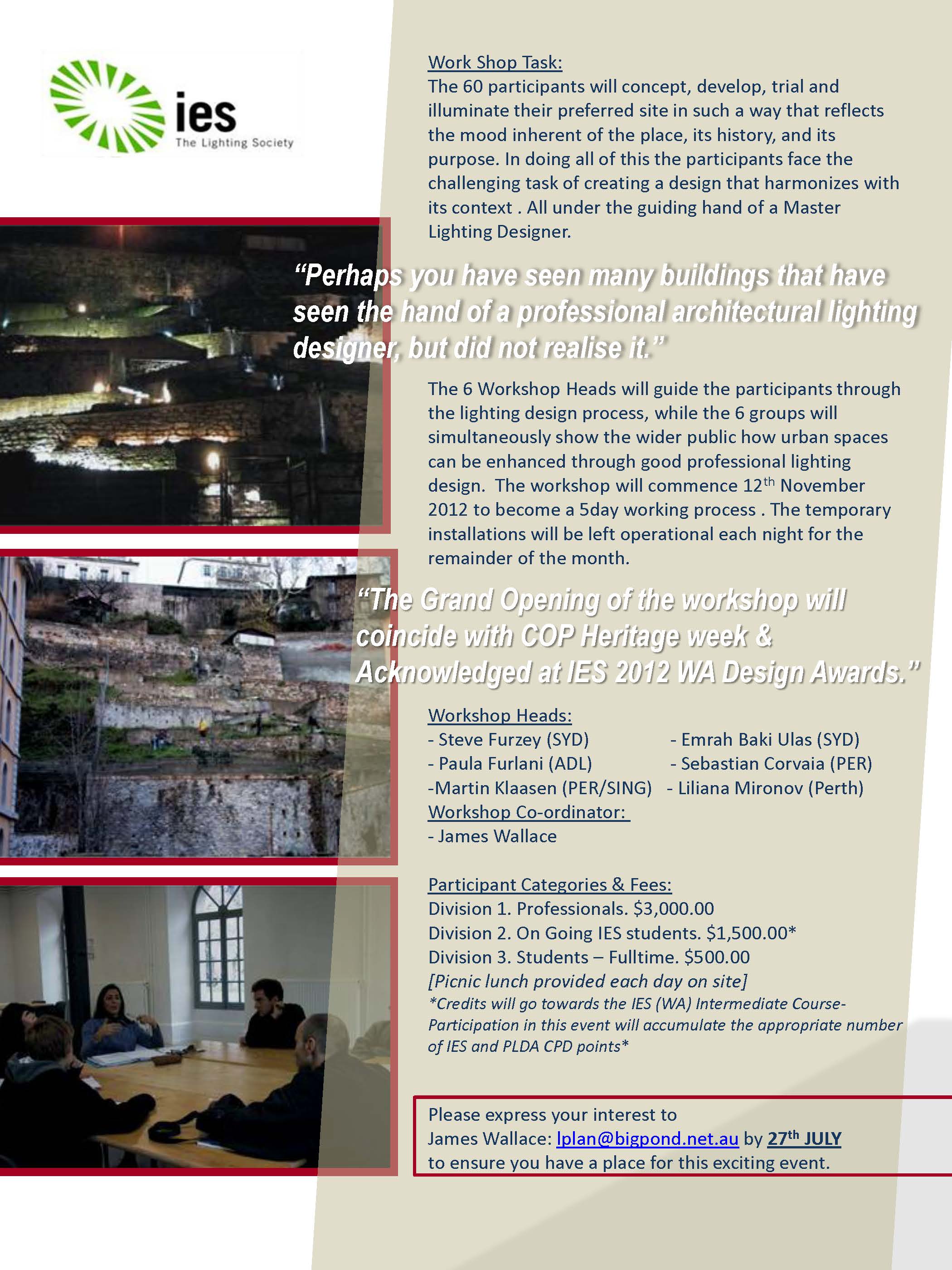
Light Watch 3-107: Below the official flyer with the announcement. I encourage interested participants, up and coming and established lighting designers to enrol for this event! I am not sure if there is an allocation process in terms of who gets to work with whom, but for those who would like to be in my team, please let the organiser (James) know :). It is going to be a memorable time with a lighting installation we will all look back on with pride and honour! See you in Perth!

LED specs
Singapore, 18th July 2012
I find it increasingly difficult to properly specify LED technology. Contrary to the past working with traditional lighting technology when I knew what to look for, getting my hands on specifying the correct LED becomes more and more a high tech affair. A bit like hand sketching versus computer renderings.
I had a session with one of my project managers this morning trying to figure out the correct specifications for just a simple LED down light. Specifically in the light of my (bad) experience with retrofit LED lamps we are now moving full swing into specifying the complete and integrated LED technology. While we know what we want in terms of performance and quality criteria, it is not necessarily a straight forward selection. You want certain dimensions, certain light distributions, certain intensities, all that with the lowest energy consumption and longest life and dimming flexibility. Unfortunately there are still many limitations. Certain fittings only come with certain colour temperatures (special colours on demand), some are not dimmable, some have unfavourable light distributions. Some can be driven on 300mA, some on 500mA and some on 700mA, all with different impact. Then we have the 230V or 12V options and so on. It is really becoming a puzzle to get it right.
After this morning’s session I am still not satisfied and fired a long list of questions to the manufacturer for clarification. Issues with drivers, dimming capabilities, emergency hook ups, still need to be resolved. Most of all I find it harder and harder to visualise the lighting intensity. A 6W LED down light today does not have the same brightness as the 6W from yesterday! It’s getting brighter and brighter! To me we have still not found the right LED downlight…but how difficult can it be? It’s just a down light!
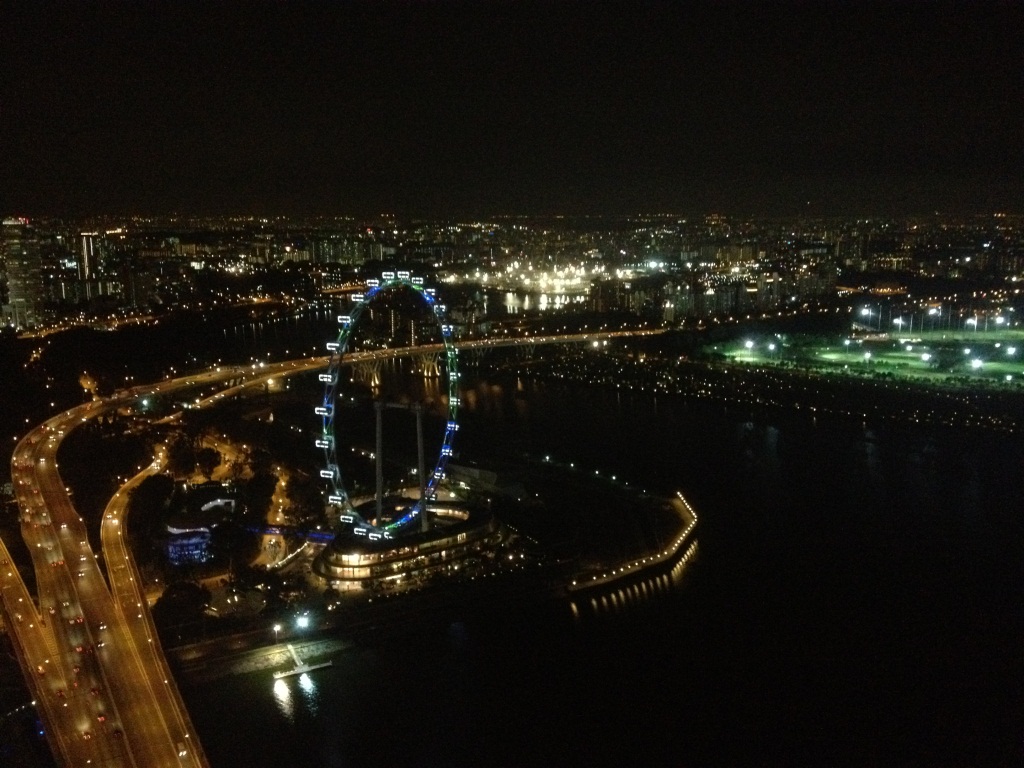
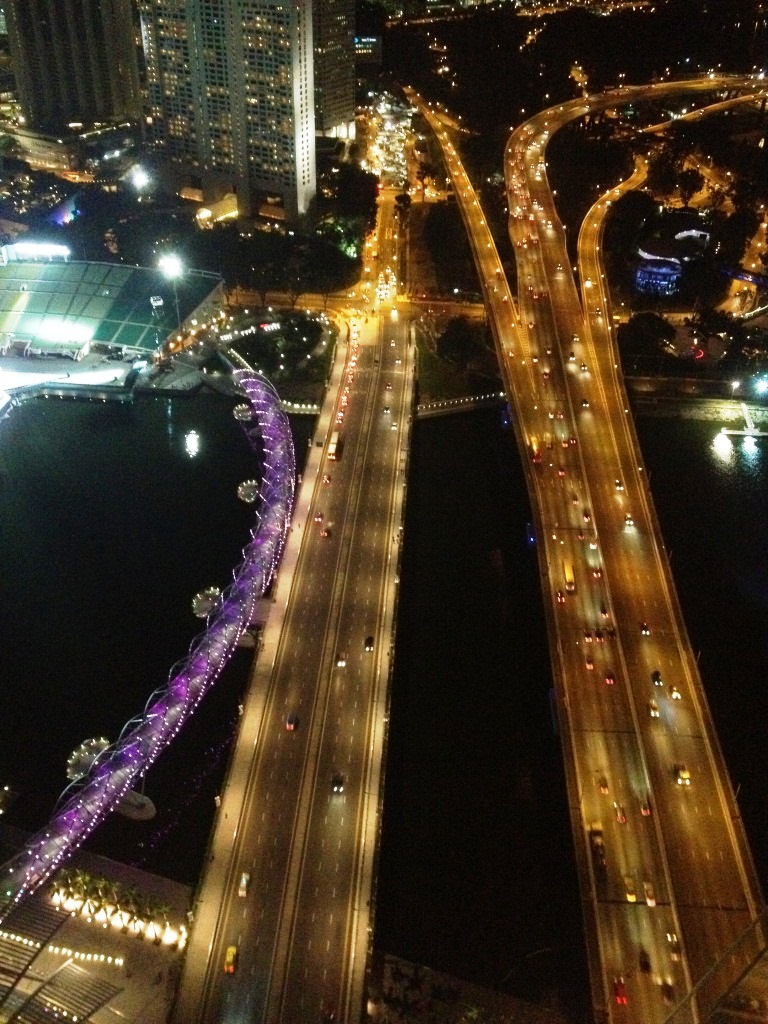
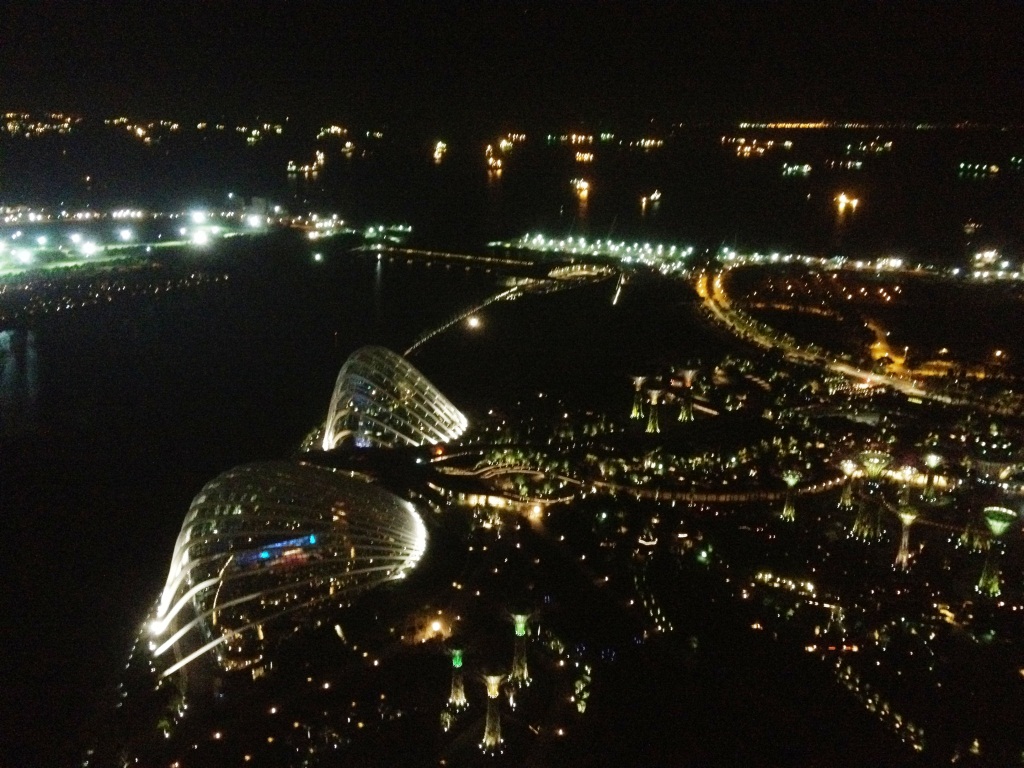
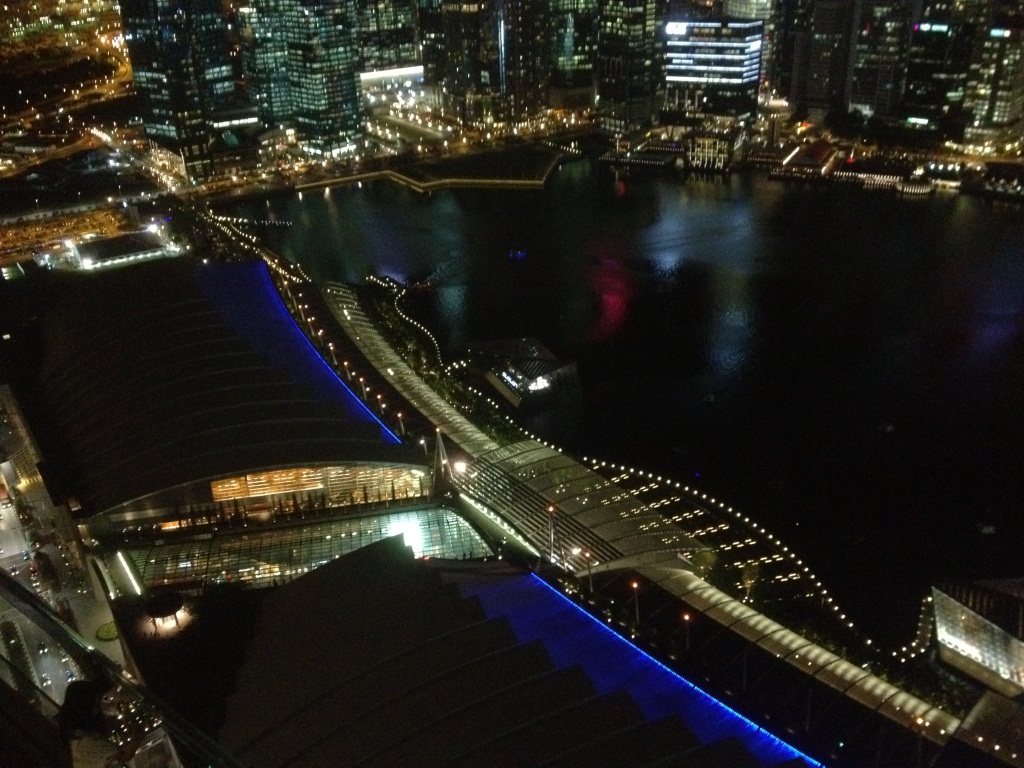
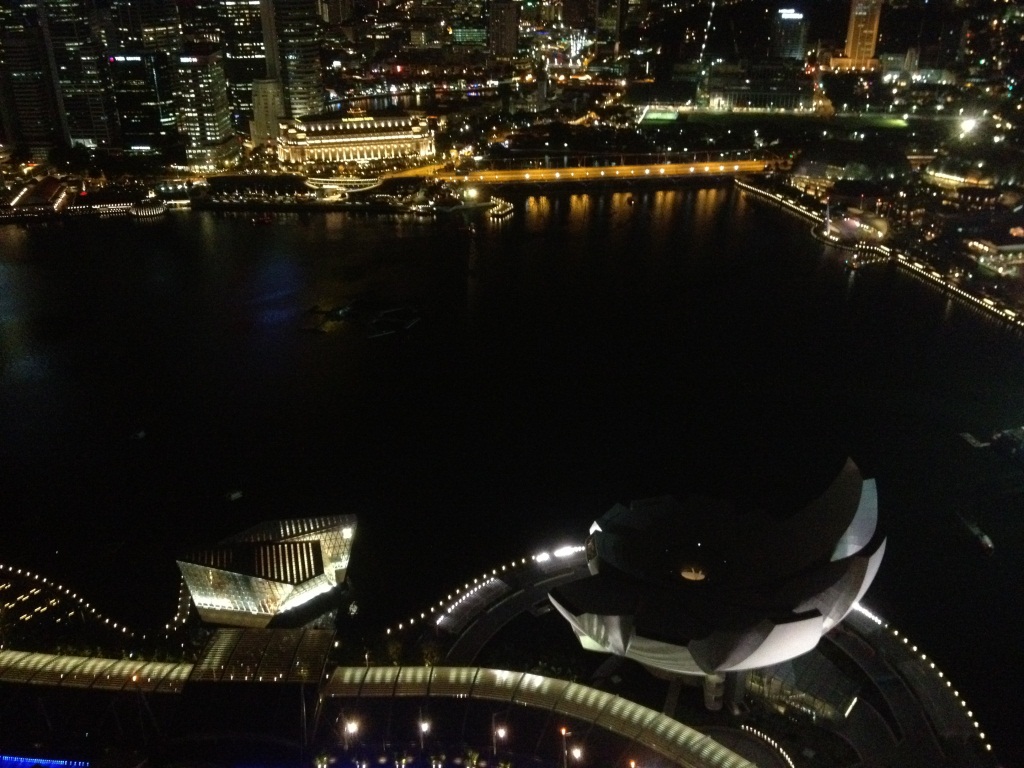
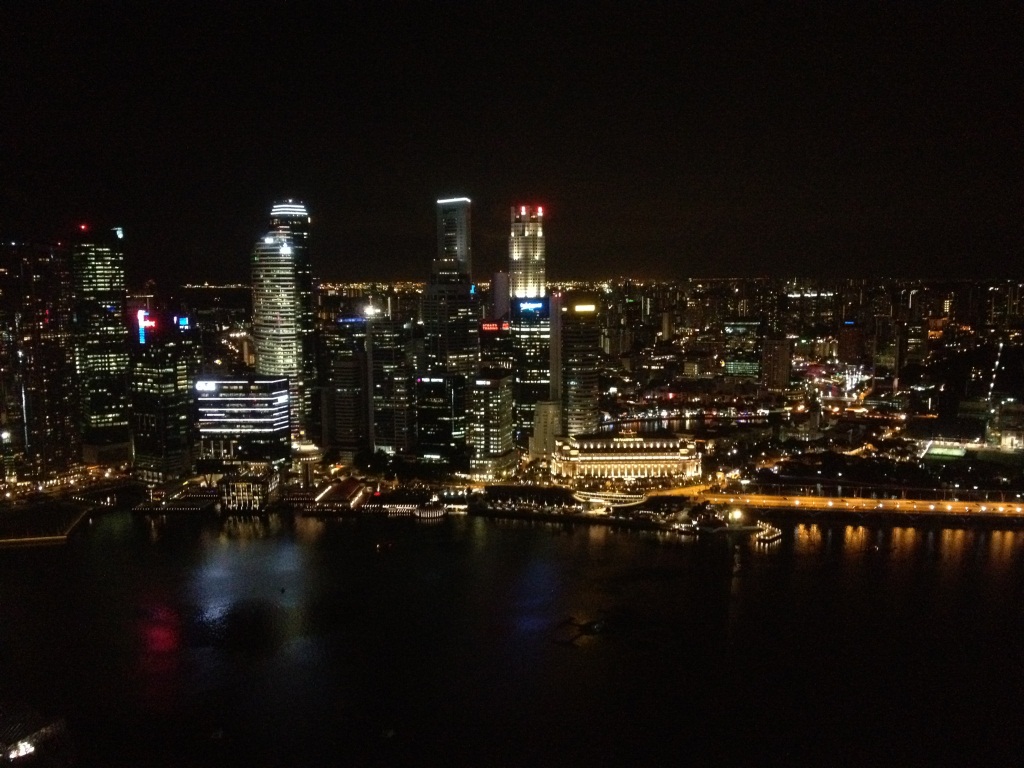
Light Watch 3-106: Tonight I went out with some family to enjoy the views from the Marina Bays Sands Sky Deck. Singapore has come such a long way since I first came here 25 years ago! Some pics shot with my Iphone (not the best quality) but alas…
Lighting calculations
Singapore, 17th July 2012
We don’t design for lux meters but for people, yet you will be surprised how many ‘engineers’ wish to see lighting level calculations! I am always very wary about this as most of the time people requesting it don’t even know how to read the print outs let alone understand what the lighting calculations mean. Experienced lighting designers can assess the general feel of the lighting looking at the lighting level calculations, but if you have ever asked participants in a lighting training seminar to tell you what lighting level they look at you will know that none of them are able to guess it even close… You will find guesses varying from anywhere between 100 to 1000 lux. And can you see the difference between 200 and 250 lux…the answer is NO!!
Then there is the issue of material finishes. 100 lux on a black surface definitely does not look as bright as on a white surface, why? Because we do not see lux levels we see reflected light. While lumens/m2 (lux) is the amount of light falling on a surface, candela’s/m2 is what we actually see, which considers the reflection properties (read absorption/ diffusion qualities) of the materials light is falling on. A glossy surface reflects light totally different then a matt finished surface. While you can incorporate certain reflection properties into the calculations the appreciation of the end result very much lies with the experience of the designer. The final judgement only possible in a real life light up.
This afternoon I spent time examining the lighting calculations of a proposed outdoor lighting installation. While the proposed generic concept from the landscape consultant looks nice in its proposed renderings, an experienced lighting designer can see the potential problems, and I spotted several. Very spotty results (lighting levels varying from nil to over 400 lux), a potentially glary light fitting installation (beam control and aiming patterns) and “doctored” end results (from the manufacturer) to show nice results on paper. In reality we will have roads (we don’t know the road finishes), walkways and garden paths (no idea about the finishes) and landscape features (just some general info available). Knowing how that will interact with lights takes much more than just reading the lux levels and uniformities from lighting calculations.
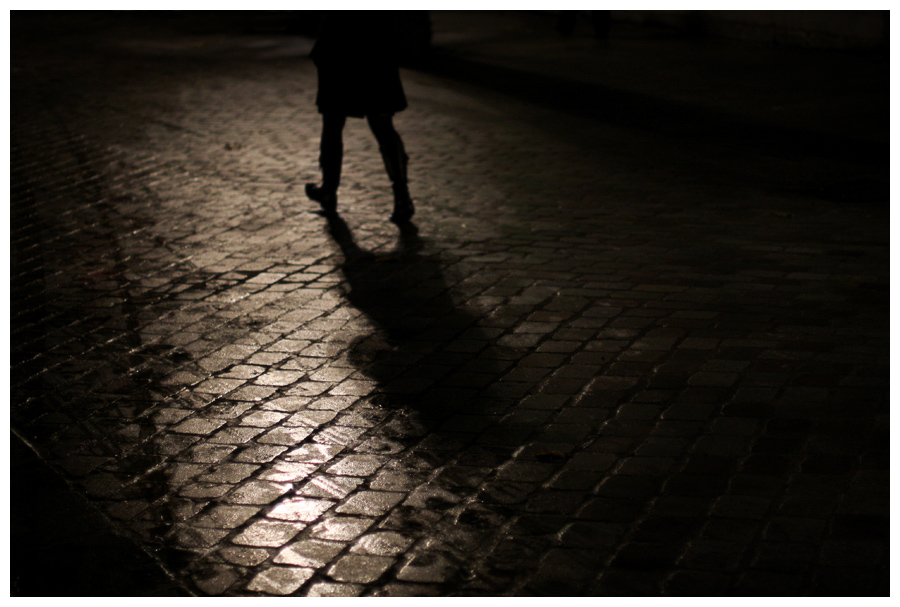
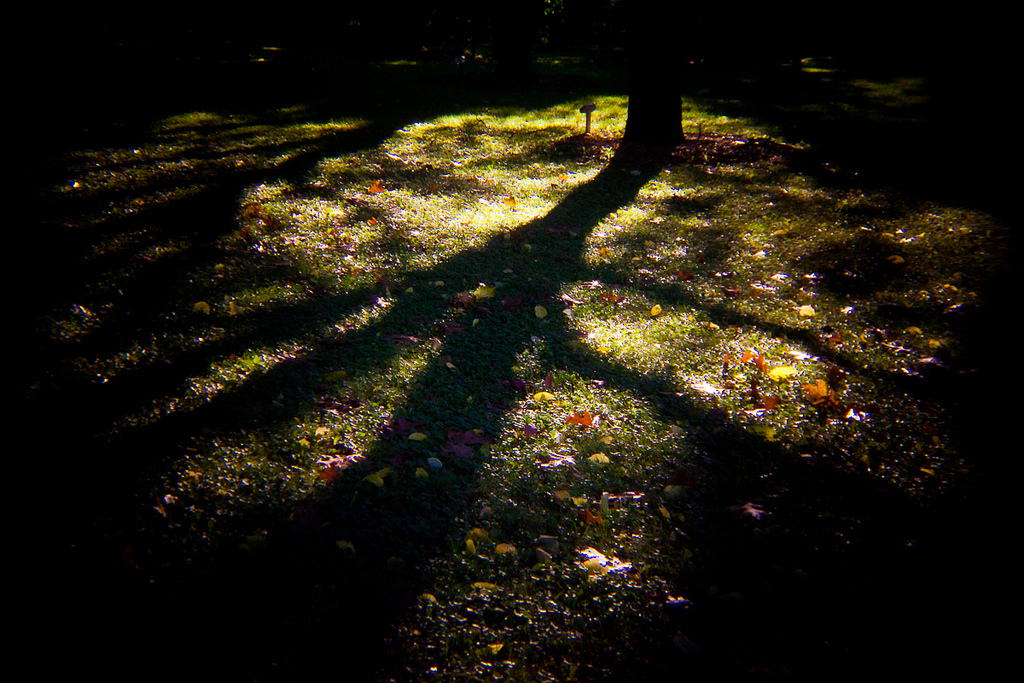
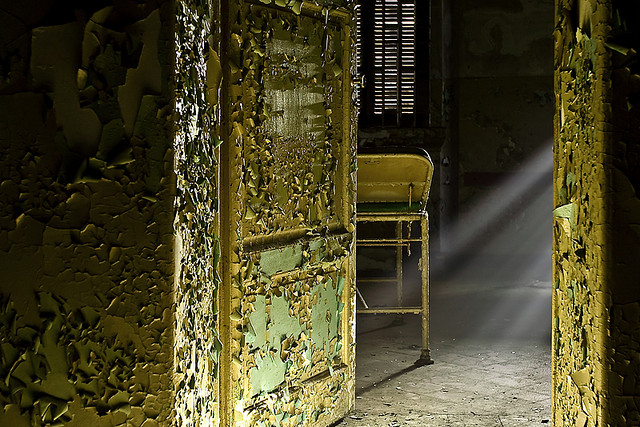
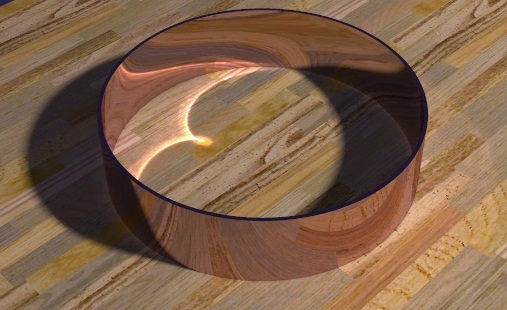
Light Watch 3-105: Some images to give you a feel of the rich palette of materials and their lighting properties…


On the same page
Singapore, 16th July 2012
For a project to be successful we all need to be on the same page, have our noses in the same direction. If that is not the case (often the situation when big ego’s push their own agenda’s) the project is generally doomed. At least that is my experience and my opinion. It is for that very reason that I insist from the very start of our project involvement to meet with the key consultants (architects, interior designers, landscapers, etc). Not only do I wish to meet with the key consultants, I insist meeting the key principal of each company to make sure the commitment and support goes up to the very top. Having the commitment and understanding from the project manager or designer is nice but I have to make sure that his or her decisions are backed up and supported by their bosses is vital. I don’t want to have an “over-rule” later on.
The problem at times is that some bosses play hard to catch and getting them to attend to such initial design workshop is easier said than done. Today I finally managed to sit around the table with the lead architect after 3 weeks of failed attempts to meet each other. Yes I was also hard to get due to my meetings and travel, but we finally managed. While the lead architect may initially have been sceptical about the need to attend such design workshop session, I think at the end he left with the satisfaction that his ideas and position were heard (and considered!) and at the same time with a greater understanding about what our lighting design approach was and most of all how it validates and enhances his architectural concept.
Being on the same page, understanding where we both come from, makes a presentation to the client a hell lot easier! Have the backing and support of the lead consultants and hence avoiding a potentially embarrassing confrontation in front of a client. It also shows professional attitude in terms of coordination.
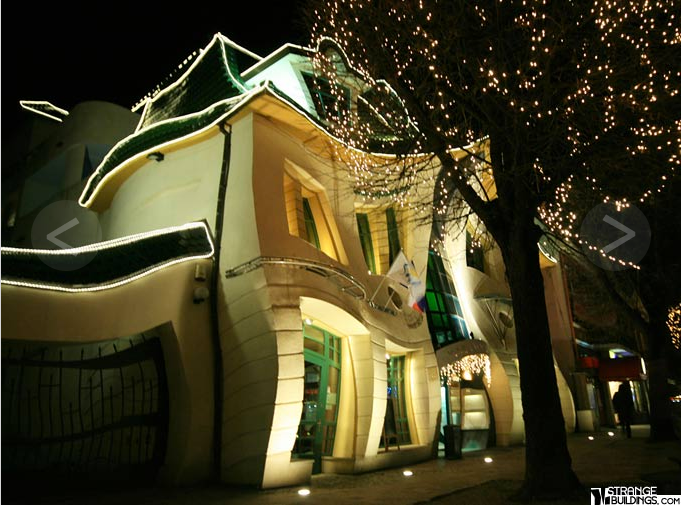
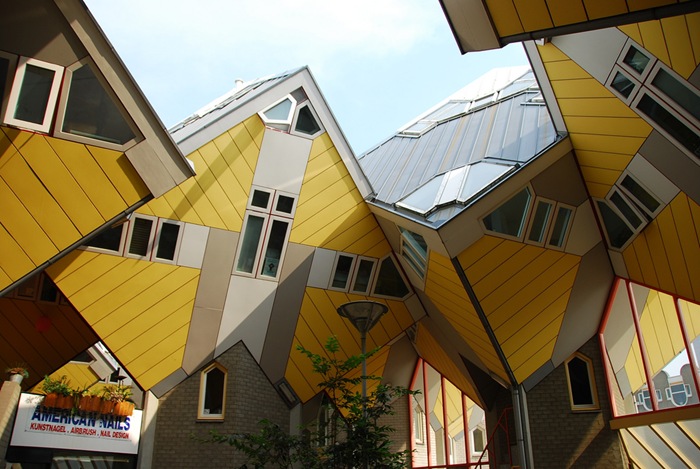
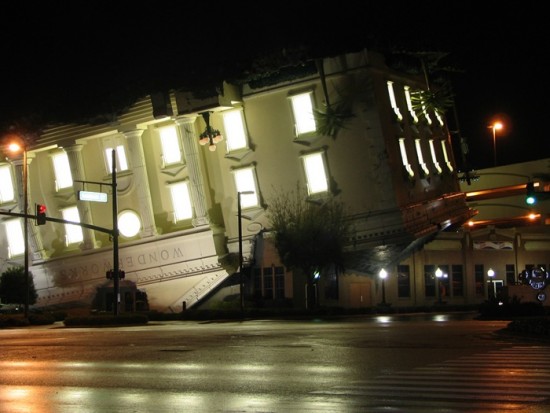
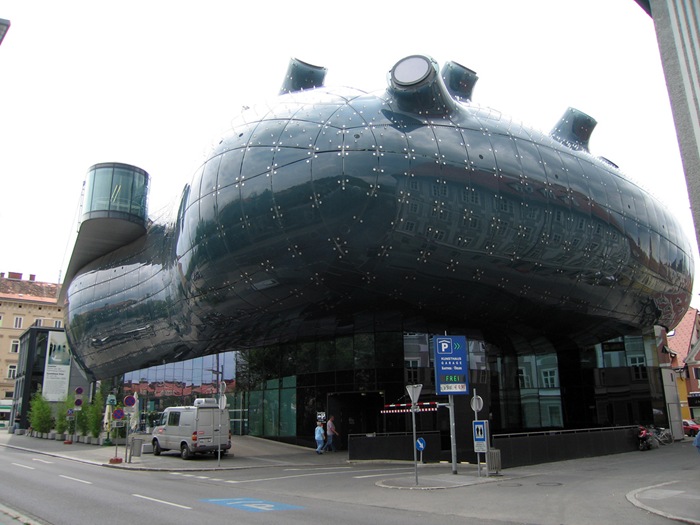
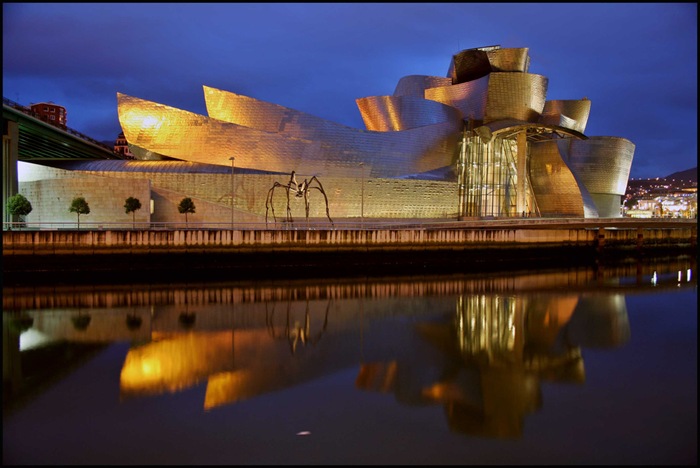
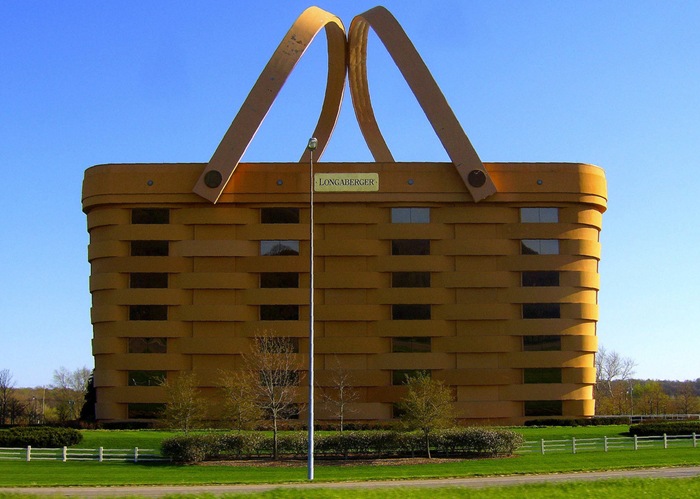
Light Watch 3-104: Getting on the same page with architects can be a good thing… They sometimes come out with weird contraptions… 🙂
 The long awaited book compilation of Martin's first year of blogging is available. Order now.
 Feedspot Top 100 Lighting Blogs