
Light & Building 2
Frankfurt, 12th April 2010
Day two of my Light Fair experience and while I have still only seen a fraction of the fair (it is really big isn’t it…) a picture is starting to emerge of the current state of lighting and where it is going. As one of the leading players and innovators in lighting Philips is showing the way in a number of areas that I believe is a confirmation of the direction for the future of lighting. When I say lighting I mean generally LED lighting.
The first thing is that the energy saving story is gradually making way for a new focus, which is lighting as a major tool for health and wellbeing, lighting as a life style. This means basically that the LED lighting systems are starting to have many more functions than just lighting. The latest systems have complete color adaptability from cool to warm white light and beam adjustments through easy to operate controls (DALI seems very popular) and are developed with specific applications in mind.
The second thing is that the latest LED developments are complete integrated systems developed for the future with build-in flexibility such as easy interchangeable components like reflectors, trims and finishes. Most interestingly Philips, like many other manufacturers, has accepted the fact that the LED technology is moving fast forward and that current LED technology may need to be upgraded as more performing LED’s become available. Hence the latest lighting systems have been designed to allow for future upgrade by just replacing the LED module.
Philips also understands that engaging key stakeholders as partners in innovation is crucial for the development of our future lighting systems. From end-users to specialists in the industry, all are engaged by Philips in the innovation process of new lighting systems.
But not all lighting developments are about LED. Philips (and others) is not forgetting the good old fluorescent and HIT sources, some also with amazing new performances and opportunities. On my question whether these were not gradually being overtaken by LED I was told that not only it would take another 5-10 years at least before this would happen (and then they would still happily live together), but that for most manufacturers the ‘conventional’ technology is still the cash cow that funds all the research for LED!
PS: My blogs are getting a bit long…but there is so much to tell….
Light & Building 1
Frankfurt, 11th April 2010
The first day on the fair is generally the day of excitement and great expectation. You know that many manufacturers use the fair to show the future of lighting, with some of their products on show not yet available in the market. So you are anxious to get a feel about what’s new and what are the latest developments. I arrived only in the afternoon so I had only a short time to wander around mostly in Hall 3.
One of my first stops happened to be the ERCO stand on which I will report today. Often leading the way in new developments it was not surprising that LED systems were the dominant new products. I was told that more than 600 new LED products were developed for this fair alone! The stand itself was lit mostly with LED lighting reportedly saving more than 80% in energy alone compare to their traditional stand lighting pre-LED in 2004. I am pretty sure to see this being representative of the overall trend in the lighting industry when I visit more of the fair.
What strikes me most is the progression in the LED technology. While in 2006 we were mostly talking RGB color type LED lighting, Frankfurt 2008 was mostly characterized by the move into white architectural lighting. This year 2010, it looks like we have moved into to functional performance lighting systems. For ERCO to have their Lightcast down light range (one of the all time favorites of lighting designers) replaced with the new Quintessence LED range shows great confidence that the performance has reached the desired quality we as lighting designers expect. With new lens technologies and the collimation of LEDs in new optical reflector systems, the lighting performance has now reach levels previously only thought achievable with metal halide. With wattages between 14 to 28W reaching 60 lm/W, this is becoming quite impressive. Add to that DALI driven color control possibilities allowing seamless transitions to any color within the color triangle and LED has become a very powerful lighting design tool.
Frankfurt is traditionally also the platform where we meet our colleagues and friends in the business. Today I caught up with many already (at the WEEF and ERCO stand parties in the evening) and look forward to catch up and meet many more over the days to come.
Warranty
Singapore- Frankfurt, 10th April 2010
Who invented the term warranty? In my early days in lighting we used to talk about guarantee, not warranty… a warranty seems to be a guarantee with a lot of small print……. 🙂
I am on my way to Frankfurt, but just before I left I had one of the LED suppliers in my office to demonstrate some of his latest T5 LED direct replacements and we got into a discussion about lifespan and warranty. The issue of warranty is becoming more and more a key element in the sales pitches of suppliers and manufacturers as the professed long life of LED would make a longer warranty logical. Yet there are still many suppliers that only give a one year warranty on LED, some painfully agree to a two year warranty. The ones that provide 3 years or more are only the reputable manufacturers and still they do it with conditions attached.
I can understand the conditions, because providing a 3 year warranty is really depending on the frequency of use. An LED installation can be used only a few hours a day or 24 hours a day…that is a big difference. A year at 24 hours a day is about 8700 hrs/ year, so with some manufactures claiming only 15,000 hours for some of their LED systems, a three year warranty may pose a little problem… just for argument sake. But it is at the same time understandable that the market is expecting longer warranty times if the professed longer lifespan of LED’s is such a big part of the sales pitch.
Then there is also the compatibility issue of the components. To extend the warranty the manufacturer/ supplier must be confident that all components are compatible, with tested and certified performances. Too often local manufacturers have doctored a system together from different brand components which may have individual reliability but not necessarily combined in a newly manufactured environment. Insisting in complete brand system configuration is at times necessary to assure its long term warranty.
Is LED mainstream already?
Singapore, 9th April 2010
There is something quite interesting happening that will be further clarified during the upcoming Light and Building Fair in Frankfurt next week. While we can argue that the LED technology is now commonly accepted in the public domain as the lighting of the future and most Tom, Dick and Harry’s mention LED as if it is already the most normal thing to use nowadays, professionals like ourselves (and I mean the respected manufacturers and lighting designers) have still many doubts about its performance and actual applicability in many project situations.
There is the public at large that are simply ignorant about the actual facts and figures regarding LED (color, light output, lifespan, etc) and seem to think that LED is the answer to everything. Then there are the ruthless (mostly small time) manufacturers and suppliers without any conscience that are in it to make a quick buck with LED lighting, they don’t really care whether it is still working tomorrow. And then there are the professional manufacturers and lighting designers that are grabbling with the real performance and quality issues to develop and apply LED in the best possible way. I mean making sense out of installing a reliable and performing LED lighting system…the value for money issue.
I think there is little doubt in everyone’s mind, regardless of the different motives or backgrounds that may drive the various interested people in using and promoting LED, that we have reached or are about to reach the mainstream public domain in terms of LED lighting.
The next few days in Frankfurt will reveal how much and how far LED lighting has moved into our daily lives…..
Corporate lighting identity
Singapore, 8th April 2010
A fair amount of our projects are in the hospitality, commercial and corporate lighting applications. While we often focus on the practicality of our lighting designs and mood setting, creating a corporate identity is not always (or hardly ever I should say) part of the design brief. But more and more corporations (including the hotel industry) are starting to include corporate identity WITH LIGHTING as part of their corporate thinking.
Corporate identity has mostly been the responsibility of graphic/ image consultants and interior designers, playing with fonts, colors, shapes and materials. But as life extends more and more beyond sunset there is the realization that lighting can play an important role in further creating a company’s identity, especially at night or in interiors.
I think the “United Colors of Benetton” was a good example at the time. At the moment we are working on a Holiday Inn project which also has developed a corporate image scheme using their corporate blue and green colors to light up the façade. The idea is to create instant recognition by applying the lighting in similar ways to reinforce the branding.
Façade lighting seems to offer great opportunities to create a corporate identity by standardizing lighting effects, colors and techniques (not all buildings have the same architectureJ). In interiors it may be created with feature ceiling lights such as custom designed chandeliers.
Especially now that we have the availability of colors through the new LED technologies there is ample opportunity to engage lighting as part of the corporate image creation.
LED and solar
Perth, 7th April 2010
I guess that the subject of LED’s and Solar is one that keeps coming back. I have blogged about it before. We are currently designing lights for a desert golf course in Western Australia and one of our considerations is to use solar driven bollard lights along the buggy path. This would not only save energy and be environmentally friendly but also save considerably in electrical cabling and trenching works as basically none are required.
We have been researching manufacturers and suppliers in Australia to assure ourselves of the quality and performance of the bollards before we specify them. With Western Australia and Greece labeled as the best countries in the world for solar energy one would expect that people know a thing or so about solar here. One of the distributors we contacted today admitted that though he was registered as a distributor for the solar bollard we had in mind, he had never sold one, had never seen a working sample and could not tell us whether it could perform as publicized. From the several distributors we contacted only one seemed up to the mark and knowing what he was talking about. We will receive a working sample soon. All in all a disturbing find…or maybe not?
It may just indicate that professional solar driven lighting as we strive for in our installations, is yet in its childhood shoes. While hardware stores sell lamentably bad garden solar spikes and the like, there are little to no professional manufacturers up to the mark to my experience so far that are comfortable in selling performance driven solar exterior lights. We still seem to have a long road ahead. Our way forward is to engage with the industry.
Projects revisited
Perth, 6th April 2010
Not always are we able to revisit our projects years later to see how they have stood the test of time. A lot of the time after the project is commissioned we never return to site. Project done, we move on to the next, we keep the nice pictures as reference. Occasionally we return to the site but most of the time we don’t, so it was interesting for me today to return to one of my project sites that was commissioned 10 years ago, the Burswood Casino in Perth.
At the time the project won us an IES/WA lighting design award and had many novelties, including some innovative synchronized fiber optic lighting effects. While much of the original lighting is still in place (and working!), the overall feel was definitely dated. Funny how things that looked leading edge and trend setting 10 years ago now look dated and “passé”. At least I had the satisfaction that it was still working and functioning! But our world has changed and our standards and experiences have grown to higher expectations. Hence it is understandable that most commercial life expectancies such as in retail and hospitality do not exceed 5 to 8 years, after which a make-over or renovation is needed to keep up with the latest trends.
One of the key aspects that is overlooked in most lighting design projects is maintenance. Too often our projects look beautiful on completion but come 1 or 2 years later we find specifically the more sophisticated parts of the lighting installation failing or just not working any more. Most of the time this is due to poor maintenance and the lack of knowledge of the maintenance staff.
As lighting designers we have to make it part of our routine to assure that the client is provided with proper maintenance instructions and trained staff. Even recommending that the lighting supplier be signed on for regular maintenance. At least we should make sure we leave our lighting installation in good care.
Earthquakes
Perth, 5th April 2010
I woke up to the news of an (7.2 on the Richter scale) earthquake in Los Angeles last night. There does not seem to be major damages or casualties but reporters were talking about the swaying of the buildings and specifically the swaying and flickering of the lights. Now I have never been close to any earthquake (I have been in Singapore at times that an earthquake hit neighboring Indonesia, but never noticed anything, only reading about it in the newspaper the next day) but I imagine it to be pretty scary.
Architecture nowadays is build to withstand earthquakes which brings up the question whether lighting is? I have been involved with designing lighting for explosion proof environments, but never had a brief in regards to earthquake lighting design. I can only imagine that fixing and vibration issues would be the two key elements to consider.
Many years back I was involved in the lighting design of a luxury cruise ship (The New Amsterdam) in a time where most liners would be equipped with incandescent lights. However at the time of the design compact fluorescent lamps (CFL) had just made its entry in the world of lighting, so we embarked on developing our lighting design aroundCFL. The main consideration to apply the CFL besides the obvious energy saving and longer life span was its non-sensitivity to vibrations! As you can imagine a cruise ship vibrates constantly because of its engines and from experience we knew incandescent lamps were struggling to make 500 hours. Test carried out on board ships confirmed zero impact of vibrations on the CFL, whereas the filament of the incandescent lamp would easily break. Not surprisingly the lighting design at the time won the team and myself an IES/NA Lighting Design Award of Merit.
So I would say that CFL (and now probably LED) would be the way to go in quake prone areas.
Easter
Perth, 4th April 2010
Today is Easter, the time when Christians around the world celebrate the re-surrection of Jesus, with services held in churches and other communal places to commemorate the event. Religion is an element in our lives that has different interpretations depending on what you believe in. Personally I believe that everybody is entitled to their own beliefs as long as they do not impose it on others. Tolerance, respect and understanding are some key words here. Unfortunately when you look around in the world there is little of that around.
Light is traditionally a big part of any faith. Not so much in a technical way but more in an abstract way, with white light seen as the most pure form of life. Technically, lighting has not much evolved when it comes to religion and “holy” places. It is pretty much still candles and daylight. I have visited quite some churches, cathedrals and temples, etc, on my world travels and must say that time and again I am amazed on how well they were designed in regards to daylight. Add to that beautiful stained glass windows, some incredible high void spaces and day time lighting in these places can be stunning. It really creates that feel of someone above watching down on you.
Then there are the candles…they are more than light only. They symbolize thoughts for people or even causes. Haven’t we all not burned a candle for someone or something at one point of time in our lives? Somehow the candle has taken on a meaning of unification. It binds us at birthdays, at diners, at weddings, at memorial services and so on.
Whether religious or not, we should treasure the candle and pray it will not be banned in the future for environmental reasons! Though there are great LED candles on the market nowadays … 🙂
Masters
Perth, 3rd April 2010
In life we do look up to people we admire, masters of their trade and examples of successful people who have made a difference in the world and more personally to our own life. There are the well known main stream icon’s like Nelson Mandela, Mahatma Ghandi, Warren Buffet, Steven Jobs, Richard Branson, Anthony Robbins, etc, but I guess there are many others that have touched us on a more personal level and impacted on our lives.
I am inspired by designers like Philip Starck or architects like Santiago Calatrava and Jean Nouvel who somehow amaze us every time with their original and creative expressions. In sports we have people like Lance Armstrong, Roger Federer or Lionel Messi who inspire us. Though the Tiger Woods saga showed us that we often only see the public face of these people and that privately they are not necessarily the perfect leading light we think they are.
In lighting, my early boss at Philips, Gerrit van den Beld, has always been my mentor and source of inspiration at the time I was developing my own as a lighting designer. Though Gerrit is now retired, I still look up at him as one of my “masters”.
But today is the anniversary of one of my biggest icons, my grandmother. Would she still be alive, she would be 107 today. She lived through two wars, brought up her five children single handedly during the second war and later wrote educational children’s books based on her experience of being a teacher, mother and provider at the same time. She was also an architect (like her father) and besides designing and building her own house also spend a lifetime studying and researching history and architecture, such as the famous pyramids in the Valey of the Nile. As her first grand son I always had a special place, I guess. She was a remarkable woman.
Today I honor my “masters” and thank them for being my source of inspiration.
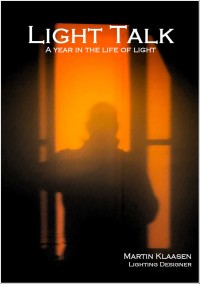 The long awaited book compilation of Martin's first year of blogging is available. Order now.
 Feedspot Top 100 Lighting Blogs