
Multi tasking
Singapore, 22nd April 2010
Yes, I made it back from Amsterdam, on the first flight out together with many other people, each with a different story to tell! I ended up sitting next to a 30 weeks pregnant mother travelling with 2 young children. She told me she was two days shy of being refused by the airline from flying back, hence she had received priority to get back on this first flight. While I had just myself to take care of, she had to multi task with her two young children, the youngest only 18 months old, during the whole flight. I have been there, done that, but it just reminded me how intensive and demanding this is!
Making the jump to lighting I want to highlight the need of “multi-tasking” as a lighting designer. Lighting consultancies are generally small offices with on average not much more than 10 staff, with 30-40 people staff considered a big lighting design firm already. The smaller the firm, the more we multi-task. In a bigger firm individual staff maybe consigned to a single type of work or even a single project, but in smaller companies we all multi task most of the time over multiple projects. It is my experience that in smaller firms the better you and your staff can multi task, the more successful you are.
How many projects should one handle or can one handle effectively? How many tasks should or can one handle within one project. Attending to design issues, documentation, meetings? It very much depends also on the individual skills of the staff. Some work well in a team, some are really good if give responsibility to handle things by themselves. Use the individual strengths of your staff…As we often have to make do with the staff we have or can find, the issue of multi tasking in the end really depends on the skills, character and personality of the staff in question.
Laser technology
Netherlands, 21st April 2010
I need to leave for the airport shortly to go on standby for my flight back to Singapore! Yeah! No idea if how it will work out, but if I am on the flight I won’t be back on line till tomorrow so better upload now! Wish me luck!
Yesterday I made the best of my extended stay in Europe by going to Germany (by car!) to visit the offices and manufacturing facilities of TARM Lasers, one of the leading laser companies in the world. We are planning to use lasers in a key landmark project. As this is not a technology I am very knowledgeable about, this was a very instructive visit which got me really excited. We talk about the enormous progress in architectural lighting (LED’s) but I can tell you, lasers also have come a long way and are developing at fast speed (literally).
By the way did you know that “laser” stands for light amplification by stimulated emission of radiation? Laser light is generally a narrow wavelength electromagnetic spectrum of monochromatic light. However with today’s laser technology practically every imaginable color tone can be created, pretty much like LED’s. By using RGB laser modules the individual beams can be emitted simultaneously and mixed to the desired colour. I was amazed by the power and clarity of the colours.
The actual laser module is small, about the size of a pencil box and only needing a few watts, variations depending on the colour of laser beam. It is the electronics, scanner heads and cooling system that requires the space. While in the past big housings were required today’s modern technology has allowed the equipment to become smaller and smaller. The optic table as it is called is now only the size roughly of two crates of beer, with the total power consumption well below 1 KW per unit. The beams are incredibly powerful and the lighting effects really only limited by your imagination…I am excited to work with this medium of light.
Who’s concept is it anyway?
Netherlands, 20th April 2010
Borrowing the tagline from the TV comedy show “Who’s line is it anyway”, I want to talk about lighting concepts that are not necessarily driven by ourselves but by others…
But first an update on the European airspace situation. After the European airlines and flight control authorities finally got together it was decided to re-open the airspace again partially. Test flights and commercial interest (some figures claim a daily loss of 200 million Euro a day) got the better of the scientists and their scientific models which led to the re-opening of the airspace. Last night the first three KLM flights left for Shanghai, New York and Dubai. Today I hear that about 50% of the flights were carried out. I am waiting for an incoming Singapore Airlines flight to allow me to go back from Amsterdam, which is expected in tomorrow morning. Fingers crossed…
Back to lighting 🙂 . Sometimes our clients have very strong ideas about what they want. Right now we are working on a façade lighting concept for a project in China with a client telling us basically what to do, what they want. In itself not a problem you would say, easy just do it. But that is exactly the issue. It is rare (as in this case) that the client is knowledgeable about lighting and what they want is either outdated, wasteful in terms of energy, not really recommended, etc. Note I am leaving out esthetic issues as we all have different tastes. Should we just follow the client or make a stand?
I personally don’t have an issue with the not-invented-here syndrome (some people have an issue if it is not designed by them) as I think we still have a big role to play in realizing a clients dream, even if it is not our lighting concept. But what is important is that we can fully stand behind the design concept and take responsibility of the end result. That is where we have the professional responsibility to make a stand and make sure the client understands the consequences or impact that the lighting concept may have…
Carbon neutral light fittings
Netherlands, 19th April 2010
Still in Holland…still no flights…it is quite an extraordinary situation. I can’t remember a time where the airspace was closed for so long. The last time was during 9-11 but not for days like this. And if the volcano remains active producing the ash clouds and the wind keeps blowing this way it can continue for weeks! The funny thing is that here in Holland we have beautiful weather, not a cloud in the sky (and not a plane :)), so it feels a bit surreal.
Besides my project work I am still working my way through the stacks of catalogues and leaflets I brought back from the fair. A bit like looking at holiday pictures once you are back… One of the things I found is that some lighting manufacturers (Philips again leading the way…) are starting to offer carbon neutral fixtures, of course specifically the LED ones. The manufacturer takes the responsibility for offsetting all CO2 emitted during the production of its light fittings. The amount of carbon emitted for producing the light fittings is then offset by purchasing carbon credits from certified carbon credit companies. These companies are specialized in projects that generate carbon credits. Philips claims that producing their Mini- Iridium Cosmopolis streetlight fitting produces 46kg of CO2 per fitting. One carbon credit is equivalent to a verified reduction of 1 ton of CO2.
Now while this is an interesting thought again, one could question the motives similarly as with the UNICEF initiative from IKEA that I mentioned yesterday. I believe the manufacturer’s initiative is good, though I still have some difficulties with the fact that they buy carbon credits rather than actually really reducing the carbon emissions themselves. I also have some hesitation about creating moral guilt when purchasing a light fitting. On one hand it is good for the public to know the company they are buying from is actively involved in carbon emission reductions, but there is a clear danger that it can be commercially exploited to stimulate specific consumer buying.
Emergency lighting
Netherlands, 18th April 2010
Still no flights in Europe…British Airways announced today that all their flights for Monday have been cancelled, which means my planned meeting in London is off. We will try and have the meeting through a conference call instead…thank God for internet these days! The subject of emergency lighting fits very well with the current emergency situation in Europe and some people’s desperate situation, stuck somewhere at an airport or foreign country…at least I am lucky holding fort at my parents place while waiting for my flight to be confirmed. Let’s face it; there is no better restaurant than mum’s cooking!
I kill my time working on some projects of which I have always plenty with me. In one of them, we have a debate with the client about who should be responsible for the emergency lighting. We generally do not take emergency lighting design as part of our services. I believe it should be the responsibility of the M&E consultant. But we do coordinate and integrate the proposed emergency lighting layout into our architectural lighting design planning. Specifically in interiors as I am not a great fan of those so called UFO’s, those little exposed ceiling “dishes” with a halogen burner. I prefer to minimize the number of lighting points in the ceiling. So we designate strategically located architectural lights to be part of the emergency lighting. When the light is not an instant start type we build an additional little halogen burner in the light fittings reflector.
In exteriors it is a bit more difficult because most light sources we use are generally gas discharge types, which do not have an instant start or re-strike. So we end up with additional emergency light fittings specifically for the purpose.
Emergency lighting can be powered by an individual battery pack or by linking the selected lights to an emergency power supply, generally a generator set. The emergency power comes on automatically when the normal grid power fails.
As emergency lighting is often a grey area, I believe as lighting designer we should take the lead and be in control of the overall integration and coordinate with the M&E consultant’s requirements.
Lighting for average Joe
Netherlands, 17th April 2010
Frankfurt is predominantly a professional light fair, like most fairs around the world. It is mainly attended by professional designers, traders and manufacturers. The general public is only represented by those with some keen interest in lighting somehow, but the average Joe generally stays away. Their knowledge and information about lighting is coming from the shops they buy their lights from and what they read in the daily magazines, etc.
Today I visited our local IKEA store (as you do sometimes in the weekend) and was obviously interested to see what it tells and sells to the public in terms of lighting nowadays. The store concept is great and in the past I have often bought stuff including lights! Needless to say that LED has arrived there as well…little bedside lamps, decorative table lamps, strip lights, it’s all there…but there is not much message. I assume that IKEA expects its customers to know what they want. But I must say that they are focused on energy saving lamps mainly, with mini compacts being the dominant lamp on sale for their fixtures. By doing so IKEA takes a responsible approach to reducing our carbon emissions.
One initiative caught my eye though…a solar driven LED desk lamp. Based on the same technology that drives our little table calculators IKEA presented their “Sunman”, a little LED desk lamp that is powered by solar cells integrated in the lamp base. No wires, no power required. IKEA advertises that for every lamp sold they will donate one to UNICEF so that needy children in refugee camps can continue to write, read and draw after sunset.
Though a laudable thought, I have mixed feelings about the commercial (and psychological) motives, as it creates some sort of moral guilt to buy such lamp.
T5 still alive and kicking
Netherlands, 16th April 2010
As I write my blog, many people are stranded because of the volcano eruption in Iceland which caused the unprecedented closure of the European airspace. Ash clouds have spread throughout Europe, cancelling all flights in or out of Europe till further notice. I am lucky to be visiting my parents so I can probably sit this one out in comfort, but some of my colleagues messaged me from Frankfurt to say they are stuck. Life’s adagio to always expect the unexpected once again struck! The trick is to turn these situations in something positive…
So let’s look at the bright side. While the main attention in Frankfurt has been on LED’s there were still some interesting developments with traditional light sources. I particularly would like to mention the initiatives by some of the big manufacturers (Philips, Zumtobel) promoting their research in lighting for schools. It has long been proven that lighting has a strong impact on mood and productivity and research in this area has seen the development of lighting systems (using T5 technology) to improve and stimulate “life” at school.
By using combinations of different lighting intensities and color temperatures several scenes have been developed in support of various school activities. From Philips I learned that the lighting scenes are based on the results from actual studies conducted at various schools in Europe. further studies are ongoing in the Asia to see if culture and geographical location have any different impact on the student behaviors. Scenes include arrival modes with high intensities (1,000 lux) with crisp daylight temperatures (12,000K) as a transition to calm students down on arrival, class mode settings were lighting intensities are brought back to 500 lux and 4000K for teaching to even lower ( 300 lux and 2750K) for exams. The lighting systems use a combination of 2x17000K and 1x 2750K special T5 lamps which can be mixed and matched to the desired effects.
It was found that restlessness and study focus can be strongly reduced, respectively stimulated by combinations of color temperatures and lighting intensities. For instance lower lighting levels and warm white light have been proven to reduce restlessness by more than 70%!
Great to see good old fluorescent technology still alive and kicking as sometimes it looks like everyone is blinded by new technology, forgetting that what is ain’t that bad still…
What happened to the LED energy story?
Netherlands, 15th April 2010
With the Frankfurt Fair still ringing in my ears…I now wonder what happened to the energy saving story that was the main driver for many in recommending and specifying LED’s. It has become apparent from the Fair that in pursuing the performance of LED’s something had to give…and that something is its energy saving potential. While many were raving about the low energy consumption initially, a reality check seems to have brought everybody down to earth. To achieve equivalent lighting levels and lighting effects, we need to have more power. Many of us have been caught out and after initial enthusiasm had to revise or even retract our energy and return on investment stories significantly.
In some cases the LED energy consumption is even higher than the conventional method for equivalent lighting effects, so it is no wonder that manufacturers sales pitches suddenly have made 180 degree turns. It is now about life style, health, well being, flexibility, ease of maintenance, etc. The only occasional energy story left is that of total system savings when including air-conditioning for instance…
So there is still a life for our traditional light sources, but it looks like the manufacturers are nearly ashamed to admit it as the displays and promotions of the latest developments in traditional lighting technologies were kind of displayed sideways at the Fair, certainly not dominantly in the public eye, in some cases only accessible under “supervision”.
Will there still be an energy story to tell…I think so, it has to be. It will just take a little longer and will need some concerted efforts to streamline all photometric data, quality criteria while fine-tuning the LED technology.
Light & Building 4
Frankfurt 14th April 2010
I was told that calling it Light Fair is politically incorrect nowadays and that I should call it Light & Building…so here it goes, I will change the headings of the previous entiries accordingly. LED’s are still ruling the world of the fair, wherever you go. Very little can be found on issues such as daylighting and sustainable/ renewable energy. I must say that I did not manage to visit all halls and stands so I may have missed this but the only stand I saw with a dedicated story on solar energy and daylight management was Zumtobel, though tucked away on the side. Window embedded PV’s and linear LED integrated in the refraction louvres was a prototype installation exploring the options to control daylight and the uses of renewable energy…it seems the big manufacturers are not ready for it yet.
Play and plug LED modules (Bridgelux) is another trend that seems to catch on. The sealed modules have pre determined lumen packages, beam types, colour temperatures and CRI’s. This cuts out a lot of hassle for the luminaire manufacturers who can now incorporate a standard base in the light fitting and plug in different bmodules depending the needs. This leaves the manufacturer to ony worry about the luminaire design and heat dissipation issues for which guidelines are provided by the plug and play LED module manufacturer. It also assures some consistency of the light5ing performance for us lighting designers.
GE showed a module with dipswitches that in different settings provides (within the same module) different wattage consumption and related lumen packages. Colour temperature and CRI choices are incorporated as well.
Finally I can not blog about the fair without mentioning the human and social and practical aspect of the fair. While catching up on the latest trends and technologies is an obvious goal of visiting the fair, it is also a great networking opportunity. For regular visitors like me (my first visit was in 1982!) it is a great time to catch up with friends and business partners in the industry. I always bring some projects with me that need some special solutions and the fair is a great platform where potential new technologies can be discussed for future application.
Last night’s PLDA function was again a great success with about 800 or so “lighting” people in attendance. I met many friends and colleagues I hadn’t seen for quite a while. Fittingly it also celebrated young lighting designers (young here meaning new in the business) through a lighting design competition. The winning design went to Flynt Talbot a lighting designer from Western Australia. I think it is great that we stimulate the industry this way. This is my last day at the fair but I will probably blog more about it over the days to come.
Light & Building 3
Frankfurt, 13th April 2010
Today my blog comes “live” from the fair. The last two nights I have been struggling to get my blog out before midnight due to the social evening activities surrounding the fair. I think most of you know what I mean :)… Tonight is the PLDA night so it is unlikely I will be in a state of blogging later on …
The talk of the day remains LED as there is really a lot happening there. The usual suspects such as Philips, Osram, GE, Toshiba, etc, as lamp manufacturers all try to better each other with performance data and that is one of the issues. How can we assure that the data provided are true and accurate? Driven amongst others by Philips and Erco under the IES umbrella new codes have been developped called LM79 and LM80 which will certify actual measured and tested performance of the LED. This includes lumen output and maintenance, CRI, lifetime, etc. Already some manufacturers have developed compliant fixtures. Making LED systems code compliant will really help to assure the lighting quality. Though I was told that already a chinese company was caught with fake certified logo’s on their fitting….hmmmm.
I have to mention OLEDs of course. First introduced on a wider scale at last fair, this year sees many companies with OLED explorations. It is obvious that most companies do not really know yet where the future applications are and many of them are therefore testing the market with various exhibits in various shapes and forms. Sizes and brightness have increased but besides some creative and decorative applications I have not really seen developments of great use yet. Performance is still weak (unless you have a lot of them together) and it is therefore not surprising to see hybrid OLED solutions mixed with “traditional” LEDs to push up the lighting performance. One company (Novaled) had launched into emergency and signage lighting which could have some potential.
Finally I would just like to mention the remote phosphorisation technology which seems to be a way to better control the binning (color)variations, one of the problems of LED lighting. Spo far white light is mainly created by putting a “yellow” phosphor layer right on top of a blue LED. By creating a sort of “lightbox” around the blue LEDs and coating the the emitting surface of the “box” with the phosphor (hence remote phosphorisation) it seems that the binning problems are no more an issue.
More about the fair tomorrow….
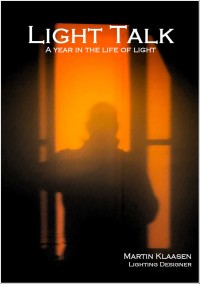 The long awaited book compilation of Martin's first year of blogging is available. Order now.
 Feedspot Top 100 Lighting Blogs