Custom design
Singapore, 22nd February 2011
Customising light fittings is a regular part of our job as lighting designers. While there are thousands of light fitting designs available in the market each with numerous lighting effect variations, it may be surprising that we still need at times to customise the light fitting to our needs. But with so many different applications, visual demands and mood requirements we often need that extra special effect to make our design stand out from the ordinary.
The last few days I have been testing some customised samples for one of our India projects were we adapted the fitting to local needs. Our customisation consists of two main things, one; a value engineering to bring the fitting in line with budget but without compromising on the final lighting quality and two; a redesign of lighting patterns to suit the local taste. While the first customisation (the value engineering) is done with the factory engineers of the manufacturer, the second is a design change. In this case we are designing a special landscape bollard for a resort in Goa (India) that projects shadow patterns from a source that simulates candle light. The perforated shadow patterns were modified to represent typical Goan patterns, well known from local architecture and culture. Our challenge was to find a light source that could project the light and shadow patterns without creating glare. Obviously perforations create openings that potentially expose the light source to the eye.
After some testing and playing around in our office, we managed to settle on a LED incandescent retrofit light with a small focal point, necessary to create the shadow projection, a big departure from the original metal halide lamp. In the process we are saving more than 80% energy! By further redesigning the apertures and perforation ratios we managed to get it just right…Can’t wait to see the end result on site!
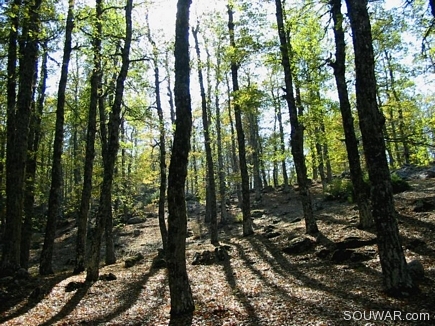
In Light Watch today I would like to focus on our primary light source…the sun. As lighting designers we tend to loose ourselves in artificial lighting, but often the most magical lighting effects take place right under our noose in nature. Nature is often our greatest source of inspiration when it comes to lighting effects.
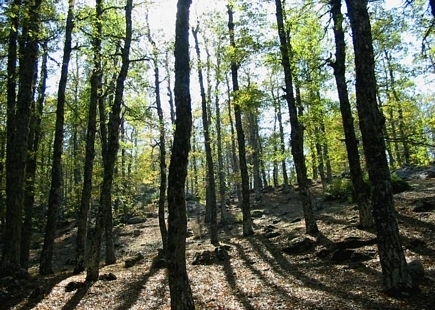
Light Watch 37: Sunlight filtering through the trees
Lighting calculations
Singapore, 21st February 2011
Lighting calculations are as good as the person who enters the parameters of the calculations in the computer, isn’t it? I have blogged about this before. I am currently doing some lighting expert assessment work for lighting designs done by a manufacturer. In this case the client wants a professional and independent lighting designer to “certify” that the lighting design is compliant to international standards.
It is understandable that a client would like an independent professional to verify the truthfulness of the lighting calculations as calculations can be manipulated to get the desired results. Generally the end-user/ client does not have that expertise hence their appeal to an expert. There are many parameters that can be manipulated. Assuming here that the correct IES photometric files are being used there are many input variables can influence the outcome. For instance has a maintenance factor been included (we need maintained values not new values)? That in itself can make 20 to 30% difference in the end result depending what standard is being applied. Another parameter is the calculation surface, calculation grid and plane height. Was the result measured at floor level or at working plane level? Are the calculation points spaced out properly? All these variables will have an impact on the final calculation results. Most applicable standards will highlight what the measurement grid is and whether the measurements should be taken at ground level working plane level or even higher. Obviously the higher, the closer you are to the emitting light source, the higher the resulting lighting levels
Assessing lighting calculations therefore requires experience and understanding of the variables and their impact on the end result. Please note I am not insinuating that reputable manufacturers like the one I am currently “investigating” are deliberately manipulating the input to get the desired results, on the contrary. Unfortunately however there are some who do and in the process they spoil the market…
In Light Watch today I am sharing one of the top spots for dining in Singapore, Sky on 57, one the roof top of Marina Bay Sands. I had the honor of being invited for dinner there last weekend. The restaurant is run by famous Singapore chef Justin Quek, who entertained us with his stories on how he sources his food from all parts of the world.
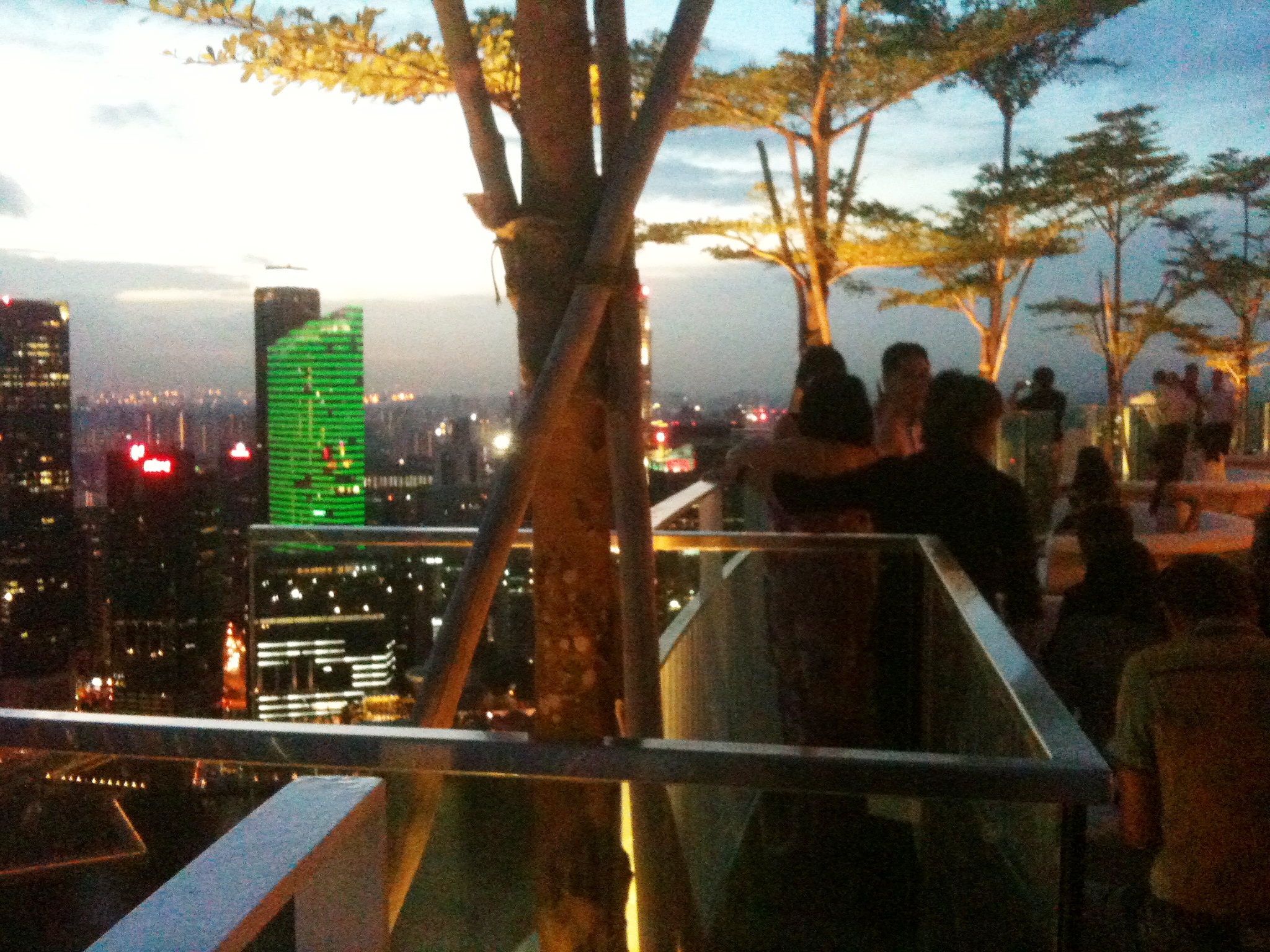
Light Watch 36: Sky on 57, Marina Bay Sands, Singapore
Made where, by whom?
Singapore, 18th February 2011
Like cars the world of lighting manufacturing is an intricate web of product and component origins, licensing and copyrights. “Made in country X” does not really mean it is made in country X. The only thing it says is that the light fittings’ final assembly (and possibly) packaging was done in country X and exported from there. Components and manufacturing processes may well have been done in other countries. I think I mentioned before that China now applies some reverse psychology my having their final products assembled in Europe so they can label their products “made in France” rather than “made in China”, even though the main components and manufacturing is still done in China. The added benefit is that in the process they can “justify” I higher price than what they could with the “made in China” stigma attached to the product through the perceived better quality…
Then there is the branding. Does the brand “Y” mean that it is actually manufactured by brand “Y”…? Not really. While we are mostly familiar in the market with the well-known brands there is a whole world of so called OEM (Original Equipment Manufacturers) out there. In other words a manufacturer that manufactures for or sells light fittings to leading brands on demand. Ever wondered why some products look so similar eventhough they are from different brands…because they are. Manufactured by the same OEM just with another brand sticker on it!
Being involved in a lighting tender process confronts you with all these issues. Am I seeing a real brand X product or is it a brand X made by manufacturer Y from country Z? Even a certificate of origin may not give you the clarity if it does not specify the origin of the components! It then comes to the reliability and reputation of the company you are dealing with. Reputable companies will give you that warranty and peace of mind that you need as a designer.
In Light Watch today a pay tribute to the many lighting manufacturers and there tireless efforts in bringing us the latest lighting products. I have been fortunate to have visited many lighting manufacturers all over the world, from Europe to China. The quality of the light fittings is generally reflected by the quality of the factory!
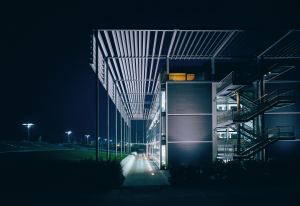
Light Watch 35: The IGuzzini head office in Italy
What’s in a beam?
Singapore, 17th February 2011
I may as well follow up on yesterday’s blog in regards to lighting standards. One of the other big misconceptions is when guides specify a certain beam spread. It’s not that simple. Specifying a, say 24 degree beam does not really tell you how the full light distribution looks like. Many uninitiated assume that a 24 degrees means that the actual light beam happens within a 24 degree cone. Unfortunately in architectural lighting that is not the case. Theatrical spots do have that distinction where you can actually focus the light to a cut off at 24 degrees but in traditional architectural lighting that is not how it works.
So first we need to understand what 24 degrees means! In most of the cases it means that at 12 degrees either way from the peak intensity you will find half the peak intensity. This is done so you know what the related cone diameter is at half peak intensity at various distances away. If you wish to create an even light distribution with ceiling down lights for instance, you just need to space the lights at the length of the (50% intensity) beam diameter. A simple but effective way to space out your lights without complex calculations for multiple light applications.
What it does not say however is the lighting effect of the single beam, in other words what you see! The zonal light distribution will show you in some cases that lamp may have a 24 degree beam but that the furthest light away from the peak intensity may actually happen at 60 degrees, in other words the light projection that we see will have a clear peak brightness in the centre, but gradually fade of well beyond the projected 24 degree. A 24 degree beam is a technical description, but not representative of the visual beam effect! Without understanding the zonal light distribution, a technical beam degree does not mean much.
My pick for Light Watch today is a place where light distributions are crucial! I read today that Singapore opened its doors to its newest cultural hub over the weekend, the Art Science Museum located at the new Marina Bay Sands. I have yet to visit the place but surely lighting will be elementary, Watson!
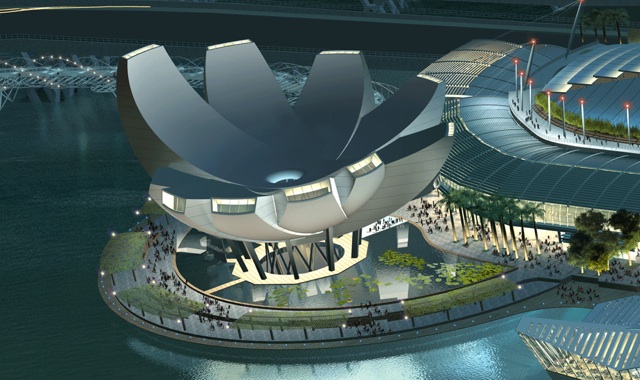
Light Watch 34: Art Science Museum at Marina Bay Sands, Singapore
What’s in a lux?
Singapore, 16th February 2011
One of the great debates is what really lux levels mean, besides being a unit of light. Many engineers drive their design based on lux levels without really understanding what a lux value means (at least that is my opinion). As far as I am concerned most of the time it means nothing. A lux measurement is only telling you approximately the amount of light falling on a surface, but not what you really see! We basically see reflections, light reflected of materials, colours, etc.!
Today I dived into one of our hotel operator guidelines to make sure our lighting design complies with their standards only to find out that just indicating a lux level and watts per square meter for a certain space does not give explicit directions. It is one of my bones of contention with many operators and it is likely that these guidelines were put together by an engineer and not a lighting designer. Why do I say that?
First where do I measure or need these levels? As an overall space average or localised at specific task areas for reading or working? What about the balance of light in the room. Lighting is about balance of brightness. Another question which is not specified in most manuals is how do I measure the lighting levels? As a standard horizontal level or on a surface perpendicular to incoming light? At ground level or on a working plane level? Without a proper guide on how to measure lighting levels a lux level requirement is hard to verify.
The values also do need to consider the interior design when we talk about interior lighting levels. When 100 lux falls on a black surface the visual impression is totally different then when it falls on a white surface. Obviously the latter one appears much brighter. Yet the lux levels are the same. And I haven’t spoken yet about light distribution… I will do that in another blog :). My point is we don’t design for lux meters, but for people!
In relation to the above I wish to highlight in Light Watch today the technological advancement that LED has seen over the last few years. Same brightness can now been achieved with about 1/5 of the energy. A incandescent candle lamp can now be replaced by a 3W LED equivalent!
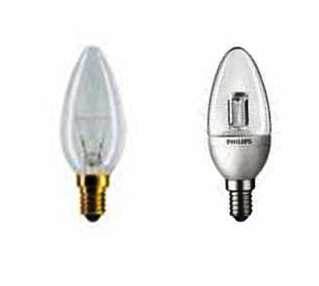
Light Watch 33: The LED evolution!
Love me tender…
Singapore, 15th February 2011
The title is misleading, as I actually want to talk about the tendering process (not Elvis Presley 🙂 ). The process where our lighting design specifications go out for tender and bidders can submit their proposal for the lighting. The tighter the specifications, generally the easier it is to assess compliance and recommend your client who to award to. A tender allows you to invite several suppliers or contractors to quote which creates a competition allowing you the get the best value for money for your client.
When the tender goes out with “as specified” only, there is not much to do other than to assure that apples are compared with apples when assessing the submissions, making sure the bids are complete and complying. But when alternative equivalents are included as acceptable bids it becomes a totally different ball game. We generally specify products we are familiar with and products that we know will do the job. However as a lighting designer in this world of rapidly developing technology we can’t possibly claim to know all the products in the world…there are many products that may be equivalent or even better. That means assessing the lighting performance and compliance often only based on some catalogue info.
Tenderers often take this opportunity to bid low sometimes even with “shady” alternatives, using original manufacturer’s documentation while offering a local copy. Only a trained eye generally is able to see the difference. This is where tight specifications allow you to shift the goodies from the baddies. Lighting performance is always the key followed by the quality and safety of the light fitting, not to mention design intent! Samples will give you most of this information…seeing is believing, but then again you need to understand what you see!!
Finally a lighting product to me is as good as the company or supplier behind it so taking in to consideration the person and company credentials and capability is a crucial element in the final tender assessment.
In Light Watch today the spectacular sight of sky lanterns. Last night I saw a report about the sky lantern launch in Taiwan and I believe other countries have similar festivals. If you are aware of one enjoy the magic sight…
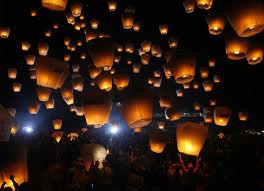
Light Watch 32: Sky Lanterns
In the mood…
Singapore, 14th February 2011
The world today celebrates Valentine’s Day…as far as I am concerned a commercially driven celebration to get people to spent money on diners, gifts and flowers. But somehow people need occasions to celebrate things…We have just had the New Year and Lunar New Year celebrations and more to come over the coming year, one even celebrates “light”…the Hindu celebration of Diwali, the festival of lights. Lighting is a big part of these celebrations and serves as a tool to set the mood.
Valentine ’s Day is generally celebrated with a romantic diner and most outlets outdo themselves to create “that” mood and ambiance. The more exclusive restaurants have their lighting control scene set to “romantic” which generally translate in low lighting levels and localised lighting. The simplest of all settings is of course just a flickering candle. Check out yours if it is concealed inside a frosted glass as it may be an artificial (LED) flame.
Lighting designs need to be tailored to the multiple needs of different occasions or time of the day. I started “scene setting” today for one of the restaurants we are designing. Though at this stage the mood creation happens on paper first and with the help of some renderings later on, it is good to think ahead on what the actual mood is that I want for the occasion so we can think through the lighting design to make sure we can achieve it. Obviously experience is key for this work. Having done many before helps to understand what a 20% or 50% setting means in the scale of the whole space. Dimming or switching of light sources requires understanding of the characteristics of the light source. Diming a fluorescent light bulb does not have the same effect as dimming a halogen bulb! Creating a mood is also highly personal as a designer…cultural backgrounds also play a role in appreciation of lighting effect….
My pick for Light Watch today is one of my own projects, The Line Restaurant in the Shangri-la Hotel in Singapore. It has been a winner from the day it opened about 5 years ago and was one of the first themed restaurants with island cooking, made popular by Super Potato, the specialist interior designers. This restaurant is sure to bring you “in the mood”…
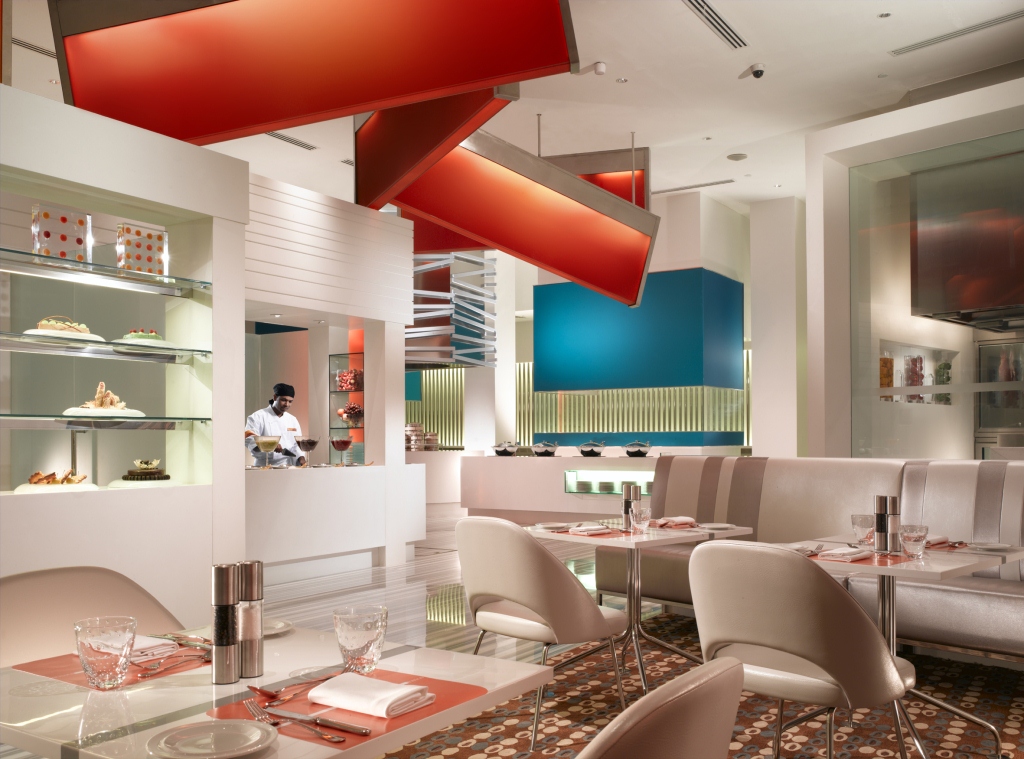
Light Watch 31: The Line Restaurant – Shangri-la, Singapore
Party time
Singapore, 11th February 2011
Life should be a balance between work and fun, business and private. Too often we emerge ourselves so much into work that we forget to enjoy life. Certainly in this part of the world work life seems to take precedence over private life with many working till late and in the weekends. There is however a healthy trend developing were businesses make it appoint that their staff relaxes, enjoy and look after their health, whether through company outings, functions or fitness programs. It is no secret that a balanced life creates a much more productive and motivating environment. Unfortunately there are still many “greedy” business owners who don’t see it that way and abuse staff to their own profit.
The trend to create better working environments translates in many projects where corporate head offices for instance create spaces for sports, relaxation or even special events and functions. This can be a gym, a pool, a café or outdoor terrace, landscaped gardens and the like. In relation to lighting this means that “corporate designs” have to be spruced up to create these relaxation spaces. This means mood settings, after hour lighting (in a social entertaining way) rather than pure performance lighting that is geared at maximising productivity.
It’s a different ball game…and it requires the lighting designer to be versatile and be understanding of the different needs for the different demands. I am a strong believer that a lighting designer nowadays should not be a specialist in one area only, but a versatile creator of lighting for all types of applications. It is the experience in these different applications that gives you the ability to think out of the box and apply your lighting knowledge from one application into another…
Today Singapore celebrates the Chingay parade, a traditional Chinese New Year procession that welcomes the spring and over the years has evolved to a massive street parade with dancers, street floats, lion and dragon dancers and more. The parade is held after office hours at night and the illuminated floats and dancers provide for an entertaining and relaxing evening. My pick for Light Watch today.
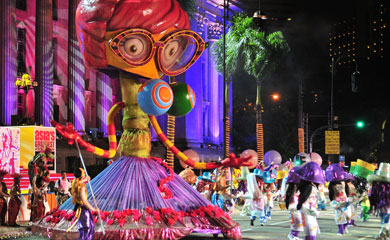
Light Watch 30: Singapore’s Chingay parade
Carbon credits
Singapore, 10th February 2011
Today I read an article in the newspaper that Singapore has embarked on a program to generate carbon credits. The program consists of replacing current fluorescent lights in housing flats (HDB) to LED equivalents. It is claimed that by replacing the fluorescents with LED in about 2000 flats island wide a saving of S$ 5 million (about U$ 3.8 Mio) a year will be achieved for the town councils. A total of 340,000 lighting points in corridors and stairways have been identified for the replacement. According to the article LED uses 60% less energy, produces less heat and lasts 6 times longer. The cost of installating LED is stated to be 3 times that of a fluorescent point. Interestingly the article focuses only on the cost and energy saving, implying that the replacement produces the same quality of light. I have my reservations…
Under the Kyoto protocol developed countries like Singapore can register their energy saving efforts with the United Nations who administers this. This projects is expected to yield about S$ 250,000 worth of carbon credits a year. A carbon credit can be used to offset excess greenhouse gas production (most developed nations have maximum emission targets as agreed under the Kyoto protocol) or can be sold on the global carbon market. Currently a certified carbon credit is worth about Euro $10-15. One carbon credit allows the holder to emit the equivalent of one ton of carbon dioxide.
The interesting twist in this project is that the winning contractor will have to foot the whole cost of installation which is estimated to be about S$ 22 million. In return however they will share in the energy savings of S$ 5 million a year.
Singapore’s HDB flats are todays pick for Light Watch. Though I have yet to see if the picture is as “rosy” as it is been presented in todays news article, the initiative is interesting and certainly worth looking out for. The Housing Development Board of Singapore has always been in the forefront when it comes to applying new technology.
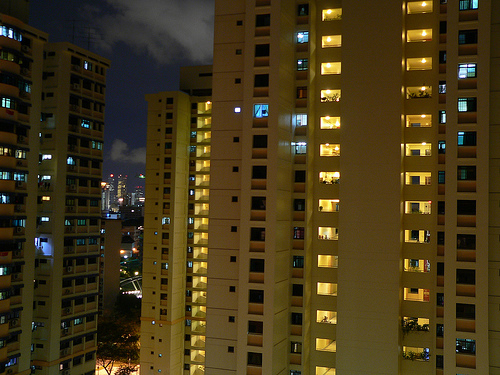
Light Watch 29: Singapore’s HDB flats
Retro fit
Singapore, 9th February 2011
The problem with LED’s has mostly been the inability of retrofit lamps to actually perform to the level of its famous predecessors. There have been many attempts to make LED versions of the incandescent and the halogen lamp and until recently most did not made the mark. So called LED replacements did comply in size (like LED’s fitted into an MR16 halogen reflector), but the performance was far from comparable in terms out light output and colour qualities. Today however the leading brands such as Philips, Osram and the like have managed to improve their technology to create replacement LED lamps that do closely match the incandescent bulb and halogen reflector lamp.
I tested some out today in a real life situation (hotel mock up room) where we replaced 60W GLS with its LED equivalent (12W Philips MasterLED) and it was impossible to tell the difference …if anything the LED version looked better! Light output, colour temperature and most of all the light distribution (lighting effect) looked identical. We decided not to notify the owners of the change when they will visit the room tomorrow, letting them believe it is still incandescent. What better way to get approval!
Even the 10W LED Masterled in 2700K, replacing the traditional 50W MR16, looked very good with very similar beam characteristics. While the new “Xicato” technology offers very different and even more powerful alternative LED solutions in traditional applications, we can now say that the leading manufacturers in LED have arrived at a level where retrofit has become a real opportunity. With prices dropping and life expectancy stabilising, the return on investment calculations start to look attractive to developers and property owners.
In Light Watch today I would however caution against the LED craze. There is a place and time for everything. Too many manufactures try to profit from the “green train” by offering LED substitutes. Unfortunately many are untested and quickly put together in an existing housing to make a quick buck and cash in on the craze. I attach a picture that I made today of an typical average floodlight that had been quickly converted (or so it looks) into an LED version. Unfortunately the quality is arguable and whether these “LED fittings” contribute to the overall appreciation of LED by the general public remains an even bigger question…
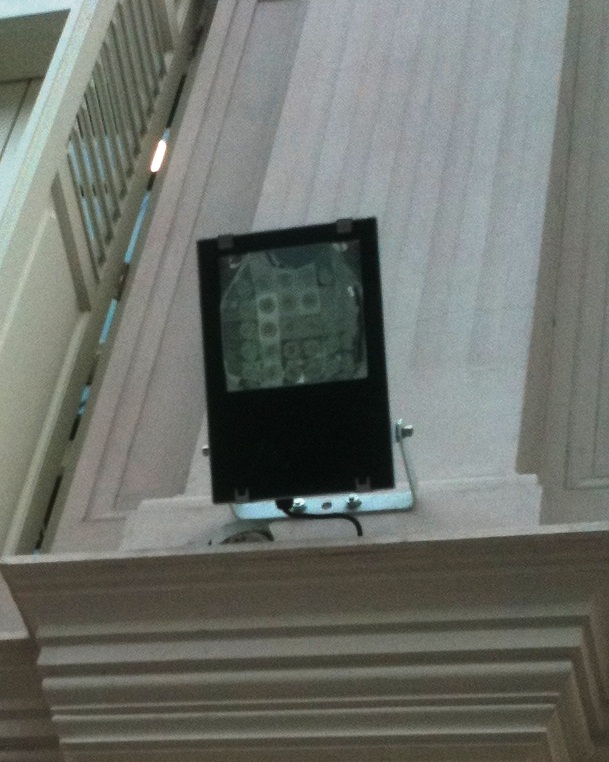
Light Watch 27: LED floodlight conversion
 The long awaited book compilation of Martin's first year of blogging is available. Order now.
 Feedspot Top 100 Lighting Blogs