
Reviewing hotel room lighting mock ups
Shanghai, 13th November 2009
Though Friday the 13th today, I went about work as usual…A mock up room review for one of our hotel projects (JW Marriott) in the morning. Then a design coordination meeting in the afternoon with interior designer and client for another project. This is pretty much the hectic schedule for work in China. Actual design work and design meetings with my team are a challenge with the client demanding lots of attention. To me it is crucial to review lighting mock ups as it is the first culmination of our conceptual design work. It reveals the through interaction with the architecture and interior design. A hotel project always includes a mock up of a standard room, generally one king and one twin bed version with two different schemes for the client to appreciate and make a final decision.
In China it is common that already in the mock up stages alternative and so called equivalent materials and products are used. This is a real issue as it does not allow us to really appreciate the original design! While I can understand the need for value engineering it should be done AFTER the mock up room and not before! It is surprising that even top hotels such as Marriott, Hilton, etc succumb to client pressure ….
Today I again I was confronted with architectural light fittings (down lights, etc) that I had not specified. Decorative light fittings (bedside, floor and table lamps) that were nowhere near the quality required. Some contractor had decided to bring in a friend of a friend to supply I can only assume…. While we know how to explain the disappointing lighting performance, clients sometimes have a hard time understanding the value of quality and specifications!
Surviving without light
Zhengzhou,12th November 2009
Still in Zhengzhou…it has continued to snow and we had to find ourselves a hotel for the night. Half way the evening it became clear that even the train option (a 12 hour journey back to Shanghai) was not possible as the highway back to the city had been closed as well. By that time the airport hotel was full and we had to go hunting for a hotel nearby. We managed to get one through the airport helpdesk, but on arrival it was pitch black! Major power failure…No lights!! We were deliberating what to do (whether to look for another hotel or stay put) and decided we would stay put with the chance of finding a hotel room becoming slimmer by the minute. At the reception we were received under extreme lighting conditions! A (cool white) LED torch and a (warm white) flickering candle …very airy ambiance. As I really needed to go to the toilet I was “LED” the way to the washroom but once inside, with the door ajar to capture a few mililux of light, had to roughly guess where the hole was! Anyhow we made it to our rooms and managed to catch some sleep under basic conditions. As I write this entry I am killing time and looking outside (thank god for daylight!) … it has kept on snowing overnight. The airport is at least closed till this afternoon and the highway is also still closed, so we are stuck! Good time to catch up on some work.
This whole experience has made me realize again how much we depend on artificial lighting in our daily lives! It brought up memories of an experience that I think every lighting designer should go through to appreciate light. That is to have a meal in a restaurant called “Dans le noir” (“In the dark”). It is a theme restaurant (I went to the one in London) where you dine in absolute darkness. You are guided to your table and served by blind people. For the rest you are on your own… filling your glass of wine, finding your cutlery, your plate and the challenge of getting the food from your plate into your mouth! As you can not see your food you it is left to your other senses to guess what you are eating. Part of the fun is to find out what you have been served! It is a good exercise in practicing your survival without light!
Note: Internet connections are scarce here and I am trying to use my colleague’s 3D wireless to send some emails and this entry to Singapore to be uploaded. I don’t know of last night entry was uploaded, so bear with me if there is some delay…
Having the client’s respect and attention
Zhengzhou,11th November 2009
Would you believe that I am snowed in at the airport! Heavy snowfall over the last few hours has resulted in temporary closure of the airport with no flights going in or out. We managed to reach the airport safely, though at snail pace. Of course all the pandemonium at the airport regarding canceled flights. We have been re-booked on a later flight should the weather improve, but for all I know we may stay her the night. I have installed myself in a comfortable lounge/ restaurant and sip from my coffee as I prepare today’s entry.
Today I wanted to reflect on respect and time, two aspects closely related to meeting your client. I don’t know about my colleagues in the business, but having the clients respect and attention is something that is hugely important for the success of your project. In my projects I experience the two ends of the scale, specifically in China, which is very structured in hierarchy. Time is one of our major commodities in our lighting design business s and thus making sure you meet the right people and have the most efficient possible meetings is quite often a big challenge. You often discover that the person you talk to will have to report to his boss, who then has to report to his boss, etc. This can make the process quite tedious. Likewise you may end up in a meeting where you discover that lighting is not really the main subject or even related subject and you end up spending your time in attendance of a meeting that does not really require your presence. My point is that good clients are generally respectful, appreciate your presence and are considerate with your time! You will find that often these clients are also good paymasters!
Design issues – design concept versus budget
Zhengzhou, 10th November 2009
Another day on the road, now in Zhengzhou, Henan province this time 1 ½ hours flight north west of Shanghai. I am meeting the client and the design architect, SOM from the USA, for one of our prestigious projects, the Zhengzhou Tower. The Tower is located at the heart of the new CBD (Central Business District) which is being purposely developed by the local government, the Tower being at the centre of this master plan. The lighting concept for the exterior façade will assure that the tower will be the show and center piece of the whole development standing tall at more than 300m high.
The design issue I want to put forward today is typical for many projects. There is a lighting concept that everybody likes and there is a budget estimate that nobody likes. The lighting concept uses the latest LED power floodlights in order to achieve the intended effect and brightness but at 300m high it is not difficult to imagine the sort of costs involved to light up the façade over its full height, 360 degrees around! So the question is whether we are willing to compromise on the lighting concept and quality in order to lower the cost. The answer of course is in principle NO, but to what extend should we be un-compromising…certainly in an environment like China where quality does not seem to be the main worry. For us as lighting designers I believe our position should always be guided by the quality of the end result. Is the lighting brief being achieved, is the client satisfied with the end result, have we provided the best value for money, will the client enjoy the end result for a long time to come? If there is a choice I believe it is better to implement full quality partially then questionable quality fully! The meeting continues tomorrow……
Note: As I go and experience them in real life, I will touch on lighting design issues that I encounter to make this blog even more actual. I am regularly confronted with all kinds of design issues for which not necessarily a right answer is available. I will share them with you and welcome any comments.
LOST IN TRANSLATION
Shanghai, 9th November 2009
Today I travelled to Hangzhou for some project coordination meetings, about 1 ½ hours with the speed train outside Shanghai. Hangzhou is one of those satellite cities around Shanghai that are riding the wave of economic growth in the Shanghai area. While greater Shanghai boost of about 20 million people (can you imagine…about as much as in the whole of Australia!), Hangzhou is a relatively “small” but beautiful city of only 5 million, nestled around Westlake, its most famous tourist attraction.
Doing business in China is an experience by itself, not in the least because of the cultural differences. The biggest challenge I find however is communicating with the project team if you don’t speak the Chinese language. Now I have picked up some Chinese words over the years and can take a taxi to get around but a presentation of your lighting design concept is a different piece of cake. So generally I end up presenting in English with one of my colleagues translating. This whole process besides being time consuming requires utmost attention. Why is it that what you explain in a few sentences seem to take an eternity to translate? Are things added in the translation? Are they explaining the same thing in 5 different ways? Likewise a question put forward in Chinese taking several minutes is translated to me with a one liner? My point is that probably a lot is lost in translation which is not easy to identify as they all nod friendly saying “mei wan ti” (no problem in Chinese). You keep your fingers crossed they have really understood and all is good… however when you do discover all is not good it is generally too late and you get a sheepish smile…..
Note: It seems blogging in China is not as easy as it is elsewhere in the world! As I wanted to access by blog to post my entry for the day I found out I could not access the blog site. I had heard this problem before from a friend who was travelling in China and kept a blog with the travel experiences. Not sure if this is ”controlled” by the government but direct access to blogging sites seemed blocked. I will have to find another way to post my blogs when in China. For the moment the entry is emailed to Singapore and then posted on the blog from there by one of my colleagues. Bare with me if there is a daily in my posting while I am in China.
Daylighting in Airports
Singapore, 8th November 2009
As I am in transit at Singapore’s new terminal 3 on my way to Shanghai, I cant but appreciate the efforts that have gone into making this new terminal at Changi Airpport one of the most sustainable airports in the world. And trust me… I see many airports! Most oairports are gloomy, ill designed and a challenge to navigate and find your way. Singapore’s Changi Airport has not won best airport awards many times for nothing. The ambiance everywhere is pleasant and comfortable and above all lighting levels and signage (crucial in aiprorts to find your way!) of excellent quality.
The main multi story departure and arrival hall has a daylight system in its ceiling, skylights designed as giant reflector luminaires. Just below the ceiling are perforated panels that deflect light into space creating a nice feature ceiling in the process. A large verical garden alon the luggage belts adds to the feeling of the airport being “green”. Throughout the airport there are large window bays providing views to the tarmac,as well as glass partionings, allowing daylight to penetrate deep into the building, whether from the departure lounges into the adjacent circulation areas. I do not have any energy figures but from what I have read and heard the airport is a great example of sustainable design with lots of daylight, but also good shading and protection of direct sun through perforated shades.
Brandenburg Gate, MTV outdoor concert
Sydney, 7th November 2009
What a shame we (PLDC) missed out on the likes of U2, Beyonce performing life at the Brandenburg Gate while in Berlin! I just caught a report of the event on TV. The Brandenburg Square was transformed into one big stage with the historic buildings illuminated as a back drop. The MTV event was part of the celebrations of the Berlin wall that came down exactly 20 years ago, signalling the end of the so called cold war.
In an earlier blog I mentioned about Berlin city’s urban lighting which I thought was well done in general. Lighting up the “Gate” in dynamically changing colours complete with text and effect projections was a totally different and exciting sight! I notice a growing trend in using heritage and landmark sites as back drop for major events and performances, such as the Forbidden City in Beijing and many others…
Modern lighting and projection technologies allow for some amazing visual transformations of these well known sites. More and more we see cities resorting to these events and I can only assume they do so to promote their city. It is obvious that lighting and its infra structure become a key component in doing so!
Note: as I let myself guide by events or things that I experience or happen on the day, repeat subjects or topics will happen. I guess this then will become a gauge of the actuallity and impact of these topics on our daily lifes!
Australian Cities going green
Sydney 6th November 2009
In today’s newspaper (*) I read an article headed: “Let there be environmentally friendly light, say our lord mayors”. The Council of Capital City Lord Mayors (never knew such Council existed!) committed to a multi point plan to lower greenhouse gas emissions with several megatonnes a year till 2020. The scheme includes retro fitting residential and commercial buildings, reducing commercial floor space for each employee by 20% within a decade, but most of all converting all urban street lighting to high efficiency LED lighting by 2020. The implementation will require close cooperation between government and local industry partners. The City of Sydney has already started with the implementation of LED street lighting in the city.
This initiative is to be louded and supported but with caution. There are still many dodgy (to use an typical Aussie slang word) LED lighting systems being offered by manufacturers jumping on the LED bandwagon at any costs. I can only hope that the “Lord Mayors” will have the foresight to engage proper lighting professionals to assure the LED replacements comply with all applicable and relevant lighting standards as too many LED lighting systems still lack in performance.
(*) Source: Sydney Morning Herald
Light…medicine of the future?
Sydney, 5th November 2009
Today I spend most of my time in an hospital supporting my sweet love as she underwent a surgical operation. Though her operation was not life threatening, an operation of any kind under full anestthetic costs quite a lot of energy both physically as well as mentally, not in the least because recovery means that practically all our body functions (including our body clock) need to be restored. With PLDC still fresh in my mind I remembered one of the speakers saying that recovery under “blue” light would greatly enhance the speed of recovery. Unfortunately the present medical system is still very conventional and alternative healing methods are still far from being accepted in public main stream.
which brings me to reflect on one of the first books I ever read on the subject called: Light, Medicine of the Future, by Jacob Lieberman. In his book Lieberman describes how light impacts on our lives and our body clock and has some real life case studies where he applied light (colours)to heal patients with specific ailments. Though written more then a decade ago, I believe it still remains one of the few authorative publications on the subject. There is no doubt in my mind that we are still in the infant stages of discovering how much impact light has on our health and well being.
Jet LED
Sydney,4th November 2009
Jetting back to Australia, I flew Singapore Airlines brandnew Super Airbus, the A380 double decker plane. As far as I know this is the most modern super jet in commercial use at the moment. Besides the latest gadgets and modern, comfortable seats, to my knowledge the airplane boosts one of the most sophisticated LED lighting systems applied in the airline industry to date. Each and every lighting point in this plane is LED, from the reading lights and indirect lighting to the mirror lights and emergerency lights. Controled by sopisticated touch screen panels. I am sure the lighting has contributed to the efficiency of the airplane by reduding its power load and thus the fuel required to power the electricity on board. I noticed that even the emergency light has a blue light function when switched to inflight mode!
I can’t but reflect on the fact that as technology advances and the need for energy saving keeps increasing we will see more and more applications move into using 100%LED lighting systems!
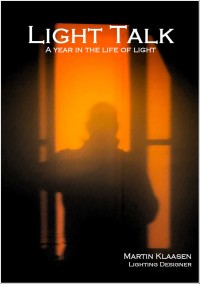 The long awaited book compilation of Martin's first year of blogging is available. Order now.
 Feedspot Top 100 Lighting Blogs