
BIPV
Singapore, 11th February 2010
Aren’t we continuously bombarded with technical jargon in our job? I am not so sure about Europe or the US, but Asia loves it abbreviations! BIPV or Building Integrated Photo Voltaic is the subject I actually wanted to discuss yesterday as we have just embarked on the conceptual design of some above ground railway stations for Singapore’s mass rapid transport (MRT) system. We are doing one of the several contracts as part of a consortium that has been awarded over the last year by the government. I assume that the designers in the other contracts have been asked the same, but in our case sustainable lighting design has been a part of the brief. This means not only maximizing day light but also looking at options for renewable energy.
We are exploring the possibility of incorporating PV (photo voltaic) cells, solar collectors, into the building to generate energy for the lighting and maybe more. While we are researching the surface required per watt of power needed for the lighting, the architect is looking into ways to integrate the solar panels into the building design…hence the term BIPV. There are different ways of doing this as PV cells come in different formats and configurations. They come as a solid panels but also embedded in glass allowing light to filter trough. So early coordination with the architect are crucial.
Like day lighting, applying BIPV opens a whole new area of expertise for us as lighting designers as we need to expand our knowledge to be able to understand the technical requirements and provide meaningful input to the architect.
A lighting novelty
Singapore, 10th February 2010
Today I came across a really interesting article in the newspaper reporting about a novelty in lighting. At least it is a novelty to me. I originally planned to write about something else, but I found this more newsworthy and interesting. The newspaper reported about the recent opening of the new Orchard Ion shopping Mall in Singapore, and specifically how some retailers were resorting to new approaches to boost sales.
What caught my eye was a specific report about German lingerie brand Triumph that had installed multiple lighting scenes in its latest outlet change rooms. The lighting scenes have options that allow you to simulate lighting effects such as for the bedroom, office or gym. In that way it gives its clients a unique way of seeing how the different fabrics and colours work under different lighting conditions. The report states that the new lighting has had impressive results on the sales and quotes a woman saying she spend double the amount she usually does triggered by the lighting! It is well known that good and dedicated lighting in retail improves sales dramatically, so it is not surprising, really, but a novel and clever way certainly!
In my early days in Philips I was part of a lighting application group developing better lighting for retail and from projects implemented as part of the studies we found that by applying light to focus on displays and promotions, introducing localized lighting, etc, the sales could be improved with as much as 25%! Using lighting to attract shoppers inside (bright in the back) and usher people out of the shop at closing time (reducing light in the back and increase brightness at the exit doors) is another clever way in using lighting as a tool to guide shoppers in big retail surfaces.
A simple calculation will tell you that the additional sales will recover the lighting investment very quickly!
Recycling
Shanghai- Singapore, 9th February 2010
On my way to Singapore to work away the last bits and pieces of projects before the Chinese New Year shuts down this part of the world. Besides typing my blog (can we imagine life without laptop?), it is also a good time to catch up on inflight documentaries such as “eco-solutions” or other technology programs. Aren’t we supposed to be leading edge designers knowing what’s new and trendy… 🙂
One of the subjects discussed in these programs is the issue of recyclable materials. Many buildings at the upcoming World Expo for instance, are being built in a way that the building materials can be recycled and re-used afterwards when the exposition dismantles.
So what is the situation with lighting… or more specifically with light fittings? I must honestly say I am not really familiar with the latest on this subject. I remember years back that German manufacturer WILA had introduced a recyclable range of down lights that could be taken apart so that the components could be recycled. I am not sure it took off but I can imagine the costs would have been high. These kind of features generally come at a premium and to my knowledge it is not something that is being featured prominently in manufacturers marketing and promotions nor being a priority in our mainstream client decision making process at the moment! The attention seems to be solely focused on aspects like energy saving and reducing light pollution. With LED life expectancy being what it is recycling is probably a “far from my bed” issue. Light fitting also have a far longer shelf life than lamps in general.
What about lamps then? Again I must confess my little knowledge. We have the so called “green lamps” which besides their energy saving features have no or little harmful content for the environment. I know there are efforts being made in some countries to consciously collect lamps (specifically fluorescent tubes) for recycling, but that is as far as it goes.
Should we make recycling a more prominent issue in our lighting design strategies?
Family and friends
Shanghai, 8th February 2010
Today I would like to pay tribute to our real support team! Not our staff, but the people that matter to us at home, our partners, our children, our parents, our friends, our loved ones. The ones who have to endure our frequent travel, our unpredictable time schedules, our moods, our successes and our failures.
The occasion is my Dad’s birthday today. Both my Dad and my Mum have always been very supportive of me (rain or shine) and I would like to thank them for that. It has and still means a lot to me. While we of course depend heavily on our front staff in the office, it’s the love and support of the people back home that carry us. I can’t emphasis enough how important family and friends are. It gives meaning to our life!
In our job as lighting designers we tend to travel a lot. It is not a 9-5 behind the desk job. It requires going out to meet clients, architects and coordinating works on site. And as there are not that many lighting designers around, we find ourselves travelling the world. Someone ever told me that for all projects that would require a professional lighting designer, less than 5% actually do. It is not hard to see that we can easily get our priorities mixed up. Certainly those who are entrepreneurs and business owners, as work never stops!
In Asian culture work seems to have priority over family life, so it makes it extra hard as the “system” expects you to work on Sundays if needed or give up your holidays to attend to urgent deadlines. Somehow project deadlines never seem to consider private life, let alone holidays!
So to all my family and friends who have supported me through thick and thin over the years I say thank you! …Happy birthday Dad!
Total recall
Shanghai, 7th February 2010
It is a wintery and rainy Sunday in Shanghai today. The streets seem unusually quiet, possibly because people have started to return to their home towns to celebrate Chinese New Year with their families later in the week. I will return to Australia in a few days too.
With a pun to Arnold Schwarzenegger’s movie I am referring today’s blog heading to Toyota’s dramatic recall of millions of their cars. Which led me to think whether such thing would be imaginable in lighting? Has any lighting manufacturer ever recalled light fixtures that are deemed unsafe? Not to my knowledge, but please let me know if that has ever happened!
As lighting designers (and manufacturers) we have generally a whole punch list of reasons to explain to a client why a light fitting is failing and most of the time the finger points to installation issues whether electrical, physical or other. While there are obviously sub standard light fittings around (the so called “Chinese” copies, used here generically), unsafe or failing light fittings also happen because of wrong specifications in the first place. And this comes right back to us as lighting designers! I am not ashamed to say I have been guilty of that. Of course I have excuses, wrong briefing, changed conditions, etc, etc, but still it is my responsibility!
In one project we had specified outdoor in-ground LED marker lights in an area believed to be pedestrian or light vehicle traffic only. But soon after installation complaints started coming in about glass covers cracking and breaking. Thinking first of product failures the supplier replaced the broken light fixtures, but it kept happening. It was later found that heavy traffic, including busses, were using the area. Further investigation also found improper installation, but key really was wrong specification. The supplier/ manufacturer subsequently graciously agreed to replace the lights (a “total recall”) with a higher specification…
Festivals of light
Shanghai, 6th February 2010
This morning I caught the tail end of a report on the news about some festival of lights. Not sure where or which country even but the images seemed quite impressive, with lighting sculptures and structures. So I set out to check out Google (yes, it still works in China 🙂 ) and was amazed by the amount of “festival of lights”! I found events in Australia, Korea, France, US, Spain, and more, all dubbed “festival of lights”. Further scrutiny however reveals that most of them are in fact more art and music festivals that are held at night with light. The Ice festival in Harbin, China, maybe the exception as lighting is an integrated part of the magical effects at night.
There are also the more cultural and religious festivals such as the Chinese Lantern Festival, the Indian festival of Diwali or the Jewish Hanukkah which are both called festivals of light, in which candles are the main lighting component. All of them are of very important cultural importance.
But the more “genuine” (from our point of view as lighting designers)are the light festivals such as last year’s successful introduction of the Sydney Smart Light festival and the well established festival of light in Lyon for example. Actual lighting installations are used to create beautiful illuminated artworks or creatively lit building structures and facades throughout the city. In Germany, the Frankfurt Luminale, which is held in conjunction with the bi-annual Light Fair, is another example.
Besides the obvious tourism benefits, these festivals however are far more meaningful as there is a deeper thought behind relating it to urban development and creating awareness for the benefits of good practice lighting.
PS: Just realised I posted my 100 th blog entry yesteday!
Speculative design
Shanghai, 5th February 2010
Speculative design is a very sensitive issue. Sometimes we get approached by clients to provide a lighting concept without appointment. In other words we have to develop a concept and if they like it we may be appointed. A bit like participating in a competition.
I generally take a stand that I do not engage in speculative design, simply because to me lighting design is my bread and butter. It is not like a supplier where I send in goods and if they don’t like it they return it. You still have the goods afterwards. As I mentioned in my “fee proposal” blog a few days ago, our commodity as lighting designers is our expertise and most of all our time! Time is an investment that you will not get back (don’t we all wish sometimes we had 36 hours in the day?).
There are of course exceptions to the rule and we have to judge each case for its merits and business potential, but most of the time I find that clients abuse the situation and bank on the company’s eagerness to get the job. I don’t have an issue for a client to ask several designers to work on a concept and then select the best one, but at least it should be done professionally and paid for!
Not so long ago we were invited to participate in a hotel concept bid by an interior designer. In an earlier process the client had shortlisted 2 interior design companies. It then asked the two companies to come up with a concept for the hotel for which it paid a proper fee. It would then build two mock up rooms according to each design and choose the winning concept company for the renovation of the whole hotel. To me that is the right way.
Zero energy, zero maintenance
Shanghai, 4th February 2010
Is it possible to design towards zero energy and zero maintenance? In other words design a full project lighting installation that is 100% sustainable through renewable energy (wind, solar, etc) and has such life span that maintenance becomes redundant?
Right now certain parts of a lighting installation can certainly be designed that way. Some of you may have seen the recent fully solar driven LED façade lighting of the Xicui Entertainment Complex in Beijing, I believe one of the first of its kind. Right now I am also exploring the possibility to design a large façade lighting project that way. But I believe we are still in a situation where the initial investment costs are still prohibitive for many.
The challenge for “zero energy” is the limitations of the size of the solar or wind collectors required to achieve the desired lighting performance. The proportional size of the renewable energy collector to light fitting is quite big. From my understanding the Beijing project for instance, uses 8 small solar collectors to feed one LED light, all embedded in the curtain wall. It also seems that feeding back the collected energy into the power grid is more workable than storing the energy due to the limited storage capacity of the batteries and space would need to be created for the batteries.
The challenge for “zero maintenance” is that the previously thought incredible 100,000 hrs lifetime of LED’s is actually more like 15,000 hrs. At an average of 3000hrs a year, that is only a 5 years life span, not really an indefinite life span anymore as we originally thought! Lighting performance is directly related to lifespan and with so much emphasis put on performance one can understand why the life expectancy has so dramatically decreased.
I think we should strive to design towards zero energy and zero maintenance as a target, but it may still take a while before it can actually be achieved.
The power of simplicity
Shanghai, 3rd February 2010
As lighting designers we tend to overdo it at times, don’t we? We want to make sure the client feels they really got value for their money. We come in and add a spotlight for the artwork there, recommend some indirect cove lighting here. For ambiance and safety we put some tree up lights and some step lights, and so on. Very often after we have provided our lighting design input, both power load provision as well as budget allocation for lighting are blown to pieces. The QS (quantity surveyor) or electrical engineer who provided the initial figures did not account for mood and ambience settings nor other basic elements that creates a nice and comfortable visual environment. Their estimates are generally based on simple engineered solutions.
I was reminded of how much we tend to over design our lighting by the simplicity of the lighting in the restaurant where I dined tonight. Fair enough, the setting was a rural themed Chinese restaurant, like dining in a farmers shed, that type of ambiance, so you really would not expect sophisticated lighting anyhow. The two naked light bulbs in an open birdcage like rattan shade was all it took to light the room. But still I caught myself thinking about how nice it would be to have indirect lighting on the thatched roof structure or have some accent lighting on the wall decorations.
It is well known that in retail for instance we can make expensive things look cheap by placing the goods in a “cheap” looking environment, or vice versa. For instance selling expensive fur coats in a supermarket style fluorescent tube lit environment creates the impression of the coats being cheap, right? Reversely selling dog food in a interior designed environment with an expensive looking chandelier will make you think twice before you buy the dog food :).
So in this restaurant the simplicity of the lighting was actually very powerful and totally in line with the rural theme. Sometimes the best lighting designs are the ones that are simple…
Fee proposals
Shanghai, 2nd February 2010
Today is one of those days I have set aside to prepare some fee proposals for which clients have been chasing us. A fee proposal is like having a foot in the door, we have passed the first hurdle of the “selection” process and the client is obviously seriously considering of appointing us. So preparing fee proposals is vital to our business.
When I started as a young entrepreneur I was eager to get my first projects on the board and hence was more focused on getting the job rather than the amount of the fees. As I got more established and more experienced I gradually started to understand the mechanics that make for a good and sound fee proposal. I guess like many I learned by trial and error…
Over the years I have developed a straight forward calculation method for the design fees which is based on the expected time involvement for the various stages and scope of design work required. Time is really our commodity! By attributing a rate to the time we get a rough indication of the fee. While a good indication, this fee then still needs further refinement, because no client is the same! We need to check out the client, his history as a client and paymaster, the level of sophistication and detailing required, etc, etc.
While a fee proposal seems to be made initially to attract a client to appoint you, in reality it is about how to limit your exposure and involvement against maximizing your profit. Specifically containing the potential “variable” costs such as travel, meetings, design variations and additions is key. It sounds harsh but really that is the bottom line. And as long as you keep receiving requests for fee proposals, you know you are still in the business! So…back to my fee proposals! 🙂
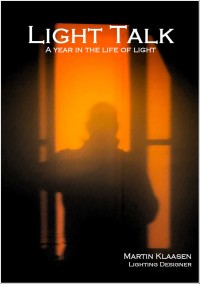 The long awaited book compilation of Martin's first year of blogging is available. Order now.
 Feedspot Top 100 Lighting Blogs