
30 Days to go!
Singapore 29th September 2010
Only 30 days to go before I complete my marathon of blogging each and every day about lighting for one full year! It has been and still is a very exciting project with plenty of subjects and issues to talk about. It will be very interesting to analyse the blogs and come out with some statistics about what has driven my lighting consultancy over the past year. By including my location I have also been able to keep track of my geographical movements in relation to my work as well as including local events and happenings in my blogs. I can probably work out how many kilometers and hours I have flown during this past year!
I will put this project up for a paper at next year’s PLDC in Madrid, as a conclusion from the place where the blog idea started last year in Berlin. The response has been really nice and encouraging and from the most unexpected places and people. I much appreciate that some of you read my blog as daily feed (and food for thought) and have been supportive with comments and encouragements. I also understand that most of us have very busy daily life and that therefore downloading and reading the blog every day is not easy. It is already quite a discipline to write it then to upload it regardless the internet access availability! I had a few interesting situations where I had to call in external assistance to be able to upload my blog on the day!
Though I let the daily events of my practice and related world events guide me in my subjects, it is inevitable that some subjects repeat itself or are a recurrent issue. However I am making concerted efforts to choose a subject I have not blogged about before or find another or additional angle on the issue. But after more than 300 blogs I may be forgiven if I repeat myself! I guess I will only find out when I start analyzing the blogs!
So what’s next? I am seriously considering doing Light Talk Season 2 so to speak, but I would like to bring in some new elements, like pictures for example. To all my dear followers, please sent in your ideas on how I could improve the blog for next season! Any suggestions are welcome! Thanks!
Marketing
Singapore 28th September 2010
One of the toughest questions to ask when setting up a lighting design practice is how to position and promote yourself. Are you going market yourself as an all-rounder like a general practitioner or an expert specialist in a specific application. I know lighting design is a specialism by itself but within our profession there is still the opportunity to develop yourself as an all-rounder or as a specialist in a specific direction. Some become specialists in the hospitality industry, some in urban master planning, some in the special events industry and so on. It is quite amazing when you think about it how many lighting applications there are in our lives!
But when you start up it is generally not so that clients are waiting in line for you. In fact they probably have never heard of you and you will have to get on to your marketing horse to promote yourself. Which is the time where you also have to decide where to position yourself on the fee scale? It is already difficult to get commanding fees as a mature company let alone with little experience and references. The dilemma is that once you start with low fees it is hard to increase them as you create an initial image of low fees…
But even mature companies need to refresh their image from time to time and so are we at the moment. My company logo and image has been around for nearly 15 years now and with new young blood in the company, changing technologies and environmental responsibilities it is time to create a new look and possibly diversify our activities more attuned to the needs of the present market. We are revamping our website, have created a new logo to refresh the company look and more. You could call it branding.
Obviously over the years we have created a certain position in the market together with an expectation from our clients in regards to our expertise and design quality. Whether we can elevate our image to new levels is yet to be seen. But the changes herald new and exciting times which is stimulating and motivating for all in the company!
CSI Lighting
Singapore 27th September 2010
The other day I caught a late night episode of CSI Miami, the crime scene investigators. I am not a regular TV watcher, but once in a while I do like to “switch off” from work and just watch some TV. Besides the fact that they use UV light to detect traces of human finger prints and the like, lighting does not play a huge role in these series. However there are times that lighting experts are called in for criminal cases/ fatal accidents to provide expert opinion when lighting is in play. In Australia we are called called in on occasion to provide such opinion.
Several years ago one of my colleagues at the time provided his expert opinion on a glare situation on the road that was the major cause of a road accident. The issue then was a car driver who claimed that he was not able to see the red traffic light because of the glaring sun and therefore was not to blame for the accident. If my mind serves me well it was proven that during some months of the year the sun set occurred right behind the traffic light and that it was indeed impossible for the human eye to overcome that contrast and actually see the traffic light let alone the color of the light. The whole case was brought on by the insurance company of course.
In a more recent case we were called in to investigate a fatal accident at a mining site somewhere in the northern part of Western Australia. A worker was fatally killed during a night shift where he fell to his death through a loose floor panel from a third floor work structure. The company needed to establish cause immediately and flew us in nearly overnight to investigate the “scene” which was left untouched to establish whether lighting was to blame for the accident. Considering the legal implications of our findings we were made to sign a non-disclosure agreement, so I can not disclose the cause but we did establish the role of lighting and submitted our report to the company’s legal department.
This is another side to our lighting experts role that is not often talked about, nor does it happen often, but we do get involved in regular lighting audits to establish public or corporate lighting compliance to standards. Just in case….
F1 Night race
Singapore 26th September 2010
Not to blog about the only Formula 1 night race in the world would be a sin. This year I have chosen to watch the race on TV from the comfort of my sofa. This is the third year now but I was one of the lucky few to see the first ever night race right from the grandstand opposite the Ferrari pits, a fantastic experience. For an experienced lighting designer the lighting for the race track seems a relatively textbook affair but still it was a first. In addition the lighting is not designed just for the drivers but also to make it enjoyable for the public and TV audience to watch!
Three years ago I wrote in my Lighting Today column that the main concern for the race track lighting is definitely safety and security. For the drivers the lighting has to provide sufficient lighting to see any obstacles well ahead and being able to anticipate in advance the manoeuvres required coming in at very high speeds. The lighting level standard applied for the Singapore night race is 3000 lux, with a near perfect uniformity. This is about twice the lighting levels applied in a sports stadium. The uniformity is crucial to avoid any form of what is called the “zebra effect”, where light and dark patches follow each other as you drive along the road. This is resolved by spacing the floodlights very close to each other so the light distributions overlap and an overall longitudinal uniformity is achieved. A total of more the 1500 floodlights have been used side by side along the track. Rather then to use poles, the floodlights are fixed to a truss system allowing parallel adjustments as necessary. The main characteristic of the track floodlights is that they project the beam asymmetrically forward, crosswise over the track, with a strong sideways cut off as not to glare the oncoming F1 driver. This is achieved by keeping the mounting height of the floodlights relatively low. In general the height is about equal to the road width, in this case the track width.
Having been at track site I can say that the view from the public stands is great without any glare. As I am watching the race on TV now the track and city skyline images are impressive as well. Lighting really gives the race another dimension…..
Race against the (biological) clock
Singapore 25th September 2010
With the Formula 1 night race upon us in Singapore, it is interesting to note that the European race drivers continue to live on their European time clocks even though the time difference is about 6 to 7 hours. Practice sessions yesterday ended close to midnight as will today’s session and tomorrows actual race. “Locals” head back to their accommodation towards 2 am but the Europeans stay on for a few more hours before they go to bed and then basically sleep through till the early afternoon. It appears the Media Centre is still much abuzz at 3-4 am!
I read that the English pair of Lewis Hamilton and Jenson Button have their own restaurant and chef cook on 24 hour standby. Breakfast is served at lunch time, lunch at dinner time and dinner apparently around 3amm surely serving their prefered English food! It is bright enough on the track site at night so getting the lighting levels high enough to suppress the sleep hormone should be no problem. Lighting levels on the race track are reportedly over 3000 lux…More difficult is to find hotel accommodation that has proper black outs (blinds, curtains) to keep out the morning sunshine and daylight.
We receive most light information through our eyes. Information from the world around us such as shapes, colors, intensity of light, time of the day, etc. We also receive light information through our skin, which allows certain wavelengths to enter our body. These light signals control our biorhythms, regulates our sleep/wake cycle, influences our blood pressure, body temperature, our appetite but importantly for top performers such as the F1 racers their physical strength, their nervous system, their reaction time and mind fitness. So one can understand their wish to minimize any disruption to their biorhythms.
On another note I just heard about the safe return of 3 astronauts from the Russian international space station after a 6 months stay in space. They would have faced similar issues of day and night time lighting control. However they have another issue which is called micro-gravity. Apparently when you stay without gravity for prolonged times you face bones and muscles loss that even hard core exercise do not help compensate…
When it comes to light and the F1 racers it’s definitely a race against the clock, your biological clock that is… 🙂
It is all in the details (2)
Singapore 24th September 2010
It’s all in the details…. I blogged about the interaction between lighting designers and other project consultants such as the interior designer, the architect, making sure we get the detailing of the lighting properly integrated. Today I want to talk about the other side of detailing, which is the implementation of the lighting details into “politically correct” drawings and documentation. Getting a common understanding with the team and client on the lighting concept and the related details is one thing, getting the details converted into drawings and document that are consistent and clear for coordination and construction is another thing.
I spent the day checking through a stack of our drawings that we need to issue to the site team to make sure the drawing quality and the detailing of the lighting design was up to par. It takes an experienced eye to notice small discrepancies, oversights, mistakes or other inconsistencies. Whatever stage we are in, concept, design development or technical documentation, we have to make sure our issues are as good as possible. Unfortunately tight deadlines push us to rush things out and invariably mistakes are made, details are overlooked. Light fitting codes that do not match, circuits that are wrongly looped, missing lights or incorrect positioning are some of the little details that come out when checking. Only critical checking by an experienced person who is fully aware of the lighting concept is able to spot these.
A lot of the time however it is little details that have nothing to do with the actual lighting design, but with inconsistency in the quality of the drawings. I am talking about line thickness, font type, consistency in the scale of details, clarity of notices, things that make reading a drawing easy and leaves no doubt about what is shown. Presentation is key. If the quality of the drawing documents is visibly bad, mistakes are obvious, the impression ensuing from it is that the lighting design is probably lacking as well.
First impressions count and the small little details can make all the difference…
Retirement
Singapore 23rd September 2010
Don’t worry I am not retiring yet, but the subject has been making some headlines around the world recently where countries are considering raising the legal retirement age to fight the economy crisis. With an aging population (people are getting older and older, with better and better medical care) the burden for the governments in taking care of the “pensioners” is becoming heavier and heavier, so delaying the retirement age is financially beneficial to governments.
This obviously brings into question the issue of retirement in our lighting design industry. Retirement very much depends on the country you live in I believe. I say that because I am a basket case with a Dutch nationality, an Australian residency and work permits in Singapore and China and therefore I am not sure how it works for “normal” people. The retirement age in both Holland and Australia is 60 as in most countries around the world but several countries, Australia included, are considering raising it with a few years. I have still a few years to go, but as an independent entrepreneur I am not really bound by these retirement ages. Choosing not to retire will mean forfeiting any or part of the retirement fund payments for as long as I work
But big multinational companies such as Philips, GE, etc, are all regulated and working past the retirement age is generally not possible or difficult, so any of my lighting colleagues in that situation are likely to leave the lighting arena when they reach the retirement age. I know some of them come back as a freelance consultant so that companies can still tap into their vast experience. Let’s face it when you retire you are virtually at the top of your experience level…we learn and experience new things every day, don’t we? However the thing with age is that we tend to “rust” into habits…it worked for years for you so why change? The older you get, the lesser open you are for change.
As for myself, as long as I enjoy my work and my health allows me to do so, I think I intent to keep working. Keeping your mind and body challenged and busy keeps you alive and alert. The difference will be really that I (hopefully) will be working because I want to, not because I have to….
Guest speaking
Singapore 22nd September 2010
Over the years I have been invited regularly as a resource and guest speaker at various events, mostly lighting related functions, seminars or training courses. It is something I really like to do as it keeps me on the edge as for these types of events you have to be 150% on top of your subject. People invite you to speak because they see you as an expert in your field and hope to learn and become aware of the latest developments in lighting shared from our professional knowledge. The presentation therefore has to deliver the level of expertise that is expected from our profession in general and from my years of experience as lighting designer specifically.
The last few days I have been liaising with my host in India who has invited me to guest-speak at an economic forum later this year that has included lighting as a main event. I generally don’t charge a speaking or appearance fee as long as all my travel and out of pocket expenses are covered as I believe in give and take. Being invited as a professional expert speaker is an acknowledgement to my status as a leading lighting designer and being involved in the event exposes me to a whole lot of new potential business relationships. If I deliver the goods in my talk, the rest will follow, I know from experience.
Having said that, public speaking is not everybody’s cup of tea. I have been blessed with many exposures in this area since my early years in Philips and still today many of my audiences and “students”, when I meet them still voice their appreciation on attending my presentations. It is all about confidence and authority…and then how to deal with questions. I well remember my first steps in public speaking nearly having to read every word from prepared presentation paper. You are then so focused on trying to read/ present without mistakes that you are not engaging with your audience to the extent that any question can throw you of balance! With experience you don’t need to write down your presentation anymore, with your slides triggering automatically what you want to share and you can engage with your audience…it’s all in the preparation. My university teacher ever said: “A good preparation is half the work done!”
Digital nights
Singapore 21st September 2010
As one of the fringe activities to the F1 circus that has come to town this week (Singapore’s Formula 1 night race is on this coming weekend), the city is staging it’s first so called Digital Arts Festival. The leaflet about the event promises (and I quote)…” unique experiences of new media and arts at their best, artworks that read the pulse of the city and respond in sound, light and digital images. The artworks will breathe life into everyday objects and locations through video projection, LED lights, and computerized creations, giving alternative perceptions and shifting the borders between arts and technology”…It is said to be inspired by the Nuit Blanche, a flagship event in major European cities.
Having read all that I went out tonight to view this with my own eyes and to be blown away my these spectacular artworks. Let’s face it, which such colourful descriptions you would expect to be in awe and see something spectacular, right? As so often the beautiful pictures and words could not really match up with the reality. Not only were the artworks hard to find, there were only 11 in total, spread throughout the city. Not really a hart stopping emotional experience! I am a bit harsh, I know and truth be told, I only managed to see half of them, the others being too far away. But really I didn’t get it…
My point is that the brochure (and newspaper writre ups) had created quite a buzz, but it sort of fizzled out when experiencing the reality. Some of the digital artworks had some nice and creative elements, yes, but somehow it definitely did not live up to the hype. Some of the artists where heralded as being of world fame with international renowned stature. Our world today is spoiled by technology and intelligent luxury with nearly everything available at the fingertips of your computer. So to impress and wow audiences with eye catching innovative art it takes more than just displaying the art. It takes a total experience and approach.
That is why after seeing this I am highly optimistic about the upcoming Marina Bay Light Festival in which I am participating as an artist myself. But it is easy to criticize others, let’s see how our artworks will come out next month! I will let you know!
Working overtime
Singapore 20th September 2010
When your job is your passion it does not really matter how many hours you put in, isn’t it? I have been lucky to find my work in something that is also my passion. It has never been about the money (though it is nice to have it), but about creation, building something that wasn’t there before. In our line of lighting design work we have diversity which means that everyday potentially is different from the previous day. Because of that we also work irregular hours as deadlines vary from project to project with overtime a necessity at times to meet these deadlines.
Already when I was a kid I liked building things. My grandmother was an architect and I have always admired her spirit and passion for what she did even though she was not a great architect. The point is that she loved what she was doing. When you love what you are doing you get up and go to work because you want to, not because you have to. Obviously we need bread on the shelf (“brood op de plank” as we say in Dutch), but going to work is then driven by passion and happiness. Joy in your work is key, as people who feel good and enjoy work are motivated and produce the best work.
Today we had some issues with clients who keep pressuring us to bring forward our delivery times on project work which in turn was stressing up individual staff members. That eventually led to upsets and stress between staff, the last thing we want. Everyone reacts to stress and pressure differently. We say things in the heat of the moment and then we start taking things personal. Before you know things have escalated…
My thought for today is that a happy and motivated team is better geared to face stress and pressure. The bug does not stop with them; it stops with the boss of the company. Everyone makes mistakes and misbehavior needs correction, but if I don’t give them my full support in resolving issues I will never earn respect. It is respect and the knowledge that we are a team that will provide the motivation to work things out, even if that means working overtime many hours…
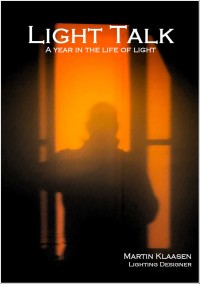 The long awaited book compilation of Martin's first year of blogging is available. Order now.
 Feedspot Top 100 Lighting Blogs