
Lighting design in India
Delhi 31st January 2012
I am in Delhi for some project work over the next few days. India is definitely on the rise and comparing it to China I would say it is following in its footsteps in terms of economic growth and speed of development. But were China is more quantity (money) based, I feel India is more quality (knowledge) based. To me of course the great advantage is that I do not really have a language barrier. English is commonly accepted and the written communication language, contrary to China were all major documents and contracts have to be in Chinese.
What struck me today was that one of the leading lighting suppliers told me that there are currently more than 40 lighting designers, or people that call themselves lighting designers in India…really??? But many of them apparently just fresh in the business, from being a fresh graduate to those who made the switch to lighting design from related activities (other consultancy work, suppliers, etc). As a result some of them have hardly any experience with cut-throat fees. I recently lost a job to a local lighting designer the client claims offered the same services for less than 20% of my fees…and my fees for that project were already heavily discounted…how is that possible? I can understand fee differences up to 30%, but at more than 80% something is not right. I then heard that the client is now complaining that the lighting design prepared by this lighting designer is so complicated and expensive in its realisation that the client does not know how to move forward as the feel the design is unrealistic and unusable.
The dilemma faced by the Indian developers is that they have these young and inexperienced designers which offer their services at very (attractive) low fees, but with potentially very expensive designs as a result, or have the much more expensive designers who through their experience can offer energy and cost effective designs.
The problem that arises is two-fold: one, you will only know when the design is done and two, if it turns out bad it creates a bad reputation for the lighting design profession in general. My advice; check out the designer’s track record!
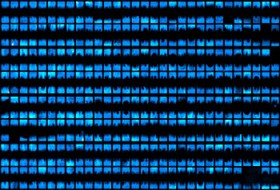
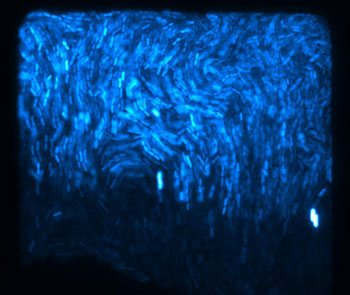
Light Watch 3-12: The University of California San Diego researchers create a bio light bulb. It was recently announced that they have managed to add a fluorescent protein to the biological clock of each bacteria through genetic engineering, giving the organisms the ability to glow. The birth of a truly organic light bulb?

 The long awaited book compilation of Martin's first year of blogging is available. Order now.
 Feedspot Top 100 Lighting Blogs
Comments (2)